
Quick answers
- What it does: An anode rod corrodes so the steel water heater tank does not corrode as quickly.
- Why it matters: Once the rod is used up, exposed steel inside the tank loses an important layer of protection.
- When to check it: AO Smith and Bradford White say to inspect it annually and change as needed, but follow the instructions for your water heater.
- Why it is easy to miss: The rod sits inside the tank, so its condition cannot be judged from the outside.
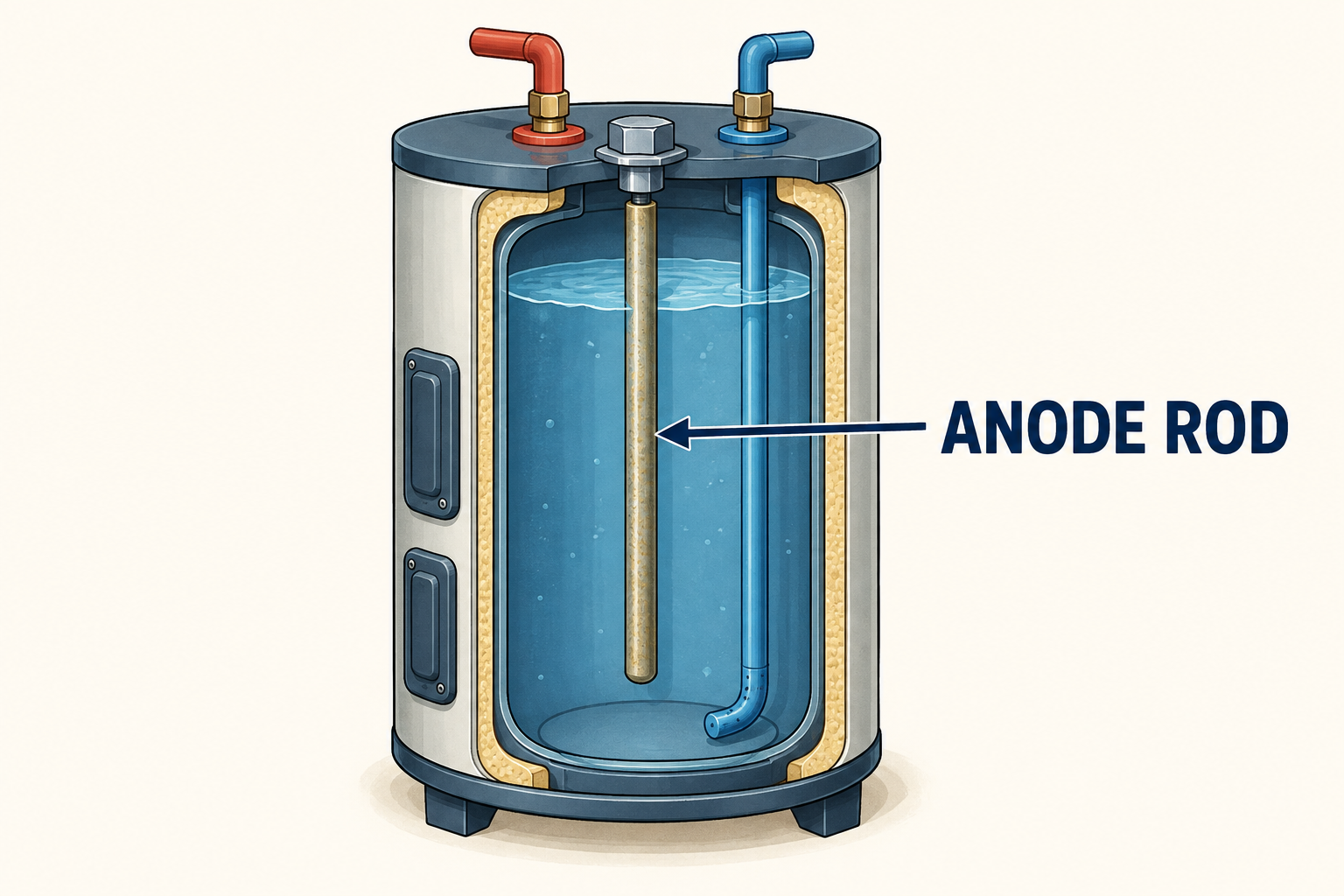
A tank-style water heater stores hot water inside a steel tank. A glass lining protects the steel, but no lining remains flawless forever. Most glass-lined steel water heaters also have an anode rod to protect any steel that the water can reach.
The rod works out of sight. It may protect the tank for years, then wear away without giving you a clear warning. Checking it before it is fully depleted may help the water heater last longer and reduce the chance of a tank leak.
What does an anode rod do?
An anode rod is a long metal rod that extends into the water heater, usually from the top. Most use magnesium, aluminum, or an aluminum-zinc alloy around a steel core wire. Some heaters have more than one rod or place it inside the hot-water outlet connection.
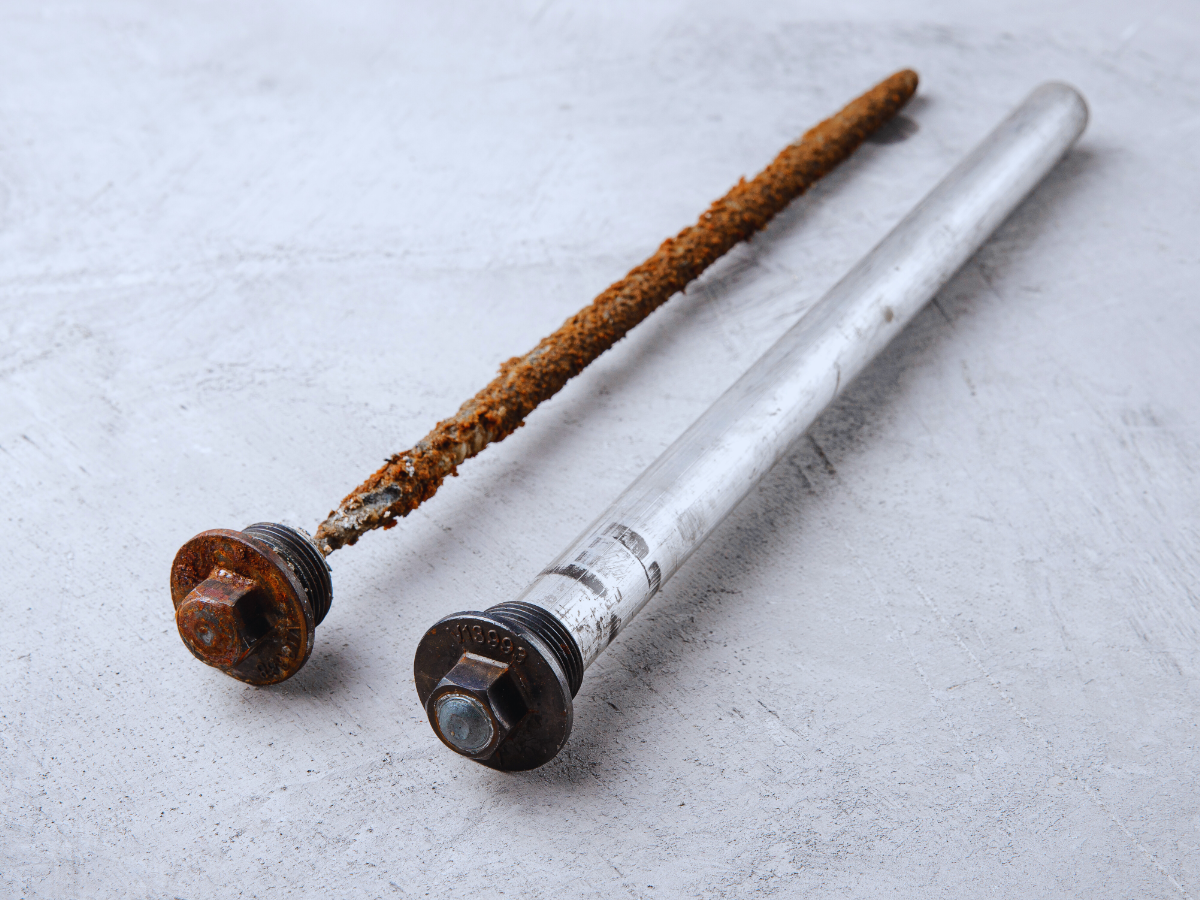
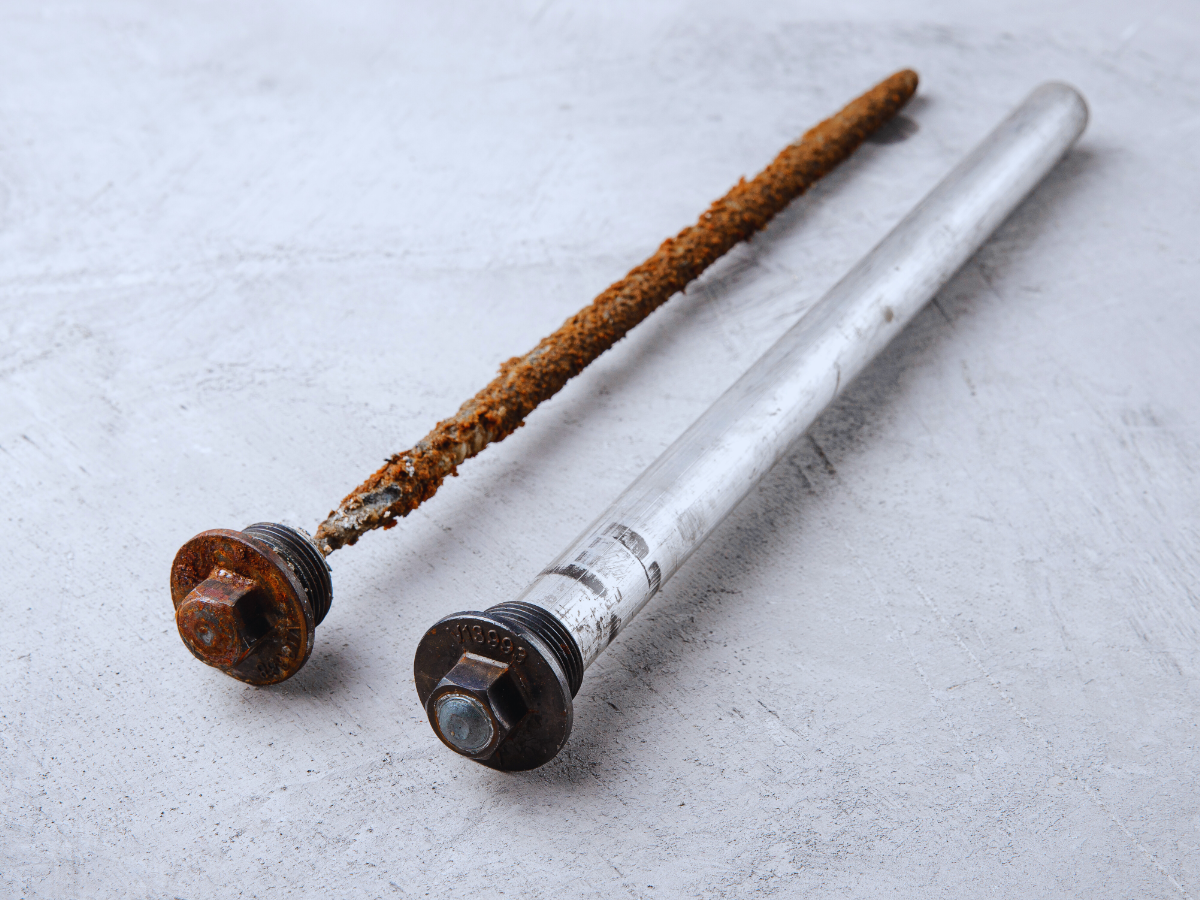
The rod is often called a sacrificial anode because it is designed to corrode. Its metal reacts more easily with the water than the steel tank does. As the rod gives up its metal, it slows corrosion of the tank.
How does the chemistry work?
Water contains dissolved minerals and salts that let a small electrical current move through it. A liquid that can carry current this way is called an electrolyte.
When two connected metals sit in an electrolyte, one may react more easily than the other. Inside a water heater, the anode rod is made from a metal that is more willing to react than steel.
Metal atoms in the rod lose electrons and enter the water as charged particles. Chemists call that process oxidation. The electrons travel through the metal connection to the tank. This makes it harder for iron atoms in the tank to lose their own electrons and form rust. Protecting steel this way is called cathodic protection.
The glass lining still matters, but the rod takes on more of the chemical reaction so the steel tank takes on less. A used rod becomes rough and thin because it has been doing its job.
Why should the rod be checked?
Once most of the useful metal is gone, the rod cannot provide the same protection. Exposed steel inside the tank can then corrode faster. That damage happens where you cannot see it.
Replacing a worn rod is one of the most important things you can do to extend the life of your water heater. It cannot repair a tank that has already rusted through. Once the steel tank leaks, the water heater normally must be replaced.
An inspection can find a worn rod while the tank may still be worth protecting, before a leak damages the surrounding area.
How long does an anode rod last?
There is no set lifespan for every anode rod. Water chemistry and operating conditions can cause two rods in similar water heaters to wear at very different rates.
The water's mineral content, pH, and electrical conductivity all affect rod wear. So do hot-water use, temperature, water source, and rod material. A water softener can make some rods wear faster, so softened water may call for more frequent checks.
How often should it be inspected?
Start with the maintenance instructions for your exact water heater. AO Smith and Bradford White manuals suggest inspecting the anode rod every year. For best results, follow the instructions for your heater. The condition found during the first inspection can help a plumber set a better schedule for your home.
If you do not know when the rod was last checked, now is probably a good time. An earlier inspection may make sense if the home has softened water, unusual water chemistry, a history of hot-water odor, or heavy hot-water use.
Can you tell when an anode rod is worn out?
Usually, there is no reliable warning from outside the tank. Rust-colored hot water can point to corrosion, but it can also come from pipes or the water supply. A rotten-egg odor can involve the anode rod, sulfur compounds, bacteria, or a mix of those conditions. Popping and rumbling sounds are more often linked to sediment. Our guide to water heater noises explains what those sounds may mean.
A sulfur smell does not always mean the rod is depleted. In some homes, an active magnesium rod helps create the odor. A different rod, tank treatment, or water treatment may help, depending on the cause. Leaving the tank without an anode is not a sound repair.
What happens during an inspection?
A plumber shuts down the heater, isolates the water supply, releases pressure, and drains enough water to remove the rod safely. Heavy pitting, major metal loss, or exposed core wire may mean it is time for a properly matched replacement.
Removal can be harder than it looks. A factory-installed rod may be very tight, and low ceiling clearance may prevent a full-length rod from sliding out. Segmented replacement rods are available for tight spaces.
Water heaters involve hot water, pressure, gas or high-voltage electricity, and piping that can be damaged by too much force. If you cannot shut down, drain, refill, and restart the heater correctly, leave the inspection to a licensed plumber.
What about tankless water heaters?
Tankless water heaters do not store water in a glass-lined steel tank, so they do not use this type of sacrificial anode rod. They still need maintenance, including descaling when water conditions and the manufacturer's instructions call for it.
When to call a plumber
Have the anode rod checked if its service history is unknown, the manufacturer says an inspection is due, or your water conditions may cause faster wear. Benjamin Franklin Plumbing of the Triad can inspect the rod, look for corrosion or leakage, and tell you whether replacing the rod makes sense for the age and condition of the water heater.
We serve Winston-Salem, Kernersville, Greensboro, and the surrounding area. To schedule water heater service, call 336-203-2348.

 Your Privacy Choices