
A Late-Night Call About a Possible Burst Pipe
A homeowner in the Brice Street neighborhood of Greensboro called us late at night because they believed a pipe had burst somewhere on their property.
Our plumbers were already committed to other calls and could not get to the home that night. Rather than leave the homeowner with water continuing to run, we talked them through how to shut off the water over the phone. That stopped additional water from escaping until we could get someone there first thing the following morning.
The homeowner also had family coming to stay, so getting the water back on quickly was an important part of the job.
The Next Morning, We Isolated the Leak to the Yard
When our team arrived the next morning, one of the first things we confirmed was that the leak was not actively causing water damage inside the home.
The problem was outside.
The property had a hilly yard, and there was not an obvious wet area that showed the homeowner exactly where the leak was coming from. After inspecting the system, we isolated the problem to the underground water service running through the yard between the city meter and the house.
The existing service was roughly 50 feet long and made from thin-wall copper.
Choosing Between Leak Detection, a Spot Repair, and Water Line Replacement
Once we knew the problem was in the underground service, we gave the homeowner two practical options.
One option was to use our leak-detection equipment to pinpoint the failure more precisely, excavate that area, and repair only the damaged section of copper.
The other option was to replace the entire approximately 50-foot water service from the city meter to the plumbing connection in the home's basement.
A spot repair can make sense when the existing water line is relatively new and the failure appears to be isolated. For example, if a newer service develops one damaged section, there may be little reason to replace an otherwise sound line.
This situation was different.
The house was built in the 1930s, and the existing underground service was older thin-wall copper. The homeowner had to weigh the cost of locating and repairing one failure against replacing the complete run and no longer relying on the remaining older underground pipe.
Leak detection itself can also be a meaningful part of the repair cost when specialized equipment and additional diagnostic time are required. Depending on the length and accessibility of the service, there are situations where locating, excavating, and repairing one section can begin to approach the cost of replacing the entire line.
For this home, the customer chose a complete water line replacement .
Utility Locates Came Before Excavation Could Begin
Before excavating the yard, the underground utilities first had to be located.
That step is one reason the total time for a water main replacement is not simply the amount of time it takes a plumbing crew to dig a trench and install pipe.
Once the utility locating was completed, our team could begin the replacement.
Replacing About 50 Feet of Copper Water Line With PEX
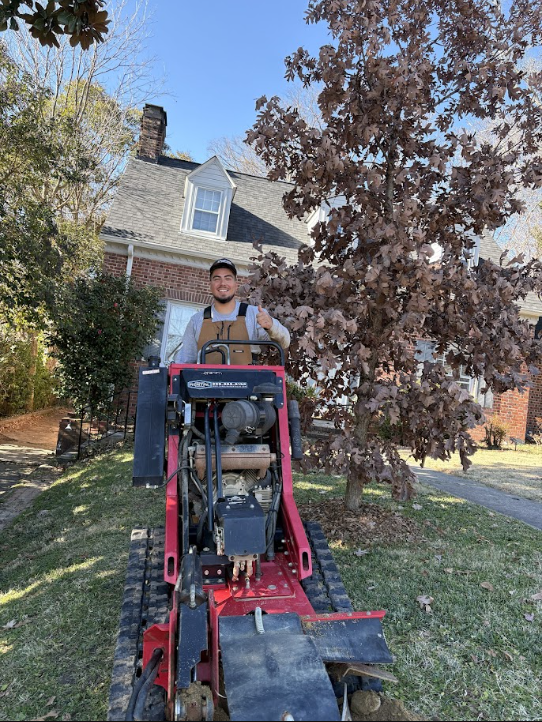
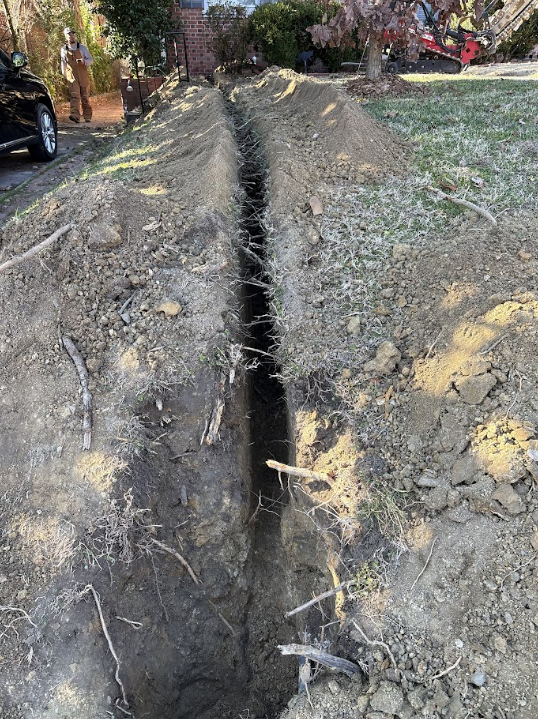
We completed this project using an open trench through the yard.
Our team excavated the approximately 50-foot route between the city water meter and the house, removed the old water service from use, and installed a new PEX water line.
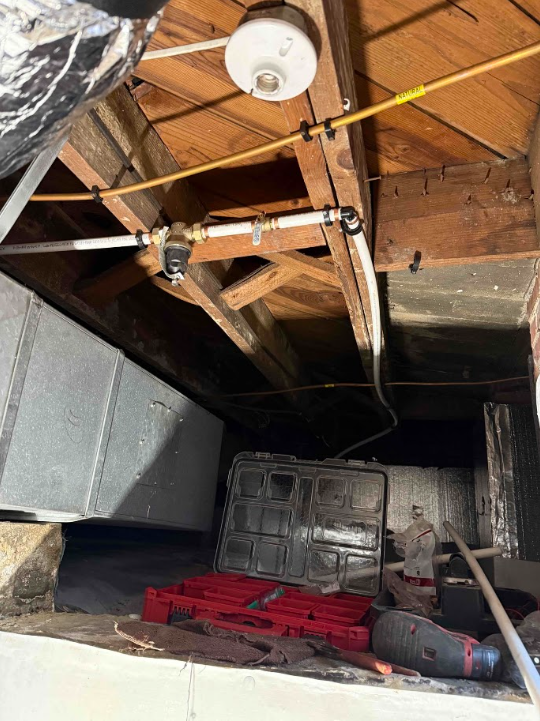
The new line continued all the way into the basement rather than stopping outside the foundation.
Inside the older home, the existing plumbing had accumulated a mixture of different pipe materials over the years. As part of the project, we cleaned up some of those transitions so the homeowner had one new water service entering the home and connecting cleanly into the point where the plumbing distributes water throughout the house.
We also installed a new main water shutoff valve in a location that was much easier for the homeowner to reach.
That means if the homeowner needs to shut off water to the house in the future, the main valve is now readily accessible from the basement.
Testing the New Water Line Before Turning the Home Back Over
Installing the pipe was not the last step.
After restoring water pressure, our team checked the new water service and its connections for leaks.
We also bled the air from the plumbing and flushed the lines before leaving.
When water pressure is removed from an older plumbing system and then restored, debris that was already inside the piping can be loosened and moved through the system. Bleeding the air and flushing the plumbing helps clear that material as the water service is brought back online.
Once that was complete, the home's water service was operating properly.
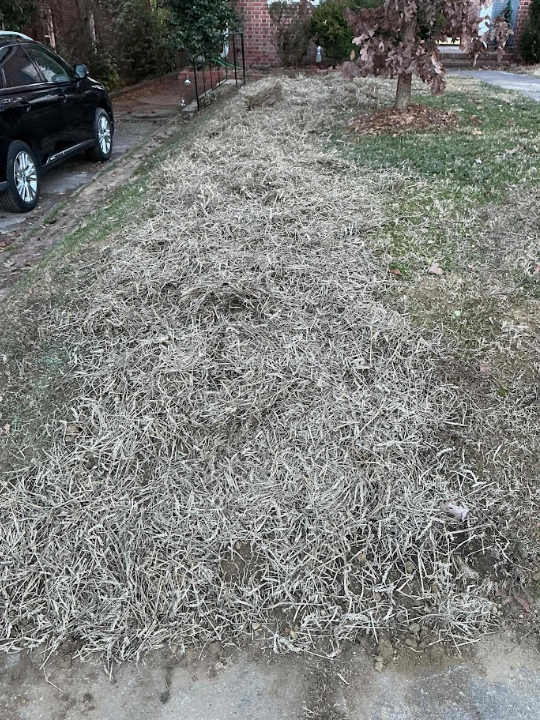
From the original late-night call through diagnosis, utility locating, excavation, replacement, testing, and restoration, the project was completed in about 48 hours.
That allowed the homeowner to get water restored before the family they were expecting arrived.
What Determines How Long a Main Water Line Replacement Takes?
The schedule for another water line replacement can be very different because the excavation itself is only one part of the project.
Some of the biggest factors are:
- Length of the water line: A longer run requires more excavation, piping, and restoration.
- Utility locating: Underground utilities need to be identified before excavation can safely proceed.
- Access to the line: An open yard is generally simpler to work in than a restricted area.
- Landscaping: Trees, retaining walls, gardens, and established landscaping can complicate the route.
- Concrete and other hard surfaces: Driveways, sidewalks, patios, and similar obstacles may require a different installation approach.
- Open trenching versus boring: Some properties allow direct excavation, while others may require piping to be bored underneath an obstruction.
- The connection inside the house: Older or heavily modified plumbing can require additional work where the new service connects to the existing system.
This Greensboro property allowed us to use an open trench for the approximately 50-foot run, which helped keep the replacement relatively straightforward once the utilities were located.
What Affects the Cost of Replacing a Main Water Line?
The same conditions that affect timing also have a major effect on cost.
Three of the biggest factors are the length, depth, and complexity of the water-line route.
A service running 50 feet through an accessible yard is a very different project from a water line that must travel a longer distance, pass underneath a driveway, work around major landscaping, or be installed where open excavation is not practical.
That is why we evaluate the actual property before recommending a repair or replacement approach rather than applying one standard price or solution to every underground water leak.
A 15-Year Parts and Labor Warranty on the New Water Service
The new water service installed on this project is backed by a 15-year parts and labor warranty.
If the installed water service experiences a covered failure during that period, our team will return and repair the covered problem at no cost to the homeowner.
For this Greensboro homeowner, the completed project provided a new PEX water service from the meter into the home, a cleaner connection to the existing plumbing, a more accessible main shutoff valve, and water restored in time for their arriving family.
If you have an underground water leak in Greensboro, our team can inspect the system and help determine whether leak detection and a spot repair or complete water line replacement makes more sense for the condition of your property.

 Your Privacy Choices