
A hidden leak is the most expensive kind of plumbing problem, and not because the repair itself is costly. It’s expensive because of how long it runs before anyone notices. A supply line failing beneath your foundation, inside a wall, or underground in the yard can leak for weeks or months — driving up your water bill, saturating the soil under your slab, and quietly causing damage that dwarfs the cost of the pipe repair. Professional leak detection exists to shorten that window, and it’s one of the most valuable calls a homeowner in Marietta or East Cobb can make.
What Leak Detection Is — and Why It Matters
Leak detection is the process of locating a concealed leak precisely, before any concrete, drywall, or flooring is opened. That precision is the whole value. Without it, addressing a slab leak means opening concrete across a general area and hoping the guess is right. With it, we identify the exact failure point first — so the access opening is small, the repair is targeted, and the restoration afterward is minimal.
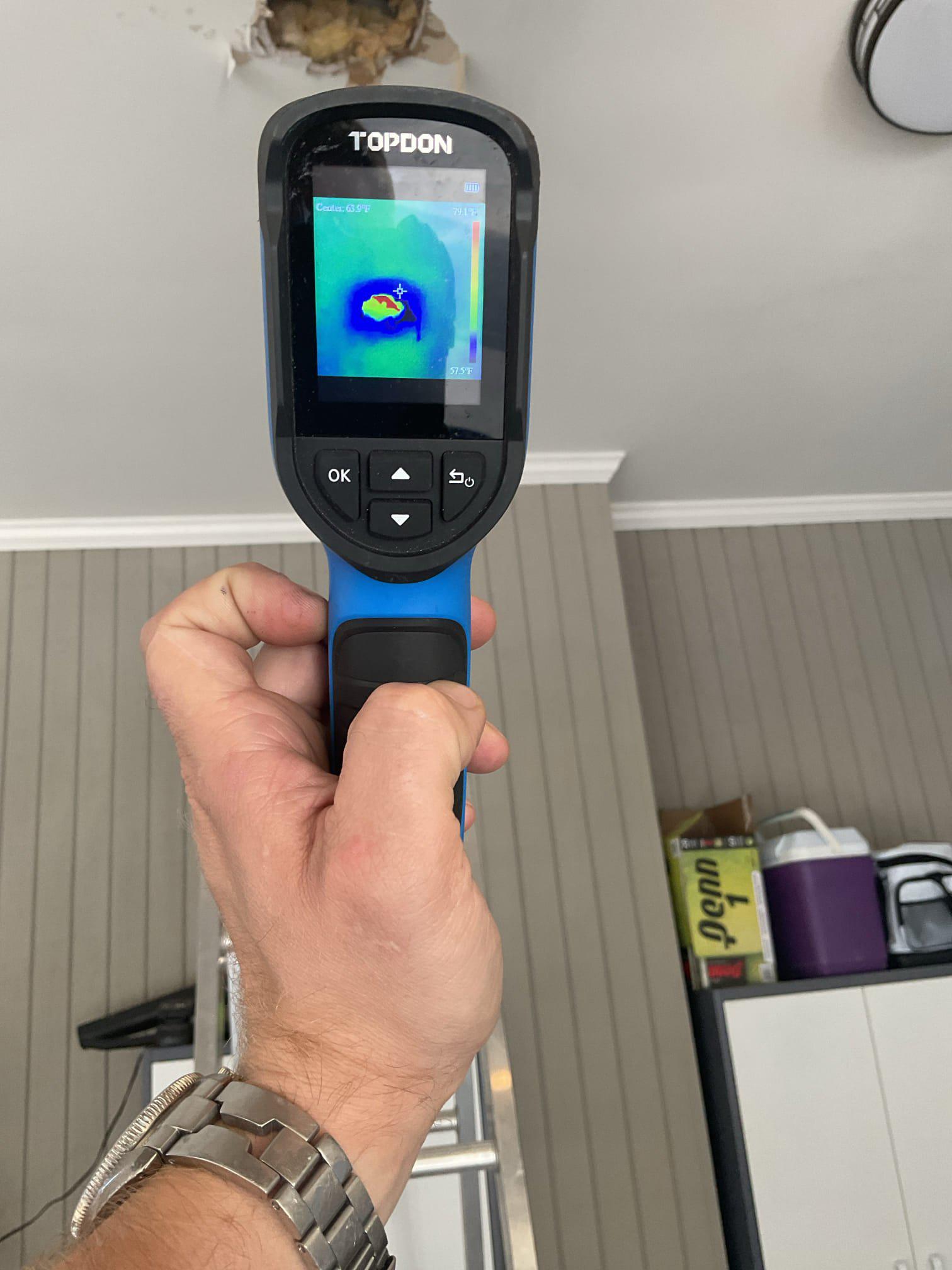
We use thermal imaging and acoustic detection together. Thermal cameras read surface temperature differences: a hot water line leaking under a slab warms the floor above it in a pattern that’s invisible to the eye but unmistakable on thermal. Acoustic equipment amplifies the sound of pressurized water escaping a pipe, letting us trace it through concrete, wall cavities, or soil. Pressure testing confirms which line is losing water. Together, these tools turn an educated guess into an accurate diagnosis.
Warning Signs of a Hidden Leak in Marietta and East Cobb Homes
- An unexplained increase in your water bill. Usually the first signal. A hidden leak runs continuously, and even a slow escape adds up measurably over a billing cycle.
- Warm or hot spots on tiled or hardwood floors. The signature sign of a hot water supply line leaking beneath a concrete slab.
- Running water sounds when everything is off. If you hear water moving with all fixtures and appliances shut down, water is escaping somewhere in the system.
- Low water pressure at every fixture. Pressure loss throughout the house — rather than at one tap — points upstream to the main supply or the underground service line.
- Musty odors, or staining on walls, ceilings, or baseboards. Concealed moisture produces smell and discoloration well before visible water shows up.
- Soggy or unusually green patches in the yard. A leaking underground service line commonly appears as a persistently wet strip or a line of grass greener than the rest of the lawn.
- Foundation cracking or floors that feel uneven. A late-stage indicator. Water escaping beneath a slab erodes the supporting soil, which can lead to foundation movement.
The Hidden Leaks We Find Most Often in Cobb County
Slab Leaks in East Cobb and Marietta
Slab-on-grade foundations are the standard across Marietta, East Cobb, and Smyrna’s 1970s through 1990s housing, with copper supply lines running beneath the concrete. When one of those lines fails, the water goes into the soil under the slab instead of into the room — which is precisely why it stays hidden so long. Slab leaks are the most frequent hidden-leak call we handle in this area.
Pinhole Leaks in Aging Copper
Pinhole leaks in older copper supply lines are a documented regional pattern throughout Cobb County. The driver is pipe age: as copper installed in the 1970s and 1980s reaches 30 to 50 years of service, localized pitting corrosion develops on the interior pipe wall until it penetrates. These leaks turn up inside walls, in ceilings between floors, and beneath slabs. The signal to watch is the pattern — multiple pinhole leaks in different locations over a short period usually indicates the copper is deteriorating system-wide, not failing at one isolated spot.
Underground Water Service Line Leaks
The water service line runs from the street meter to your home’s main shutoff and is the homeowner’s responsibility. In older Marietta and East Cobb neighborhoods, many of these lines are original and decades old. A leak shows up as low pressure throughout the home, a climbing water bill, or a wet strip in the yard tracing the line’s path. Locating it accurately determines whether a targeted repair or a full replacement is the right call — and on established, landscaped Cobb County lots, directional boring often lets us replace the line without trenching across the yard.
Why Catching It Early Changes the Cost Entirely
The difference between an early and a late diagnosis isn’t a matter of degree. A slab leak found at the warm-floor or rising-bill stage is a contained plumbing repair. The same leak found months later can bring flooring replacement, drywall and baseboard repair, mold remediation, and in severe cases foundation work. The plumbing portion of the invoice hardly moves — everything built around it multiplies. That’s the case for calling at the first symptom rather than waiting for something visible.
What Happens on a Leak Detection Call
We begin by understanding the symptoms — which fixtures are affected, how long it’s been building, what your water bill has done. That gives us a working diagnosis before equipment comes out. We then isolate and pressure test to confirm which line is losing water, and use thermal imaging and acoustic detection to pinpoint the location. You’ll get a straightforward explanation of what we found, where it is, what caused it, and what the repair involves — with flat-rate pricing quoted before any work begins, backed by our warranty and 100% satisfaction guarantee.
If any of the warning signs above sound familiar, don’t wait for visible damage. We’re available 24/7 — call (770) 999-9871 or book online. Serving Marietta, East Cobb, Smyrna, Vinings, Sandy Springs, and Cumberland.

 Your Privacy Choices