Almost every homeowner has a bottle of drain cleaner under the sink, and for the right problem it does the job. But there’s a point where DIY drain clearing stops solving anything — where you’re pouring chemicals down a drain every few weeks, or plunging the same tub over and over, and the problem keeps coming back. That’s not bad luck. It’s a signal that what’s actually wrong is beyond what any consumer product can reach.
Here’s an honest look at what DIY methods genuinely fix, where they fall short, why repeated chemical use can make things worse, and how to recognize when it’s time to stop treating the symptom.
What DIY Drain Clearing Actually Fixes
Let’s give DIY its due, because for certain problems it’s the right answer and calling a plumber would be overkill:
- Hair and soap buildup near the drain opening. A bathroom sink, tub, or shower that drains slowly because of accumulated hair in the first few inches of pipe is a genuine DIY job. A hair removal tool or a small hand snake from the hardware store usually resolves it.
- A simple kitchen sink clog. A plunger or a hand-crank drain snake often clears a localized food or grease blockage in the trap.
- A single toilet clog. A flange plunger handles the vast majority of toilet blockages.
The common thread: these are shallow, localized, single-fixture problems. When the issue is that specific and that accessible, DIY works fine.
Where DIY Stops Working — and Why
DIY methods fail when the cause isn’t a simple blockage sitting near the drain opening. In Marietta and East Cobb homes, that usually means one of three things, and none of them can be fixed from inside the house with a store-bought product.
Cast Iron Scale Buildup
Homes across Marietta, East Cobb, and Smyrna built before 1990 commonly have cast iron drain lines. Over 35 to 55 years, the interior surface corrodes and roughens, and scale builds up until the effective diameter of the pipe is significantly narrowed. Debris catches on that rough surface far more readily than on smooth pipe. A snake punches a channel through the accumulation, which restores flow briefly — but the narrowed, roughened pipe wall is still there, and it closes up again quickly. This is why so many owners of older Cobb County homes find themselves clearing the same drain several times a year.
Tree Root Intrusion
The mature tree canopy across East Cobb and Marietta’s established neighborhoods means roots have had decades to grow toward buried sewer lines, entering through joints and small cracks. Once inside, they form a mass that catches debris and blocks flow. No chemical drain cleaner removes roots, and a household snake can’t reach the main line where they typically live. Clearing cuts them back temporarily; they regrow.
A Structural Problem in the Line
An offset joint, a bellied (sagging) section, a crack, or a partial collapse creates a permanent catch point where waste accumulates no matter how many times you clear above it. Nothing you pour or push down the drain fixes a pipe that has physically shifted or broken.
A Word of Caution About Chemical Drain Cleaners
Occasional use on a minor fixture clog is fine. Repeated use is a different matter, and worth understanding before you reach for the bottle again. Chemical drain cleaners work by generating a strong caustic or acidic reaction, and that reaction produces heat. Used repeatedly, especially in older pipes, that can accelerate wear on the pipe itself — a real consideration in Marietta’s aging cast iron drain lines — and can degrade rubber seals and gaskets in the system.
There’s also a practical problem: when chemicals fail to clear the blockage, that caustic liquid sits in the pipe. If a plumber then has to open the line or work on the drain, they’re dealing with standing chemical rather than water. Always tell your plumber what you’ve poured down the drain and when — it matters for their safety and for how they approach the job.
Most importantly, chemicals don’t address any of the three real causes above. They may dissolve some organic matter around a root mass, but the roots remain. They can’t remove cast iron scale. They certainly can’t fix an offset joint.
The Signs It’s Time to Stop DIY and Call
- The same drain backs up repeatedly. If you’ve cleared it more than once or twice, the underlying cause isn’t being addressed.
- Multiple drains are slow at the same time. That points to the main line rather than any individual fixture — well beyond DIY range.
- Gurgling from toilets or drains when you run water elsewhere. A classic sign of a partial main line blockage.
- Sewage odors from drains or outside near the cleanout. Indicates waste sitting in the line.
- Any backup involving sewage coming up through a floor drain or toilet. Call immediately — this is a main line issue and a health concern.
What Professional Drain Cleaning Does Differently
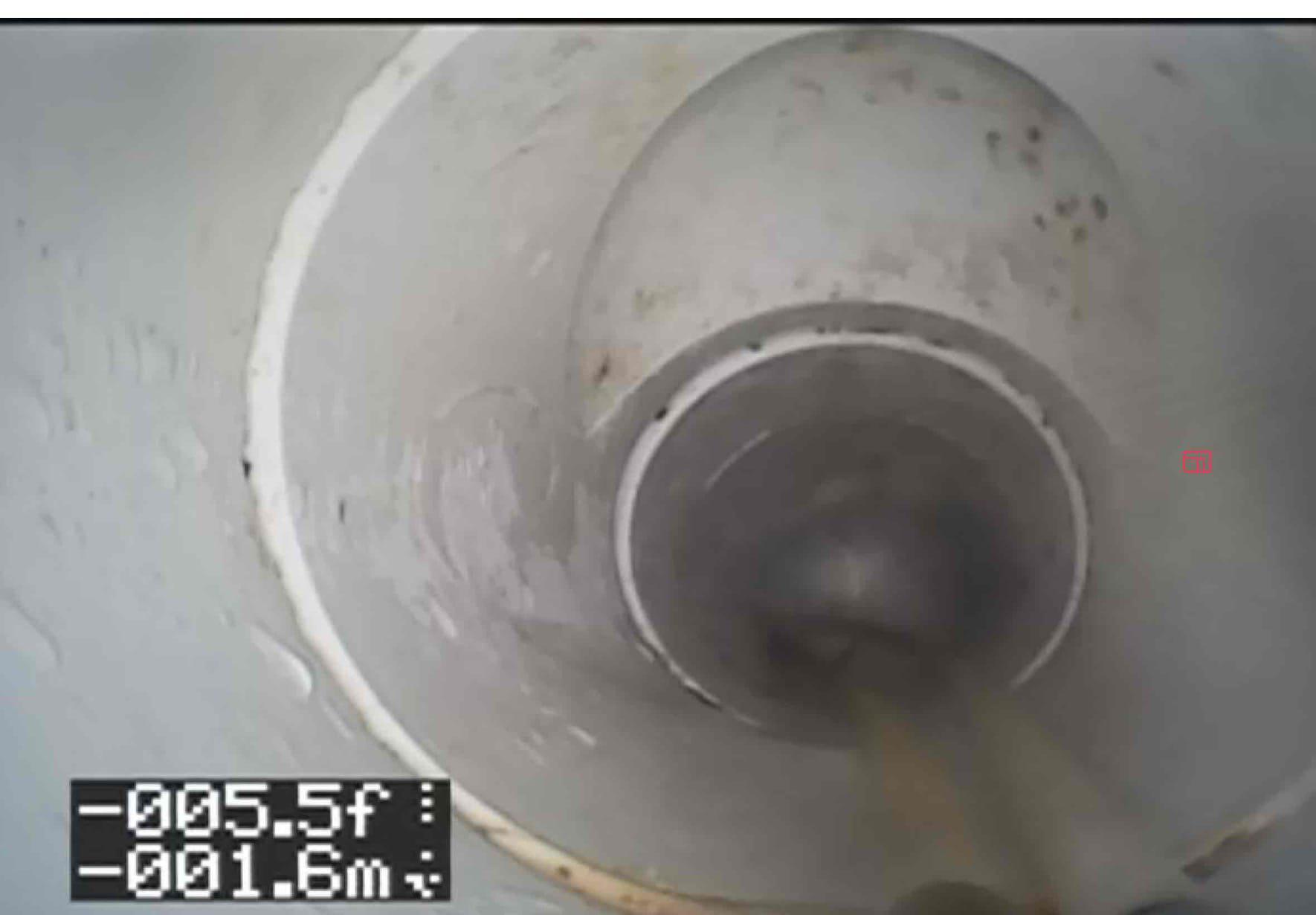
Two things, mainly. Hydrojetting uses high-pressure water — typically 3,000 to 4,000 PSI — to scour the interior of the pipe wall to wall rather than punching a channel through the blockage. In an older cast iron line, that means actually removing the decades of scale that keeps causing the problem, not just clearing a path through it. And sewer camera inspection shows exactly what’s inside the line and what condition it’s in, so the recommendation is based on what’s actually there rather than a guess. You see the footage too.
If a camera reveals structural damage, we can address the cause — trenchless pipe patch repair for a contained crack or joint, or targeted section replacement for more extensive deterioration — rather than scheduling you for another clearing in three months. Flat-rate pricing before any work begins, and every repair is backed by our warranty. Call (770) 999-9871 or book online — serving Marietta, East Cobb, Smyrna, Vinings, Sandy Springs, and Cumberland.

 Your Privacy Choices