While frozen pipes are one of the most common winter plumbing emergencies, you may not know where to start if you've never experienced this problem before. Your ability to keep a cool head and act quickly will give you the best chance of getting ahead of the damage. This guide walks you through what to do, what to avoid and when to call a professional for repairs.
How to Tell if You Have a Frozen Pipe
You might have a frozen pipe if you notice the following signs.
- Little or no water from a faucet or fixture: If water flow has slowed to a trickle or stopped altogether from one specific area of your home, the pipe serving that fixture could be frozen.
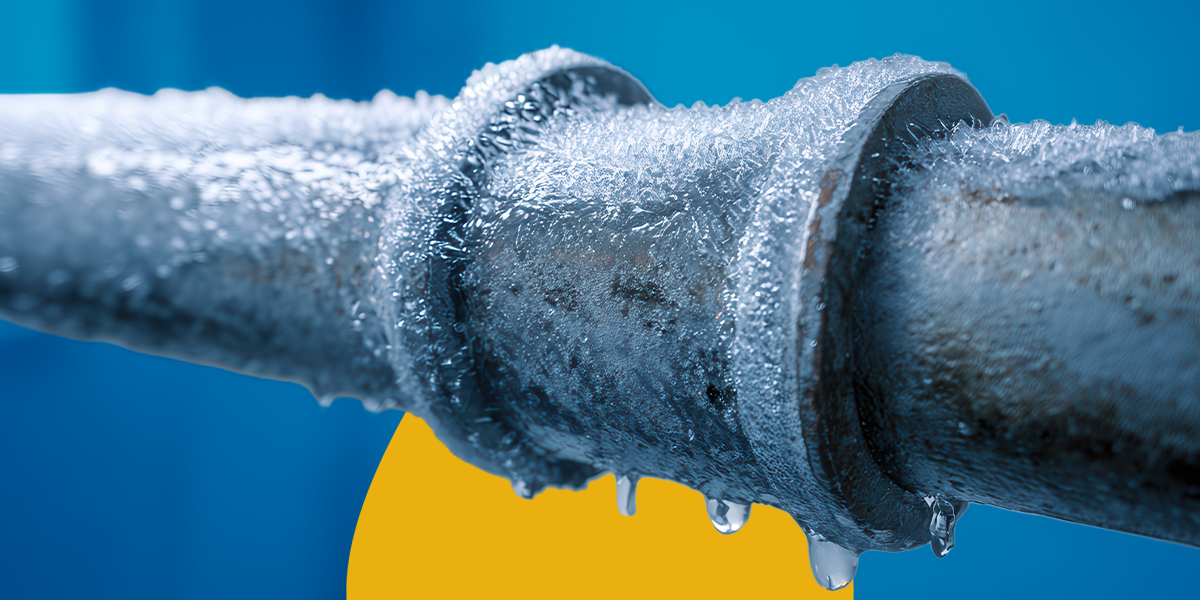
- Visible frost or condensation: Check visible pipes in your basement, crawl space, attic or garage. A layer of frost or unusual condensation on the exterior is a direct confirmation.
- A foul or unusual odor: When ice blocks a plumbing line, it traps sewer gases inside, where they have nowhere to go but back through the fixture.
- Visible swelling, bulging or surface cracking: This more advanced sign indicates that pressure has already built up inside the line for some time. If you see this, act quickly.
- Gurgling or unusual sounds when running water nearby: If water still flows elsewhere in the house but you hear strange sounds when using fixtures near the affected area, ice is likely partially blocking the line.
- A pipe that feels unusually cold or icy to the touch: Run your hand along exposed pipes in unheated areas. A pipe that is significantly colder than the surrounding ones, or that feels hard and solid in a specific section, is a strong indicator of a freeze.
Your Immediate 4-Step Action Plan to Prevent a Burst
Follow these steps to keep the situation from escalating while you work toward a resolution.
1. Immediately Shut Off the Main Water Supply
Greenville Water officials consistently identify shutting off the water as a critical step in any emergency involving a leaking, frozen or burst pipe. If the pipe is already cracked or bursts while you are working, an open water supply can release hundreds of gallons into your home within hours. Turning everything off stops that from happening.
Locate your shutoff valve now if you have not already. In most Greenville homes, it is near the water meter, in the basement or in a utility closet.
2. Open the Faucets to Relieve Pressure
After turning off the water supply to your home, open the faucet connected to the affected pipe. The water and steam inside the line will need somewhere to go as ice begins to melt. An open faucet provides that release and significantly reduces the pressure that causes pipes to burst. Repeat this step for every affected fixture. Even a slow drip tells you the blockage is beginning to clear.
3. Locate the Frozen Section of Pipe
With pressure relieved, turn your attention to finding where the freeze occurred. Pipes running along exterior walls and through unheated crawl spaces are the most common freeze points due to overnight temperature drops. Check visible pipes in your basement, attic, garage and under sinks on exterior walls for the same signs you identified earlier — frost, swelling or an unusually cold section.
If you can see and access the frozen section, you are ready to move on to Step 4. If the freeze runs behind a wall, beneath a slab or anywhere else you cannot safely access, skip the next step and call a professional. Working blind causes more damage than it prevents and calls for professional leak detection service.

4. Apply Gentle, Safe Heat to the Pipe
Starting at the faucet end and working back toward the frozen section directs melting water outward rather than trapping steam behind the blockage. Safe and effective options include a hair dryer on a low or medium setting, an electric heating pad wrapped firmly around the pipe or warm towels reapplied at regular intervals. Watch the open faucet as you work. Increasing flow confirms the pressure is dropping and the ice is releasing.
How Not to Thaw Frozen Pipes
The wrong move during a frozen‑pipe emergency can turn a plumbing problem into a house fire, an electrical hazard or a burst line that causes far more damage than the original freeze.
Never use any of these methods to thaw a pipe.
- An open flame or propane torch: A blowtorch delivers sudden, extreme heat that can rupture a pipe on contact and ignite wall materials, insulation and nearby surfaces in seconds. What starts as a plumbing problem becomes a fire hazard the moment you apply a flame. Torches or open fires are among the leading causes of house fires during winter plumbing emergencies.
- A high-wattage space heater pointed directly at a pipe: Concentrating intense heat on a single section puts dangerous stress on the pipe walls, which are already under pressure from expanding ice inside. The result is often a burst at or near the heated point.
- Electrical tools: If the pipe has already developed a hairline crack and water is beginning to seep, mixing electricity with that moisture creates a genuine electrocution risk. If you see signs of leakage, keep electrical heat sources well away and call a professional immediately.
- Cranking the thermostat and walking away: Rapidly raising the temperature throughout the house causes multiple pipes to thaw unevenly at once, creating new stress fractures in lines you had not identified as frozen. It also deprives you of the ability to monitor the situation as it develops.
- Leaving a partially thawed pipe overnight: A pipe that partially thaws and then refreezes is under significantly greater internal stress than one that froze cleanly. The second freeze dramatically increases the likelihood of a burst. If you cannot complete the thaw safely, call for pipe repair services before the temperature drops again.
- Thawing a pipe you cannot see or access: Working blind behind walls, beneath slabs or in tight crawl spaces wastes critical time while pressure continues to build. At this point, DIY thawing stops being helpful and starts making things worse.
If you have already made one of these mistakes, don't panic. Immediately shut off the main water supply, evacuate the affected area and call your local pros. Licensed plumbers use waterproof cameras and commercial-grade equipment to find and fix the problem.
Frequently Asked Questions
What is the first thing I should do when I suspect a pipe is frozen?
Shut off the main water supply to reduce burst risk, then open the affected faucet to relieve pressure and give melting water a place to escape. Next, locate the frozen section if it is visible and accessible.
What is the safest way to thaw a frozen pipe without causing a burst?
Apply gentle heat with a hair dryer on low to medium, an electric heating pad, or warm towels, starting near the faucet end and working back toward the frozen section. Watch for improving flow at the open faucet. Stop and call a plumber if the pipe is behind a wall, under a slab, or shows cracking or leaking.
What should I never use to thaw frozen pipes (and why)?
Do not use open flames or torches, and do not aim high-watt heaters directly at a pipe. Sudden intense heat can rupture pipes and create a fire hazard. Avoid electrical tools near any moisture, and do not attempt blind thawing where you cannot see the pipe.
When should I stop DIY thawing and call a plumber in Greenville?
Call a pro if the frozen section is not accessible, if you see bulging, cracking, or leaking, if you suspect the freeze is behind a wall or under a slab, or if you cannot restore flow safely. Professional equipment can locate and resolve the problem without escalating damage.
Call Benjamin Franklin Plumbing® of Greenville for Emergency Frozen Pipe Repair
If the frozen pipe is inaccessible, you see cracking or leakage or aren't sure what to do, our licensed plumbers provide 24/7 emergency plumbing services you can rely on. Our team handles water line repair to restore your home quickly and correctly if a burst has already occurred.
We back every frozen pipe repair in Greenville with a two-year warranty and a 100% satisfaction guarantee. As The Punctual Plumber, we stand by our on-time guarantee — if there’s any delay, it’s you we pay!
Schedule your appointment online or call 864-813-5511 any time, day or night.


 Your Privacy Choices