
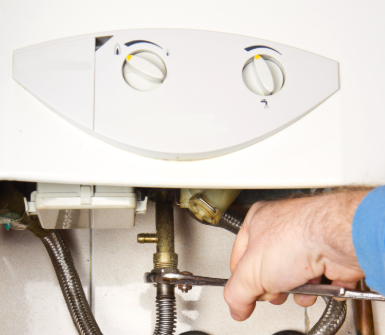
Water heater repair in Willis, TX, starts with a simple question: is the water completely cold, only lukewarm, or hot for a much shorter time than usual? Those symptoms may feel similar at the faucet, but they point toward different electrical, gas, plumbing, or equipment problems.
A complete loss of hot water may begin with a tripped breaker, interrupted gas supply, failed heating component, or safety control. A gradual decline is more likely to involve sediment, scale, a worn part, changing household demand, or a tank that can no longer recover as designed.
Homes across Willis include established properties, newer subdivisions, and homes outside the municipal core with different water supplies and equipment locations. Matching the symptom to the system is the safest way to avoid unnecessary parts, repeat repairs, and another cold shower.
In this article, you will learn about:
- What your hot-water symptoms can reveal
- What you can check safely before requesting service
- How Willis water and installation conditions affect performance
- When repair makes sense and when replacement is more practical
Keep reading to narrow down why your hot water stopped and what a plumber should verify before recommending a repair or replacement.
What your hot-water symptoms can reveal
The phrase "no hot water" can describe several different problems. A faucet may run completely cold, deliver warm water that never reaches the expected temperature, or start hot before cooling too quickly.
Before touching the equipment, test more than one faucet and note how the temperature changes. The pattern helps separate a water heater problem from a fixture, mixing valve, supply, or demand issue.
Completely cold water points to an interrupted heat source
When every hot-water tap stays cold, the heater may not be receiving power or fuel. Electric and gas units create heat differently, but both rely on controls and safety devices that can stop operation when something is wrong.
A water heater that stops working can have several possible causes. The equipment type and what happened immediately before the failure help narrow the list.
Common starting points include:
- A tripped circuit breaker or loss of electrical power
- A failed electric heating element or thermostat
- A gas supply interruption or ignition failure
- A triggered high-temperature safety limit
- A tankless error that has stopped the burner or heating elements
- Water leaking onto electrical or combustion components
Do not repeatedly reset a breaker that trips again. A recurring trip can indicate an electrical fault, a damaged element, moisture, or wiring trouble that needs professional testing.
Gas odor, scorching, soot, or abnormal burner behavior also requires immediate caution. Leave the equipment alone, move away from the area when appropriate, and contact the gas utility or emergency services if you suspect a gas leak.
Hot water that runs out quickly suggests reduced capacity
A tank can still heat water while delivering much less usable hot water than before. A failed lower element in an electric unit, a damaged dip tube, heavy sediment, or an incorrect thermostat response can leave only the upper portion of the tank adequately heated.
Household demand can produce the same complaint. A larger family, a new soaking tub, back-to-back showers, or simultaneous laundry and dishwashing may exceed a tank that once felt sufficient.
Timing offers a useful clue. If capacity dropped suddenly without a change in household use, a component failure is more likely. If the problem grew gradually, mineral accumulation, declining performance, or changing demand may be involved.
Recovery time matters too. A tank that eventually reheats but takes much longer than before may have a weak heating component, combustion problem, scale-covered surface, or heat loss in the distribution piping.
Temperature changes at one fixture may not come from the heater
If hot water works normally at most faucets, the water heater is producing heat. A single shower or sink that changes temperature may have a worn cartridge, pressure imbalance, restricted supply, or local mixing problem.
When shower water temperature fluctuates as another fixture runs, the problem may involve pressure or flow rather than the heater itself. Testing multiple fixtures keeps a localized repair from being mistaken for an equipment failure.
The opposite pattern is also informative. If every fixture loses temperature together, especially after a predictable amount of use, the heater's capacity or recovery process is more likely involved.
Tell the plumber which fixtures were tested and whether the problem appears during certain activities. That detail can shorten the diagnostic process and keep the evaluation focused on the correct part of the system.
What you can check safely before requesting service
Homeowners can collect useful information without removing access panels, opening a combustion chamber, or handling gas controls. The goal is observation, not a do-it-yourself repair involving electricity, fuel, pressure, or very hot water.
Start by protecting people and property. Water around the tank, gas odor, burning smells, visible electrical damage, or discharge from a safety valve changes the situation from routine troubleshooting to an urgent service call.
Begin with visible controls and household-wide symptoms
Check whether the problem affects every hot-water fixture, then identify the equipment type from the label and visible connections. Note any display code, indicator light, unusual sound, odor, or moisture without opening sealed or powered compartments.
Temperature also deserves caution. The U.S. Consumer Product Safety Commission reports that 140-degree water can cause burns with 6 seconds of exposure, while 130-degree water can burn in 30 seconds. Even 120-degree water can cause a third-degree burn after 5 minutes of exposure.
Safe observations include:
- Whether hot water is unavailable at every fixture
- Whether the breaker is tripped, without repeatedly resetting it
- Whether the gas service is working at other approved appliances
- Whether a tankless display shows an error code
- Whether the area around the tank, pan, or drain is wet
- Whether the unit is making new popping, rumbling, clicking, or ignition sounds
Record what you find and when the failure began. A photo of an error code, equipment label, leak location, or indicator light can preserve information that disappears after the system cools or resets.
Avoid guessing at thermostat settings when the delivered temperature is unknown. The U.S. Department of Energy recommends a warm setting of 120 degrees Fahrenheit, but temperature at a faucet can differ from the control label and should be checked carefully.
Electric units require more than a breaker reset
An electric tank usually has heating elements and thermostats behind access panels. A tripped breaker may be the visible symptom, but the cause can be a failed element, damaged wire, moisture intrusion, or a control problem.
Resetting a breaker once may confirm that power was interrupted. Resetting it repeatedly without identifying the fault can energize damaged equipment and increase the risk of shock, overheating, or further component damage.
When the unit has power but produces only a small amount of hot water, one element may still work while another does not. Electrical testing can determine whether each element receives power and has the correct resistance.
That testing belongs to a qualified professional because it may require live voltage measurements. The result should distinguish a replaceable component failure from wider tank, wiring, or control damage.
Gas and tankless systems need equipment-specific diagnosis
A gas tank may stop heating because of an ignition, burner, thermocouple, control valve, venting, or fuel-supply issue. Tankless units add flow sensors, fans, heat exchangers, electronic controls, and error codes that vary by manufacturer.
Do not bypass a safety control or attempt to relight equipment when you smell gas. Soot, scorch marks, repeated ignition attempts, or an abnormal flame pattern can indicate unsafe combustion or venting.
For a tankless system, write down the complete error code before power is interrupted. Also note whether the failure happens at every flow rate or only when one low-flow fixture is used.
A manufacturer code points the technician toward a system, not always a single failed part. Flow, gas pressure, venting, scale, sensors, and installation conditions may still need testing before the cause is confirmed.
How Willis water and installation conditions affect performance
Water heaters do not operate separately from the home around them. Incoming water quality, supply pressure, equipment location, pipe length, household demand, and maintenance history all affect how much hot water reaches a faucet.
The City of Willis provides annual water-quality information for municipal customers through its Consumer Confidence Reports. Properties outside that system may have another public supplier or a private well, so the correct response to sediment, odor, or scale begins with identifying the actual water source.
Water-source clues can change the next step
White scale, loose sediment, metallic staining, sulfur-like odor, and cloudy water are not interchangeable symptoms. Some originate in the water supply, while others develop inside the water heater or household piping.
Compare hot and cold water from the same fixture before blaming the tank. A condition found only on the hot side points more strongly toward the heater, while a condition present on both sides may begin with incoming water or the supply piping.
Useful comparisons include:
- Hot water versus cold water at the same faucet
- One fixture versus fixtures throughout the house
- Morning water after low use versus water during peak demand
- Municipal-water symptoms versus known private-well conditions
- A one-time change versus a recurring pattern
These observations do not replace testing, but they help determine whether the plumber should focus first on the heater, supply lines, or treatment equipment. They also prevent a filtration product from being chosen before the substance affecting the water is identified.
When water quality is part of the problem, testing should guide any water filtration system or softening recommendation. Hardness, sediment, iron, odor, and disinfectant taste require different treatment methods.
Sediment and scale can imitate component failure
Minerals and suspended material can settle at the bottom of a tank or collect on heated surfaces. The result may be noise, reduced usable capacity, slow recovery, uneven heating, or greater stress on components.
Routine water heater flushing can remove loose sediment when the equipment condition and manufacturer instructions support the procedure. It cannot reverse corrosion, repair a leaking tank, or restore an element that has already failed.
Tankless equipment can also lose performance when scale collects in the heat exchanger. Service requirements vary by model and water conditions, which is why the maintenance interval should follow manufacturer guidance and observed buildup rather than a universal schedule.
If maintenance has been deferred for years, aggressive flushing is not automatically the best first step. A plumber should inspect the tank, valves, connections, and drain condition before disturbing heavy deposits in aging equipment.
Equipment location changes the risk of waiting
A water heater in a garage or utility area may reveal a leak on the floor. A unit in an attic, closet, or finished part of the house can send water into ceilings, walls, insulation, cabinetry, or flooring before the source becomes obvious.
Look at the drain pan, nearby surfaces, piping connections, and the area below the installation. Moisture does not always come from the tank itself; fittings, valves, supply lines, condensate, and the temperature-and-pressure relief system can also leak.
Safety components should remain unobstructed and correctly routed. The International Residential Code states that a tank pressure-relief setting must not exceed 150 psi and that the temperature-relief valve must open at no more than 210 degrees Fahrenheit.
Do not cap a dripping discharge pipe or close a valve to stop the symptom. Professional leak detection in Willis can determine whether moisture comes from the tank, a plumbing connection, a safety discharge, or another nearby source.
When repair makes sense and when replacement is more practical
Repair is often reasonable when a serviceable component has failed and the tank remains structurally sound. Replacement becomes more practical when the tank leaks, failures repeat, corrosion is widespread, or the equipment no longer meets household demand.
Age matters, but it should not make the decision by itself. Condition, maintenance history, repair cost, efficiency, parts availability, installation quality, and the risk posed by the unit's location all belong in the comparison.
A focused component failure may support repair
Heating elements, thermostats, certain ignition components, valves, sensors, and controls may be replaceable when the rest of the system is in good condition. The diagnosis should connect the failed part directly to the reported symptom.
A professional plumbing diagnosis should also look beyond the immediate failure. High pressure, scale, wiring trouble, venting problems, or water quality can shorten the life of a new part if the contributing condition remains.
Repair is more likely to make sense when:
- The tank is not leaking or extensively corroded
- The failed part can be identified and replaced
- The repair restores the required capacity and recovery rate
- Replacement parts remain available for the model
- The same failure has not become a recurring pattern
- The installation still meets the household's hot-water demand
A written scope should identify the part, testing performed, and any condition that could cause another failure. That makes the repair decision easier to compare with the cost and benefit of replacement.
After the repair, verify temperature and recovery under normal use. Ongoing water heater maintenance can help catch leaks, sediment, and worn components before they interrupt hot water again.
A leaking tank usually changes the decision
Water from a loose connection, valve, or drain fitting may be repairable. Water escaping through the tank wall or base indicates that the storage vessel itself has failed and generally cannot be restored with a component replacement.
Recurring failures can also make continued repair less attractive. A new thermostat does not solve a deteriorating tank, and another heating element may not be a good investment when corrosion, sediment, and capacity problems are present together.
Replacement provides an opportunity to correct sizing, drainage, shutoff access, safety components, and installation conditions. The final choice should reflect peak household use rather than simply matching the old unit's label.
The water heater installation cost depends on equipment type, capacity, fuel or electrical requirements, access, removal, and any changes needed for a safe installation. A complete estimate should separate those items clearly.
Efficiency and household demand shape replacement choices
No single water heater type fits every Willis home. Tank capacity, recovery rate, available fuel, electrical service, installation space, water quality, and simultaneous demand all influence performance.
Water heating represents a meaningful share of household energy use. ENERGY STAR estimates that water heaters use about 12 percent of a home's energy, while a certified heat pump water heater can use about one-quarter of the energy of a standard model.
Efficiency should be considered alongside installation practicality. A heat pump model needs suitable space and condensate management, a gas unit needs safe combustion and venting, and tankless equipment must be sized for the required flow and temperature rise.
Comparing tankless and traditional water heaters by household demand, maintenance needs, installation constraints, and operating cost produces a more useful decision than choosing from efficiency claims alone.
Conclusion
No hot water is a symptom, not a diagnosis. Completely cold water, reduced capacity, slow recovery, and temperature changes at one fixture each point toward a different set of possible causes.
Safe observation can help you describe the problem, but electrical testing, gas controls, combustion, pressure, and internal safety devices require professional evaluation. Water around the unit, gas odor, repeated breaker trips, or safety-valve discharge should never be treated as routine inconvenience.
The best repair decision connects the symptom to a verified failure and considers the whole installation. When the tank remains sound, a focused repair may restore reliable service. When the tank leaks or problems keep returning, replacement may offer the more dependable path.
Contact Benjamin Franklin Plumbing of Conroe to ask about the Club Membership Program and schedule help with water heater problems in Willis.

 Your Privacy Choices