
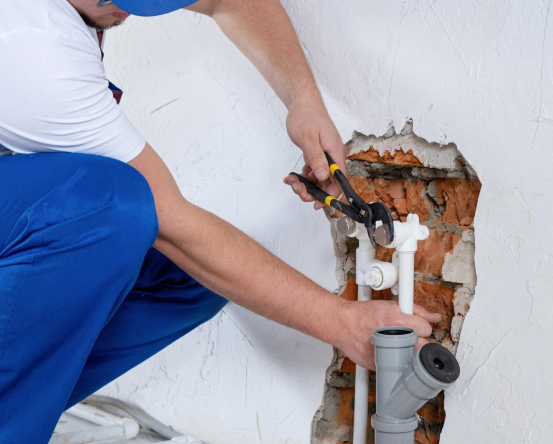
Most water damage in Willis, TX does not come from a storm or a flood. It comes from inside the house, from plumbing failures that go unnoticed until the damage is already extensive. The ability to prevent water damage with leak detection starts with understanding that the leaks causing the most harm are the ones you cannot see, the ones running silently behind walls, beneath the slab, and inside ceilings for days or weeks before anything looks wrong.
Willis sits in Montgomery County just north of Conroe, in a part of Southeast Texas where the soil mix, seasonal humidity, and aging residential plumbing all create conditions that favor hidden leaks. Many homes in the area were built on concrete slab foundations with copper or galvanized supply lines running underneath, and those materials have a limited lifespan. As pipes corrode and the ground shifts with the region's wet and dry cycles, small failures develop in places no homeowner can inspect without specialized equipment.
The cost of ignoring those small failures adds up fast. According to FEMA, even one inch of standing water inside a home can cause up to $25,000 in damage to flooring, walls, insulation, and personal belongings. Professional leak detection catches problems at the stage where a repair is still targeted and affordable, before they become a restoration project.
In this article, you will learn about:
- Why hidden leaks are the leading source of residential water damage
- How to recognize early warning signs in your Willis home
- What professional leak detection technology can find that you cannot
- Steps to protect your plumbing system before a leak becomes a disaster
- When to call a licensed plumber for an inspection
Keep reading to learn how catching a hidden leak early can save your home from the kind of damage that takes months and thousands of dollars to undo.
Why hidden leaks are the leading source of residential water damage
Water damage does not always announce itself with a dramatic event. In most homes, the damage builds gradually from leaks that are too small to see and too quiet to hear. By the time evidence appears on a wall, a floor, or a utility bill, the water has often been running for weeks.
Understanding why these leaks are so common and so destructive helps explain why proactive detection matters more than reactive repair.
Plumbing failures outpace natural disasters
The assumption that water damage comes primarily from storms, floods, and natural events is one of the most common misconceptions homeowners hold. According to the Insurance Information Institute, water damage and freezing claims accounted for roughly 23 percent of all homeowners insurance property damage claims between 2019 and 2023, making them the second most frequent claim type behind wind and hail. The majority of those claims stem from internal plumbing failures, not external weather events.
Supply line failures, corroded joints, deteriorating valves, and slow drips behind appliances are responsible for more residential water damage in the United States than hurricanes and flooding combined, when you isolate non-weather events. In Willis, where many homes are between 15 and 40 years old and the original plumbing has never been replaced, the risk of a supply line or drain failure increases with every passing year.
The financial impact is significant. The average homeowners insurance claim for water damage or freezing between 2019 and 2023 exceeded $15,000. For damage that goes undetected long enough to affect the foundation, the cost can escalate well beyond what insurance covers.
How small leaks cause large damage over time
A pinhole leak in a copper supply line beneath your slab might release only a few gallons of water per day. That sounds manageable until you consider it running undetected for 60 or 90 days. At just five gallons per day, a small leak can deposit over 400 gallons of water into the soil and concrete beneath your home in under three months.
That water does not evaporate. It saturates the ground beneath the foundation, migrates upward through the concrete, and begins to affect everything it contacts, including flooring adhesive, carpet padding, drywall, baseboards, and wooden structural elements. In Southeast Texas, where outdoor humidity already stays high for much of the year, the additional indoor moisture from a hidden leak creates ideal conditions for mold to establish and spread.
The U.S. Environmental Protection Agency states clearly that wet or damp materials must be dried within 24 to 48 hours to prevent mold growth. When a leak has been running undetected for weeks, that window closed long ago, and the remediation scope grows accordingly.
Why Willis homes face elevated risk
Willis and the surrounding Montgomery County area present a few specific risk factors that make hidden leaks more likely and more damaging than in many other markets.
The soil in this part of the county includes a mix of sandy loam and clay-bearing layers. When clay-containing soil dries out during the summer months, it contracts and can pull away from the foundation, leaving gaps that shift the load distribution on the slab. When heavy rain returns, the soil rehydrates and swells. That cycle of expansion and contraction puts mechanical stress on the pipes embedded in and running beneath the concrete.
Additionally, Willis draws its municipal water from sources that can carry moderate mineral content. Over years of continuous contact, those minerals contribute to interior pipe corrosion, particularly in copper lines. When you combine aging pipe material, shifting soil, and mineral-laden water, the conditions for a slow, hidden failure are already in place in many Willis homes long before any symptom appears.
How to recognize early warning signs in your Willis home
Hidden leaks leave traces. The key is knowing what to look for and understanding that each individual symptom might seem minor on its own, but two or more appearing together should prompt immediate investigation.
The earlier you catch a warning sign, the more likely it is that a plumbing inspection can identify the source before the damage escalates.
Unexplained increases in your water bill
Your water bill is one of the most reliable early indicators of a hidden leak. Even a small, steady leak will register as increased consumption over the course of a billing cycle. If your household routine has not changed but your usage has climbed by 15 to 25 percent or more over two consecutive months, there is a good chance that water is leaving the system somewhere you cannot see.
Pull up your last three to four months of billing statements and compare the actual consumption figures, not just the dollar amounts. Look for a consistent upward trend that does not correspond to seasonal changes, new appliances, or additional household members.
The EPA's WaterSense program reports that the average household wastes approximately 9,400 gallons of water per year from leaks. A hidden plumbing failure beneath a slab or inside a wall can contribute far more than that, pushing annual waste into five figures.
Changes in water pressure across the house
A gradual drop in water pressure that affects multiple fixtures at the same time often points to a leak somewhere in the main supply line or in the distribution piping beneath the slab. When water escapes through a break before it reaches your faucets and showerheads, the volume available at each fixture decreases.
This is different from a single slow faucet, which is usually a localized issue with a valve, aerator, or cartridge. System-wide pressure loss, where the kitchen, bathrooms, and outdoor spigots all seem weaker than they used to be, is a plumbing system problem that warrants investigation.
If you notice that pressure drops are worse at certain times of day or seem to fluctuate without any change in your usage pattern, the inconsistency itself is a clue that the system is losing water intermittently.
Damp spots, musty smells, and flooring changes
Physical evidence of moisture inside the house is a more advanced warning sign, which means the leak has typically been active long enough to push water through the slab or wall cavity and into your living space.
- Carpet that feels damp in a room with no obvious water source
- Hardwood or laminate flooring that is warping, cupping, or developing soft spots
- A persistent musty or earthy smell in a room that should be dry
- Discoloration or staining at the base of walls, especially along baseboards
- Tile that has loosened without any impact or visible cause
Any of these symptoms appearing in a location near plumbing lines should be treated as a potential leak indicator. If you notice a musty odor in a bathroom, kitchen, or laundry room that persists even after cleaning, the moisture source may be behind the wall or beneath the floor rather than on a surface you can reach.
The sound of running water when everything is off
This is one of the clearest indicators. If you turn off every faucet, appliance, and fixture in the house and still hear faint running, hissing, or dripping sounds coming from the floor or walls, water is moving through a line that should be static. The sound is often most noticeable at night when ambient noise is low.
Walk through the house slowly, pausing in rooms where supply lines and drain lines are concentrated, and listen. If you can hear water moving, note the location and describe it when you call for an inspection. That detail helps the technician narrow the detection area before equipment is even deployed.
What professional leak detection technology can find that you cannot
By the time a homeowner notices a symptom, the leak has usually been active long enough to cause some degree of concealed damage. Professional leak detection bridges the gap between suspicion and confirmation by using technology that can locate the exact source of a leak without opening walls or cutting into concrete.
This section covers the tools and methods that licensed plumbers use and explains why investing in professional detection saves money compared to exploratory demolition.
Acoustic and electronic detection equipment
Licensed plumbers who specialize in leak detection use a combination of acoustic sensors and electronic detection tools to isolate the leak location with precision.
Acoustic listening devices amplify the sound of water escaping from a pressurized pipe beneath the slab or inside a wall. The technician moves the sensor across the floor or wall surface, listening for variations in sound intensity that indicate proximity to the break. Because pressurized water makes noise as it escapes, acoustic detection works especially well for supply line leaks.
Electronic moisture sensors detect the presence of water in materials that should be dry, such as concrete, drywall, and subflooring. These sensors help map the path the water has traveled from the leak source to the point where symptoms are visible, which is critical for planning a targeted repair rather than an unnecessarily broad one.
Thermal imaging for hot water line leaks
When the leak involves a hot water supply line, thermal imaging cameras can detect the temperature differential on the floor or wall surface. The escaping hot water creates a warm signature that the camera reads as a distinct pattern against the cooler surrounding material.
This method is particularly useful when a homeowner has noticed warm spots on the floor, a water heater that runs constantly, or inconsistent hot water delivery to fixtures. The thermal image confirms the presence of a hot water leak and helps the technician determine where to access the pipe with minimal disruption.
Video pipe inspection for drain and sewer lines
Not all hidden leaks involve pressurized supply lines. Drain lines and sewer lines beneath the slab can also develop cracks, offsets, or root intrusions that allow water to escape into the surrounding soil or, in reverse, allow groundwater to infiltrate the plumbing system.
Video pipe inspection uses a waterproof camera on a flexible cable that the technician feeds into the drain system. The camera transmits live footage of the interior pipe walls, allowing the plumber to see cracks, corrosion, root penetration, and joint failures directly. This is the most definitive way to diagnose a drain or sewer issue without excavation and is especially valuable for older homes in Willis where cast iron or clay drain lines may still be in service.
Steps to protect your plumbing system before a leak becomes a disaster
Leak detection is most effective when it happens before a crisis, as part of a proactive approach to home maintenance rather than a reactive response to visible damage. The steps below are practical measures any Willis homeowner can take to reduce the risk of a hidden leak and catch developing problems early.
Prevention does not eliminate the possibility of a leak, but it significantly reduces the likelihood of catastrophic damage.
Monitor your water meter regularly
The simplest leak screening tool you already own is your water meter. Run a quick test once every few months by turning off all water-using fixtures and appliances in the house for at least two hours, then checking whether the meter has moved. If the dial or digital readout shows any consumption during that window, water is leaving the system somewhere.
This test takes almost no time and costs nothing. It will not tell you where the leak is, but it will confirm that one exists, and that confirmation is the trigger to schedule a professional plumbing inspection before the damage grows.
Manage your water pressure
Excessive water pressure is one of the most common accelerators of pipe failure. The International Plumbing Code requires a pressure-reducing valve whenever static pressure in the building exceeds 80 psi, and for good reason. Sustained pressure above that threshold puts stress on joints, valves, and pipe walls that shortens their functional lifespan.
You can check your home's static water pressure with a threaded gauge that attaches to an outdoor hose bib. If the reading is consistently above 70 to 80 psi, a pressure-reducing valve may need to be installed or an existing one may need to be serviced. Reducing pressure to a safe operating range is one of the most cost-effective ways to extend the life of your plumbing.
Keep an eye on visible connections and fixtures
While the most dangerous leaks are the ones you cannot see, the ones you can see are often ignored until they worsen. A slow drip beneath a sink, a toilet that runs intermittently, a damp ring around a supply line connection, or a small stain on the ceiling below an upstairs bathroom are all signals that a fitting or valve is beginning to fail.
Fix visible leaks promptly. They are inexpensive to address while they are small, and leaving them in place trains you to normalize the presence of water where it should not be, which can delay your response to a more serious problem later.
Schedule professional inspections before symptoms appear
Annual or biannual plumbing inspections are a practical investment, particularly for homes older than 15 years and homes where the original supply lines, drain lines, and sewer connections have never been evaluated. A licensed plumber can assess the condition of accessible plumbing, check for signs of corrosion at visible joints, test water pressure, and recommend targeted detection if any preliminary findings suggest a hidden issue.
The CDC links prolonged exposure to damp indoor environments with respiratory symptoms, asthma exacerbation, and allergic reactions. The health implications alone make proactive inspection worthwhile, because a hidden leak that runs long enough to generate mold becomes a health issue on top of a structural one.
When to call a licensed plumber for an inspection
Some situations allow you to monitor and schedule at your convenience. Others require a same-day call. Knowing the difference helps you respond proportionally and avoids both the cost of overreacting and the far greater cost of waiting too long.
A routine inspection makes sense whenever you are buying or selling a home, after any significant plumbing work, when the house reaches 15 to 20 years of age, or when you have not had the system evaluated in several years.
Signs that warrant immediate action
Call immediately if you notice any of the following in your Willis home.
- A sudden, dramatic drop in water pressure with no explanation from the utility provider
- Standing water or active moisture in a room with no visible source
- The water meter is spinning when every fixture in the house is off
- A strong musty smell accompanied by visible staining or soft spots on the floor
- New cracks in the foundation, walls, or exterior that appear alongside any moisture symptom
When two or more of these signs appear together, the probability of a significant hidden leak is high, and the damage curve steepens with every passing day. The cost of a professional detection appointment is a fraction of what emergency plumbing and water damage restoration will cost if the problem is left to progress.
What to expect from the detection appointment
A professional leak detection appointment typically involves a systematic inspection of both the pressurized supply side and the drain and sewer side of your plumbing system. The technician will check water pressure, perform a meter test, deploy acoustic and electronic sensors as needed, and use thermal imaging or video inspection when the findings point to a specific area.
The goal is to locate the leak precisely enough to plan a repair with minimal disruption. Accurate detection means the plumber can access the exact section of pipe that has failed rather than opening up large areas of floor or wall speculatively. That precision saves time, materials, and money, and it keeps the impact on your daily life as small as possible.
If the inspection confirms a slab leak or a significant supply line failure, the plumber can walk you through the repair options, which typically include spot repair, rerouting, or in some cases repiping a section of the system. The right approach depends on the leak location, the condition of the surrounding pipe, and the age and material of the plumbing.
Conclusion
Water damage in Willis homes is far more likely to come from a hidden plumbing failure than from a storm or flood, and the damage it causes is just as severe. The difference between a manageable repair and a full-scale restoration project almost always comes down to how early the problem was caught.
Leak detection is not a service you schedule after the damage is visible. It is a preventive measure that protects your home, your health, and your finances by finding problems while they are still small. Monitoring your water bill, running periodic meter tests, maintaining healthy water pressure, and scheduling professional inspections are all straightforward steps that keep you ahead of the risk.
If you are seeing any of the warning signs described in this article, or if it has been more than a year since your plumbing system was evaluated, do not wait for a wet floor or a cracked wall to make the decision for you. Contact Benjamin Franklin Plumbing of Conroe to schedule a professional leak detection inspection and protect your Willis home before a hidden leak becomes a visible disaster.

 Your Privacy Choices