
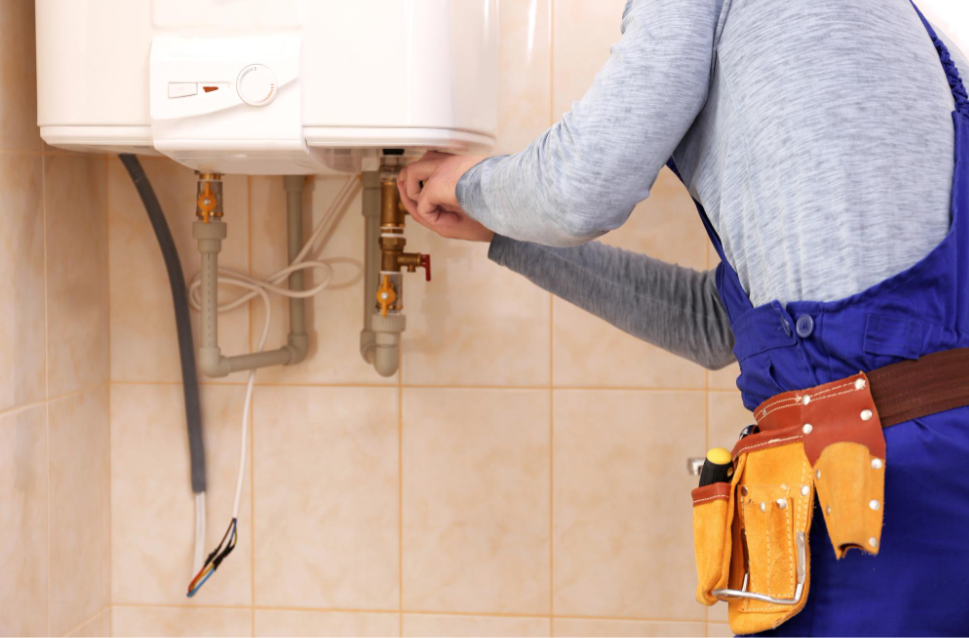
Most homeowners in Panorama Village do not think about their water heater until the hot water runs out or a strange noise starts coming from the tank. By that point, sediment has usually been building up inside the unit for months or even years, and the damage to efficiency and tank life is already underway. Learning when to flush your water heater in Panorama Village keeps that buildup in check and saves you from the kind of repair bill that comes with waiting too long.
According to the U.S. Department of Energy, water heating accounts for roughly 18% of a home's total energy use, making it the second largest energy expense in most American households. That percentage climbs higher when a tank full of sediment forces the burner or heating element to work overtime just to maintain temperature. I
n a small community like Panorama Village, where many homes were built in the 1970s and 1980s around the original golf course development, aging tanks and mineral-rich water from the Gulf Coast Aquifer create conditions that reward consistent flushing over emergency fixes.
This is one of the simplest maintenance tasks a homeowner can schedule, and the payoff in lower bills, longer equipment life, and consistent hot water is hard to beat. The key is knowing how often to do it, what the process actually involves, and when the signs point to something a flush alone will not fix.
In this article, you will learn about:
- What sediment buildup actually does to your water heater
- How Panorama Village water quality affects your tank
- The right flushing schedule for Montgomery County homes
- How to flush a tank water heater step by step
- Warning signs that mean more than a flush is needed
- Why professional maintenance catches what flushing misses
Keep reading to find out how a simple annual flush protects the appliance that delivers hot water to every faucet in your home.
What sediment buildup actually does to your water heater
Sediment is not some abstract maintenance concern. It is a physical layer of calcium, magnesium, and other mineral deposits that collects on the bottom of the tank every time hot water cycles through the system. Over months and years, that layer thickens, hardens, and starts creating real problems that show up in your utility bills long before you notice anything wrong with the water itself.
Understanding what happens inside the tank helps explain why flushing matters so much, and why putting it off turns a minor maintenance task into a major repair or replacement.
How minerals settle and harden over time
Every gallon of water that enters your tank carries dissolved minerals from the local water supply. When the water heats up, those minerals separate from the liquid and sink to the bottom of the tank as solid particles. In a gas water heater, that sediment settles directly on top of the burner plate. In an electric model, it collects around the lower heating element.
At first, the layer is thin and loose enough to stir up when water enters the tank. A flush at this stage washes most of it out through the drain valve with minimal effort. Left alone for a year or more, the sediment compacts and hardens into a dense crust that resists flushing and requires more aggressive methods to remove.
In Panorama Village, where many tanks sit in garages, attics, or utility closets without regular attention, it is common for homeowners to go three, five, or even ten years without flushing. By that point, the sediment layer can be inches thick, and the tank is already operating well below its designed efficiency.
The efficiency penalty you are paying without knowing it
Sediment acts as an insulating barrier between the heat source and the water it is supposed to be heating. The burner or element has to run longer and burn more fuel or draw more electricity to push heat through that mineral layer and into the water above it.
The U.S. Energy Information Administration reports that water heating, lighting, and refrigeration together accounted for 25% of total annual home energy use in 2020. Water heating alone represents the largest share of that group. When sediment reduces the efficiency of that system, the financial impact compounds with every billing cycle. You are paying more every month for the same amount of hot water, and the extra runtime accelerates wear on the tank and its components.
The popping and rumbling sounds that some homeowners hear from their water heater are not normal aging. They are the sound of water trapped beneath a hardened sediment layer, boiling and creating steam pockets that escape upward through the crust. Those sounds mean the sediment has already hardened enough to interfere with heat transfer, and flushing should happen as soon as possible.
Tank damage and shortened lifespan
A water heater that runs hotter and longer than it should does not just cost more to operate. The excess heat stresses the tank lining, weakens the glass or enamel coating that protects the steel from corrosion, and causes the temperature and pressure relief valve to cycle more frequently. All of those stressors shorten the life of the unit.
The anode rod, a sacrificial metal rod designed to attract corrosive elements in the water and protect the tank walls, also deteriorates faster when sediment covers it or forces the tank to run at higher internal temperatures. Once the anode rod is spent, the tank itself begins to corrode from the inside. At that point, flushing helps slow the damage but cannot reverse it.
A tank water heater typically lasts 10 to 15 years with proper care. Without regular flushing, especially in areas with mineral-rich water, that lifespan can drop to seven or eight years before leaks or complete failure force a water heater replacement.
How Panorama Village water quality affects your tank
Panorama Village sits in the northern part of Montgomery County, about five miles east of Lake Conroe. The community was incorporated in 1972, and many of its roughly 1,040 homes date from the original development era through the 1990s. That means a significant number of water heaters in the area are serving homes with plumbing systems that have been processing local water for decades.
The mineral content of that water determines how quickly sediment accumulates inside the tank and how aggressively homeowners need to stay on top of flushing.
Groundwater sources and mineral content
Montgomery County draws its municipal water from the Gulf Coast Aquifer, a layered system of sand, clay, and limestone formations that runs beneath the Texas coastal plain. As water moves through those formations, it dissolves calcium, magnesium, and other minerals that end up in the treated supply delivered to homes.
The U.S. Geological Survey has documented that water quality in the Gulf Coast aquifer system is highly variable, with dissolved solids ranging from under 500 milligrams per liter in shallow zones to much higher concentrations at depth. Municipal treatment reduces many contaminants to safe levels, but the minerals responsible for water hardness, primarily calcium and magnesium, pass through treatment in concentrations that still affect household appliances.
For water heaters, this means every tank in Panorama Village receives a steady supply of the minerals that create sediment. The rate of buildup depends on daily hot water use, the temperature setting on the tank, and how long the water sits in the tank between draw cycles.
Why local conditions accelerate buildup
Several factors specific to Panorama Village and the surrounding Montgomery County area make sediment accumulation faster than in regions with softer water.
The warm Texas climate means water heaters run year-round without the seasonal breaks that cooler climates provide. Hot water demand stays high through the summer for showers, laundry, and dishwashing, even when space heating is off. Homes that also experience high water pressure push even more mineral-laden water through the tank and deposit more sediment on the bottom.
Tank location also matters. In Panorama Village, many water heaters sit in garages or attics where ambient temperatures can exceed 100 degrees Fahrenheit during summer months. A water heater operating in a 110-degree attic works harder to maintain its setpoint than one in a climate-controlled utility room, and that extra runtime means faster mineral precipitation.
Homes near Lake Conroe that rely on well water instead of municipal supply may face even higher mineral concentrations, depending on well depth and aquifer conditions.
Hard water signs you should not ignore
If you see white, chalky residue around your faucets or notice spots on dishes even after running the dishwasher, your water has enough mineral content to affect your water heater too. Those visible deposits are the same calcium and magnesium compounds that settle inside the tank.
Other signs of hard water affecting your plumbing include:
- Soap that does not lather easily or rinses poorly
- A film or residue on glass shower doors
- Stiff, scratchy laundry after washing
- Reduced water pressure at fixtures that were previously strong
- White scale inside the kettle or coffee maker
When these signs are present in your home, the sediment inside your water heater is almost certainly building up faster than average, and a more frequent flush schedule is the right response.
The right flushing schedule for Montgomery County homes
The answer to how often you should flush your water heater depends on your water quality, the age of the tank, and how much hot water your household uses. There is no universal rule that applies to every home, but there are practical guidelines that work well for the conditions in Panorama Village and the surrounding area.
The U.S. Department of Energy recommends flushing a quart of water from the storage tank every three months as part of routine maintenance. For most homeowners, a full flush once or twice a year strikes the right balance between thoroughness and convenience.
Annual flushing for most Panorama Village homes
If your home receives treated municipal water and your household uses a moderate amount of hot water, flushing the tank once a year is a reasonable starting point. An annual flush removes loose sediment before it has time to compact and harden, keeps the drain valve functional, and gives you an opportunity to inspect the anode rod and other components.
The best time to schedule a flush in this part of Texas is late spring or early fall. Flushing in late spring clears any buildup from the heavy winter hot water use and prepares the tank for the increased summer demand. Flushing in early fall catches whatever accumulated during the hottest months when the tank worked hardest.
Pairing the flush with your annual plumbing inspection makes the whole process more efficient. A plumber can flush the tank, check the anode rod, test the temperature and pressure relief valve, inspect supply connections, and look for early signs of corrosion or leaks, all in a single visit.
When to flush every six months
Some homes in Panorama Village need a more aggressive schedule. Flushing twice a year is appropriate when any of the following conditions apply:
- The water heater is more than seven years old and has never been flushed
- Visible scale is present on faucets and fixtures throughout the house
- The tank makes popping or rumbling sounds during heating cycles
- The household uses more than 60 gallons of hot water per day
- The home uses well water rather than treated municipal supply
Homes that check even one of those boxes should move to a six-month cycle to stay ahead of the buildup.
Homes with tankless water heaters also benefit from regular descaling on a similar schedule. Tankless units do not accumulate bottom sediment the same way tank models do, but mineral scale builds up on the heat exchanger and reduces efficiency in the same way. The descaling process is different from a tank flush and typically requires a professional.
What happens when flushing is overdue
A water heater that has not been flushed in three or more years is almost certainly carrying a significant sediment load. At that point, a standard drain-and-flush may not remove the hardened deposits on its own. The sediment may have compacted into a solid layer that blocks the drain valve or stays cemented to the tank floor even with the water running.
If you open the drain valve and see cloudy, discolored water followed by a slow trickle or no flow at all, the valve is likely clogged with sediment. Forcing it open further risks breaking the valve and causing a flood. This is the point where a professional plumbing repair visit makes more sense than a DIY approach. A plumber has the tools to clear the valve safely and assess whether the tank is still worth maintaining or whether replacement is the smarter investment.
How to flush a tank water heater step by step
Flushing a water heater is a straightforward process that most homeowners can handle with basic tools. The entire job takes about 30 to 45 minutes, and the only equipment you need is a garden hose and a flat-head screwdriver or pliers.
Safety comes first. The water inside the tank is hot enough to cause serious burns, so handle the hose connection carefully and keep children and pets away from the work area during the flush.
Preparing the unit for flushing
Before you touch the drain valve, take a few steps to set up the process correctly. Skipping the preparation creates unnecessary mess and increases the risk of burns or water damage.
- Turn the thermostat to the "pilot" setting on a gas water heater, or switch off the circuit breaker for an electric water heater. Never drain a tank with the heating element or burner still active. Running a dry element will destroy it within minutes.
- Turn off the cold water supply valve at the top of the tank. This stops new water from entering while you drain.
- Open a hot water faucet somewhere in the house, a kitchen sink or bathtub works well. This relieves pressure inside the tank and allows air into the system so the water drains freely.
- Connect a garden hose to the drain valve at the bottom of the tank and route the other end to a floor drain, a driveway, or a bucket. Make sure the hose runs downhill from the valve so gravity carries the water out.
These four steps take about five minutes and prevent the most common problems homeowners run into during the flush.
Draining and flushing the tank
Open the drain valve slowly. The first water that comes out will likely be cloudy or slightly discolored with visible particles. This is the sediment you are removing.
Let the tank drain completely. Depending on the tank size, this takes 15 to 30 minutes for a standard 40- to 50-gallon unit. While the tank drains, watch the water coming out of the hose. It will start cloudy and gradually clear as the sediment washes out.
Once the tank is empty, turn the cold water supply valve back on briefly while the drain valve is still open. This sends a burst of fresh water through the tank to stir up and flush out any remaining loose sediment. Repeat this rinse two or three times until the water runs clear from the hose.
Close the drain valve, disconnect the hose, and turn the cold water supply fully on to refill the tank. Leave the hot water faucet you opened earlier running until water flows steadily from it with no air sputtering. That tells you the tank is full and the air has purged from the lines.
Restarting safely after the flush
With the tank full, turn the thermostat back to its normal setting or switch the circuit breaker back on for an electric unit. The Department of Energy recommends setting the thermostat to 120 degrees Fahrenheit for the best balance of comfort, safety, and energy efficiency.
Give the tank 30 to 60 minutes to heat the full volume of water before testing. Run a hot water tap and confirm the temperature is back to normal.
Check around the drain valve for any drips. If the valve leaks after closing, it may need a new washer or a full replacement. A small drip from a drain valve is a common issue on older units and is an easy fix for a plumber during a routine maintenance visit.
Warning signs that mean more than a flush is needed
Flushing solves the sediment problem, but it does not fix everything. Some water heater symptoms point to issues that go beyond what draining the tank can address. Recognizing these signals early prevents a slow-developing problem from turning into a sudden failure.
A water heater that has been flushed on schedule and still shows these signs needs a professional evaluation rather than another flush.
Inconsistent water temperature
If the water temperature swings between hot and lukewarm during a single shower or shifts noticeably from day to day, the problem may be a failing thermostat, a worn heating element, or a damaged dip tube rather than sediment. These are internal components that deteriorate independently from mineral buildup.
The dip tube directs incoming cold water to the bottom of the tank so it heats before rising to the top. When the tube cracks or breaks, cold water mixes with the hot water near the outlet, creating temperature fluctuations that flushing will not resolve.
A licensed plumber can test the thermostat, check the elements, and inspect the dip tube to determine which component is responsible. These are targeted repairs that extend the life of the tank without requiring a full replacement.
Discolored or rusty hot water
Brown or rust-colored water coming from the hot water taps only, not the cold, usually means corrosion is happening inside the tank or in the hot water supply lines. If the discoloration clears after running the water for a few minutes, the issue may be minor sediment disturbance. If it persists, the tank lining may be failing.
Flushing sometimes stirs up rust particles temporarily, which is normal. But ongoing discoloration after a flush suggests the anode rod is depleted and the tank walls are corroding. Replacing the anode rod, if the tank is still in reasonable condition, can buy several more years of service. If the tank itself is leaking or showing visible rust on the exterior, replacement is the safer path.
Discolored water can also come from aging water lines rather than the tank itself. A plumber can isolate the source by testing water from different points in the system. Professional leak detection pinpoints the problem without guesswork.
Visible leaks around the base
A puddle or persistent moisture around the base of the water heater is never something to flush away. Small drips from the drain valve or the temperature and pressure relief valve are repairable. A leak from the tank body itself means the internal lining has failed and the steel shell is corroding through.
Tank body leaks are not repairable. Once the shell is compromised, the only safe option is replacement. In Panorama Village, where many water heaters sit in attics above living spaces, a leaking tank can cause significant water damage to ceilings, walls, and flooring before the homeowner even notices the problem. The damage is similar to what happens with a hidden slab leak, where the source stays invisible until the consequences are already serious.
If your water heater is in an attic or elevated closet, checking for moisture around the base should be part of your regular seasonal home maintenance routine.
Why professional maintenance catches what flushing misses
Flushing the tank is the most important thing you can do for your water heater between professional visits. But a flush only addresses the sediment. A full maintenance inspection covers the components that keep the tank safe, efficient, and properly connected to your home's plumbing system.
Scheduling annual professional service alongside your own flushing routine gives the water heater the complete care it needs to reach its full lifespan. Treating the flush as part of a broader year-round plumbing protection plan keeps every part of the system covered.
Anode rod inspection and replacement
The anode rod is a metal rod, typically magnesium or aluminum, that hangs inside the tank and corrodes in place of the tank walls. It is designed to sacrifice itself, and it needs to be checked regularly because once it is gone, the tank starts corroding.
Most manufacturers recommend inspecting the anode rod every two to three years and replacing it when it is more than 50% depleted. A plumber removes the rod, examines it, and either reinstalls it or replaces it on the spot. This single step can add three to five years to the life of the tank.
Homeowners rarely check the anode rod on their own because it requires a socket wrench and enough clearance above the tank to pull the rod out, which is difficult in tight attic installations. A plumber who is already on site for a flush handles this in a few minutes.
Temperature and pressure relief valve testing
The T&P valve is a critical safety device that opens to release pressure if the tank overheats or the internal pressure exceeds safe limits. If this valve fails, the consequences can be catastrophic.
Testing the valve involves lifting the lever briefly to confirm that water flows freely through the discharge pipe. If the valve does not open, drips constantly, or does not reseat properly after testing, it needs immediate replacement. This is a check that should happen at least once a year, and it is one of the tasks included in a professional water heater service visit.
A malfunctioning T&P valve combined with a sediment-covered tank bottom is a dangerous combination. The sediment causes the tank to overheat, and the faulty valve fails to relieve the pressure. Professional maintenance catches both issues in the same inspection.
Full system evaluation
Beyond the flush and individual components, a plumber evaluates the entire water heater system during a maintenance visit. A thorough inspection covers several items that homeowners cannot easily check on their own:
- Supply line connections, looking for corrosion, mineral deposits, or slow leaks at the joints.
- Flue and venting on gas models, confirming that exhaust gases are drawing properly and not back-drafting into the living space.
- Thermostat calibration, verifying the actual water temperature matches the dial setting.
- Gas line integrity or electrical connections, depending on the fuel type, checking for leaks or loose wiring.
- Overall tank condition, including exterior rust, moisture at the base, and the condition of the drain valve.
Each of these checks takes only a few minutes during a scheduled visit, but any one of them can catch a developing problem before it turns into a failure.
For electric models, the plumber tests each heating element and checks for scale buildup on the lower element, which is the first to fail in hard water areas. For gas models, the plumber inspects the burner assembly, flame pattern, and pilot light or electronic ignition system.
The DOE's updated efficiency standards for residential water heaters, expected to save American households approximately $7.6 billion per year, make it even more worthwhile to keep an existing unit running at peak efficiency through regular maintenance rather than absorbing the cost of premature replacement.
This kind of comprehensive evaluation is not something a homeowner can replicate with a garden hose and a YouTube tutorial. It is the difference between maintaining the appliance and actually understanding its condition.
Conclusion
Flushing your water heater is one of the simplest, most effective maintenance steps you can take as a homeowner in Panorama Village. It removes the sediment that drives up your energy bills, protects the tank from premature corrosion, and keeps the hot water flowing consistently to every fixture in your home. The process takes less than an hour, requires no special tools, and pays for itself in lower utility costs and fewer emergency repairs.
The right schedule for most homes in this part of Montgomery County is once a year at minimum, and twice a year if you notice hard water signs, hear popping sounds from the tank, or have a unit that has gone several years without attention. Pairing your own flushing routine with an annual professional inspection covers both the sediment and the components that a flush alone cannot reach.
When the water heater needs more than a flush, or when you want a professional to handle the job from start to finish, Benjamin Franklin Plumbing serves Panorama Village and the surrounding Montgomery County communities with upfront pricing, on-time arrival, and thorough diagnostics. Call (936) 283-6808 to schedule your water heater maintenance today

 Your Privacy Choices