
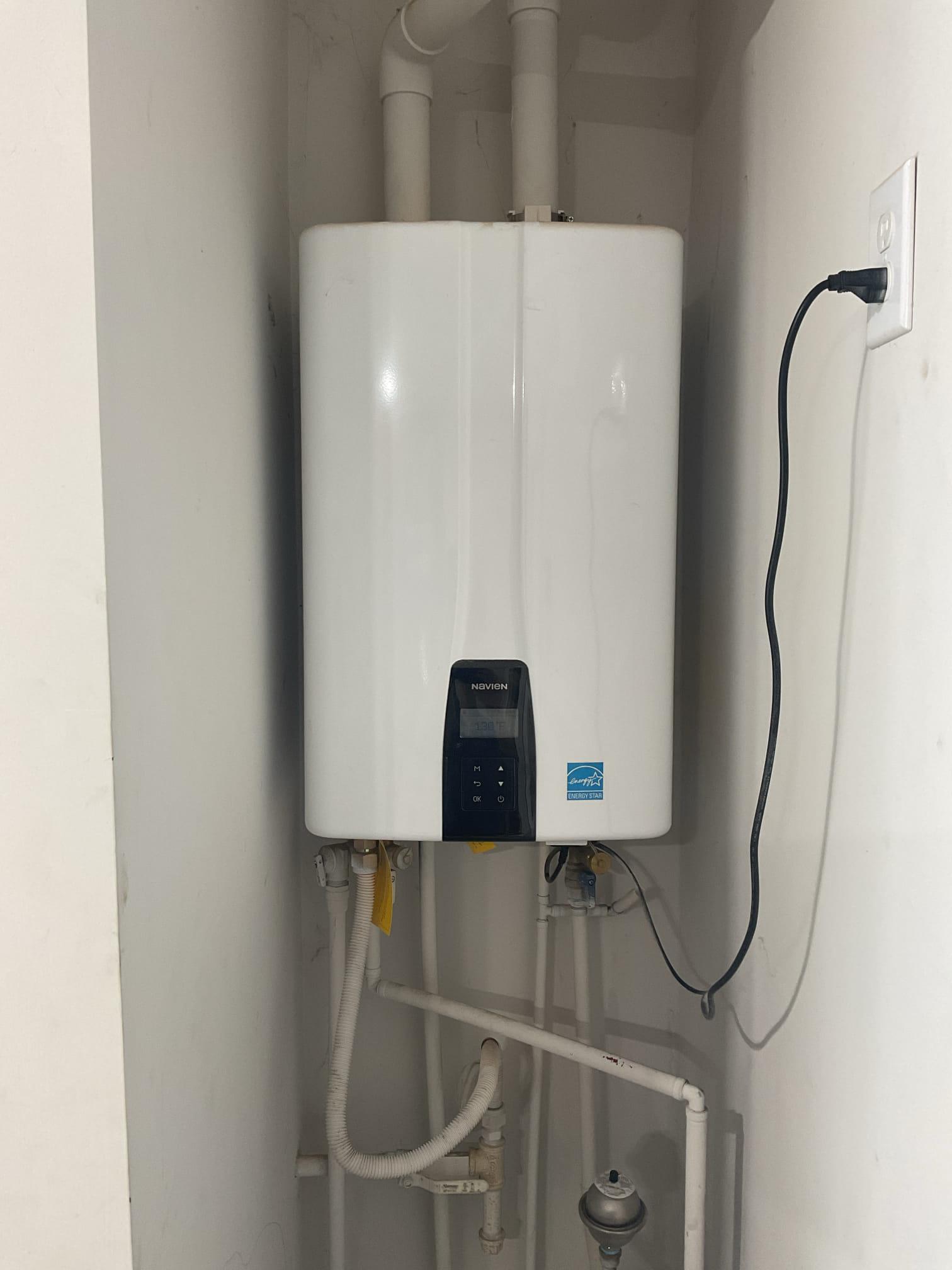
If your water heater is approaching the end of its life — or has already failed — you are facing one of the more consequential plumbing decisions a homeowner makes: replace it with another traditional tank, or make the switch to tankless. For Alpharetta and North Fulton homeowners, the right answer depends on your home’s age, your hot water habits, your gas and electrical setup, and how long you plan to stay. This guide walks through the real tradeoffs so you can make an informed choice rather than a rushed one in the middle of a cold-shower emergency.
How the Two Systems Actually Differ
A traditional tank water heater stores 40 to 80 gallons of hot water and keeps it heated around the clock so it’s ready when you need it. A tankless unit heats water on demand — when you open a hot tap, it fires up and heats water as it flows through, delivering an essentially endless supply for as long as the tap is open. That core difference — stored hot water versus on-demand heating — drives every other tradeoff between the two.
Tank Water Heaters: The Case For
- Lower upfront cost. A tank unit and its installation cost significantly less than a tankless system, particularly if you are replacing an existing tank with another tank — the connections, venting, and location are already in place.
- Simple replacement. Swapping a failed tank for a new one is usually a same-day job with no changes to your gas line, venting, or electrical service.
- Handles simultaneous demand well. A properly sized tank delivers hot water to several fixtures at once without strain, which suits larger households with overlapping morning routines.
The tradeoffs: a tank has a shorter service life (typically 10 to 12 years), it loses energy keeping water hot when no one is using it (standby heat loss), and when it runs out during heavy use, you wait for it to recover.
Tankless Water Heaters: The Case For
- Endless hot water. A correctly sized tankless unit never runs out — a real advantage for households where back-to-back showers, laundry, and dishes overlap.
- Much longer lifespan. Tankless units commonly last 20 years or more with proper maintenance — roughly double a tank’s service life.
- Energy efficiency. Because it only heats water when you need it, a tankless system eliminates standby heat loss and typically lowers the energy used for water heating.
- Space savings. A tankless unit mounts on a wall and frees up the floor space a bulky tank occupies — useful in Alpharetta homes where the water heater sits in a garage or finished basement.
The tradeoffs: higher upfront cost, and converting from tank to tankless often requires gas line resizing, new venting, and in some cases an electrical upgrade — which adds to the first-time conversion cost. Extremely high simultaneous demand across many fixtures can also exceed a single unit’s flow rate, though this is rarely an issue once the unit is sized correctly for the home.
What This Means for an Alpharetta Home Specifically
Most homes in Alpharetta and North Fulton were built from the mid-1980s through the 1990s, which means many are on their second or third water heater. If your current unit is a tank in a standard location and you are simply replacing a failed one, another quality tank is a sound, economical choice. But if you are renovating, frequently run out of hot water, value the long-term efficiency and lifespan, or want to reclaim the floor space, a tankless conversion is well worth considering — especially in larger Cumming, Milton, and Johns Creek homes with high hot water demand.
One Alpharetta-specific note: North Fulton’s water is soft, so you don’t face the aggressive scale buildup that shortens tankless heat-exchanger life in hard-water regions. That makes tankless a lower-maintenance proposition here than it is in much of the country — though annual descaling is still manufacturer-recommended and keeps the warranty valid.
The Maintenance Difference
Every water heater needs maintenance, regardless of type. Tank units benefit from an annual flush to clear sediment that naturally settles to the bottom of the tank over time, plus periodic anode rod inspection. Tankless units require annual descaling of the heat exchanger — this is manufacturer-specified maintenance, not optional, and skipping it can void the warranty. We offer maintenance plans for both, and as a Navien NSS certified installer we back our tankless installations with a 10-year parts and labor warranty — one of the strongest packages available in the Alpharetta market.
Making the Decision
Here is the short version. Choose a tank if you want the lowest upfront cost, you’re replacing an existing tank in place, or you plan to move within a few years. Choose tankless if you want endless hot water, the longest service life, lower energy use, and you plan to stay in the home long enough to recoup the higher first cost — which most homeowners do, given the 20-plus-year lifespan. We’ll give you an honest assessment of your specific home and usage during the visit, with flat-rate pricing on both options before any work begins. Alpharetta homeowners can call us at (678) 833-2754 or book online.

 Your Privacy Choices