The water service line is one of the most important pieces of plumbing in your home and one of the least thought about — right up until it fails. It’s the underground pipe that carries water from the meter at the street to your home’s main shutoff, and everything downstream of it depends on that single line working. For homeowners in Cumming and the surrounding Forsyth County area, where lot sizes are often large and many homes have been in place for decades, a failing service line is a common and very fixable problem. Here’s how to recognize the signs, what your replacement options are, and what the process actually involves.
What the Water Service Line Is — and Why It’s Your Responsibility
The water utility owns and maintains the main line in the street and, typically, the meter itself. From the meter to your house, the service line is the homeowner’s responsibility. That distinction matters: when this line develops a leak or fails, it’s on you to repair or replace it, not the utility. On the larger lots common throughout Cumming and Forsyth County, that service line can run a considerable distance underground — which means more pipe, more opportunity for a problem to develop, and a bigger reason to understand the warning signs before a small leak becomes a failure.
Signs Your Cumming Home’s Water Service Line Is Failing
- A sudden or gradual drop in water pressure throughout the home. If pressure is low at every fixture — not just one — a restricted or corroding service line is a common cause.
- An unexplained increase in your water bill. A service line leaking underground runs continuously, and even a slow leak adds up to a measurable bill increase over a month.
- Wet, soggy, or unusually green patches in the yard. A persistent wet strip or a lush green line across the lawn between the street and the house often traces the path of a leaking service line.
- Discolored or rusty water. Older galvanized steel service lines corrode from the inside out and can produce rust-tinted water as they deteriorate.
- Air sputtering from faucets or fluctuating pressure. These can indicate a compromised line drawing air through a crack or gap.
Any one of these is worth a professional assessment. Because the line is buried, the only way to confirm the condition and pinpoint a leak is with proper diagnostic work — pressure testing and leak location — rather than guesswork.
Why Older Cumming Service Lines Fail
The most common reason a service line needs replacement is simply age. Homes built several decades ago in Forsyth County may have original galvanized steel or older-generation service lines that are now well past their expected lifespan. Galvanized steel corrodes internally over time, progressively restricting flow and eventually leaking. Georgia’s clay soil adds to the stress — it expands when wet and contracts when dry through seasonal cycles, and that ground movement works on a buried line year after year. On the long service-line runs typical of large Cumming lots, there’s simply more pipe exposed to these forces.
Your Replacement Options
Directional Boring (Trenchless)
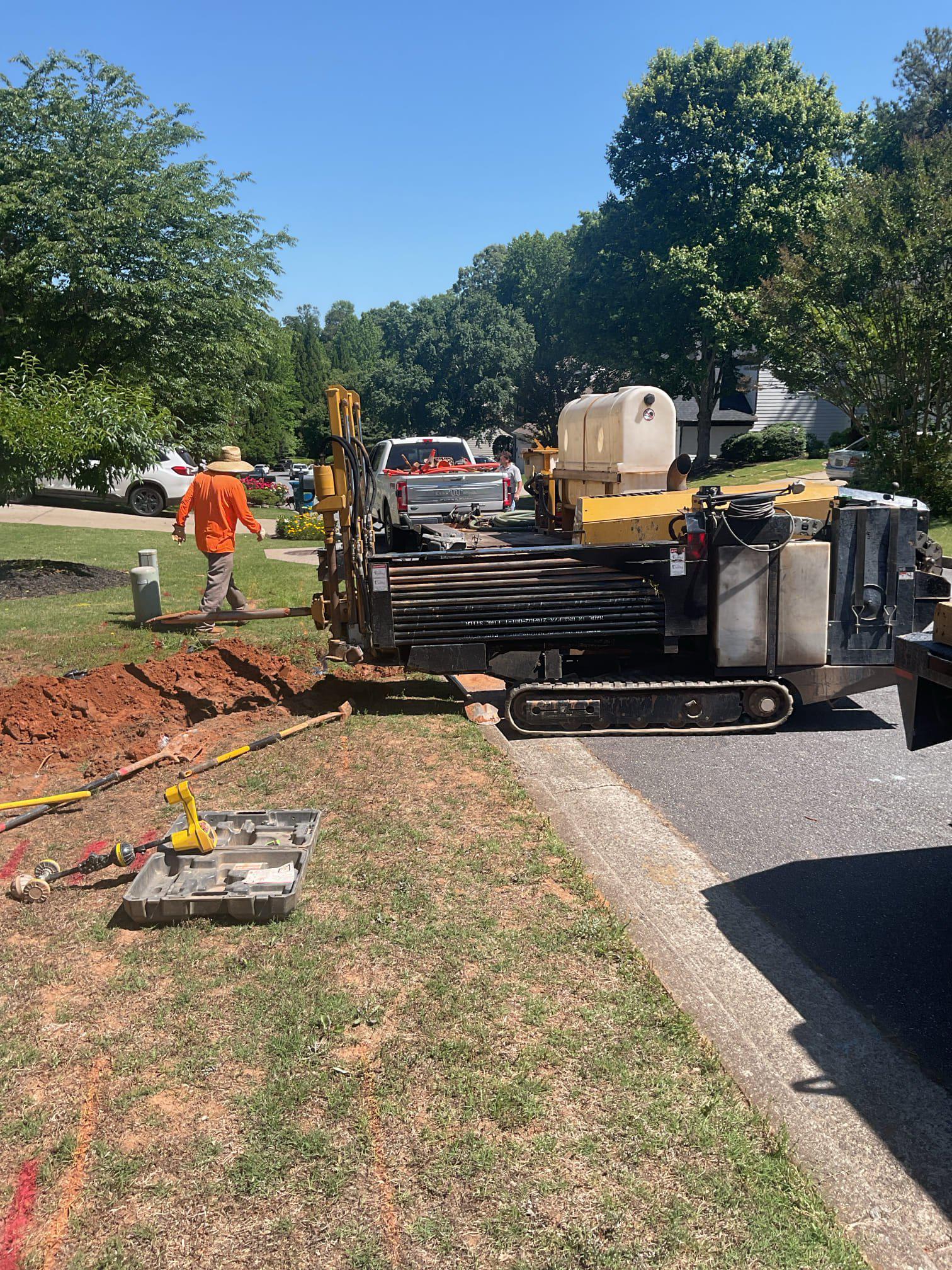
For most Cumming homes, directional boring is the preferred replacement method — and it’s a genuine advantage on the large, established, well-landscaped lots common in this area. Rather than digging an open trench along the entire path from the street to the house, directional boring installs the new line underground through a small entry point and a small exit point. The result is a brand-new service line with minimal disruption to your lawn, driveway, mature trees, and landscaping. We back our directional bore service line replacements with a 10-year parts and labor warranty.
Traditional Trench Replacement
In some situations — depending on soil conditions, the line’s path, obstructions, or the location of other underground utilities — a traditional open-trench replacement is the right approach. We excavate along the line’s route, remove the old pipe, install and properly bed the new line, and restore the surface. For many Cumming properties, the trench can be targeted to the necessary path rather than tearing up the entire yard. We assess which method fits your specific site during the diagnostic visit and explain the tradeoffs clearly.
A Note on Cumming Water and Wells
Most homes in the Cumming and Forsyth County area are served by municipal water drawn from Lake Lanier, which is treated and delivered as standard city water. Some properties in the area, however — particularly on larger or more rural lots — are on private wells, and well water can genuinely be hard or carry minerals that municipal water does not. If your Cumming home is on a well and you’re dealing with scale buildup, staining, or hard-water effects, that’s a real consideration, and a water softener may be a worthwhile addition rather than just an optional upgrade. We can test your water and recommend the right treatment for your specific situation, whether you’re on city water or a well.
What to Do If You Suspect a Service Line Problem
If you’re seeing low pressure, an unexplained bill increase, or a wet spot in the yard, the right first step is a professional assessment. We pressure test the line, locate any leak precisely, and give you a clear picture of the line’s condition before recommending anything. If replacement is the answer, we provide flat-rate pricing in writing before any work begins, and we’ll walk you through whether directional boring or trenching is the better fit for your property. Call us at (678) 833-2754 or book online.

 Your Privacy Choices