
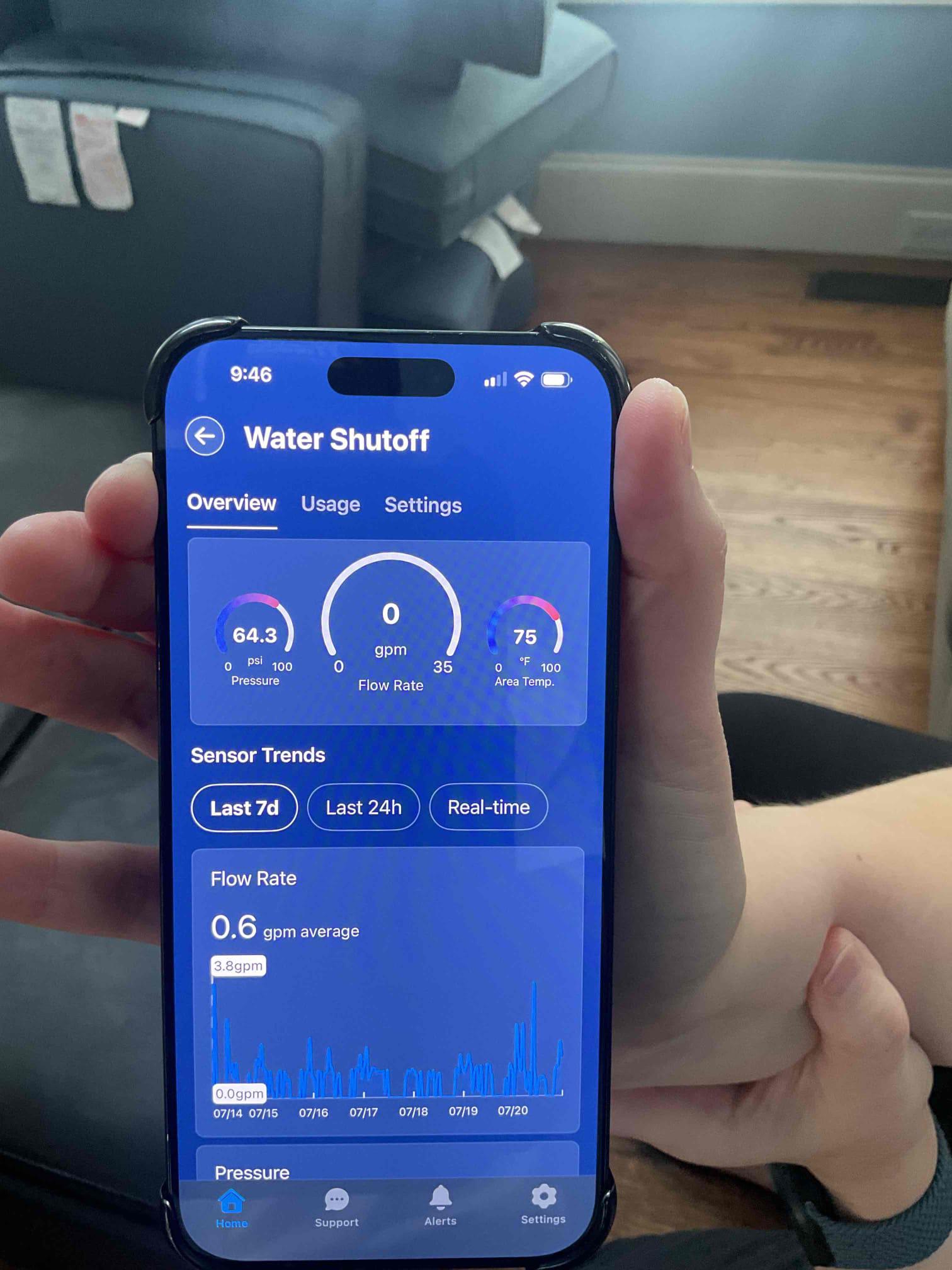
You open the water bill and it’s noticeably higher than last month — sometimes dramatically higher — and nothing about your household routine has changed. No houseguests, no new appliances, no filling a pool. It’s one of the most common calls we get from Alpharetta and North Fulton homeowners, and it’s worth taking seriously, because a sudden bill increase with no explanation almost always means water is escaping somewhere you can’t see.
Here’s what usually causes it, a simple test you can run yourself in about twenty minutes, and when it’s time to bring in a professional.
The Most Common Causes of a Sudden Water Bill Increase
A Running Toilet — the Most Common Culprit
Start here, because it’s the most frequent cause and the cheapest fix. A toilet with a worn flapper or a misadjusted fill valve can leak continuously from tank to bowl, often silently. A single running toilet can waste 150 to 200 gallons a day — enough to move your bill significantly. The classic tell is a toilet that occasionally refills on its own without being flushed, or a faint hiss you notice at night when the house is quiet. If you suspect one, drop a few drops of food coloring in the tank, wait fifteen minutes without flushing, and check the bowl. If color appears, the flapper is leaking.
A Slab Leak
This is the cause that most concerns us, and it’s common in North Fulton because slab-on-grade construction is standard across Alpharetta, Milton, and Johns Creek’s 1980s and 1990s housing. When a supply line beneath the concrete foundation develops a leak, the water goes into the soil under the slab instead of into the house — so there’s often nothing visible for weeks or months while the meter keeps running. A rising bill is frequently the very first sign. Look also for warm spots on tiled floors, the sound of running water when everything is off, or a musty smell near a plumbing wall.
A Leaking Water Service Line
The service line runs underground from the street meter to your home’s main shutoff, and it’s the homeowner’s responsibility. On the larger lots common across Milton, Cumming, and Johns Creek, that line can run a long distance. A leak here shows up as a rising bill, often paired with reduced water pressure throughout the house or a persistently wet, soggy, or unusually green strip in the yard tracing the line’s path.
Pinhole Leaks in Aging Copper
Homes across North Fulton built in the 1980s and 1990s are on copper supply lines now 30 to 45 years old. As copper reaches that age, localized pitting corrosion develops on the interior pipe wall until a small hole forms. A pinhole inside a wall or ceiling can drip steadily for a long time before it produces a visible stain — and meanwhile it’s on your bill every day.
Irrigation System Leaks
Easy to overlook, and very common in North Fulton’s well-landscaped neighborhoods. A cracked irrigation line, a stuck valve, or a broken sprinkler head can run water underground where the damage is invisible because the yard is supposed to be wet. If your bill jumped when the irrigation season started, this is a strong suspect.
The Meter Test: How to Check for a Leak Yourself
Before you call anyone, you can confirm whether water is actively escaping in about twenty minutes. Here’s how:
- Step 1 — Shut everything off. Turn off every faucet, don’t run the dishwasher or washing machine, don’t flush any toilets, and turn off the ice maker and irrigation system. Nothing in the house should be using water.
- Step 2 — Read your meter. Find your water meter (usually near the street in a covered box) and note the reading, or watch the low-flow indicator — often a small triangle or dial that spins when water is moving.
- Step 3 — Wait and re-check. Leave everything off for at least twenty to thirty minutes, then check again. If the reading has changed or the low-flow indicator is turning, water is escaping somewhere in your system.
That result is genuinely useful information. It tells you the problem is real and ongoing rather than a billing error or a one-off month, and it’s the first thing we’ll ask about when you call.
When to Call a Plumber
Call if the meter test shows water moving with everything off, if the bill increase is significant and you can’t trace it to a running toilet or irrigation, or if you’re seeing any of the other warning signs — warm floor spots, low pressure throughout the house, running-water sounds, musty odors, or a wet patch in the yard. Those combinations point to a leak that isn’t going to resolve itself and gets more expensive the longer it runs.
The cost logic here is worth understanding. A slab leak caught at the rising-bill stage is a contained plumbing repair. That same leak found six months later can involve flooring replacement, drywall repair, mold remediation, and sometimes foundation work. The plumbing portion barely changes; everything around it multiplies. That’s the entire case for acting on an unexplained bill increase now rather than waiting another cycle to see if it settles down.
We locate hidden leaks with thermal imaging and acoustic detection equipment before opening any wall or concrete, so the repair is targeted and the restoration minimal. Flat-rate pricing is quoted before any work begins. Call us 24/7 at (678) 833-2754 or book online — serving Alpharetta, Milton, Roswell, Johns Creek, and Cumming.

 Your Privacy Choices