
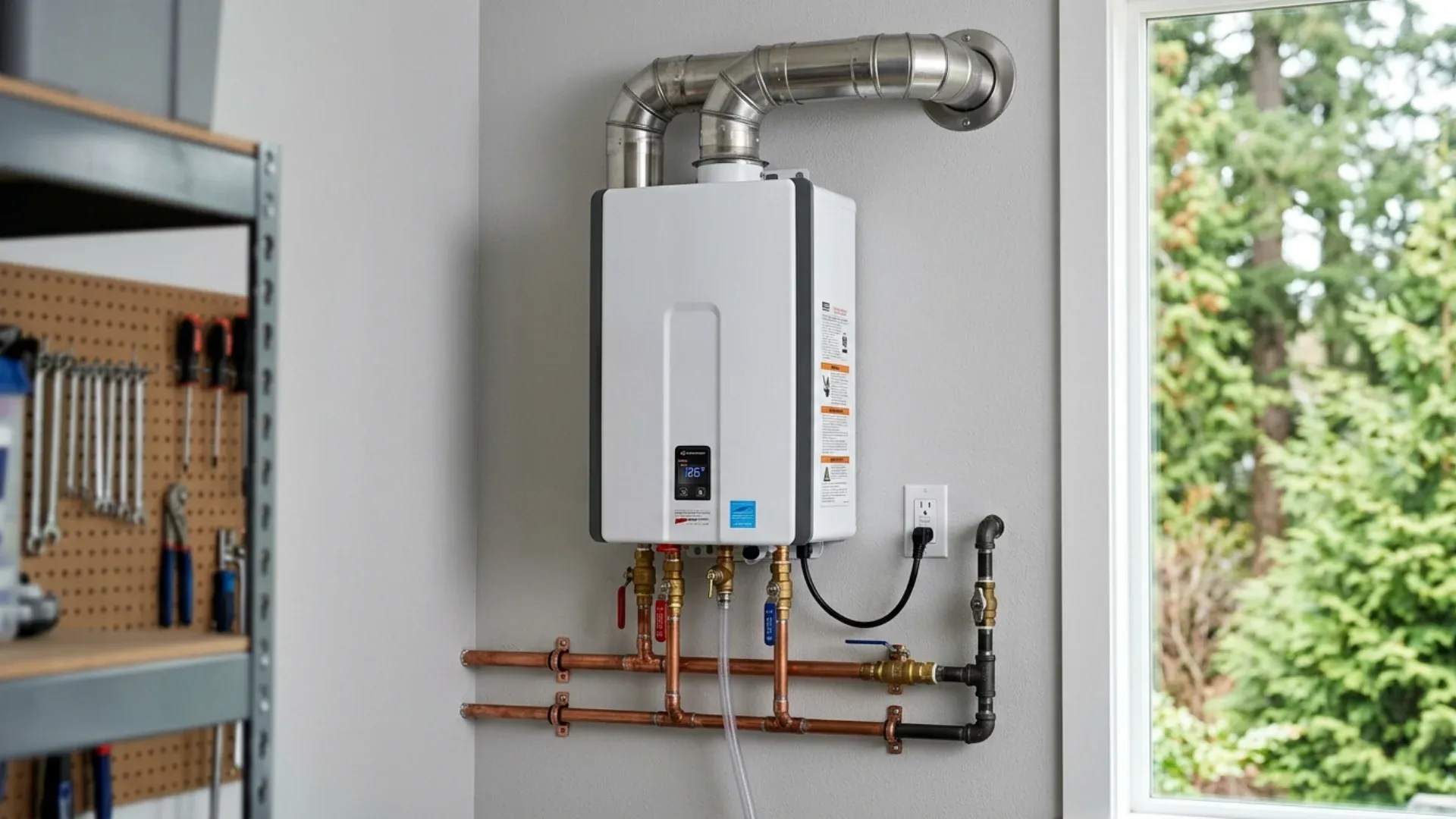
If you are comparing tankless water heaters for a Redmond home, you have probably looked at a spec sheet that says something like 6.5 gallons per minute and thought, that is more than enough. In July, it is. In January, that same unit might give you closer to half of it.
Our groundwater gets genuinely cold in winter, and that single variable decides whether a tankless feels like an upgrade or a regret. Here is how sizing actually works on the Eastside.
Why Cold Redmond Groundwater Changes the Tankless Water Heater Size You Need
A tank water heater stores hot water and refills slowly, so cold incoming water mostly affects recovery time. A tankless heats on demand, which means incoming temperature is not a detail. It is the whole equation.
Temperature Rise Explained Using an Actual Redmond January
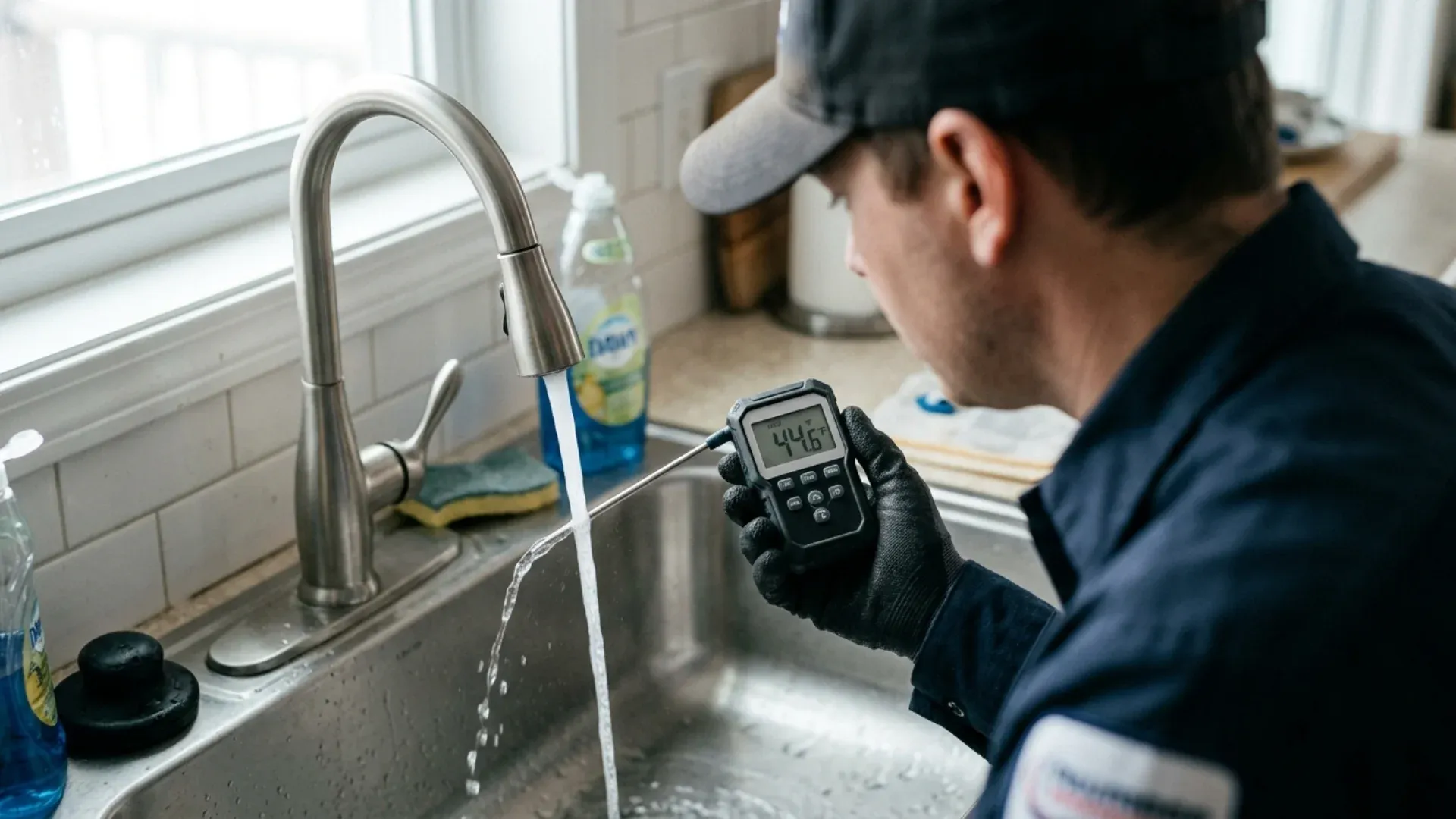
Temperature rise is the difference between the water coming into your house and the temperature you want at the tap.
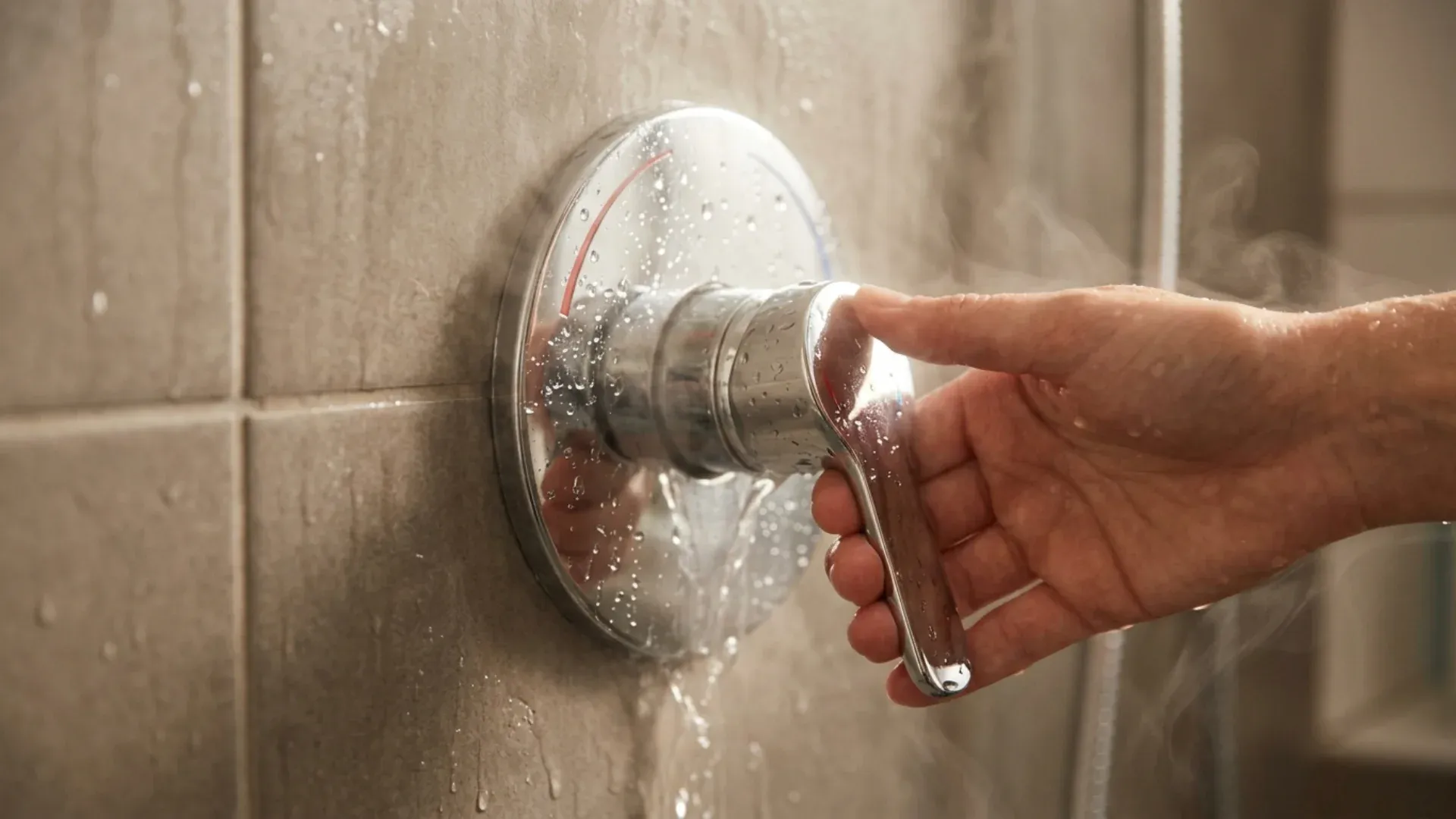
In summer, incoming water around here sits comfortably in the upper fifties. If you want 120 degrees at the shower, the unit needs to add roughly sixty degrees. Manageable. In the middle of a Redmond January, after weeks of cold rain soaking into the ground, that incoming water drops into the forties. Now the unit has to add seventy five or eighty degrees to the same water, through the same heat exchanger, at the same instant you are standing under it.
A tankless has a fixed amount of heating power. It cannot manufacture more. So when the required rise goes up, the only thing it can do is slow the water down. That is the mechanism behind every complaint I have heard about a disappointing tankless in this region. The unit is working correctly. It was matched to summer conditions.
What a 6.5 GPM Tankless Water Heater Really Delivers in Winter
Here is where the marketing gets quietly misleading.
Manufacturers publish peak flow ratings at a modest temperature rise, often somewhere in the thirty five to forty five degree range. That is an honest number under those conditions, and those conditions describe a mild climate in spring. Look further down the same spec chart, at the column for a seventy five degree rise, and the number drops substantially. A unit advertised in the six to seven gallon range on the front of the box frequently lands in the three to four gallon range in a genuine Pacific Northwest winter.
Three and a half gallons per minute is one strong shower. Add a dishwasher and you are splitting it. That is the "cold water sandwich" your neighbor complained about, and it is not a defect. It is a sizing decision that was made off the wrong column.
How to Size a Tankless Water Heater for the Way Your Household Actually Uses Hot Water
Sizing is not about square footage or bedroom count, which is how it gets estimated over the phone. It is about simultaneous demand at your worst hour of the week.
Running Your Real Peak Demand: Two Showers, a Dishwasher, and a Laundry Load
Picture a Tuesday morning in your house rather than an average day. Two showers running while someone starts the dishwasher and a load of laundry goes in. That is your design condition, and it is what the unit has to survive.
Modern low flow showerheads pull somewhere near two gallons per minute each. A dishwasher and a washing machine each draw meaningfully on top of that. Add it up honestly and most families land between four and six gallons per minute at peak. Now compare that against the winter rated output, not the summer number, and you will see immediately why so many Eastside homes end up needing a larger unit than the online calculator suggested.
There is a second option worth knowing about: two smaller units installed in parallel, or a dedicated unit serving one end of the house. In some layouts that is more sensible than a single oversized appliance.
Why Older Education Hill Homes and Newer Overlake Builds Need Different Sizing
The house matters as much as the household.
Older homes around Education Hill and the established Redmond neighborhoods often have longer, less direct pipe runs, sometimes with narrower supply lines and a water heater tucked into a garage or utility corner far from the primary bathroom. Long runs mean more standing cold water in the pipe and a longer wait, which is where a recirculation system stops being a luxury and starts being the thing that makes the whole upgrade feel worthwhile.
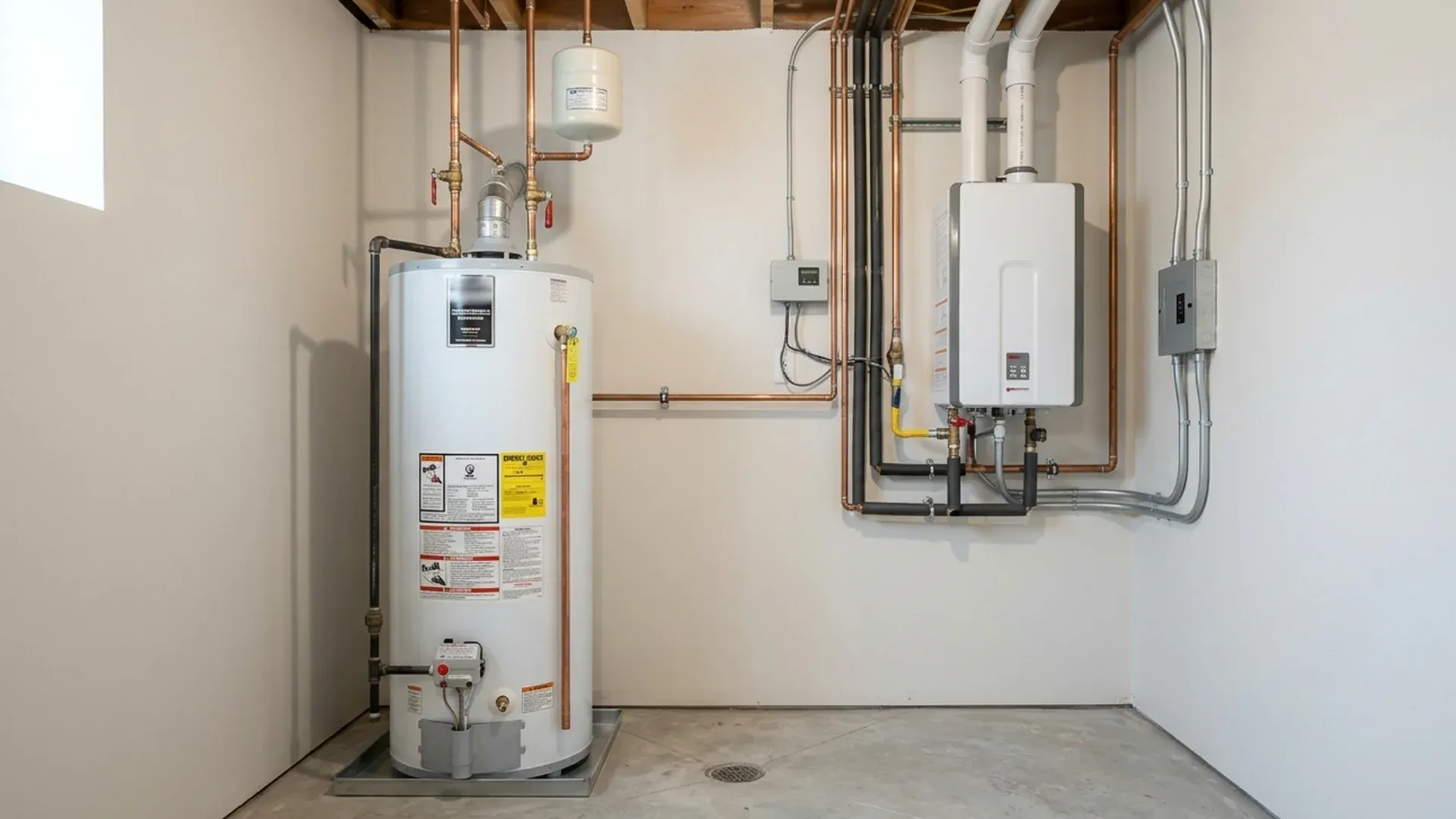
Newer construction around Overlake and the more recent developments tends to have tighter, better planned runs and more capable gas service. Those homes usually get a cleaner result from a single well matched unit. Same brand, same model, two different outcomes, decided by the house rather than the appliance.
What Has to Be True About Your Redmond Home Before Tankless Makes Sense
I would rather tell you this before an install than after. A tankless is an excellent appliance in the right house, and a frustrating one in the wrong house.
Gas Line Capacity and Venting: The Two Things That Decide Feasibility
A gas tankless demands a large burst of fuel while it runs. Many homes were piped for a conventional tank that sips gas slowly, and the existing line simply cannot deliver the volume a tankless needs at peak. That is a plumbing and gas fitting question, and it has to be answered before anything is ordered, not discovered on installation day.
Venting is the second gate. Tankless units use sealed, dedicated venting that has to run to an approved exterior termination. Where the unit can physically live in your home is often decided by where that vent can legally go, not by where you would prefer it.
Neither of these is a dealbreaker on its own. Both are reasons an accurate quote requires someone standing in your utility space. That is the core of a proper tankless water heater evaluation.
Annual Flushing and Eastside Water Quality: The Maintenance Nobody Mentions
Tankless units need an annual descaling flush. That is not optional maintenance, it is the difference between a unit that lasts two decades and one that fails early with a restricted heat exchanger and no warranty support.
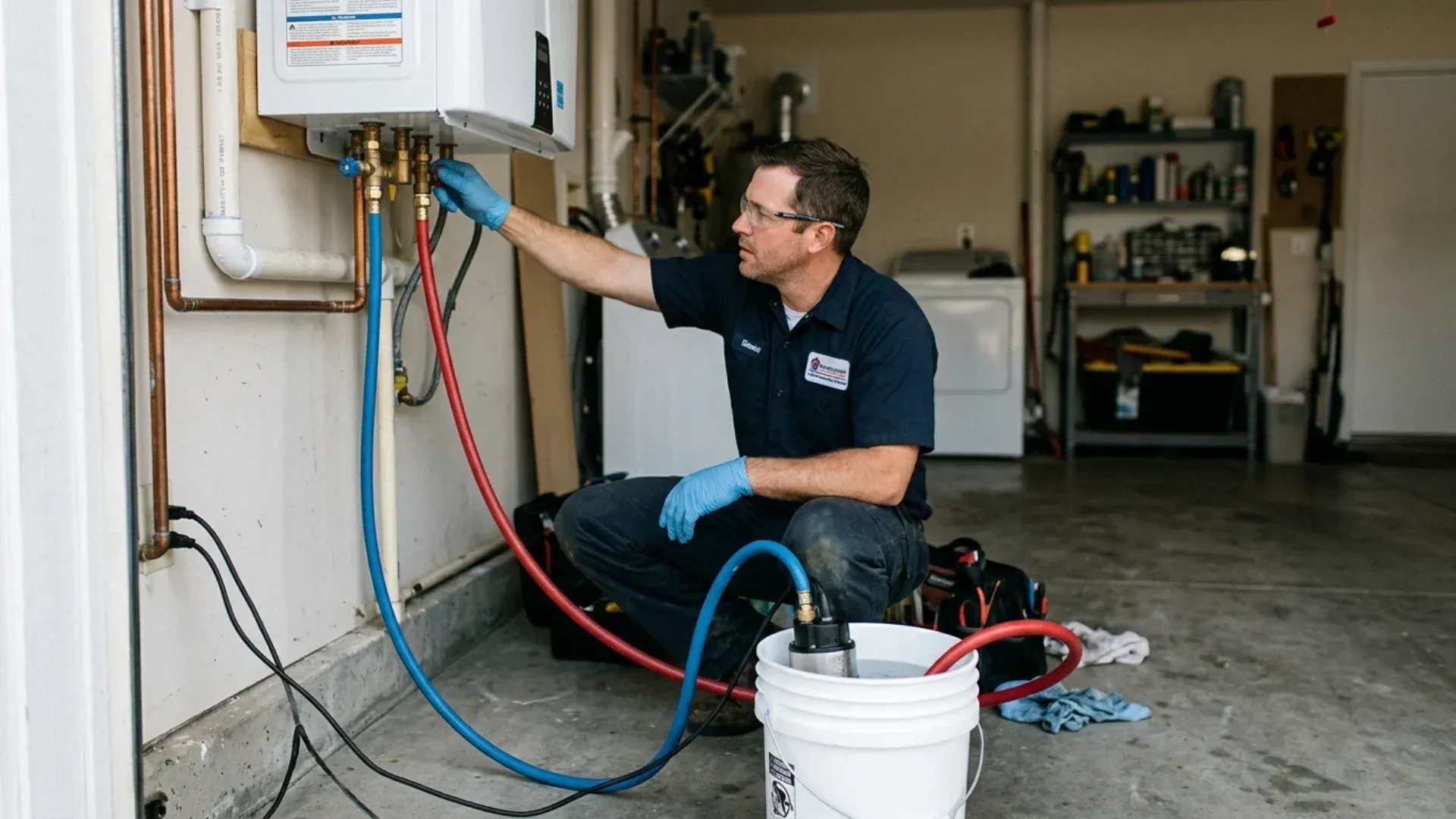
Our regional water is not brutally hard, but minerals still accumulate in a narrow heat exchanger over years of operation. Anyone selling you a tankless without explaining the flushing requirement is leaving out something you deserve to know.
When We Tell Redmond Homeowners to Keep Their Tank Water Heater
Sometimes tankless is the wrong call, and we will say so.
If your gas service would need a significant upgrade, if the venting path is genuinely difficult, if your household hot water use is modest and predictable, or if you are planning to sell within a couple of years, a high quality tank unit is often the better decision. There are also cases where the honest recommendation is simply a well executed water heater installation of a conventional unit, or a repair on the existing one if it has life left. We would rather do the right job than the bigger one.
The number on the front of a tankless box was measured somewhere warmer than here. What decides your experience in a Redmond winter is temperature rise, and that comes down to how cold the water arriving at your house gets in January and how much of it your family wants at the same time. Get those two numbers right and a tankless is genuinely excellent: endless hot water, a reclaimed corner of the garage, and a unit that outlives two tanks. Get them wrong and you will notice it every single winter morning.
Before you commit to a model, let us measure your real peak demand, incoming water temperature, gas capacity, and venting path in person. Schedule a free in-home tankless sizing assessment and get a recommendation based on your house instead of a spec sheet.

 Your Privacy Choices