
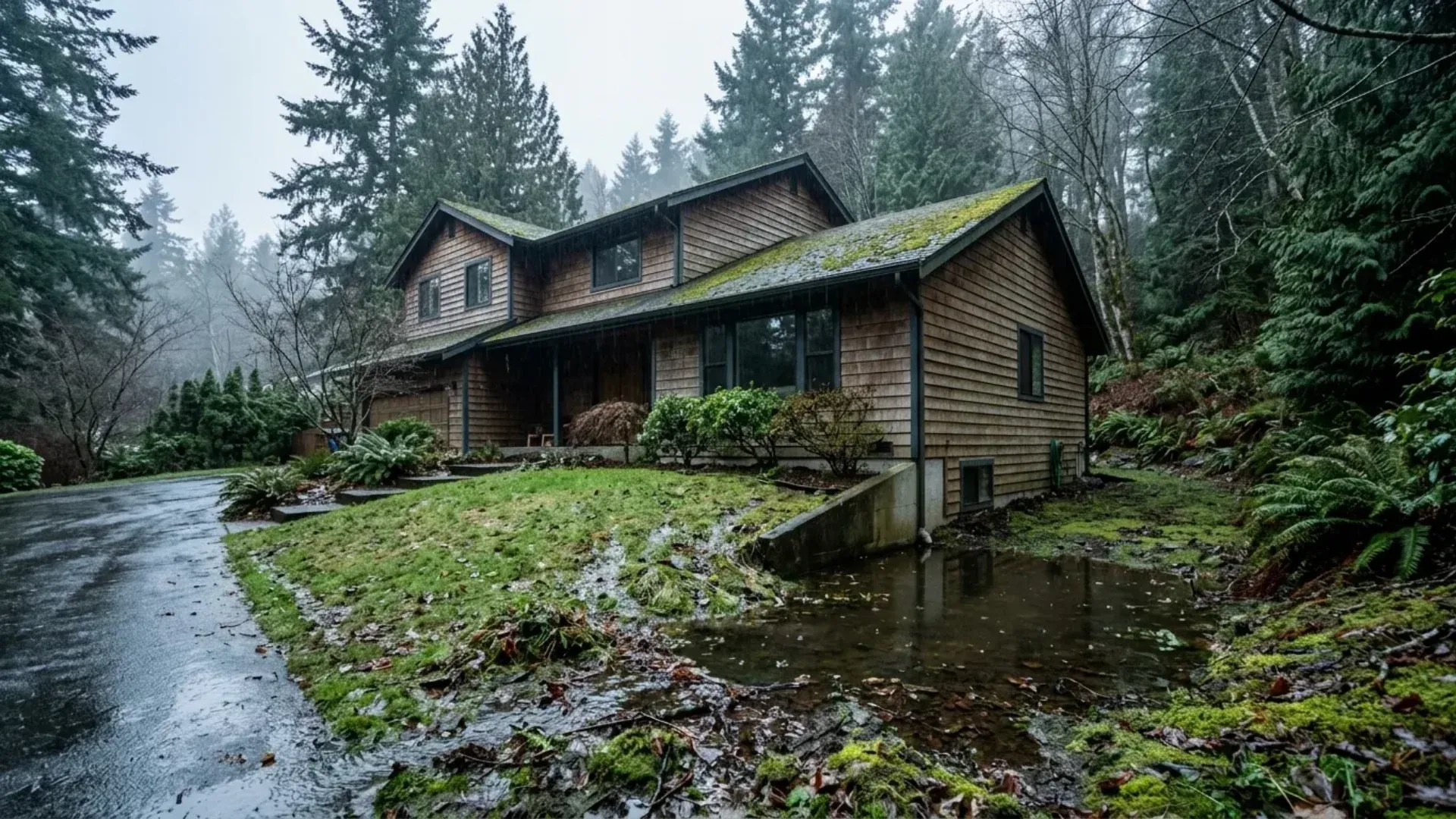
You already know what December looks like in Woodinville. Rain stops being weather and becomes a season. Your pump kicks on, then kicks on again, and you start wondering how much more of that it has left in it.
Most of the pumps we end up replacing did not die of old age. They died because of a discharge problem nobody had checked in years.
Why Sump Pumps Fail in Woodinville During Winter Atmospheric Rivers
Failure here is seasonal and it is predictable. The pump does not suddenly get weaker in December. The ground around it changes, and the pump that was adequate in September is suddenly running a shift it was never rated for.
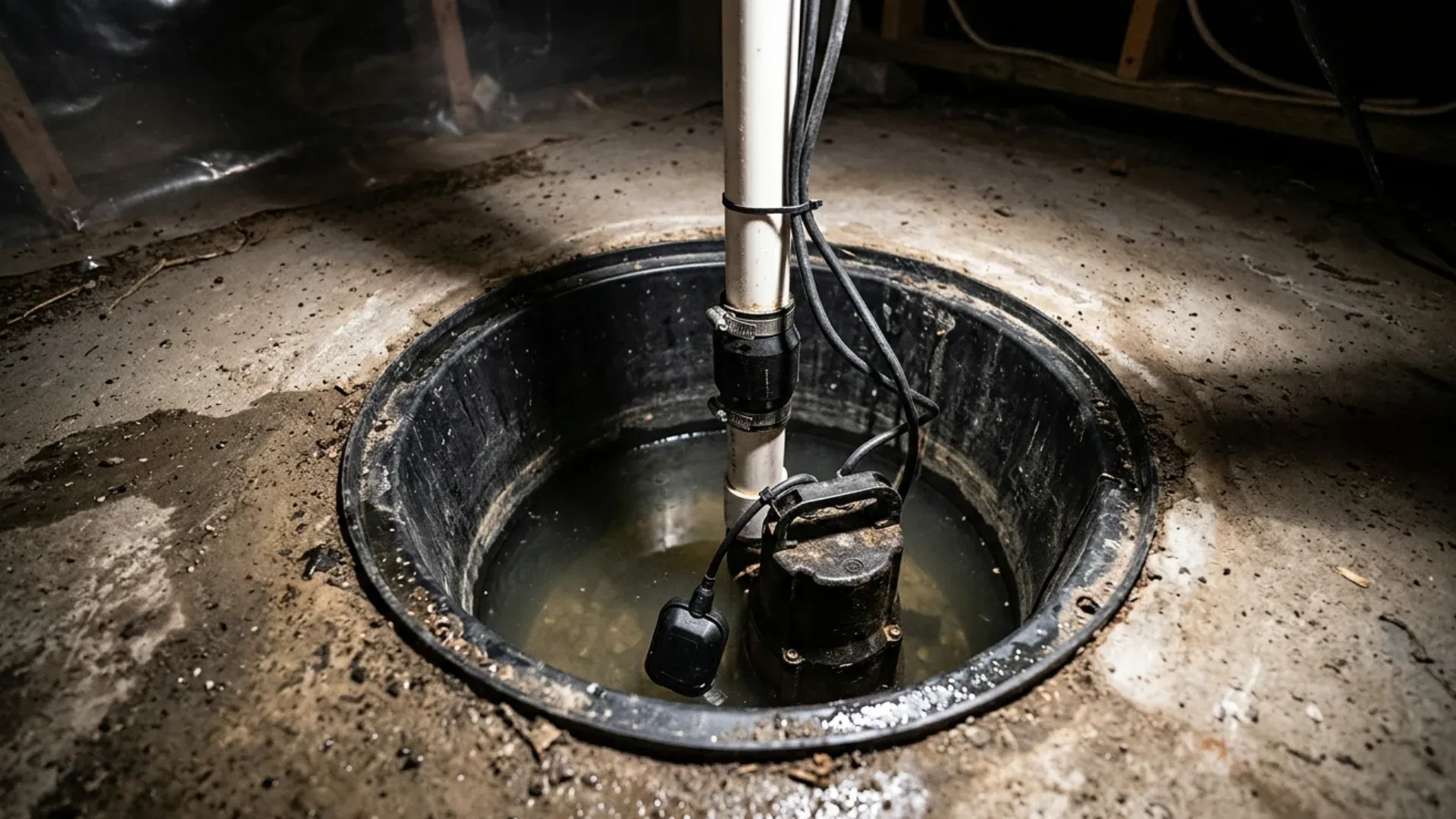
What Weeks of Atmospheric River Rain Do to the Woodinville Water Table
An atmospheric river is not a storm. It is a conveyor belt of moisture that parks over the region and unloads for days. The important part for your basement is not the total inches. It is that the soil never gets a chance to drain between events.
Once the ground is saturated, every additional inch of rain has nowhere to go but sideways and down, straight toward the lowest point on your property. If your house sits at that low point, your sump pit becomes the drain for your whole yard and, frankly, for some of your neighbor's yard too. That is the moment a pump that cycled four times an hour starts cycling every ninety seconds.
Motors are rated for duty cycles. Run one at ten times its normal load for three straight weeks and the failure is not bad luck. It is arithmetic.
Sammamish Valley Floor vs. Hollywood Hill: Two Different Groundwater Problems
I want to separate these, because homeowners on opposite sides of Woodinville keep getting the same generic advice for two completely different problems.
Down on the valley floor near the Sammamish River, the issue is a high water table. Groundwater sits close to the surface year round and rises with sustained rain. Pits fill from below, steadily, and they refill fast after the pump shuts off. If your pit is empty for ten seconds before water starts seeping back in, that is what you have.
Up on Hollywood Hill and the slopes around it, the issue is usually perched water moving laterally. Rain hits the hillside, travels along a hard soil layer, and hits your foundation from the uphill side. That produces a different pattern: the pit stays quiet for hours, then fills violently during and just after heavy rain.
Same pump, same checklist online, two problems that need different solutions. One needs capacity. The other needs the water intercepted before it reaches the foundation.
Where Your Sump Pump Discharge Water Is Legally Allowed to Go in King County
The pump is only half the system. The discharge path is the other half.
Why Connecting a Sump Pump to the Sanitary Sewer Is a Code Violation
Every so often we open a crawl space and find a sump discharge tied into the sanitary sewer line. Usually it was done decades ago by someone trying to solve the problem quickly and out of sight.
It is not allowed. The EPA classifies sump connections to sanitary sewers as illicit inflow, in the same category as illegally connected roof drains. King County Code Title 9.12 prohibits illicit connections to the conveyance system. The reasoning is straightforward: sanitary lines are sized for wastewater, not for thousands of gallons of groundwater arriving during the exact storm when the whole system is already at capacity. That is how basements back up with something far worse than rainwater.
If you inherited this from a previous owner, you inherited the liability with the house. It is worth finding out before a real estate transaction finds out for you.
If You Are on Septic in Woodinville, Your Sump Pump Is Fighting Your Drainfield
A large share of Woodinville properties are still on septic, and this deserves its own warning.
Sending sump water into a septic tank is a bad idea for a reason that is easy to miss. The water itself is clean. The problem is timing. Your drainfield disperses effluent into the surrounding soil, and during an atmospheric river that soil is already saturated and accepting almost nothing. That is precisely when your sump is pushing the most volume. You are asking a drainfield that is underwater to absorb hundreds of extra gallons an hour.
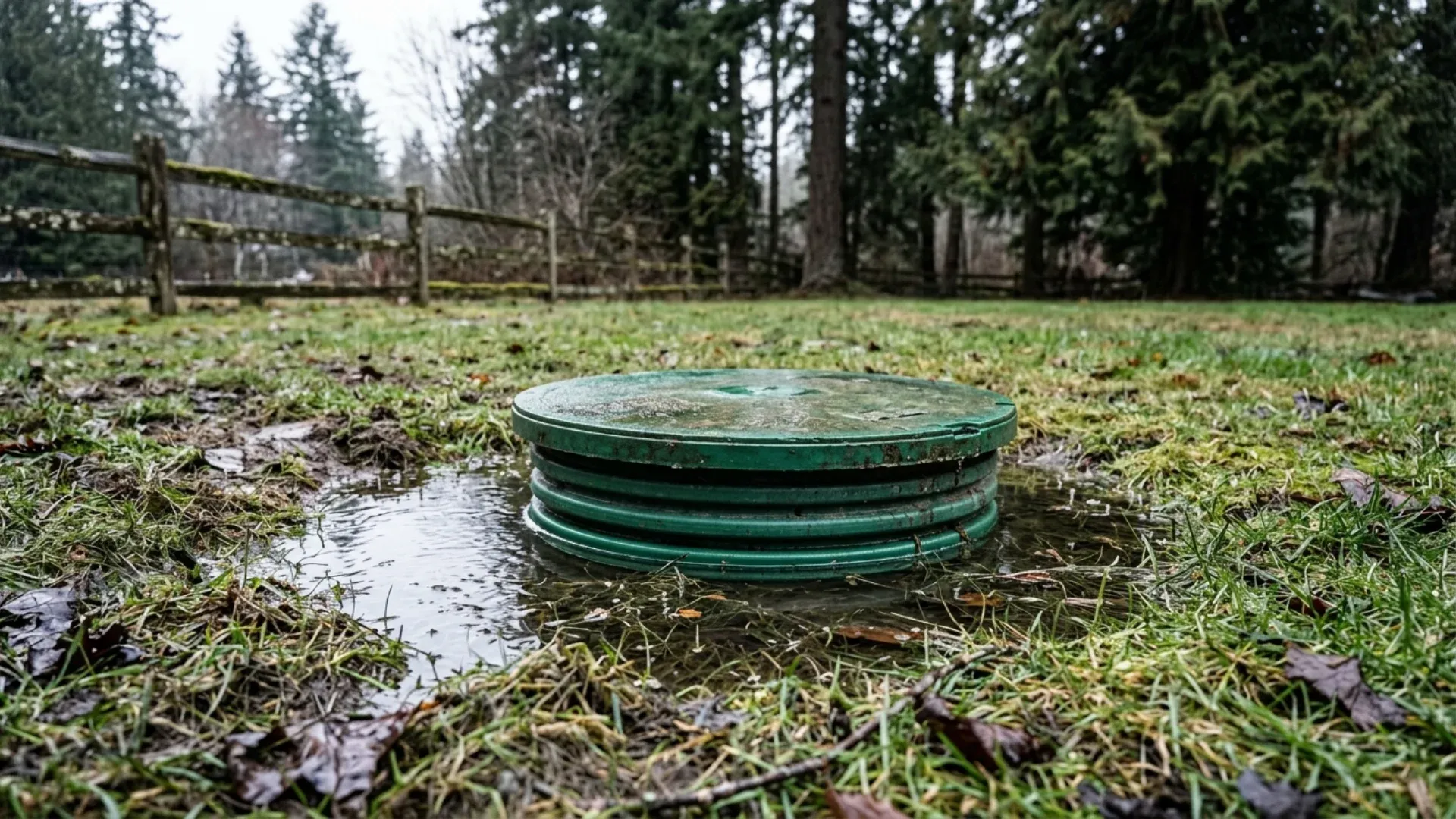
The result is not a slow decline. It is hydraulic overload, surfacing effluent, and in bad cases a drainfield that needs replacing years earlier than it should have. A sump pump handles clean groundwater and belongs in a stormwater path. A sewage ejector pump is the one that ties into the sanitary or septic side. They look similar in a pit and they are not interchangeable.
Frozen, Crushed, and Buried Discharge Lines: How to Spot the Problem From Your Yard
Most discharge failures are visible from outside if you know where to look. Walk the line while it is dry out.
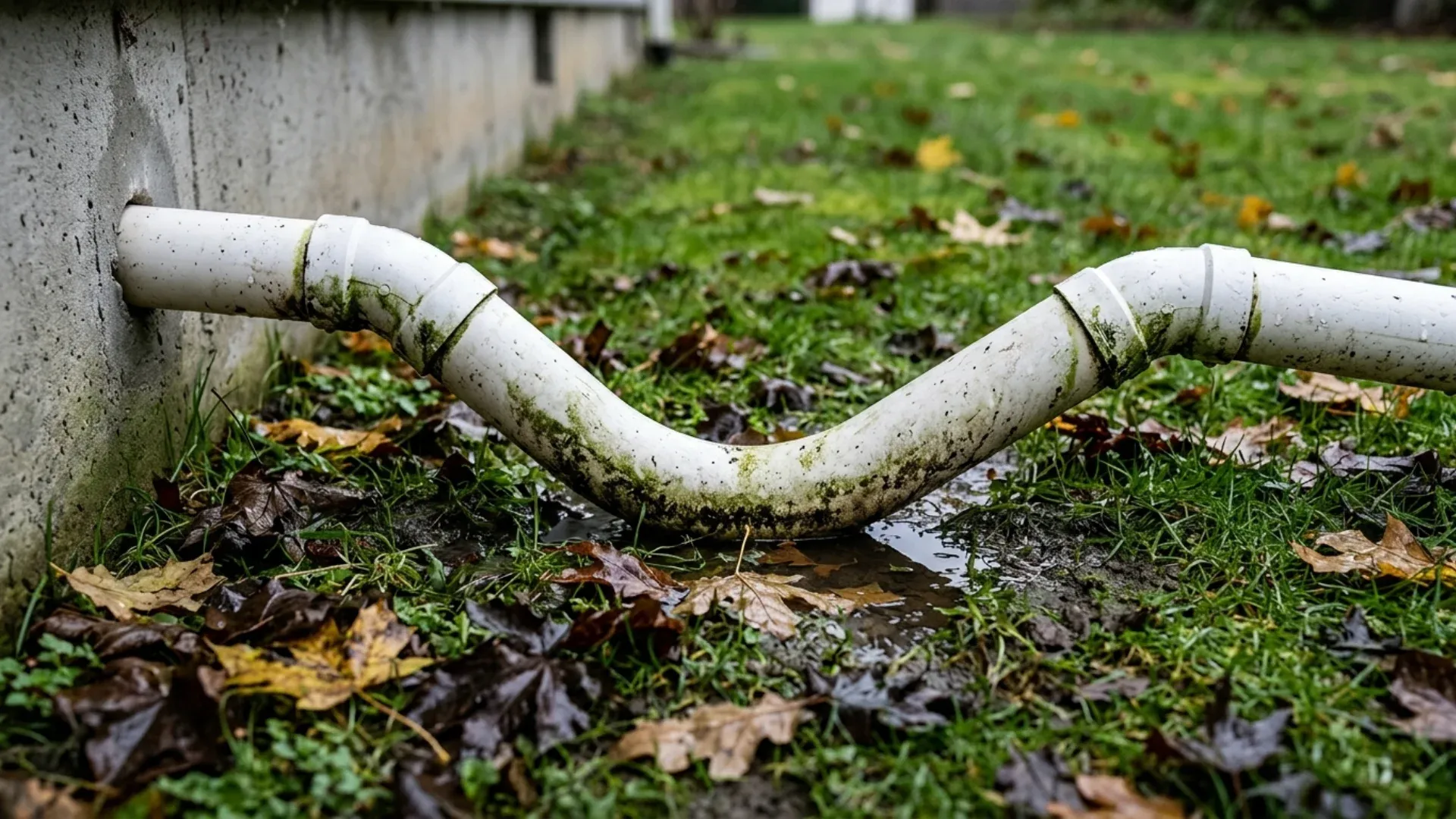
Find the outlet. If you cannot find where the water exits, that is finding number one. Buried outlets settle, fill with silt, and get rerouted by landscaping crews who did not know what the pipe was. Check whether the outlet is above grade or sitting in a low spot that floods, because a submerged outlet means the pump is fighting backpressure every cycle. Look for crushing where a driveway, a parked trailer, or a raised bed crosses the line.
Then check the slope. Any section that dips holds standing water, and in a December cold snap that section freezes solid. The pump then runs against a sealed pipe, trips its thermal overload, and stops. Your pit fills while the pump sits there doing nothing wrong except being blocked.
The Pre-Winter Sump Pump Check That Actually Predicts Failure
The bucket test everyone recommends tells you one thing: the float works today. Useful, but it does not tell you whether the pump survives February. These two checks do.
Cycle Counting: The One Number That Tells You If Your Pump Is Failing
Stand near the pit during steady rain and time it. Note how long the pump runs and how long it rests.
A healthy setup runs for 10-20 seconds and then rests for a meaningful stretch. If it runs for two seconds and shuts off, then repeats every few seconds, the float is set too tight or the pit is undersized, and you are burning through start cycles at a rate that will kill the motor. Motors fail on starts far more than on runtime.
If it runs for well over a minute and the water level barely drops, the pump is losing capacity, the impeller is fouled, or the discharge is restricted. And if it runs continuously without the level moving at all, stop and call someone. That is a pump that will be dead within days.
Do this in October. The whole point is to catch it while you still have options.
What a Professional Sump Pump Inspection Catches That a Bucket Test Cannot
When we service a sump pump system, we are measuring things you cannot see from the top of the pit: actual amp draw against the motor's rating, check valve performance under load, whether the discharge diameter matches the pump's output, and whether the pit itself is sized for your inflow rate.
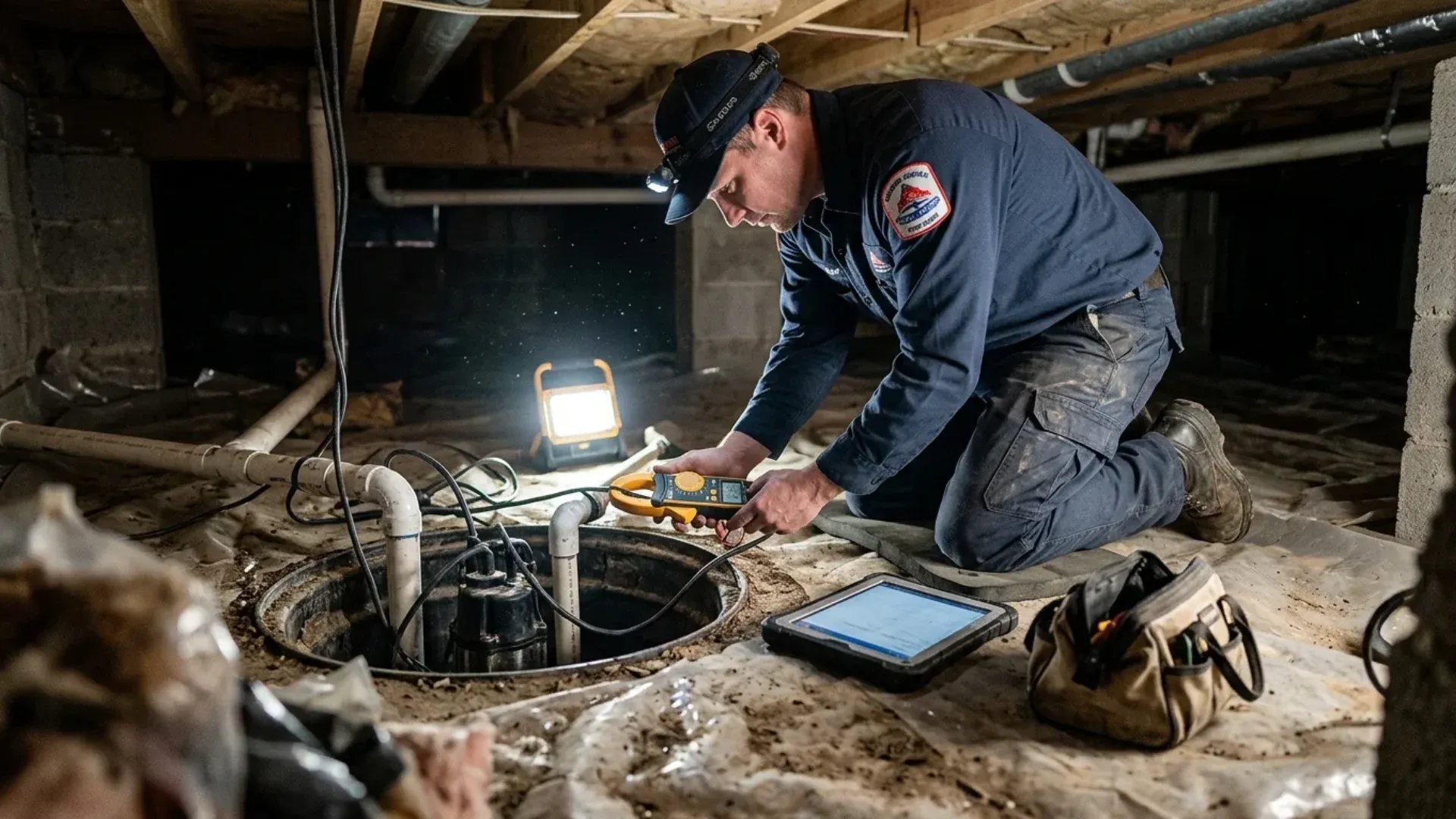
We also look at how the rest of the house handles water, because sump problems rarely travel alone. Slow perimeter drains and backed up lines push more water toward the pit, which is why a drain cleaning visit in Redmond before the rainy season often does more for a struggling pump than replacing the pump would. If the picture is unclear, a full plumbing inspection and diagnosis sorts out what is a pump problem and what is a drainage problem.
We work throughout Woodinville and the surrounding Eastside, and the valley and hillside properties genuinely need different answers.
Your Sump Pump Is Not The Weak Link In Most Woodinville Homes.
The path the water takes after it leaves the pump is. A discharge line that freezes, floods, or drains somewhere it legally should not is the reason healthy pumps fail in the middle of the wettest weeks of the year. The good news is that all of it is checkable now, in dry weather, on a normal weekday. Count your cycles, walk your discharge line, and confirm where that water ends up. October decisions are cheap. February decisions are not.
Want a second set of eyes before the rain settles in? Schedule a free estimate at Benjamin Franklin Plumbing for a pre-winter sump pump and drainage assessment, and we will tell you plainly whether your system is ready or not.

 Your Privacy Choices