
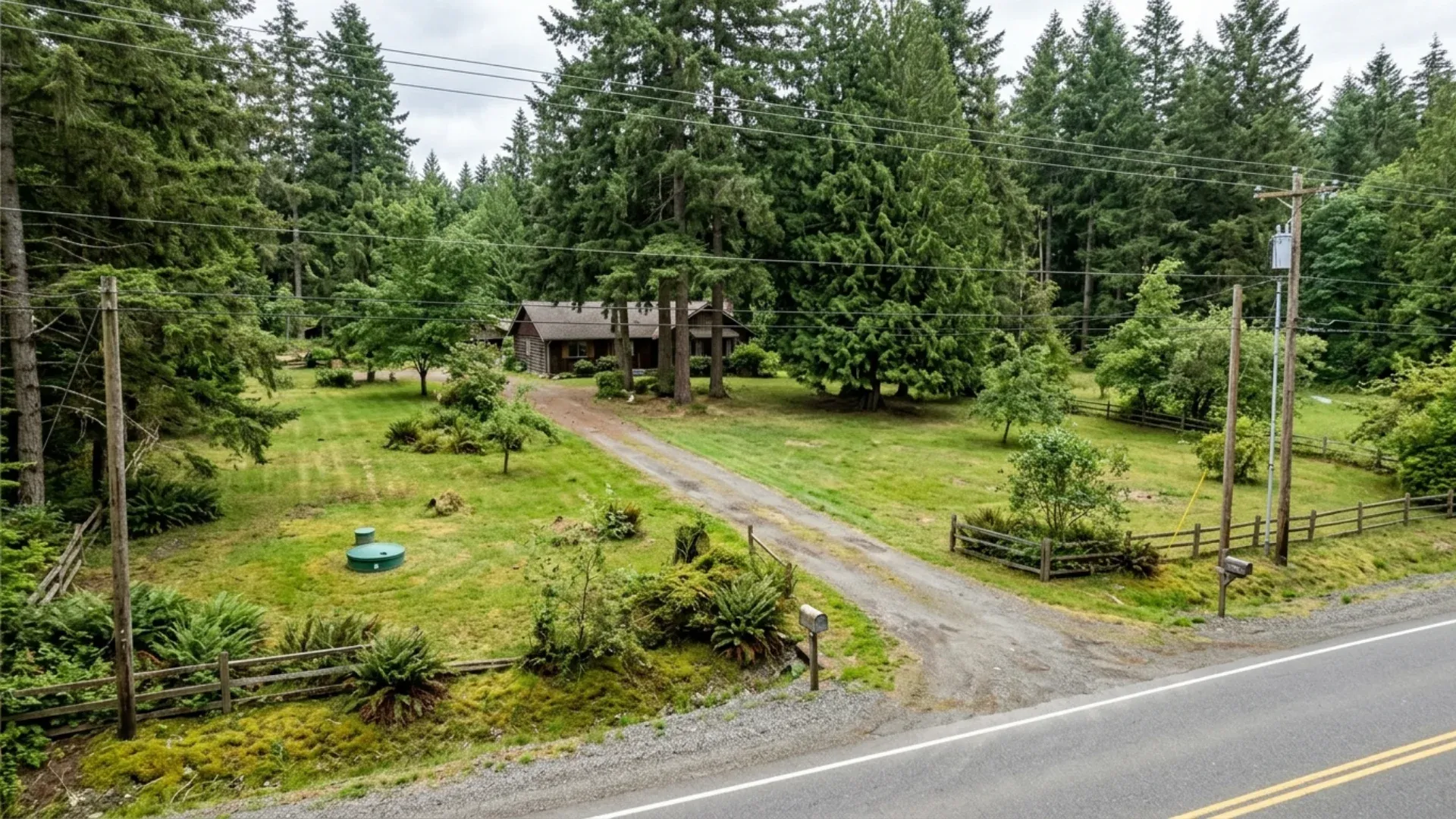
Woodinville homeowners looking at a septic to sewer conversion: the first question is not what it costs. It is who has authority over your address. A Woodinville mailing address can sit inside the city, in unincorporated King County, or over the line in Snohomish County, and that single fact changes your permit path, your inspections, and your timeline.
If a sewer recently reached your street and you are weighing it against a new drainfield, start here.
Before Anything Else, Find Out Which Woodinville Jurisdiction Your Property Sits In
This sounds like paperwork trivia. It is not. It determines which agencies you are dealing with, and getting it wrong at the start is how projects stall.
City of Woodinville, Unincorporated King County, or Snohomish County: Why the Mailing Address Misleads
The City of Woodinville states this plainly on its own FAQ: not all Woodinville addresses are inside the city. Plenty of properties carry a Woodinville mailing address while sitting in unincorporated King County, and others sit north of the county line in Snohomish County.
That matters because the permitting authority follows the actual jurisdiction, not the envelope. A King County property works through King County permitting and Public Health's on-site sewage program. A Snohomish County property works through Snohomish County Planning and Development Services. A property inside city limits goes through the city's permit center for what falls under city authority.
Water and sewer utility service, meanwhile, comes from the Woodinville Water District for much of the area, which is a separate entity from all three of the above. So a single conversion can involve a utility district, a county health authority, and a local permitting jurisdiction. Knowing which ones apply to you is genuinely step one.
How to Confirm a Sewer Main Is Actually Within Reach of Your Lot
Eligibility comes down to whether there is a sewer main you can reasonably connect to and whether your property can be served by it.
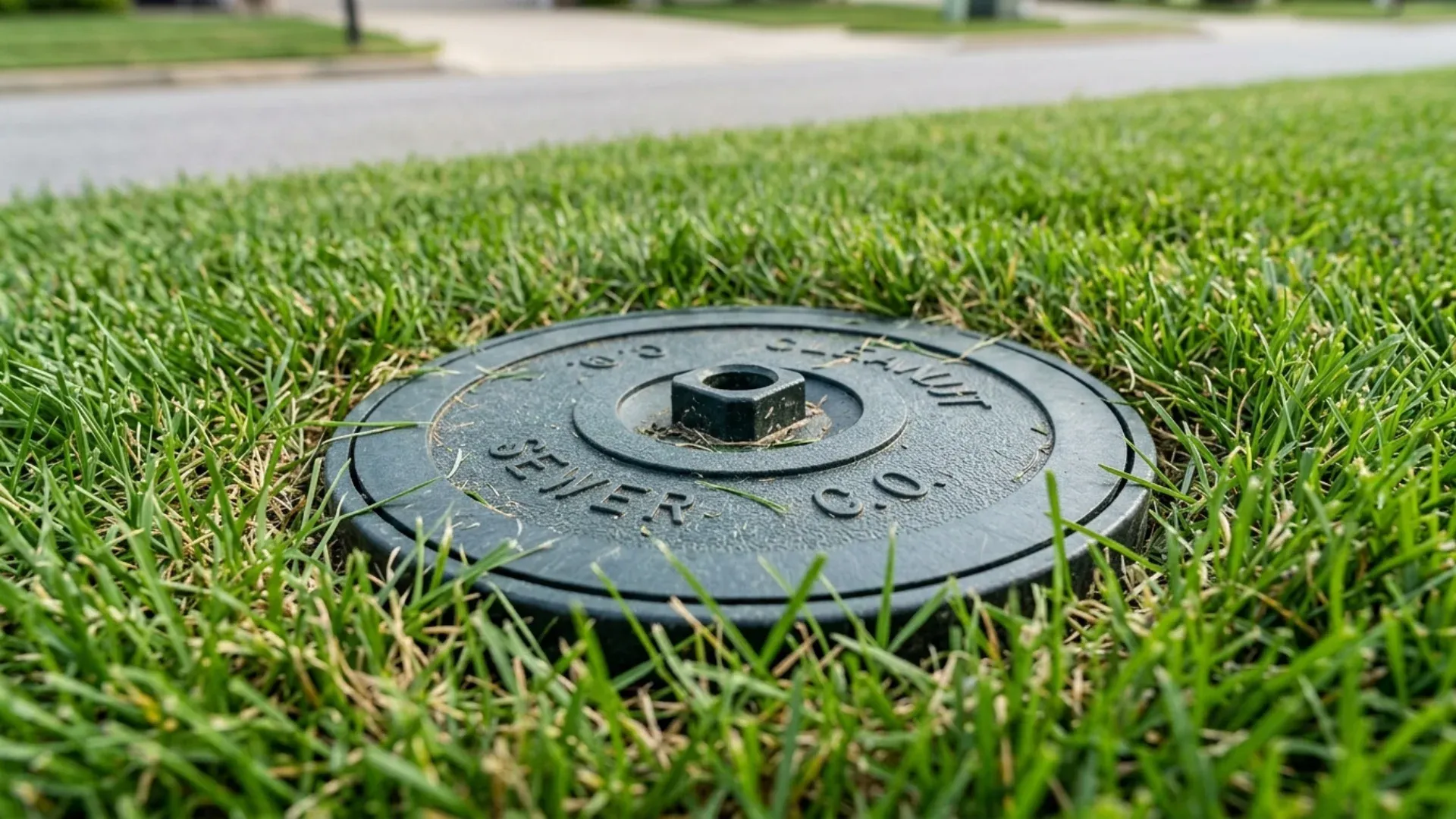
Two things need checking. First, whether a main actually fronts or reaches your property, which the utility district can confirm from its own maps. Second, whether your house sits within the distance the district allows between its cleanout in the right of way and the building, and whether the grade works. Sewer laterals rely on gravity, so a house sitting below the main is a different and more involved project than one sitting above it, potentially requiring a pump system.
Do not take a neighbor's connection as proof your lot qualifies. Mains run in specific alignments and a property two doors down can have a completely different answer.
The Septic to Sewer Conversion Approval Sequence in the Order It Really Happens
The Woodinville Water District Side: Service Agreement, Side Sewer Permit, and Preconstruction Meeting
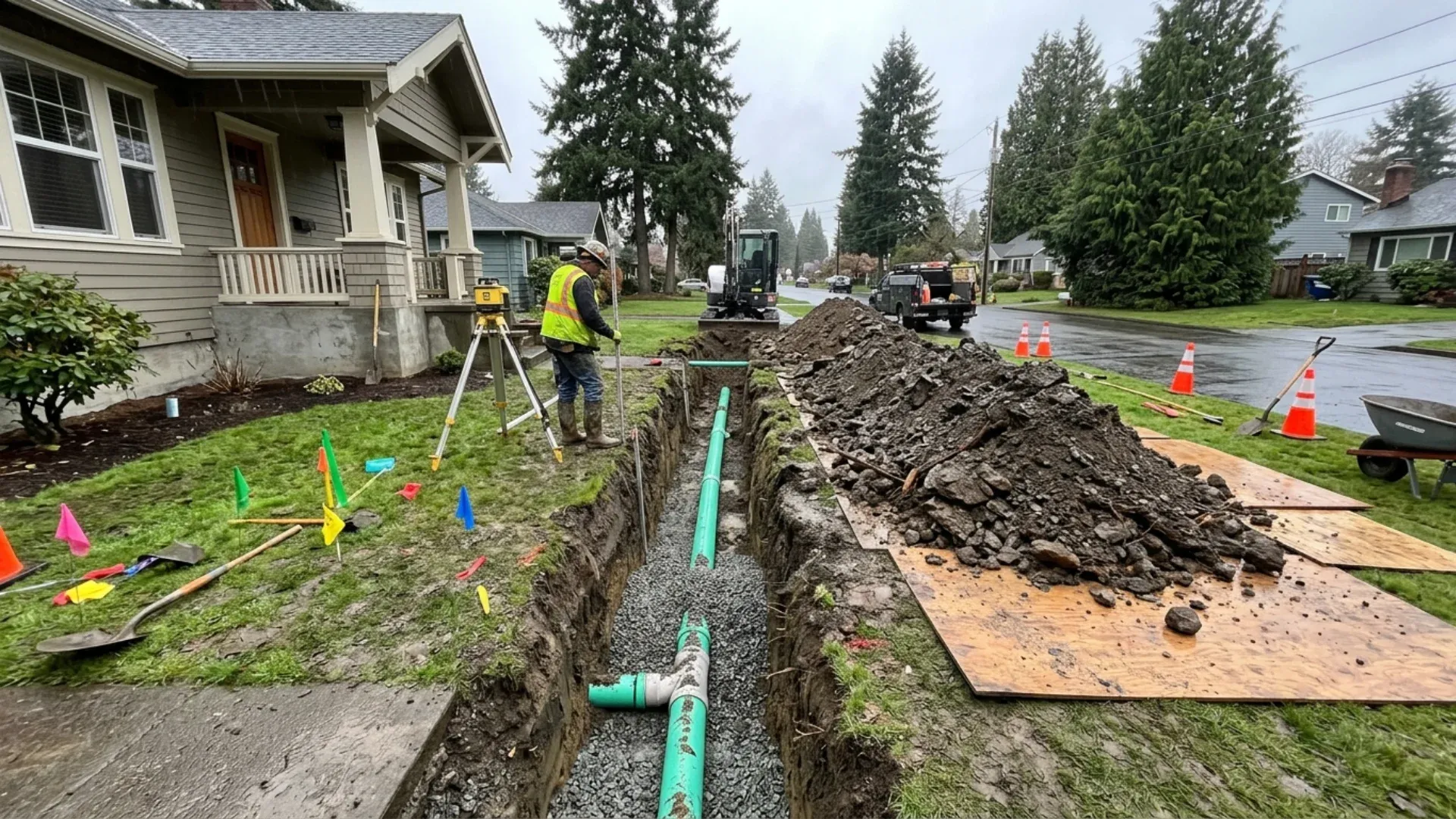
For properties served by the Woodinville Water District, the sequence runs roughly like this. A service connection agreement gets signed. The connection from the main, including a cleanout in the right of way, gets installed and approved. Then, at the district office, a King County Residential Sewer Use Certificate is completed, the side sewer permit is signed, and fees are paid.
The detail that catches people out is what comes next. You are not permitted to install the private side sewer until the permit is in hand and a preconstruction site meeting has taken place with the district inspector and your contractor present. District standard plans govern how the private side sewer is built, including materials, cleanout placement, and backwater valve requirements.
None of that is unusual for utility work. It is simply a sequence with gates in it, and every gate is a scheduled appointment with someone else's calendar. Confirm current requirements directly with the district, since forms and fee schedules are updated periodically.
Decommissioning the Old Septic Tank Under Washington State Code
The old tank does not just get left in the ground.
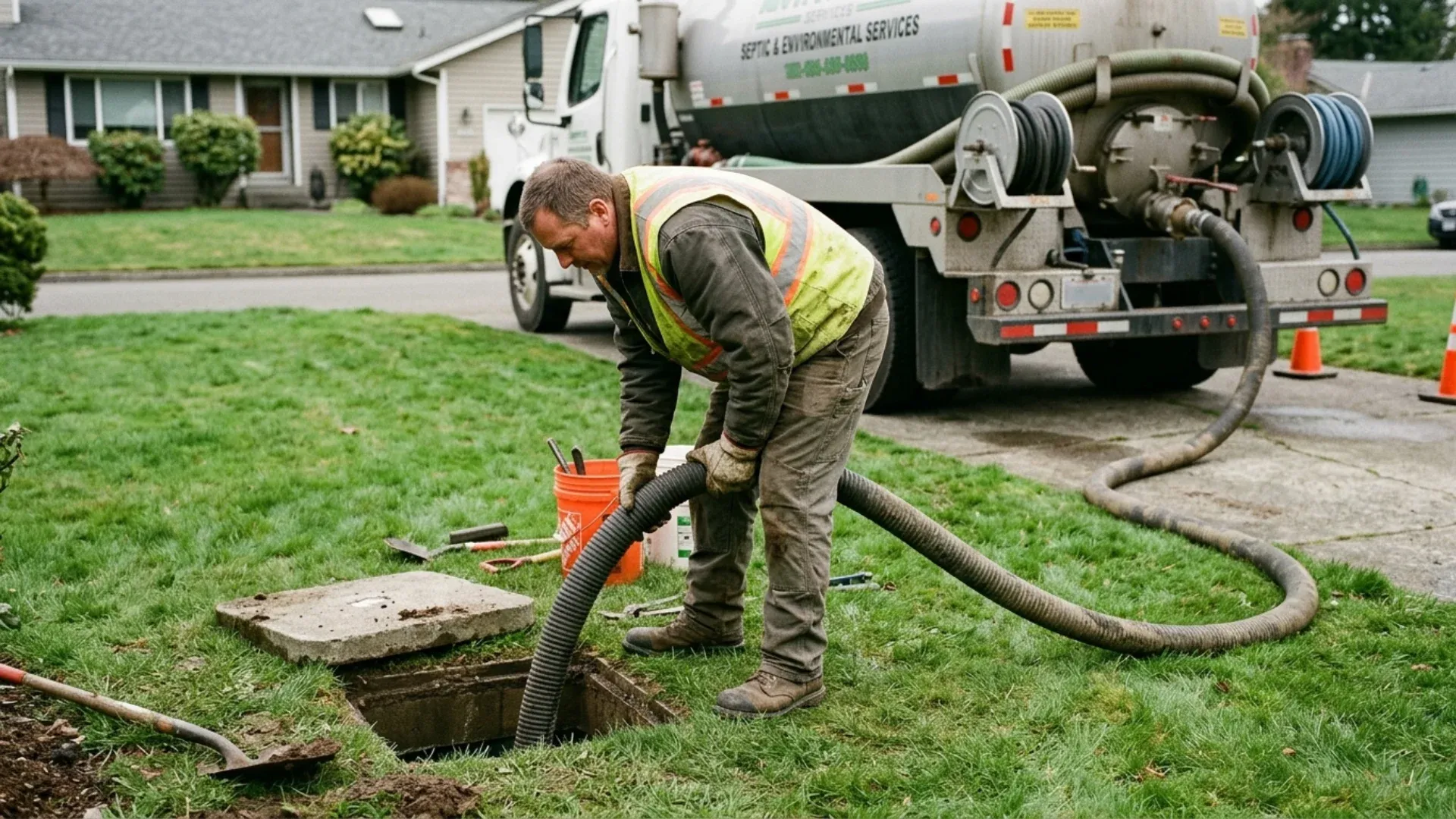
Washington state code governs how on-site sewage systems are decommissioned, and in general that means the tank is pumped by a licensed hauler, the lid or structure is dealt with so the tank cannot be a collapse hazard, and the work is documented with the county health authority. In many jurisdictions the septic decommissioning approval is tied into the side sewer permitting process rather than being an afterthought, which is exactly why it belongs early in your planning rather than at the end.
This is also why a homeowner should not be disconnecting or filling a tank independently. The abandonment needs to be done correctly and documented, and that documentation is what a future buyer's inspector will ask for.
Why 3 to 5 Days Describes the Excavation, Not the Project
You will see contractors advertising conversions completed in a handful of days. That number is not dishonest, it is just describing the wrong thing.
Three to five days is roughly the physical work: trenching the lateral, making the connection, tying in, decommissioning the tank, and backfilling. The full project timeline from decision to completed conversion runs considerably longer, and permit processing across multiple agencies is where nearly all of that time goes. Plan in weeks and months, not days, and be skeptical of anyone who quotes you the trenching time as the project time.
Where site conditions allow, trenchless sewer methods can reduce yard disruption significantly, which is worth raising early because it can influence how the route is planned.
Deciding Between a Septic to Sewer Conversion and a New Drainfield
If your system is functioning and connection is voluntary, this is a genuine decision with legitimate arguments on both sides. Here is how I would frame it.
What Tips the Decision: Lot Size, Tank Age, ADU Plans, and Resale
Lean toward conversion when your tank and drainfield are approaching end of life anyway, because you are choosing between two projects rather than adding one. Lean toward conversion when your lot is constrained and a replacement drainfield would consume usable land or is difficult to site at all. Lean toward it strongly if you are considering an ADU, an addition, or anything that increases the bedroom count, since septic capacity is tied to design flow and an expansion can force the issue regardless.
Resale matters too. Buyers and their lenders treat a sewer connected property as a simpler proposition than a septic property with an unknown maintenance history.
Lean toward keeping septic when the system is relatively young and well maintained, when the main is far from your lot, and when connection is genuinely voluntary in your area with no pending requirement. There is no prize for converting early if nothing is pushing you.
What Changes Inside Your House After the Conversion
Usually less than people expect. Your interior drain, waste, and vent plumbing generally stays as it is, since the change happens where the building drain exits the house and heads out to the lateral.
Some homes need more attention: properties with a sump or ejector setup, homes where the existing building drain is old or in poor condition, or situations where the new lateral's grade requires rerouting. It is also a sensible moment to camera the existing line, because if that pipe is failing you would rather know before it is connected to a new sewer than after. That work sits alongside our sewer line replacement and installation services.
What Drives the Number on Your Estimate
I am not going to give you a figure here, because any number published on a website for this kind of project is a guess, and the guesses circulating online for our area tend to be well off.
What I can tell you is what moves it: the distance from your house to the connection point, the depth and grade of the run, what is in the way including driveways, mature trees, retaining walls, and other utilities, whether the route allows trenchless methods, soil and water table conditions, the permit and connection fees set by each agency, and the decommissioning of the existing tank. Two neighboring properties can land in very different places on all six.
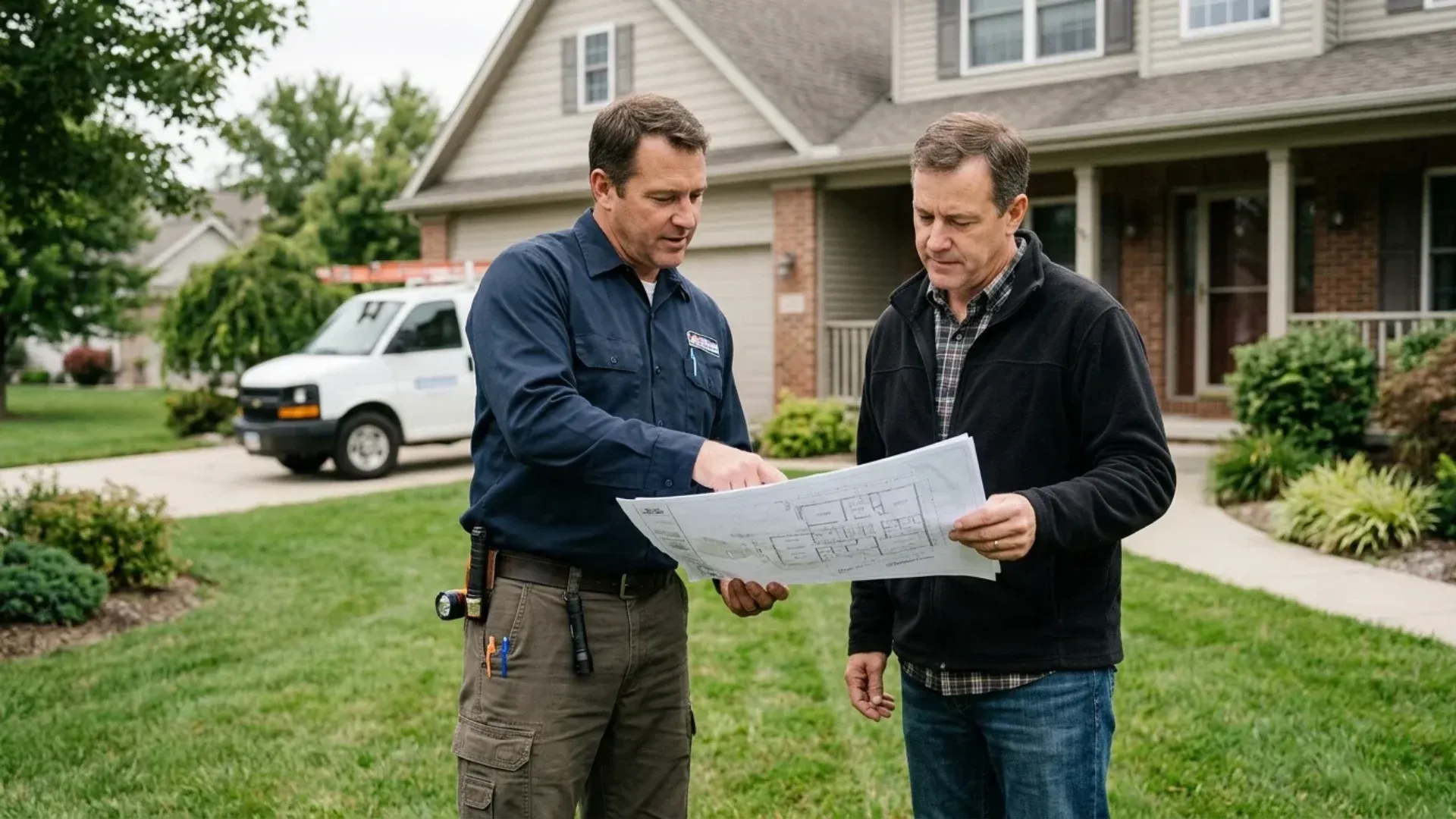
The estimate comes after someone walks the property, confirms jurisdiction, and verifies where the main actually is. Our sewer services team handles the plumbing side of these projects and coordinates with the district and county on the rest. We work throughout Woodinville and the surrounding Eastside.
Septic To Sewer Conversion Is One Of The Larger Decisions You Will Make About Property
It goes badly when it starts with a price and well when it starts with facts. Confirm which jurisdiction you are actually in. Confirm the main is within reach and that the grade works. Understand that the permit sequence has gates in it and that the tank decommissioning belongs in the plan from day one, not at the end. Do that and the project becomes a series of scheduled steps rather than a source of expensive surprises.
Schedule a free on-site conversion assessment at Benjamin Franklin Plumbing. We will confirm your jurisdiction, check reach and grade to the main, and lay out the actual sequence before anyone talks scope or numbers.

 Your Privacy Choices