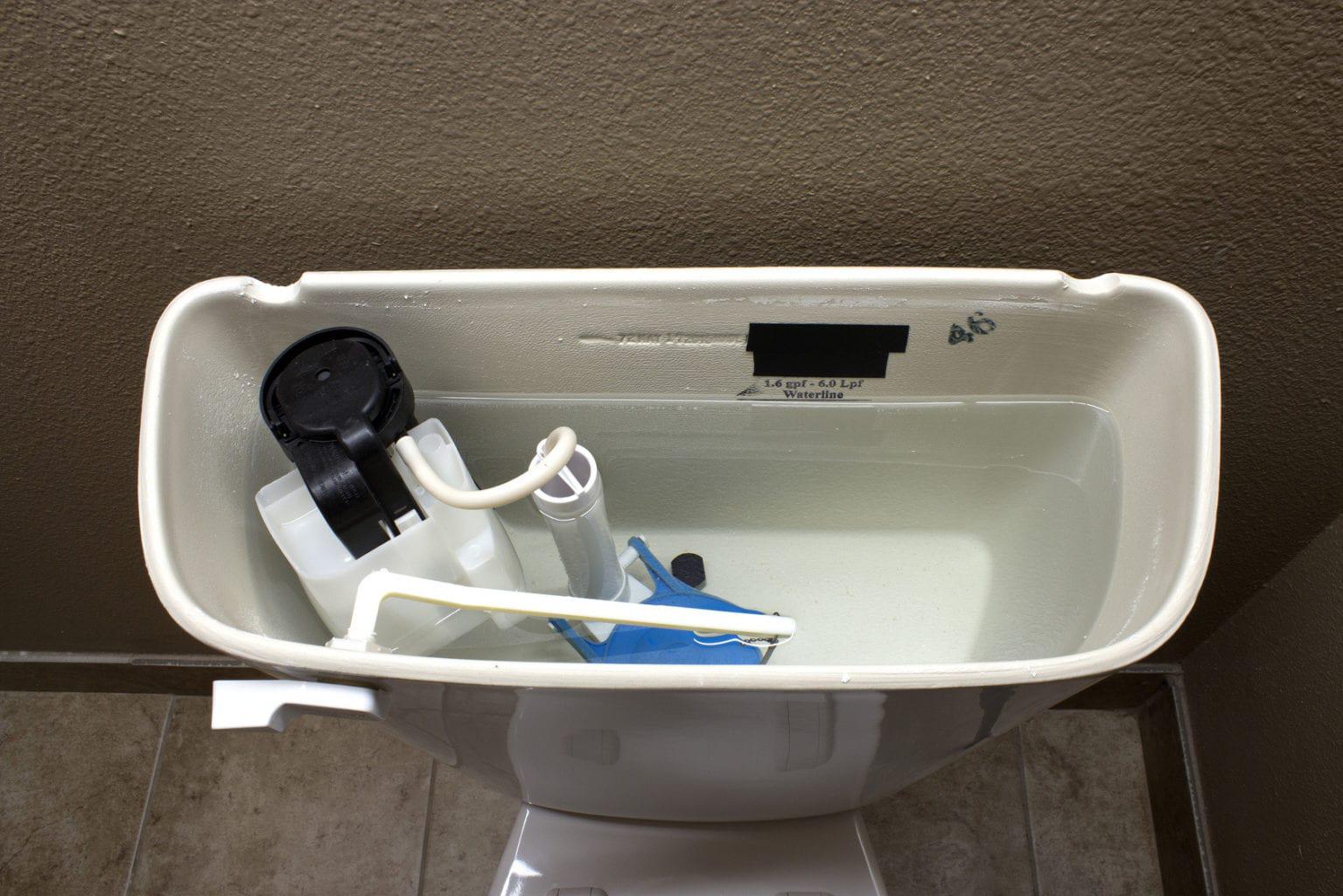
A toilet that keeps running after a flush is leaking water from the tank into the bowl. The most common cause is a worn flapper. The other causes are a flapper chain that's the wrong length, a float set too high, a dirty or failing fill valve, or a leaking flush valve seat. The EPA estimates a running toilet wastes about 200 gallons of water a day, so this is worth fixing quickly.
How a Toilet Tank Actually Works
When you push the handle, a chain pulls a rubber flap (the flapper) up off the bottom of the tank. Water rushes into the bowl. As the tank empties, a float drops down and opens the fill valve, which refills the tank. When the water level rises back up, the float rises with it and shuts the fill valve off. The flapper sits back down and seals the tank. When any part of that sequence doesn't complete cleanly, the toilet keeps running.
What's Causing It
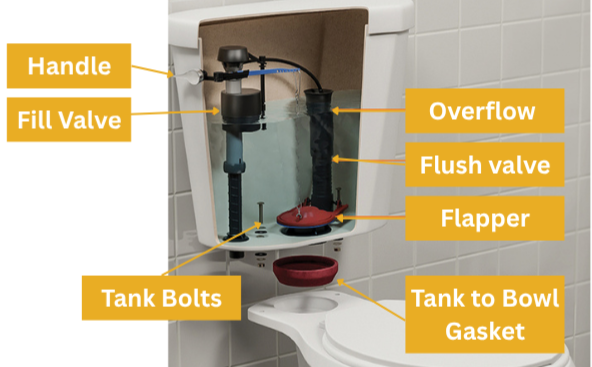
Worn or warped flapper. This is the most common cause. The flapper is a rubber disc that seats over the flush valve opening at the bottom of the tank. Over time, rubber breaks down, warps, or gets coated with mineral deposits and can no longer make a clean seal. When that happens, water trickles from the tank into the bowl constantly, and the fill valve runs to keep up. Flappers typically last 3 to 5 years. In-tank cleaner tablets accelerate the breakdown significantly and should be avoided entirely.
Flapper chain is too long or too short. The chain connects the flapper to the flush handle arm. If it's too long, excess chain can fall between the flapper and the flush valve opening, holding the flapper slightly open and letting water drain into the bowl continuously. If it's too short, it pulls the flapper up at an angle or prevents it from seating flat, which breaks the seal. The correct amount of slack is about one to two links when the flapper is closed.
Float is set too high. The float tells the fill valve when to stop adding water. If the float is adjusted too high, the water level in the tank rises above the top of the overflow tube, which is the tall plastic pipe in the center of the tank. Once that happens, water spills into the overflow tube and drains into the bowl continuously. You'll hear the fill valve running without stopping. Look in the tank while it's running. If water is pouring into that center tube, the float needs to come down.
Sediment or debris in the fill valve. The fill valve can collect sediment or debris in its cap, preventing the valve from shutting off fully after the tank fills. This is especially common in older homes or after the water supply line has been turned on and off recently, which can shake loose sediment from the pipes. Cleaning or replacing the fill valve cap often fixes this.
Leaking flush valve seat. If you've replaced the flapper and the toilet is still running, run your finger around the rim of the flush valve opening where the flapper seats. If you feel roughness, pitting, or mineral buildup on that rim, the flapper can't make a clean seal no matter how new it is. If the plastic is warped or cracked, the flush valve itself needs to be replaced.
What You Can Try First
Start with the dye test. Add a few drops of food coloring to the tank and wait 15 to 30 minutes without flushing. If color shows up in the bowl, the flapper is leaking.
Check the chain. It should have about one to two links of slack when the flapper is sitting flat. Trim or adjust it if it's too long or preventing the flapper from closing.
Look at the water level. If water is flowing into the overflow tube, the float needs to come down. On most fill valves there's a small adjustment screw at the top, or a clip on the float arm you can slide down. The water level should sit about an inch below the top of the overflow tube.
Feel the flapper. Reach into the tank (the water is clean) and feel the rubber. It should be soft and pliable. If it feels stiff, tacky, or crumbly, replace it. Replacement flappers are available at any hardware store. Shut off the supply valve at the wall behind the toilet, flush to empty the tank, pull the old flapper off the ears of the overflow tube, snap the new one on, reconnect the chain, and turn the water back on.
When to Call a Plumber
If any of this feels daunting or overwhelming, call us. If you have tried replacing several components and are still having trouble with the toilet, give us a call. We can take care of it in one visit.
Through the growth Winston-Salem has seen since the booms of the 90s and early 2000s, homes often have original toilet hardware that's 15 to 20 years old. While municipal water isn’t terribly hard, parts wear out over time. If the flapper is failing on an older toilet and the flush valve seat is pitted, it may make more sense to replace the whole flush valve assembly rather than keep chasing the same symptom. A plumber can tell you in five minutes whether a flapper will fix it or whether something more is needed.
A running toilet is one of the most common reasons your water bill spikes without an obvious explanation.
What This Costs
Our toilet repair service starts at $189. A flapper swap takes about 20 minutes. A fill valve or flush valve replacement takes a bit longer but is still a quick visit. We'll tell you upfront what the job involves before we start.

 Your Privacy Choices