Quick answers
- Sediment buildup: Dirt and minerals collect at the bottom of your tank over time and take up space that used to hold hot water. This is the most common cause in Winston-Salem homes.
- Failing heating element: Electric water heaters have two heating elements. If one goes out, your tank only heats half the water it used to.
- Wrong size tank: A 40-gallon tank that worked fine for two people may not keep up when you add a third or fourth person to the house.
- Quick fix to try: Run the hot water until it goes cold and note how many minutes it takes. That number helps a plumber diagnose the problem fast.
- Long-term option: A tankless water heater makes hot water on demand so you never run out.
If your shower goes cold after five or ten minutes, something is wrong. A water heater in good shape should keep up with a normal morning routine. When it stops doing that, one of three things is usually going on: sediment has built up in the tank, a heating element has failed, or the tank is just too small for your household.
Here is how to tell which one is causing your problem.
Sediment buildup
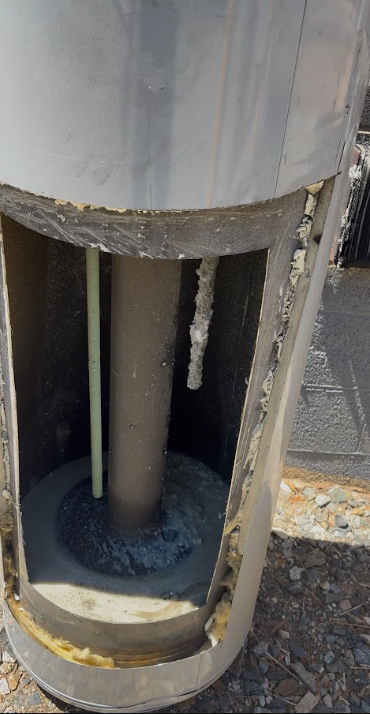
This is the most common cause we see in Winston-Salem and Kernersville homes. Water from the tap carries minerals and dirt. Over time, those settle at the bottom of your water heater tank. The longer you go without flushing the tank, the more that layer builds up.
When sediment fills the bottom of the tank, two things happen. First, it takes up space that used to hold hot water, so your tank holds less than it used to. Second, it sits between the burner and the water, making the heater work harder and heat more slowly. A 50-gallon tank with heavy sediment may only deliver 30 gallons of hot water before it runs cold.
Signs of sediment buildup include a popping or rumbling sound from the tank while it heats, water that takes longer to get hot at the tap, and a water heater that runs almost constantly. If you hear those sounds, check out our guide to Water Heater Noises to see what they mean.
Flushing the tank once a year clears sediment and keeps the heater running like it should. If it has never been flushed, a plumber may need to inspect the tank first to see if it is worth flushing or if it is time for a replacement.
A failing heating element
Electric water heaters have two heating elements, one near the top of the tank and one near the bottom. The bottom element does most of the work. When it fails, the top element tries to pick up the slack but can only heat the top half of the tank. You get hot water at first, then it goes cold fast once that top portion is used up.
This one is easy to spot. If your hot water runs out twice as fast as it used to and the tank itself is not that old, a failed bottom element is the likely cause. Replacing a heating element is a straightforward repair and much cheaper than replacing the whole unit.
Gas water heaters do not have elements but can have a failing thermocouple or burner that causes the same short-hot-water problem. Either way, the fix is a repair, not a full replacement, in most cases.
A tank that is too small
Water heater tanks are sized for the number of people in a home. A 40-gallon tank works for one or two people. A family of four usually needs 50 gallons or more. If your household has grown or you added a bathroom, your old tank may simply not be able to keep up anymore.
A good rule of thumb is 10 to 15 gallons of tank capacity per person. If your math does not line up, that could be the problem for you.
What about a tankless water heater?
Tankless water heaters heat water as you use it instead of storing it in a tank. That means you do not run out. They cost more upfront but last longer and use less energy than a standard tank. If you are already looking at replacing an old unit, it is worth asking about tankless as an option.
That said, tankless is not the right fit for every home or every budget. A plumber can tell you if your gas line or electrical panel can support one and what the total cost would look like. We will have a full breakdown in our upcoming water heater cost guide. Ultimately, electric tankless water heaters are rarely an economical option for our area but your situation may allow it.
When to call a plumber
Try noting how many minutes of hot water you actually get. Share that number when you call. It helps narrow down the cause before anyone sets foot in your home.
Call a plumber if your hot water runs out faster than it used to, if the tank is more than 10 years old, if you hear rumbling or popping from the tank, or if the water is warm but never fully hot. Any of those points to something that will not fix itself and will likely get worse over time.
We serve Winston-Salem, Kernersville, Greensboro, and the surrounding area. If your hot water is not keeping up, call us and we will figure out why. 336-203-2348

 Your Privacy Choices