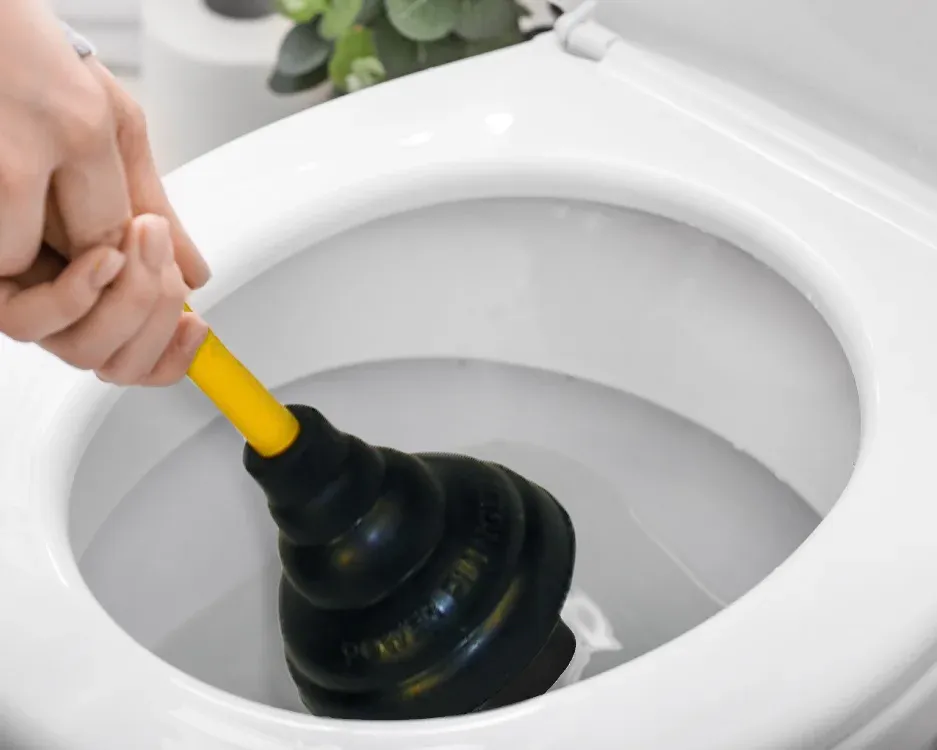
Most toilet clogs happen right at the trap, the curved section of porcelain just below the bowl. Something got stuck, and now water can't get through. In most cases, a plunger will clear it. If it won't budge after several tries, you likely need a toilet auger. If the toilet is still backed up after that, the problem is deeper in the drain line. PRO TIP: If the water is clear and not draining, the clog is likely further down the line and not in the toilet itself.
What's Causing It
Too much toilet paper or the wrong material. This is the most common cause. Thick or quilted toilet paper, paper towels, or wipes (even ones labeled "flushable") don't break down the way regular toilet paper does. They bunch up in the trap and stop flow cold.
A partial clog that finally sealed off. Sometimes waste builds up gradually. The toilet seemed fine for weeks, and then one flush put it over the edge. If your toilet has been draining slower than normal lately, that's usually what happened.
Something fell in or was flushed. Kids' toys, bottle caps, wrappers, feminine products, cotton swabs. These items don't dissolve. Once they're in the trap, a plunger alone won't move them. They need to be pulled out or broken loose with an auger.
A problem further down the line. If water is backing up in other drains at the same time, or if you hear gurgling in the sink when you flush, the clog isn't in the toilet. It's in the main drain line. That's a different job entirely.
What You Can Try First
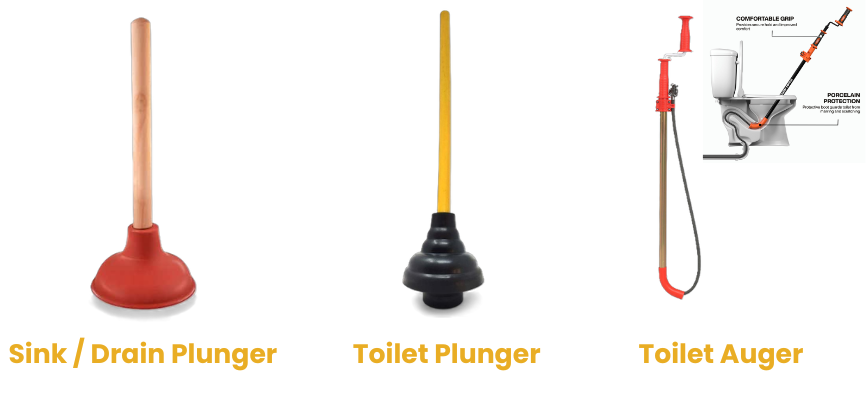
Use a toilet plunger, not a sink plunger. A toilet plunger has an extended rubber lip that folds out from the bottom to fit the toilet drain opening. A sink plunger is flat on the bottom and is designed for flat drains like sinks and tubs. It can't get a seal on the curved toilet drain, so it won't generate real pressure. Using the wrong type makes the job much harder than it needs to be.
To use it correctly, push down slowly to get a seal around the drain opening, then work with firm, steady strokes. Don't go fast and splashy. Give it 3 to 5 pumps. If the water starts draining, let it refill and flush once to confirm it's fully clear.
If the plunger doesn't work after a few solid attempts, a toilet auger (also called a closet auger) is the next step. It's a cable tool with a curved end designed to reach into the toilet trap without scratching the porcelain. It either breaks up the clog or hooks onto whatever is causing it so you can pull it out. You can rent one at a hardware store or buy a basic model for around $30.
Do not pour chemical drain cleaner into a clogged toilet. It won't reach the clog effectively through standing water, and it can damage the porcelain and the wax ring seal at the base of the toilet. We explain why in more detail in our post on chemical drain cleaners and your pipes.
When to Call a Plumber
Call us if the toilet won't clear after plunging and augering, if you can see or suspect something rigid went down (a toy, a phone, a bottle cap), or if other drains in the house are backing up at the same time. That last one points to a main sewer line blockage, which needs camera inspection and professional equipment to clear.
If this is the second or third time in a few months, the problem is likely not in the toilet. Read about other problems that cause drains to backup to understand what a main line problem looks like and when it's time to get a camera down there.
What it Costs to Clear a Clogged Toilet
Our drain cleaning service starts at $200. A toilet clog that needs a toilet auger will start there. If we find a deeper line issue, we'll walk you through what we found and what it takes to fix it before we do anything.
Toilet clogs are one of the most common calls we get across Winston-Salem and the surrounding area. If yours isn't clearing with a plunger, don't keep forcing it. Call us and we'll have it sorted out the same day.

 Your Privacy Choices