
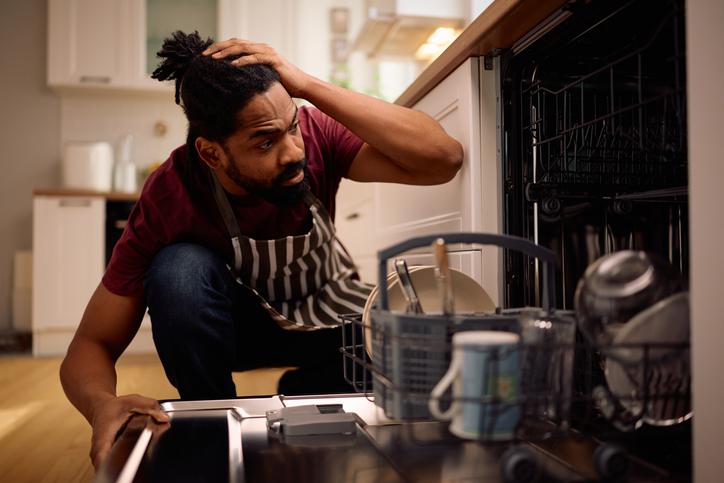
While some issues are appliance-related, many dishwasher problems are connected to your home’s plumbing system. Because dishwashers rely on both water supply and drainage, even a small issue—like a partial clog or improper hose setup—can lead to bigger problems. What starts as a slow drain can lead to cabinet damage, mold, or sewer backups if left unresolved.
If you’re already seeing signs of backups or slow drainage, it may be tied to a broader issue like a partial drain blockage or developing sewer line problem.
How Does a Dishwasher Drain? (And Why It Matters)
Your dishwasher removes dirty water through a drain hose connected to your plumbing system. This connection typically routes wastewater to one of two places:
1. Garbage Disposal Connection
- Most common in modern kitchens
- Dishwasher drains directly into the disposal unit
- Wastewater then flows into the main drain line
If your dishwasher is connected to a garbage disposal, a clog or blockage in the disposal can impact drainage.
2. Sink Drain (Tailpiece Connection)
- Used when there’s no garbage disposal
- Hose connects to a fitting under the sink
- Sends water into the same pipe as the sink drain
If your sink is draining slowly, it can prevent your dishwasher from draining.
What is an Air Gap or High Loop and Why is it Important?
Depending on local plumbing codes, systems use either an air gap (required in some areas) or a high loop:
- Air gap (mounted on the sink or countertop)
- High loop (hose routed upward under the sink)
If these are missing or installed incorrectly, you may experience backups, odors, or incomplete draining. Backflow issues are often tied to deeper drainage problems, especially if multiple fixtures are involved.
Why Is Your Dishwasher Not Draining?
A dishwasher won’t drain due to a clogged filter, blocked drain hose, garbage disposal issue, or a problem in the home’s plumbing system.
Most Common Causes of Dishwasher Drain Problems
1. Clogged Dishwasher Filter
- Traps food, grease, and debris
- Causes standing water
- Easy to clean and maintain
2. Blocked or Kinked Drain Hose
- Prevents water from exiting
- Common after installation or movement
3. Garbage Disposal Issues
- Clogs or blockages restrict flow
- Knockout plug may not be removed in new installs.
4. Sink Drain or Pipe Clogs
- Shared plumbing line causes backups
- May affect multiple fixtures
If your kitchen sink is also slow, this is likely a shared issue.
5. Air Gap Blockage
- Prevents proper drainage
- May cause water to spill near the sink
Why Is Your Dishwasher Leaking?
Dishwasher leaks are usually caused by worn door seals, loose connections, clogged drains, or excessive detergent use.
Common Leak Sources
- Damaged Door Gasket: Worn or cracked seal allows water to escape
- Loose or Faulty Hose Connections: Leads to slow leaks under cabinets
- Clogged Drain Causing Overflow: A clogged drain can contribute to backup or overflow, especially when combined with pump or float switch issues. Explore our clogged drain guide for more details.
- Incorrect Detergent Use: Excess suds lead to overflow
Why is Your Dishwasher Not Filling with Water?
A dishwasher that won’t fill is often due to a faulty inlet valve, closed water supply, or low water pressure.
Key Causes to Check
- Closed or partially closed shut-off valve
- Clogged or faulty inlet valve
- Kinked or damaged water line
- Low home water pressure
If water pressure is inconsistent throughout your home, it may point to a larger issue.
Step-by-Step Dishwasher Troubleshooting Guide
Step 1: Check for Standing Water -- Indicates a drainage issue
Step 2: Clean the Filter -- Remove debris and build up
Step 3: Inspect the Drain Hose -- Look for kinks or clogs
Step 4: Run the Garbage Disposal -- Clears shared drain pathways
Step 5: Check for Leaks -- Inspect seals and connections
Step 6: Test Water Supply -- Confirm valves are open and pressure is normal
When is it a Plumbing Problem
Signs of a Bigger Issue:
- Multiple drains are slow
- Dishwasher backs up into the sink
- Recurring clogs
- Gurgling pipes
These symptoms often indicate a deeper blockage that may require professional assistance.
How to Prevent Dishwasher Drain and Leak Problems
Simple Maintenance Tips
- Clean the filter regularly
- Avoid grease-heavy loads
- Run hot water before starting
- Use proper detergent
Long-Term Prevention
- Schedule routine maintenance
- Ensure proper drain setup
- Address slow drains early
When Should You Call a Professional?
Call a plumber if:
- The dishwasher won’t drain after cleaning
- Leaks persist or worsen
- Multiple fixtures are affected
- You suspect a deeper plumbing issue
Need Help Fixing Your Dishwasher or Drain Issue?
If your dishwasher problems are tied to a clog, backup, or plumbing issue, getting professional help early can prevent costly damage. Professional plumbers don’t just restore flow—they identify the root cause to prevent repeat failures.
Schedule an appointment with Benjamin Franklin Plumbing to diagnose the problem and get a long-term solution—fast, clean, and done right the first time.















 Your Privacy Choices