
When your water heater starts struggling to keep up, replacing it with the same type you already have can feel like the easiest choice. But if you're replacing an aging system anyway, it's worth asking a bigger question: Should you stick with a traditional tank water heater or switch to a tankless model?
At Benjamin Franklin Plumbing of Decatur, we know there's no single answer that works for every homeowner in Justin, TX. Your household's hot water demand, budget, available gas or electrical capacity, space, and long-term plans all play a role.
Both systems have legitimate advantages. A traditional tank water heater is generally less expensive and simpler to install, while a tankless water heater can provide hot water on demand, take up less space, and potentially reduce energy waste. The key is understanding how each option works before making your decision.
How Traditional Tank Water Heaters Work
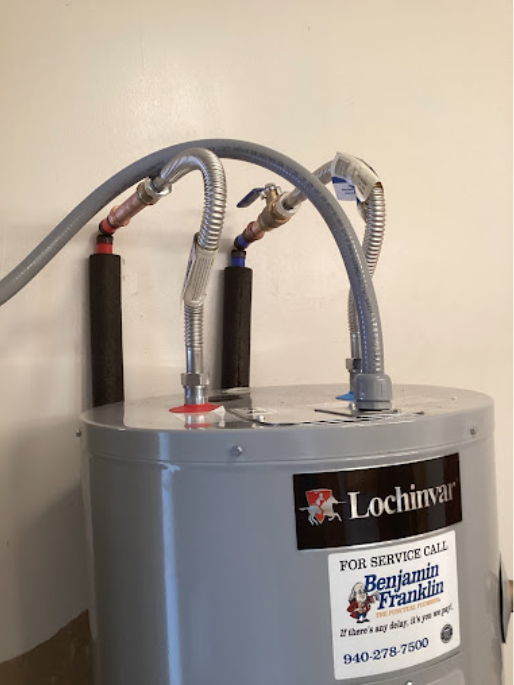
A traditional tank water heater stores a supply of heated water inside an insulated tank. Common residential models hold somewhere between 30 and 80 gallons, giving your household a reserve of hot water whenever someone turns on a faucet or starts a shower.
The system continuously maintains the water temperature. When the stored water cools below the thermostat setting, the burner or heating elements turn on to bring it back up to temperature.
This approach has been around for decades because it's straightforward and dependable. Tank water heaters are available in gas and electric models and generally have lower purchase and installation costs.
One drawback is standby heat loss. Because the water is kept hot even when nobody is using it, the system periodically consumes energy throughout the day.
Benefits of Tank Water Heaters
There are several reasons tank water heaters remain popular:
- Lower upfront purchase and installation costs
- Familiar, straightforward technology
- Simpler replacement when an existing tank fails
- Large reserve of hot water available when needed
- Compatibility with many existing plumbing and utility setups
- Gas models can potentially continue operating during a power outage
For homeowners who want a practical replacement without making major changes to their home's infrastructure, a tank system can be a very sensible choice.
Limitations of Tank Water Heaters
The biggest limitation is capacity. Once the stored hot water has been used, the system needs time to heat another supply.
That can become noticeable in a busy household. If several people shower one after another while the dishwasher and washing machine are running, you may eventually find yourself waiting for hot water.
Tank systems also occupy considerably more floor space than wall-mounted tankless units and experience standby heat loss.
How Tankless Water Heaters Work
A tankless water heater takes a completely different approach. Instead of storing hot water, it heats water as it passes through the unit.
When you open a hot water faucet, the system detects the flow and activates its burner or heating element. Water travels through a heat exchanger, gets heated, and continues toward the fixture.
Once you close the faucet, the unit stops heating.
Because there isn't a large tank sitting full of hot water, there's no traditional standby heat loss. Tankless systems can also provide hot water for extended periods, provided the household's demand doesn't exceed the unit's flow-rate capacity.
Benefits of Tankless Water Heaters
Tankless systems offer several appealing advantages:
- On-demand hot water
- No traditional standby heat loss
- Potentially lower operating costs
- Longer expected service life
- Compact, wall-mounted design
- Less risk associated with a large storage tank eventually leaking
For larger households, one of the biggest benefits is the ability to keep producing hot water rather than relying on a finite tank capacity.
Limitations of Tankless Water Heaters
Tankless doesn't mean unlimited water flow.
Every tankless unit has a maximum gallons-per-minute output. If your household suddenly demands more hot water than the system can heat effectively, water temperature can drop.
Installation can also be more involved than a traditional tank replacement. Depending on your home, a tankless conversion may require changes to the gas line, electrical system, venting, or condensate drainage.
And because mineral buildup can affect the heat exchanger, tankless systems generally require regular maintenance, especially in areas with hard water.
Tank vs. Tankless: Key Differences
Looking at the two systems side by side makes the decision easier.
Hot Water Supply and Flow Rate
A tank water heater provides a limited amount of stored hot water. Once that supply is depleted, you have to wait for the system to recover.
Tankless systems don't have the same storage limitation. They can continue heating water as long as the demand stays within their rated flow capacity.
The important distinction is that tankless provides continuous heating, not unlimited flow.
A properly sized unit can handle the needs of your household, but sizing should account for the fixtures that may operate simultaneously.
Energy Efficiency and Operating Costs
Tank water heaters periodically use energy to maintain the temperature of stored water, even when you're not using hot water.
Tankless systems eliminate that traditional standby loss because they only heat water when there's a demand.
That can make tankless systems more efficient, although your actual savings depend on your household's water usage, fuel type, utility rates, and equipment.
Lifespan and Long-Term Value
Traditional tank water heaters commonly have a service life of roughly 8–12 years, while tankless systems can often last 15–20 years with appropriate maintenance.
That longer lifespan is one reason tankless systems can make more financial sense for homeowners who plan to remain in their homes for many years.
However, the higher initial cost means tankless isn't automatically the cheaper option for every homeowner.
Space Requirements
Tank water heaters require enough floor space to accommodate a large cylindrical storage tank.
Tankless systems are much more compact and are typically mounted on a wall. This can free up valuable space in a garage, utility area, or other installation location.
For homeowners dealing with limited space, this can be a surprisingly important advantage.
Upfront Purchase and Installation Costs
Traditional tank water heaters generally have the lower upfront price.
A tankless system costs more to purchase, and converting from a tank to tankless may involve additional installation work. Gas-line capacity, electrical requirements, venting, condensate drainage, and unit sizing all need to be evaluated.
That's why comparing only the price of the equipment doesn't tell the whole story. It's better to compare the total installation cost and expected ownership period.
Tankless Water Heater Installation Considerations
Switching from a tank to tankless isn't always a simple equipment swap. Before installation, the home's existing infrastructure needs to be evaluated.
Gas Line and Electrical Requirements
Gas tankless water heaters can require greater gas flow than conventional tank models. If the existing gas line isn't large enough, an upgrade may be necessary.
Electric tankless systems can also have substantial electrical requirements and may need dedicated circuits or electrical upgrades.
A professional assessment helps identify these requirements before installation begins.
Venting and Condensate Requirements
Gas tankless water heaters have specific venting requirements that differ from many traditional tank systems.
Some high-efficiency condensing models also produce condensate that needs to be properly drained.
These details should be considered as part of the installation plan rather than treated as afterthoughts.
Proper System Sizing
Sizing is one of the most important parts of a tankless installation.
A professional should consider the maximum amount of hot water your household might need at one time. That means looking at showers, faucets, appliances, and other fixtures that could operate simultaneously.
An undersized system can leave you with disappointing water temperatures, while unnecessarily oversizing the system can increase the initial cost without providing meaningful benefits.
Maintenance Requirements for Tank and Tankless Systems
Neither type of water heater should simply be installed and forgotten.
Tank water heaters benefit from periodic inspection and flushing to address sediment accumulation. Components such as the anode rod can also require inspection or replacement.
Tankless systems require regular descaling, and their filters and other components may need attention as recommended by the manufacturer.
The maintenance schedule depends on the equipment and local water conditions, but staying proactive can help preserve efficiency and extend the life of your water heater.
Which Water Heater Is Best for Your Home?
There's no universal winner in the tank-versus-tankless debate. The better choice depends on what you need from your water heater.
When a Tank Water Heater Makes Sense
A traditional tank may be a better fit if you:
- Want the lowest upfront installation cost
- Prefer a familiar and straightforward system
- Need a quick replacement
- Have relatively predictable hot water demand
- Don't want to make major changes to your existing utility connections
- Aren't planning to remain in the home for many years
For many households, a high-quality tank water heater remains a dependable and practical option.
When a Tankless Water Heater Makes Sense
Tankless may be worth considering if you:
- Regularly run out of hot water
- Have higher household hot water demand
- Want an on-demand hot water supply
- Want to reduce standby energy loss
- Prefer a compact wall-mounted system
- Plan to stay in your home long enough to benefit from its longer lifespan
- Are comfortable with the higher initial installation investment
The best way to decide is to look at your actual household usage rather than choosing based on general claims about either technology.

Professional Water Heater Installation and Service
Choosing between a tank and tankless water heater doesn't have to be complicated. The right system starts with understanding how much hot water your household actually uses and what your home's existing plumbing and utility infrastructure can support.
At Benjamin Franklin Plumbing of Decatur, we can evaluate your current setup, discuss your options, and help you choose a water heater that makes sense for your home and budget.
If you're replacing an aging system or considering upgrading to tankless, reach out to Benjamin Franklin Plumbing of Decatur for professional water heater installation and straightforward guidance tailored to your home in Justin, TX.

 Your Privacy Choices