
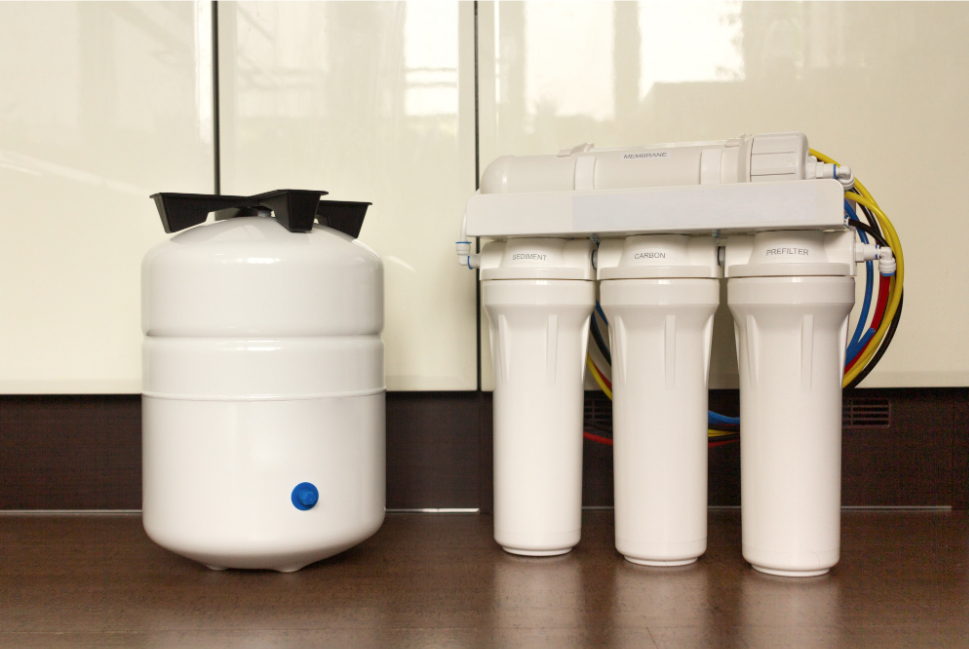
If you've ever filled a glass from the tap in Conroe and caught a faint chlorine smell, or noticed white crust building up around your faucets, you're not imagining things. Whole home water filtration is the system homeowners install at the point where water enters the house, treating everything that comes out of every tap, shower, and appliance instead of just one filter under the kitchen sink.
Conroe sits on a mix of groundwater from the Gulf Coast Aquifer and surface water drawn through the San Jacinto River Authority from Lake Conroe, and that blend brings both dissolved minerals and disinfection byproducts along for the ride. Homeowners across Conroe and nearby communities like The Woodlands and Shenandoah deal with the same water source, so the symptoms tend to look similar from house to house.
This article breaks down what's actually in Conroe water, how a whole-home filtration system is different from the softener or countertop pitcher you might already have, and what it takes to get one installed correctly by a licensed plumber who understands the local water supply.
In this article, you will learn about:
- What's actually in Conroe's water supply
- How whole-home filtration is different from a water softener
- The signs your home would benefit from one
- What installation and upkeep actually involve
Keep reading to find out whether the crust on your faucets and the smell in your glass are worth fixing at the source.
What's actually in Conroe's tap water
Conroe's water supply blends groundwater pulled from wells tapping the Gulf Coast Aquifer with surface water sourced from Lake Conroe. Both sources pick up dissolved minerals as they move through soil and rock, and both go through disinfection before they reach your home, which is standard practice and required under federal law.
Federal researchers who studied Lake Conroe's water chemistry over nearly a decade found the lake itself runs moderately hard, with hardness levels between 60 and 120 milligrams per liter as calcium carbonate according to the U.S. Geological Survey, and that hardness tends to concentrate further once the water is treated and distributed through the municipal system.
That mineral load is a big part of why homeowners in Grangerland and other parts of Montgomery County who rely on private wells often notice hardness symptoms even more strongly, since well water skips municipal treatment entirely. It's worth understanding both what this mineral load does and where it comes from before deciding which type of system actually solves your problem.
Hardness minerals and what they do to your home
Hard water isn't a health hazard in the way a contaminant like lead or arsenic would be. The real cost shows up in your plumbing and your appliances over months and years, not in a single glass of water.
- Scale buildup narrows the inside diameter of pipes, restricting flow over time
- Water heaters lose efficiency as mineral deposits coat the heating elements or tank walls
- Fixtures develop the chalky white residue that resists normal cleaning
- Dishwashers, washing machines, and coffee makers wear out faster with a steady mineral load
A study from the Pacific Northwest National Laboratory on residential water heating found that hard water accelerates scale and sediment buildup inside tank-style heaters, which raises operating temperature at the heating element and shortens the unit's working life.
That single appliance often becomes the first thing homeowners replace once hardness catches up with it, and it's part of why summer water heater maintenance tends to turn up scale as the culprit behind reduced performance.
Disinfection byproducts and other compounds worth knowing about
Municipal water treatment uses chlorine or chloramine to keep water safe from bacteria between the treatment plant and your tap, and that process creates trace byproducts as a side effect, most commonly a group called trihalomethanes. Byproducts like these are common for surface-water-blended systems nationwide and are monitored under the Safe Drinking Water Act.
Separately, an analysis of the EPA's most recent nationwide contaminant testing round found that more than 158 million Americans are served by water systems with detectable PFAS, the persistent "forever chemicals" drawing growing regulatory attention. Texas systems are part of that broader monitoring effort, and whether your specific address is affected depends on your water system's most recent test results.
None of this means Conroe's water is unsafe to drink. It means there's a real, documented gap between water that passes compliance testing and water that's been filtered down to the level a lot of homeowners want for their family, especially households with young kids or anyone managing a skin condition that hard water tends to aggravate. If you've noticed a jump on your bill alongside taste or smell changes, it's worth pairing this conversation with a look at high water bill causes, since leaks and filtration issues sometimes show up together.
How the local water supply compares to national averages
Conroe's blend of groundwater and reservoir water isn't unusual for Texas, but it does mean two separate issues, hardness and disinfection byproducts, show up together more often than in a purely groundwater or purely surface-water system. Homes around Lake Conroe closer to the reservoir tend to notice taste and odor complaints first, while homes further out, including Panorama Village and Cut and Shoot, tend to notice scale and hardness symptoms first.
- Check your most recent water bill or utility mailer for a hardness reading if one is included
- Note whether complaints in your home lean toward taste and smell or toward scale and buildup
- Use that pattern to guide the conversation with your plumber about which system fits
That distinction matters more than it seems, since it points toward a softener, a carbon filter, or a combination system before you even get a water test back.
Whole-home filtration versus a water softener
Homeowners often use "water softener" and "whole-home filter" interchangeably, but they solve different problems, and knowing the difference matters before you spend money on either one.
A water softener is built for one job: pulling calcium and magnesium out of the water through an ion exchange process, swapping those hardness minerals for sodium or potassium. It's excellent at stopping scale buildup and extending the life of your water heater, but it doesn't touch chlorine taste, sediment, or trace organic compounds.
A whole-home filtration system is built around media, usually activated carbon, sometimes paired with sediment pre-filters, that pulls chlorine, byproducts, and particulates out of the water as it passes through. Depending on the system, it may or may not include a softening stage.
When a softener alone is enough
If scale, spotting on dishes, and a shortened water heater lifespan are your only complaints, and your water otherwise tastes fine, a standalone softener may solve the problem without the added cost of a full filtration system. This is common in homes on a straightforward municipal supply with no unusual taste or odor complaints.
- Your main concern is buildup on fixtures and appliances, not taste or smell
- You've already confirmed hardness through a water test or utility report
- Budget is the deciding factor and you want the most targeted fix
That said, a softener addresses hardness and nothing else, so if chlorine taste or sediment is part of what's bothering you, you'll want to look at combination systems instead. A standalone softener can also help with the shower water temperature fluctuating that some homeowners trace back to scale inside the water heater rather than the thermostat itself.
When a full filtration system makes more sense
Combination systems that pair a softening stage with carbon filtration solve both problems at once: mineral buildup and taste or odor from disinfection chemicals. These tend to be the right call for households in Grangerland on well water, homes near Lake Conroe with more variable source water, or anyone who has noticed a persistent chlorine smell along with hardness symptoms.
- Confirm what's actually in your water through testing rather than guessing
- Match the system to the specific issues the test reveals
- Size the system to your household's peak water usage, not just square footage
- Plan for a pre-filter stage if sediment or rust is part of the picture
Getting this sequence right up front saves you from buying more system than you need, or worse, one that doesn't address the actual problem. It's the same logic behind residential plumbing services generally: diagnose before you spend.
Point of entry versus point of use systems
It's also worth understanding where these systems sit in your plumbing. A whole-home system is a point of entry system, installed on the main line where water enters the house, so every fixture benefits. A countertop filter or an under-sink cartridge is a point of use system, treating water at exactly one tap.
Point of use filters are fine for drinking water at a single sink, but they do nothing for the water running through your shower, your washing machine, or your water heater. If scale and mineral buildup are affecting your whole plumbing system, including areas prone to plumbing drain repair from mineral buildup, a point of use filter simply isn't positioned to help.
Signs your Conroe home would benefit from whole-home filtration
Some of these signs are obvious the moment you notice them. Others build up slowly enough that homeowners get used to them before realizing something's off.
Start by paying attention to what's happening at your fixtures and your water heater, since those two spots tend to show hard water and sediment problems first.
A gradual drop in water pressure, sometimes tied to broader high usage water pressure issues, a shortened water heater lifespan, or dishes that never quite come out spotless are all signs worth taking seriously rather than writing off as normal wear.
Physical signs around the house
- White or chalky residue building up around faucets, showerheads, and drains
- Soap and shampoo that won't lather properly, no matter the brand
- Spots on dishes and glassware straight out of the dishwasher
- Skin and hair feeling dry or filmy after a shower
Signs in your plumbing and appliances
- A water heater failing well before its expected lifespan
- Noticeably reduced water pressure throughout the house
- Visible scale inside kettles, coffee makers, or the dishwasher's heating element
- Clothes coming out of the wash feeling stiff or looking dingy over time
If you're seeing two or more of these regularly, it's a strong signal that your water's mineral content is actively working against your plumbing and appliances, not just your dishes. It's also worth ruling out a slab leak while you're at it, since hidden slab leak symptoms can sometimes mimic pressure and water quality complaints.
Taste, smell, and family health considerations
- A chlorine or "pool water" smell straight from the tap
- A metallic or slightly off taste that bottled water doesn't have
- Ongoing eczema or dry skin flare-ups in the household that seem tied to bath water
- Concern about disinfection byproducts or PFAS for households with infants or pregnant family members
These concerns are personal and often the real reason homeowners finally make the call, even when the plumbing symptoms have been tolerable for years. There's nothing wrong with prioritizing peace of mind here, especially with young kids in the house. If a plumber is already coming out for a plumbing diagnosis on something else, it's worth asking them to test for hardness and chlorine at the same time.
Installation, sizing, and ongoing upkeep
Getting the sizing right is where a lot of DIY installs and off-the-shelf systems fall short. A system built for a two-bathroom starter home won't keep up with a four-bathroom household running two showers and a washing machine at the same time, and undersizing shows up fast as pressure drops during peak usage.
A licensed plumber accounts for your household's peak simultaneous water demand, not just your square footage, when recommending a system size. That calculation also depends on your incoming water pressure and the specific hardness and contaminant levels your water test turns up, which is why a real water test matters more than a generic recommendation.
This kind of upfront diagnosis is a core part of plumbing system summer readiness, since peak summer usage is exactly when an undersized system falls short.
What a proper installation involves
- Water testing to confirm hardness levels and any specific contaminants present
- Selecting system type and size based on household usage and test results
- Installing at the main water line, typically near where the line enters the home or garage
- Bypass valve installation so water can be rerouted during filter changes or service
- Pressure and flow testing after installation to confirm the system is performing correctly
Skipping the testing step is the most common mistake homeowners make when they order a system online without professional guidance. You end up with a system sized for someone else's water, not yours, similar to how skipping seasonal leak prevention services tends to catch up with homeowners right when they can least afford the surprise.
Ongoing maintenance to expect
- Carbon filter media typically needs replacement on a schedule based on household water usage
- Softener resin tanks need periodic salt or potassium chloride refills
- Sediment pre-filters usually need more frequent swaps than the main filtration media
- Annual system checks catch small issues before they turn into a full system failure
None of this maintenance is complicated, but skipping it defeats the purpose of the system. A whole-home filter that hasn't had its media changed in two years is filtering less than a fresh one, sometimes barely filtering at all, the same way ignoring outdoor plumbing maintenance in Montgomery County eventually catches up with a home's exterior lines.
Working with a licensed plumber versus a big-box kit
Big-box filtration kits are sized generically and installed by whoever's available, which means the sizing math and the plumbing connection quality are both guesswork. A licensed plumber pulls the correct permit where required, ties the system into your main line correctly, and sets up the bypass valve so future maintenance doesn't require shutting off water to the whole house.
That difference matters most the day something needs service. A properly installed bypass valve means a filter change or a repair takes minutes instead of leaving your household without water for an afternoon, the kind of reliability homeowners also expect from a year round plumbing protection plan.
Conclusion
Whole-home water filtration isn't an upgrade every Conroe homeowner strictly needs, but for households dealing with visible scale, a water heater that keeps failing early, or a chlorine smell they can't ignore, it solves the problem at the source instead of treating symptoms one faucet at a time. The right system depends entirely on what's actually in your water, which is why testing comes before buying.
Conroe's blended groundwater and surface water supply means hardness and disinfection byproducts are both realistic concerns here, not hypothetical ones. Between the mineral load documented in local water studies and the national data on PFAS detection across water systems, there's a real case for finding out what your household is dealing with rather than guessing.
If any of the signs in this article sound familiar, from the white residue around your faucets to a water heater that never seems to last, it's worth having a licensed plumber test your water and walk you through what a properly sized system would look like for your home. Benjamin Franklin Plumbing serves Conroe and the surrounding Montgomery County communities through the Benjamin Franklin Plumbing club membership program, which includes the kind of proactive home checks that catch water quality issues early.

 Your Privacy Choices