
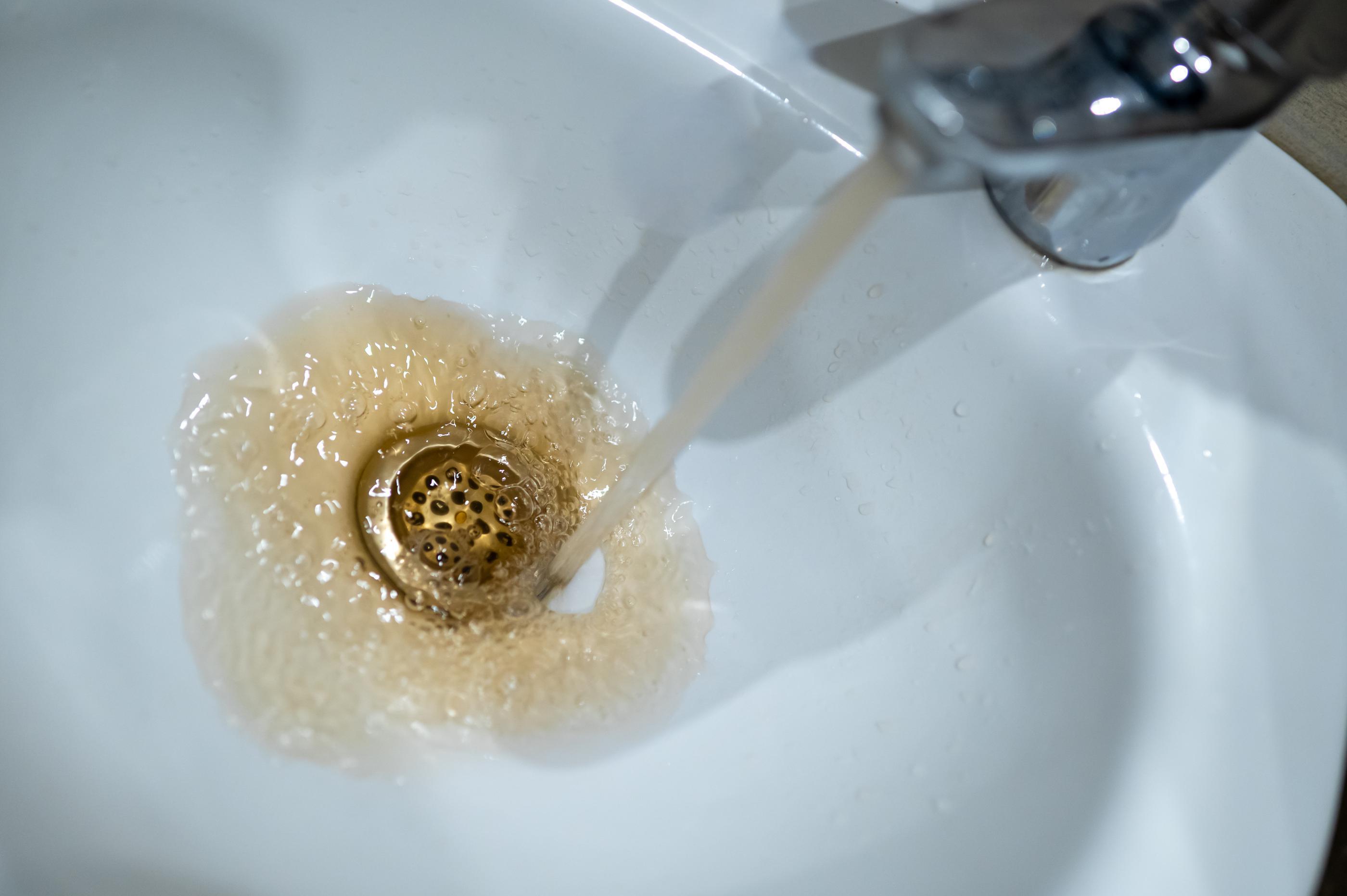
If your Washtenaw County home uses a private well, rusty stains around the sink or a metallic taste in the water may be more than a cleaning problem. Iron is one of the water-quality concerns Michigan recommends testing for in private wells, and local homeowners are responsible for monitoring the quality of their own well water.
The good news is that iron is usually easy to recognize once you know what to look for. Orange staining, discolored water, sediment, or recurring buildup around fixtures can all point to iron in the water. The important part is testing first, because the right solution depends on how much iron is present and what form it takes.
What Are the Signs of Iron in Well Water?
Iron problems often show up around the house before you ever see a water-test result.
Common signs can include:
- Orange, reddish-brown, or yellow stains in sinks, tubs, or toilets
- Rust-colored marks on laundry
- Metallic-tasting water
- Discolored or cloudy water
- Brown or orange buildup around faucets and fixtures
- Sediment collecting in aerators or other plumbing components
Michigan considers iron levels above 0.3 milligrams per liter objectionable primarily because of taste, odor, staining, and discoloration. That does not mean every stain is caused by iron, though. Low water pressure, sediment, or discoloration can have several plumbing or well-related causes, which is why testing is so helpful.
Why Is Iron Found in Well Water?
Private wells draw water from underground, where it has been in contact with soil, rock, and minerals. As groundwater moves through those materials, naturally occurring iron can dissolve into the water and eventually reach your well.
You may not see anything unusual when that water first comes from the faucet. Some forms of dissolved iron can look clear until the water is exposed to air. Once oxidation occurs, the familiar orange or reddish staining can start to appear.
Iron can also come from corrosion in older metal plumbing or well components. That is another reason it helps to know whether the problem is present in the groundwater itself or developing somewhere within the home's plumbing system.
How Can You Tell Where the Iron Is Coming From?
You cannot reliably tell how much iron is in your water just by looking at it.
If your Washtenaw County home has a private well and you notice staining, sediment, an unusual taste, or a change in water quality, testing is a good first step. Michigan recommends laboratory testing for private wells, and the Washtenaw County Health Department is one of the local agencies that offers water-testing resources.
If you already have a water softener or filtration system, Michigan recommends testing water before and after the treatment equipment. That can help show what is entering the home and whether the existing system is actually reducing the iron.
Is Iron in Well Water Dangerous?
For most households, iron in drinking water is primarily a water-quality and plumbing concern rather than an immediate health concern. Michigan uses 0.3 mg/L as the level above which iron may become objectionable because of color, taste, odor, and staining.
The problems homeowners notice most often are practical ones. Iron can stain plumbing fixtures and laundry, leave sediment behind, and create buildup in places where water flows through the home.
Over time, heavy mineral or iron buildup can also affect faucet aerators, valves, appliances, and other plumbing components. If your water pressure seems lower than usual or fixtures repeatedly collect sediment, it is worth finding out whether water quality is contributing.
What Type of Iron Is in Your Water?
This is where treatment can become confusing, because not all iron behaves the same way.
One common form is dissolved, or ferrous, iron. The water may look clear when it first comes from the faucet, then turn orange or leave stains after it is exposed to air.
Ferric iron is already oxidized, so you may see reddish particles, cloudy water, or visible sediment right away.
There can also be iron bacteria, which are different from dissolved mineral iron. They may create slimy buildup, unusual odors, or deposits in well and plumbing components. The treatment for one type of iron may not work well for another, which is why testing before buying equipment is so important.
What Can Treat Iron in Well Water?
There is no single filter that is right for every Washtenaw County well.
The best treatment depends on the amount and type of iron in the water, along with other water-quality factors such as hardness, pH, manganese, and sediment.
Water Softeners
A water softener may reduce certain amounts of dissolved iron while also treating hardness. However, a softener is not automatically the right solution for every iron problem, especially when iron levels are high or the water contains visible particles.
Iron Filtration
Dedicated iron filters can be used when testing shows that filtration is a better match for the type and concentration of iron in the water.
Oxidation and Filtration
Some treatment systems first convert dissolved iron into solid particles and then filter those particles out before the water reaches your fixtures.
The important takeaway is simple: test first, then choose treatment. Buying a water softener or filter based only on orange stains can leave you with equipment that does not actually address the source of the problem.
When Should You Call a Plumber or Water-Treatment Professional?
You do not need to wait until every sink is stained orange.
Consider having your water and plumbing evaluated if you notice:
- Recurring rust-colored stains
- Metallic taste or unusual water odor
- Visible sediment
- A sudden change in water color
- Frequently clogged faucet aerators
- Low or changing water pressure
- Problems with the well pump or pressure system
These symptoms do not prove that iron is the cause. They simply tell you that something has changed and deserves a closer look.
If your concern may involve the well equipment itself, Benjamin Franklin Plumbing® also provides well pump services for problems such as low pressure, dirty water, air coming from faucets, or a pump that runs continuously.
Do Not Guess at a Well Water Problem
If you keep scrubbing orange stains from the same sink or replacing clogged aerators, treating the symptom will only get you so far. A water test can tell you whether iron is actually present and give you the information needed to choose the right next step.
Benjamin Franklin Plumbing® of Ann Arbor can help homeowners throughout Washtenaw County with well-water concerns, plumbing problems, and water treatment options.
If your well water has changed color, started leaving stains, or developed a metallic taste, schedule an evaluation with Benjamin Franklin Plumbing® of Ann Arbor. We can help you determine whether the issue is coming from the water, the well equipment, the plumbing, or a combination of factors.

 Your Privacy Choices