
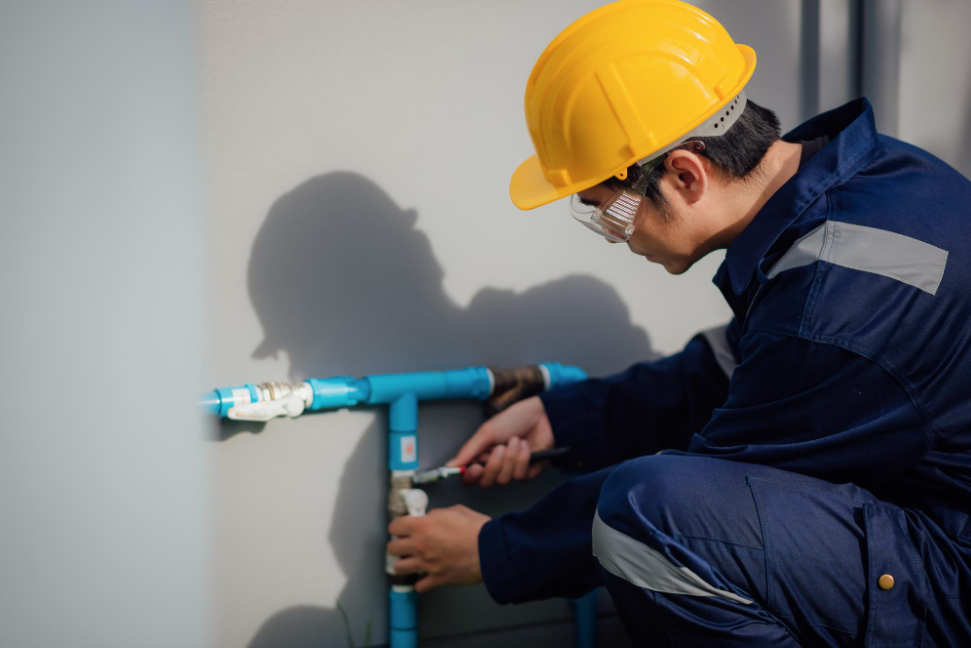
Leak detection in Johnson County, KS, can answer a frustrating question: Where is that water coming from? A higher water bill, a damp odor, or a warm patch on the floor may be the only clue that a pipe is leaking somewhere you cannot see.
That uncertainty matters in homes throughout Overland Park, Leawood, Prairie Village, and neighboring communities. Water can travel along framing, collect beneath flooring, or emerge several feet from the failed connection, so the first visible stain does not always reveal the source.
Early diagnosis helps limit water waste and gives you a clearer repair plan before damaged drywall, flooring, or cabinets expand the scope of the job. Professional leak repair services can connect the evidence inside your home to the pipe or fixture that actually needs attention.
In this article, you will learn about:
- What clues point to a hidden plumbing leak?
- Why leaks show up differently across Johnson County homes
- How professional leak detection finds the source
- What should you do when you suspect a leak?
Keep reading to recognize a hidden leak sooner and make a more informed decision about the next step.
What clues point to a hidden plumbing leak?
Some leaks announce themselves with dripping water. Others stay behind a wall, under a slab, or inside a toilet tank while the household continues as usual. Leak detection begins by comparing several clues instead of relying on one stain or sound.
The scale of hidden waste can be surprising. The U.S. Environmental Protection Agency reports that an average household can lose more than 9,300 gallons per year to leaks, 9% of homes lose at least 50 gallons per day, and correcting readily repairable leaks can reduce water bills by about 10%.
What can you see, hear, or smell?
A leak often changes the surrounding materials before water becomes visible. Paint may bubble, drywall may soften, wood flooring may cup, or a baseboard may swell. A persistent musty odor can also point to moisture trapped inside an enclosed space.
Walk through the home when it is quiet and look for changes that do not have an obvious explanation. Pay particular attention to cabinets, ceilings below bathrooms, walls shared with showers, finished basement areas, and the floor around water-using appliances.
- A stain grows or darkens even though it has not rained.
- You hear hissing, trickling, or dripping while fixtures are off.
- A section of flooring feels unusually warm, cool, soft, or damp.
- Paint, drywall, trim, or cabinetry changes shape or texture.
- A musty smell returns after cleaning and ventilation.
- The water meter moves when no one is using water.
One clue may have several possible causes. Condensation can resemble a supply leak, and roof intrusion can create a ceiling stain far from the plumbing, so observation should narrow the possibilities rather than become a reason to open a wall immediately.
Act promptly when materials are wet. The EPA's moisture guidance recommends drying water-damaged areas and items within 24 to 48 hours to help prevent mold growth.
Can low pressure or a high bill reveal the problem?
A bill that rises without a change in household routines is one of the clearest reasons to investigate. Compare the same billing periods when possible, because lawn irrigation, guests, and seasonal use can otherwise make normal consumption look suspicious.
Weak flow at one faucet usually points toward that fixture or its supply stop. A broader drop in water pressure can involve a pressure regulator, mineral buildup, a partially closed valve, or a leak on a main supply line. The location and timing of the pressure change help separate those causes.
A constantly refilling toilet can waste water without leaving a wet floor. Outdoor spigots, irrigation connections, refrigerator lines, washing machine hoses, and water heater fittings also deserve attention because they can leak intermittently or only when an appliance runs.
Treat the bill as evidence, not a diagnosis. A plumber can compare consumption clues with pressure readings and fixture tests, then focus the inspection on the most likely part of the system.
How do you run a simple water meter test?
A water meter test can tell you whether water is moving into the property when every known fixture and appliance should be off. It cannot identify the location by itself, but it is a useful screening step for a suspected hidden leak.
Before starting, confirm that no toilet is refilling and that the dishwasher, washing machine, ice maker, water softener, humidifier, and irrigation system will not cycle. Then use a period when everyone in the home can avoid water use.
- Turn off every faucet and water-using appliance without closing the home's main shutoff valve.
- Record the meter reading or take a clear photo of the display and leak indicator.
- Wait two hours without flushing, washing, watering, or using any water.
- Check the meter again and compare the reading and indicator position.
- If the reading changed, close fixture supply valves one at a time when it is safe to do so, or arrange a professional inspection.
The EPA's household leak checklist identifies any meter movement during a two-hour no-use period as a probable leak. It also flags monthly winter use above 12,000 gallons for a family of four as a sign that a serious leak may be present.
Do not use the meter test to delay action when water is actively spreading. Shut off the nearest working fixture valve or the main water supply if needed, move vulnerable belongings, and contact an emergency plumbing service for an uncontrolled leak.
Why leaks show up differently across Johnson County homes
Johnson County contains a wide mix of housing, from established neighborhoods with decades-old plumbing to newer subdivisions with modern supply materials and finished lower levels. The likely leak location changes with a home's age, layout, renovation history, and pipe installation.
There is also a lot of property to protect. According to the U.S. Census Bureau, Johnson County had 268,845 housing units in 2025, an owner-occupied housing rate of 68.5% for 2020 through 2024, and a median owner-occupied home value of $391,200 during that period.
How do older and remodeled homes change the search?
In established parts of Prairie Village and northern Overland Park, a home may contain several generations of plumbing work. Original piping, replacement sections, renovated bathrooms, and newer appliance lines can all meet at transition fittings that deserve close inspection.
Finished walls and ceilings may hide supply lines that were rerouted during a remodel. When the plumbing history is unclear, a plumber works from fixture locations, shutoff behavior, pressure changes, and moisture patterns instead of assuming the shortest path between two points.
An older home is not automatically leaking, and a newer home is not immune. Installation errors, failed seals, accidental fastener damage, appliance connections, and movement at joints can affect plumbing at any age.
Local service familiarity helps because the inspection can account for recurring layouts and renovation patterns without turning those patterns into assumptions. Homeowners in Prairie Village still need a diagnosis based on the conditions in their specific property.
What role do freezing temperatures and seasonal movement play?
Johnson County plumbing experiences real temperature swings. The National Weather Service lists normal January lows around 20 to 22 degrees Fahrenheit at the Olathe and Johnson County Executive Airport stations, cold enough to put vulnerable piping at risk when it lacks heat or insulation.
Pipes near exterior walls, garages, crawl spaces, hose connections, and poorly sealed penetrations face the greatest exposure. Water expands as it freezes, but the split may not release obvious water until the pipe thaws and normal pressure returns.
A winter leak may therefore appear after the coldest part of the weather has passed. Periodic checks around vulnerable areas and a practical plumbing winter checklist can reduce exposure before the next hard freeze.
Seasonal soil moisture can also change support around buried service lines. That does not mean every yard depression or pressure change is an underground leak, but it is one reason a plumber may compare indoor tests with the route between the meter and the home.
Can hard water contribute to leak symptoms?
Hard water contains dissolved minerals that can leave scale on aerators, showerheads, valves, and water-heating equipment. The scale itself does not prove that a pipe is leaking, but it can restrict flow, interfere with seals, and make water pressure symptoms more confusing.
White crust around a connection can show where small amounts of water repeatedly evaporated. It can also be old residue from a previous spill, so the area should be cleaned and monitored before anyone treats the deposit as proof of an active leak.
Homeowners in Leawood and nearby communities may notice spotting or buildup at fixtures before they recognize the broader effects of mineral-rich water. Knowing how hard water shows up at home helps distinguish scale-related maintenance from a concealed plumbing failure.
A complete diagnosis considers both issues when they overlap. Removing mineral buildup may restore a fixture's flow, while a pressure test or moisture reading may still be necessary to rule out a hidden leak elsewhere.
How professional leak detection finds the source
Professional leak detection is a process of narrowing the search. A plumber starts with the homeowner's observations, confirms how the system behaves, and chooses tests that fit the suspected line and location.
The goal is to collect enough evidence for a targeted repair. No single device can identify every leak through every material, so good diagnostic work combines tools, plumbing knowledge, and verification.
What happens during the initial plumbing inspection?
The plumber will usually ask when the symptom started, whether it is constant, and what changed around the same time. A recent freeze, remodel, appliance installation, pressure fluctuation, or unusual bill can point toward a useful first test.
The visible inspection then follows the plumbing system rather than the stain alone. Accessible shutoffs, supply connectors, fixtures, toilets, drains, exposed pipes, the water heater area, and the meter can all provide evidence.
From there, the plumber may compare hot and cold water symptoms, measure pressure, isolate part of the system, or scan likely surfaces for moisture and temperature differences. The combination depends on the evidence, and the suspected location should be confirmed before access or repair is recommended.
These steps may change order based on the situation. A ceiling that is actively dripping beneath a bathroom calls for a different starting point than unexplained meter movement with no visible damage.
The inspection may also reveal that the apparent leak has another source, such as condensation, a failed fixture seal, or drain water escaping only during use. That distinction keeps the repair focused on the actual failure.
Which tools help locate a concealed leak?
Moisture meters can compare damp and dry building materials. Thermal imaging may reveal temperature patterns associated with moisture or a leaking hot-water line, while acoustic equipment can help a trained plumber listen for pressurized water escaping from a pipe.
Pressure testing and line isolation help determine which part of the system is losing pressure. Dye testing can expose toilet or fixture leaks, and small inspection cameras may help examine accessible cavities or drain piping when the suspected problem fits that method.
These tools provide clues that require interpretation. A cool thermal pattern could result from air leakage, and sound can travel through framing or pipe material, which is why the plumber compares readings with the plumbing layout and other tests.
An experienced residential plumbing team should be able to explain what the tests indicate, what remains uncertain, and why a particular access point or repair is recommended.
Does leak detection always require opening a wall or floor?
Many investigations begin without cutting finished surfaces. Meter readings, fixture isolation, pressure tests, moisture mapping, thermal patterns, and acoustic clues can often reduce the search area first.
Access may still be necessary to confirm and repair a concealed failure. The important difference is that testing can support a smaller, better-placed opening instead of broad exploratory demolition.
Leaks below slabs or in buried service lines can require additional planning because concrete, soil, and pipe depth affect the signal. In those situations, the diagnostic findings should inform both the repair location and the choice between a localized fix and a larger piping solution.
Homeowners scheduling plumbing repairs should expect the proposed work to connect clearly to the evidence. If conditions change after access, the plumber should explain the new finding before expanding the scope.
What should you do when you suspect a leak?
The right response depends on whether the leak is contained, hidden, or actively damaging the home. A slow meter change deserves investigation, while spraying water or a sagging ceiling calls for immediate control of the water supply and electrical awareness.
You can help the diagnostic process by documenting what you observe. Photos, meter readings, billing history, and notes about when a sound or stain appears give the plumber a more complete timeline.
What deserves immediate attention?
Treat a leak as urgent when water is spreading, pressure suddenly collapses, a ceiling begins to bulge, or water approaches electrical equipment. Keep people away from a saturated ceiling because wet drywall can fall without much warning.
If you can reach the correct shutoff safely, stop the water at the fixture or main valve. Do not enter standing water near outlets, wiring, an electrical panel, or energized appliances.
- Move people and valuables away from the affected area.
- Shut off the nearest reliable water valve, or use the main shutoff when necessary.
- Avoid electrical hazards and stay out of questionable standing water.
- Photograph the damage and note the time you first observed it.
- Call a plumber and describe whether the water is controlled.
- Begin safe water removal and drying once the source is stopped.
If the main valve does not close completely, do not force a corroded or damaged handle. Tell the plumber that the leak remains active so the visit can be prioritized appropriately.
In Overland Park, access to prompt local plumbing service is especially helpful when the water source cannot be isolated at a fixture. Clear information about the leak location and shutoff status helps the responding team prepare.
What information should you share with the plumber?
Describe the first symptom and the order in which other signs appeared. Mention whether the problem changes when a shower, toilet, dishwasher, washing machine, irrigation zone, or water heater operates.
Share any recent freeze, renovation, flooring work, wall mounting, appliance replacement, or pressure change. A nail or screw can nick a concealed pipe, and a new appliance connection can leak only during a fill or drain cycle.
Billing statements can establish whether water use climbed suddenly or gradually. Photos of the meter before and after a no-use test are useful, as are marked images showing how a stain expanded over time.
Do not clean up every trace before documenting it, but do not leave wet materials in place solely for the inspection. The plumber needs a good history, while the home needs prompt drying and protection.
How can you reduce the chance of another hidden leak?
Prevention begins with knowing where the main shutoff is and confirming that it operates. Inspect flexible supply lines, fixture valves, appliance connections, exposed piping, and areas around the water heater often enough to notice a small change.
Pay attention to the water bill and investigate unexplained increases. Small water-saving repairs matter because reducing water waste at home also limits the time a minor leak can continue unnoticed.
Seasonal maintenance deserves a place on the calendar. Disconnect hoses, protect vulnerable piping before freezes, keep conditioned air around plumbing in exterior cabinets, and follow sensible pipe-freezing prevention when cold weather approaches.
Routine plumbing maintenance can also catch deteriorated connectors, slow fixture leaks, pressure concerns, and water heater issues before they create a larger mess. No inspection can prevent every failure, but regular checks make subtle changes easier to recognize.
Conclusion
A hidden leak rarely gets easier to solve by waiting. A changing water bill, meter movement, damp material, unexplained sound, or recurring odor gives you a reason to investigate before more of the home becomes involved.
The most useful diagnosis combines your observations with systematic testing. That approach can distinguish a fixture problem from a concealed supply leak, narrow the source, and support a repair plan based on evidence.
Johnson County homes vary widely in age and layout, so the right solution depends on the property in front of the plumber. Early attention, clear documentation, and routine maintenance give you the best chance to limit damage and water waste.
For ongoing plumbing care that includes priority scheduling and an annual safety inspection, leak check, and water heater tune-up, explore the Benjamin Franklin Plumbing® of Kansas City Club Membership Program.

 Your Privacy Choices