
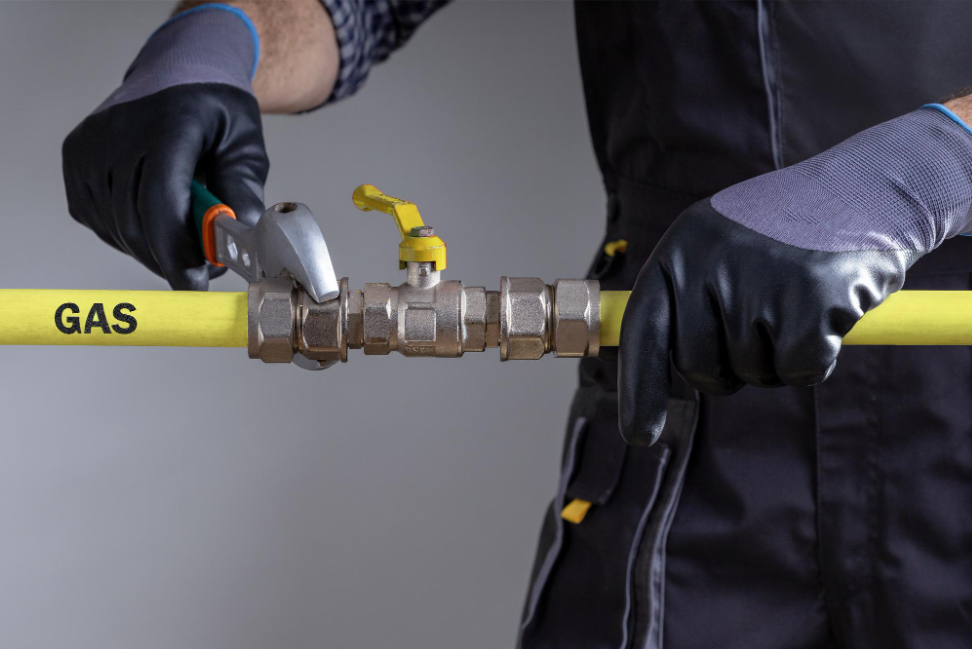
If your stove pilot won't stay lit, or you caught a whiff of something like rotten eggs near your water heater closet, your gas line is trying to tell you something. Gas line services in Kansas City, MO cover everything from small pressure fixes to full line replacements, and getting it right matters more than almost any other job in your house.
A lot of homeowners put off gas line work because it feels intimidating. It shouldn't be. A licensed plumber who works on gas lines every week can usually diagnose the problem in minutes and walk you through exactly what needs to happen next, in plain language, no scare tactics required. It's the same standard our residential plumbing team applies to every job, gas lines included.
Kansas City's mix of older brick bungalows, mid-century ranch homes, and newer builds out toward Overland Park and Lee's Summit means gas line age and material vary a lot block by block. What worked fine for a house built in the 1950s isn't necessarily safe or code-compliant today, and that gap is where most of the real risk hides.
In this article, you will learn about:
- Recognizing the warning signs of a gas line problem
- What gas line repair, installation, and inspection actually involve
- Why Kansas City's older housing stock raises the stakes
- Choosing a licensed plumber you can trust with gas work
Keep reading to understand exactly what's happening behind your walls and how to get it handled safely, the first time.
Recognizing a gas line problem before it becomes an emergency
Gas leaks don't always announce themselves with a strong smell. Natural gas is odorless on its own, and utility companies add a chemical called mercaptan specifically so a leak has that rotten-egg or sulfur smell people can recognize. Even so, a slow leak in a crawlspace or behind a wall can go unnoticed for a while, especially in a finished basement where airflow is limited.
Your nose isn't the only tool you have. Plenty of gas line problems show up as smaller, easier-to-miss clues before they become a full-blown emergency plumbing call.
The smell test and what it actually means
That sulfur or rotten-egg odor is the clearest signal something is wrong, and it should never be ignored, even if it's faint. If you catch a whiff near an appliance connection, a meter, or a wall where a line runs, treat it as real until a professional tells you otherwise.
Don't try to locate the source yourself by sniffing along walls or under sinks. Get everyone out of the house, leave the doors open on your way out, and call from outside. Avoid flipping light switches or using your phone inside, since a spark near a significant leak is a real risk.
Physical signs around your home
Beyond smell, a handful of physical clues point to trouble with the pipe itself rather than an appliance malfunction. These are worth walking your property for once or twice a year, especially if your gas line is decades old.
- Dead or discolored vegetation in a straight line across your yard, which can mean an underground leak
- A hissing sound near a gas appliance, meter, or exposed pipe
- Bubbles forming in a puddle or standing water near the gas line's path
- Higher than usual gas bills with no explanation
- Soot, scorch marks, or discoloration around a fitting or appliance connection
If you spot any of these, don't wait for a second sign to confirm it. A hissing sound alone is enough reason to shut off the gas at the meter and call for service.
Appliance behavior that points back to the line
Sometimes the first sign isn't near the line at all, it's how your appliances are acting. A furnace pilot light that keeps blowing out, a water heater that won't hold a steady flame, or a gas range with weak or uneven burners can all trace back to a supply or pressure issue upstream. If your water heater isn't keeping up, a gas supply problem is worth ruling out before assuming the tank itself has failed.
Carbon monoxide symptoms deserve special attention here, since they're easy to mistake for something else. Headaches, dizziness, or nausea that clear up when you leave the house and return when you're back inside are a red flag worth taking seriously. The Centers for Disease Control and Prevention attributes an estimated 15,000 emergency department visits each year to unintentional carbon monoxide exposure, and malfunctioning fuel-burning appliances are among the most common sources.
Not every appliance issue means the line itself is bad. Sometimes it's a bad regulator, a loose fitting, or a worn valve. Either way, tracing it back correctly takes someone who works on gas systems regularly, not a guess-and-check approach.
What gas line repair, installation, and inspection actually involve
Once you've called it in, it helps to know what's actually happening on the technical side. Gas line work isn't one task, it's a category that covers repair, new installation, and inspection, and each has its own process.
Kansas City homes run on a mix of black iron pipe, copper, and newer flexible corrugated stainless steel tubing, often called CSST. Which material your home has affects both the diagnosis and the fix, so a plumber will usually confirm the pipe type before doing anything else.
Diagnosing and repairing an existing line
Repair starts with pressure testing. A plumber pressurizes the line and monitors for drops that indicate a leak, then narrows the location using a combination of soap-bubble testing at fittings and, for underground runs, specialized leak detection equipment.
Once the leak is located, the repair itself depends on where it is and what caused it. A corroded fitting might just need replacement. A section of pipe damaged by nearby digging or settling ground usually calls for cutting out and re-piping that segment.
- Shut off gas at the meter and confirm zero pressure in the line
- Pressure test to confirm the leak and narrow its general location
- Pinpoint the exact spot with soap testing or electronic detection
- Cut out and replace the compromised section or fitting
- Pressure test again to confirm the repair holds
- Restore gas service and relight pilot lights on affected appliances
That last step matters more than people expect. After any gas service interruption, pilot lights on water heaters, furnaces, and some ranges need to be manually relit, and a plumber will typically walk through each one before leaving.
Installing a new gas line
New installation comes up for a few common reasons: adding a gas range where the kitchen only had electric, running a line out to a patio for a grill or fire feature, or connecting a new appliance like a gas dryer or a backyard fire pit. Each of these means extending or branching off the existing supply line, sized correctly for the new load.
Sizing is where a lot of DIY or unlicensed installs go wrong. Add too much appliance demand onto an undersized line and you get pressure drops that show up as weak burners or pilot lights that won't hold, even though nothing is technically leaking. It's a version of the same wasted water and wasted energy problem that shows up whenever a home system is sized wrong from the start.
Permits and inspections aren't optional extras here, they're part of doing the job correctly. Kansas City and the surrounding municipalities require permits for new gas line work, and a licensed plumber handles that paperwork as part of the installation rather than treating it as a hassle to skip.
Inspection: the step most homeowners skip
A gas line inspection is a proactive check, not a response to a known problem. It's the kind of service that catches small issues, an aging fitting, early-stage corrosion, a connector that's outlived its expected lifespan, before they turn into an emergency call.
This matters more in Kansas City than in newer-construction markets, simply because of how much older housing stock is still in daily use. A line installed decades ago that's never been inspected is a much bigger unknown than one that gets checked every few years.
Buying or selling a home is a natural trigger point for an inspection too. A pre-purchase gas line check can surface issues that would otherwise become the new owner's surprise a few months in, and it gives sellers a chance to address problems before they complicate a sale.
Why Kansas City's older housing stock raises the stakes
Kansas City's neighborhoods span a wide range of build eras, from early-1900s homes in the urban core to postwar ranches and newer subdivisions further out toward Blue Springs and Independence. That range means gas line age, material, and condition vary dramatically from one address to the next, even within the same block.
Pipeline age is a real factor nationally, not just a local talking point. Data from the U.S. Pipeline and Hazardous Materials Safety Administration, reviewed in a Congressional Research Service analysis, shows an average of 11 deaths and 48 injuries occurred annually across roughly 26 serious pipeline incidents nationwide from 2014 through 2024, a reminder that pipeline systems, including the distribution lines running into individual homes, require ongoing attention rather than a set-it-and-forget-it approach.
Older pipe materials and how they age
Black iron pipe, the traditional standard for decades, holds up well but is vulnerable to internal corrosion over long stretches of time, particularly where moisture has found a way in. Homes from the early-to-mid 20th century that still run their original gas lines are the ones most likely to be due for a closer look, the same way hard water quietly wears down old supply pipes from the inside without any obvious outward sign.
Newer installations more commonly use CSST, which resists corrosion better but has its own considerations, including proper bonding and grounding to protect against electrical damage during storms. Kansas City sees its share of severe spring weather, so a home with CSST benefits from confirming that bonding was done correctly at install.
Third-party damage and excavation risk
A significant share of gas line incidents nationally trace back not to the pipe itself failing, but to outside excavation work, digging for a fence post, a new sprinkler line, or utility work, striking a line that wasn't properly marked or was buried shallower than expected.
The Washington Utilities and Transportation Commission reports that excavation damage accounts for roughly 60 percent of the gas distribution incident reports it receives, a pattern consistent with what pipeline safety data shows nationally. Calling 811 before any digging project matters for that reason, whether it's a professional job or a weekend DIY project in the yard.
Kansas City's mature tree canopy adds another wrinkle. Root systems can shift and stress buried lines over years, particularly in yards where a gas line runs near a large, established tree that wasn't there when the line was first installed.
Seasonal freeze-thaw stress
Missouri's winters bring real freeze-thaw cycles, and that shifting ground can stress buried gas lines over time, especially older, more brittle sections. Gas line inspection belongs on any homeowner's plumbing winter checklist, alongside the usual pipe and fixture prep. A line that's been fine for twenty winters can still develop a slow leak after ground movement finally finds its weak point, not unlike how pipes freeze and burst when the ground shifts around them.
This is one more reason a periodic inspection earns its cost. Catching ground-movement stress on a line before a hard freeze, rather than during one, means a planned repair instead of an emergency call in single-digit temperatures.
Choosing a licensed plumber you can trust with gas work
Gas line work isn't the place to shop purely on price or take a chance with someone unlicensed. The stakes, fire, explosion, carbon monoxide exposure, are high enough that verifying credentials before anyone touches your line is worth the extra five minutes.
Missouri requires plumbers to be licensed, and gas line work specifically calls for training most general handyman services simply don't have. A quick license check protects you far more than it protects the plumber.
What licensing and insurance actually cover
A licensed plumber has demonstrated the required training and passed the testing that Missouri requires before touching gas systems in a home. Insurance matters just as much, since it protects you if something goes wrong during the work itself, not just after.
- Verify the plumber holds an active Missouri plumbing license
- Confirm they carry liability insurance, not just the company name on a truck
- Ask whether they pull permits for gas line work as standard practice
- Check that they test and document the repair before leaving
A company that skips any of these steps, especially permits, is cutting a corner that eventually becomes your problem, not theirs. It's the same reasoning behind steering clear of chemical drain cleaners as a shortcut, the quick fix often costs more down the line.
What to expect from a same-day call
Benjamin Franklin Plumbing® of Kansas City backs its gas line work with a 100% satisfaction guarantee, and technicians arrive ready to diagnose the issue on the spot rather than scheduling a separate visit just to look at it. Trucks are stocked to handle the majority of gas line repairs without a follow-up trip, which matters when you've already been without a working stove or water heater for a day.
Every job, whether it's a small fitting repair or a full new installation, gets pressure tested and confirmed before the technician calls it done. That's not an optional extra, it's the standard the work is measured against, and it's the same standard behind services like sewer line repair and sump pump installation across the rest of the home.
Questions worth asking before you book
A few direct questions upfront save a lot of back-and-forth later. Ask how the company handles permits, whether the technician doing the work is specifically trained on gas systems, and what the process looks like if a repair turns out to be more involved than expected once the line is opened up.
A straight answer to all three, without hedging, is usually a good sign you're dealing with a company that does this work regularly rather than occasionally. Members of the Hero's Club also get priority scheduling for exactly this kind of work, which matters when a gas issue turns up and you don't want to wait in line behind everyone else.
Conclusion
Gas line problems aren't the kind of thing to wait out or attempt as a weekend project. The signs are often subtle, the materials and code requirements vary by home age, and the consequences of getting it wrong go well beyond an inconvenience.
Kansas City's mix of older and newer housing stock means no two gas lines tell quite the same story. What matters is having someone look at yours who understands both the technical side and the local building patterns that shape what's actually going on behind your walls.
Whether you've caught a whiff of something off, you're planning to add a gas appliance, or it's simply been years since anyone checked your line, getting ahead of it is always the better call than reacting to an emergency. Benjamin Franklin Plumbing® of Kansas City is ready to help with gas line repair, installation, and inspection, backed by a 100% satisfaction guarantee and technicians who treat your home like it's their own.

 Your Privacy Choices