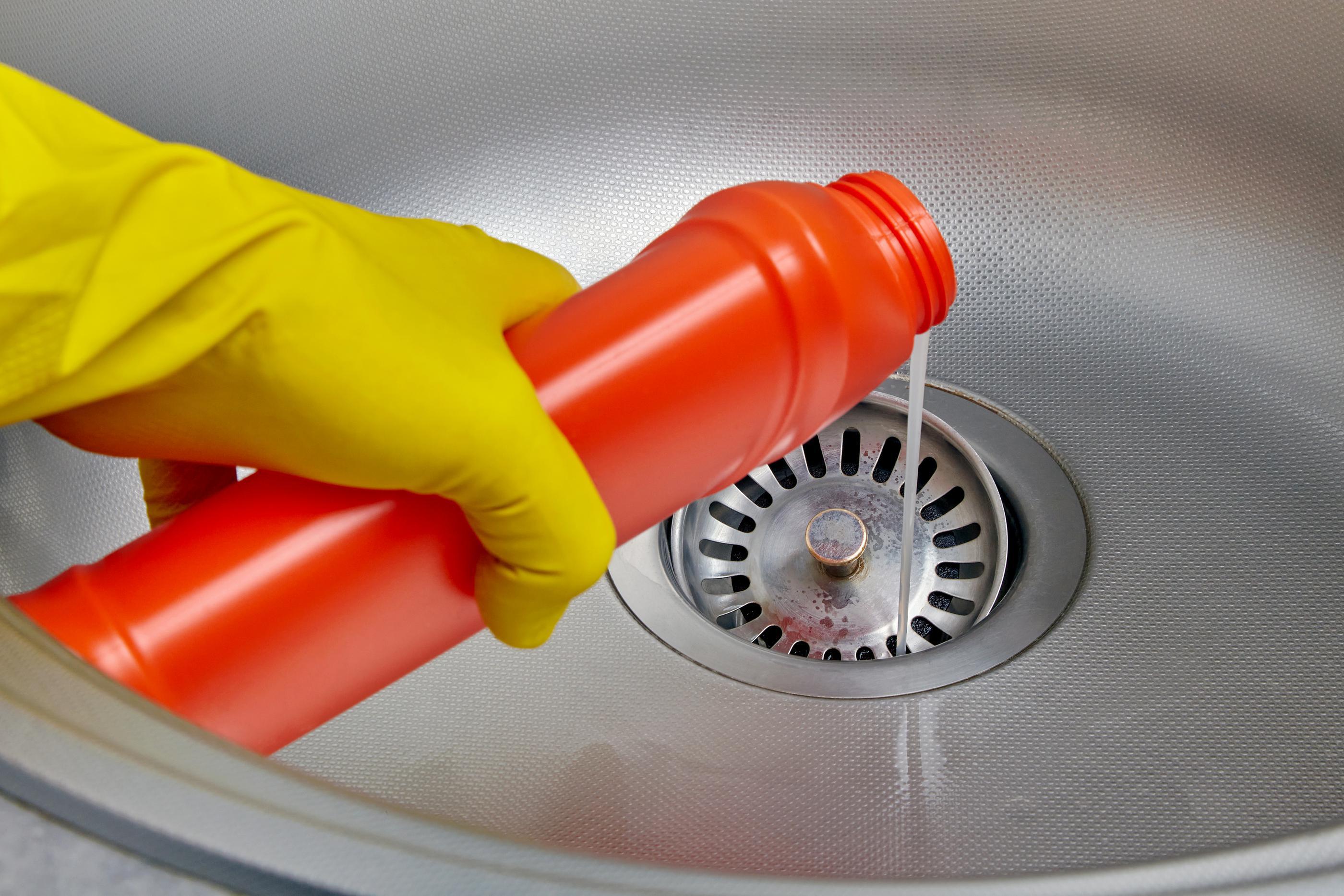
Chemical drain cleaners are a common response to clogged sinks, tubs, showers, and toilets. Because they’re inexpensive and easy to find, many homeowners use them before considering professional drain cleaning. However, these products also have a reputation for damaging pipes and creating larger plumbing problems over time. If you’re dealing with a stubborn clog in your Kansas City home, here’s what you should know about chemical drain cleaners and the risks they can create inside your plumbing system.
The Different Classes of Chemical Drain Cleaners
Several types of chemical drain cleaners are commonly sold for residential plumbing use. Each works differently, but all rely on strong chemical reactions to break down clogs inside the pipe.
Caustic Cleaners
Caustic drain cleaners generate intense heat inside the pipe to help break down grease, hair, soap residue, and other organic buildup. In many cases, the material softens enough to partially drain away once water flows through the pipe again. However, some of the loosened material may simply move farther down the drain line instead of fully clearing the blockage.
Oxidizing Cleaners
Oxidizing cleaners break down organic material through chemical reactions that target food waste, hair, and sludge buildup inside the drain. These products usually work more slowly than caustic cleaners but can still create harsh reactions inside the plumbing system.
Acid-Based Cleaners
Acid-based drain cleaners are among the most aggressive options available. They react quickly and can dissolve certain clogs rapidly, but they also carry a higher risk of damaging pipes, seals, and plumbing connections if used repeatedly or improperly.
A major problem with all three types of cleaners is that they often provide only partial relief. The clog may temporarily loosen enough for water to drain more slowly, while buildup remains farther inside the pipe. Over time, this can allow recurring clogs to form in the same location and make future blockages more difficult to remove.
Possible Threats to Your Home's Plumbing
Older plumbing systems are especially vulnerable to repeated chemical drain cleaner use. Galvanized steel, cast iron, and copper pipes are still common in many Kansas City homes, particularly in older neighborhoods. Cast iron drain lines, in particular, can develop rough interior surfaces as they age, making it easier for grease, soap residue, and debris to collect inside the pipe.
Repeated exposure to harsh chemicals can gradually accelerate corrosion in metal plumbing systems. Over time, weakened joints, pipe walls, and threaded connections become more vulnerable to leaks and failures.
Plastic plumbing materials like PVC and ABS are not completely immune to damage either. Repeated exposure to harsh chemical reactions can weaken pipe joints, rubber seals, and connection points over time. Extremely hot reactions may also place stress on glued fittings and older plumbing components.
One of the biggest concerns is that plumbing damage often develops out of sight. A small leak behind a wall, beneath flooring, or under a slab foundation may go unnoticed for a long time before visible signs of water damage appear. In some cases, homeowners continue using chemical cleaners repeatedly while the underlying plumbing issue slowly becomes worse.
We also commonly see situations where drain cleaners create a small opening through the blockage without fully clearing the pipe. Water begins draining again temporarily, but grease, hair, or debris remains along the pipe walls. Before long, the drain slows down again and homeowners reach for another bottle of cleaner.
Recurring Cleaning Cycles
One of the biggest problems with chemical drain cleaners is that they often encourage temporary fixes instead of fully resolving the clog. A drain may improve for a short period, only to become slow again within weeks or months because the underlying buildup was never completely removed.
As a result, many homeowners end up repeatedly using chemical cleaners rather than addressing the root cause of the blockage. In some homes, recurring drain problems may involve:
- Grease buildup inside kitchen drain lines
- Hair and soap accumulation in bathroom drains
- Partial sewer line blockages
- Pipe scaling in older cast iron systems
- Tree root intrusion in sewer lines
Using chemical cleaners near toilets can create additional risks because toilet clogs often involve larger drain obstructions deeper in the plumbing system. Some acidic products may also increase wear on older pipes, seals, and drain connections over time.
Why People Still Rely on Chemical Drain Cleaners
Despite the risks, many homeowners still use chemical drain cleaners because they’re inexpensive, widely available, and sometimes provide fast temporary results. When the water starts draining again, it’s easy to assume the problem has been solved.
Drain problems also tend to stay hidden until they become severe. Because most of the plumbing system is behind walls, under floors, or underground, homeowners may not realize the drain cleaner is contributing to pipe damage or recurring buildup until a much larger plumbing issue develops.
Hazards to You
Chemical drain cleaners can also create safety hazards for homeowners. If a clog doesn’t fully clear, chemicals may back up into sinks, tubs, or toilets, increasing the risk of burns, splashing, or accidental exposure during plunging or drain cleaning attempts.
Strong drain cleaning chemicals may also release unpleasant fumes, especially in poorly ventilated areas. In some situations, severe drain or sewer issues can contribute to sewer gas odors inside the home, which should always be inspected promptly by a professional plumber.
How to Be Sure
Professional plumbers have tools that allow them to diagnose drain and sewer problems much more accurately than chemical cleaners can. Camera inspections help identify buildup, pipe damage, recurring blockage locations, and sewer line issues without relying on guesswork.
At Benjamin Franklin Plumbing® - Kansas City, MO, we perform inspections before and after drain cleaning services so homeowners can better understand what caused the issue and whether the blockage has been fully resolved.
We can also perform leak detection services to identify hidden plumbing problems before they create more extensive water damage inside the home.
Alternatives to Chemical Cleaners
Professional drain cleaning methods are typically safer and more effective for clearing stubborn or recurring clogs. Depending on the condition of your plumbing system, our team may recommend:
- Drain snaking
- Hydro jetting
- Camera inspections
- Sewer line cleaning
- Targeted plumbing repairs
These solutions allow plumbers to fully evaluate the condition of the drain system while removing buildup more thoroughly than most chemical cleaners.
Benjamin Franklin Plumbing® - Kansas City, MO is available 24/7 to addressplumbing emergencies throughout the area. We always send licensed and insured technicians to every job, and we back our work with a 100% satisfaction guarantee.
Whether you’re dealing with a slow kitchen sink, recurring drain clogs, or possible sewer line problems, our team can help you find long-term plumbing solutions designed to protect your home’s plumbing system.
Contact Benjamin Franklin Plumbing® today to schedule professional drain cleaning or plumbing service for your Kansas City home.

 Your Privacy Choices