Key Takeaways About Garbage Disposal Repair
This article explains common problems with kitchen disposals and basic decision points for repair or replacement. It is for homeowners and property managers who notice jams leaks or odors and need to decide when to call a professional.
- Identify unusual noises or humming that signal internal jams.
- Prevent odors and buildup with monthly cleaning routines.
- Avoid electrical risks by shutting off power before inspecting.
- Spot leak sources at the flange discharge or P-trap quickly.
- Reduce future failures by documenting recurring issues for technicians.
- Plan replacement when housing corrosion or motor tests show failure.
Introduction
A stuck, leaking, or foul-smelling garbage disposal can stop kitchen routines and cause water damage if left unchecked. Homeowners notice grinding noises, persistent odors, or water under the sink and wonder whether repair will hold. These problems matter because a failing disposal can damage the drain, P-trap, or cabinet finishes. In Florence, SC many older homes show visible wear where disposals connect to plumbing.
Jams and clogs often create loud, irregular sounds and a sudden loss of grinding power in the unit. Leaks usually show as damp cabinets, puddles on the floor, or rust forming on metal parts near the sink. Odors come from trapped food in the grind chamber or a failing seal that lets bacteria build up. For properties in Darlington, SC persistent smells are a common reason owners schedule a plumbing inspection.
Knowing whether to repair or replace matters for cost and long term reliability of your kitchen plumbing. Simple fixes can restore function but repeated failures point to failing components or age related wear. A failing motor, cracked housing, or recurring seal leaks often justify replacement to avoid future water damage. Making the right choice helps prevent emergency calls and larger repairs later.
Professional diagnosis focuses on observable symptoms such as noise, leak location, and odor source before recommending action. A plumber will inspect the mounting flange, P-trap, electrical connection, and grind chamber to confirm causes. Clear photos or a brief description of sounds and leaks speed up the assessment during a service visit. If you notice frequent issues, a timely inspection reduces risk and clarifies next steps.
How Garbage Disposals Work and Why They Jam
A garbage disposal grinds food waste into small particles that the drain can carry away. The unit uses a motor, impellers, and a grind chamber to chop and flush scraps. A homeowner often hears a humming sound or no sound at all when the motor is stalled. A common question is whether a noisy or stuck unit can be freed without replacing the entire disposal.
- Motor hum means a jammed flywheel or overload protector tripped.
- Grinding noise with clunks often signals hard debris contacting impellers.
- Loss of power can indicate a tripped breaker or failed motor windings.
- Intermittent operation can point to loose electrical connections.
Most jams occur when fibrous or hard materials bind the impellers or flywheel and stop rotation. Homeowners reporting a sudden loud grinding then silence usually have an internal obstruction. A visual check under the sink can reveal loose mounting or a split discharge line causing movement. In Florence, SC older mounts sometimes loosen and let the unit wobble during operation.
Electrical and mechanical failure both cause similar symptoms, so observation alone may not confirm the cause. A professional will first cut power at the breaker and test for voltage at the disposal's junction box. Then they inspect the mounting flange, reset the overload switch, and use an Allen wrench on the flywheel to see if it turns freely. For example, a homeowner might hear irregular grinding and technicians will check the grind chamber, impellers, and P-trap next to confirm a jammed object.
Knowing these components and checks helps homeowners describe the problem accurately during a service call. Clear descriptions of sounds, when the issue started, and any recent disposals of non-food items speed diagnosis. If you prefer a professional assessment, consider scheduling a visit so a plumber can run voltage readings and provide a written report. For routine maintenance and repair options see the related garbage disposal repair services page.
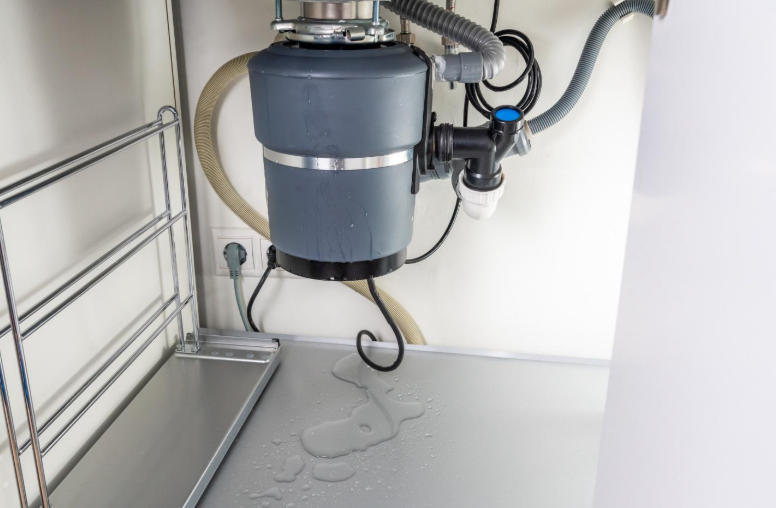
Photo from iStock - Credit: Mariakray
Common Causes of Leaks and How to Diagnose
Leaks usually come from a handful of specific parts that fail or loosen over time. The sink flange can corrode or lose plumber’s putty, letting water seep around the sink opening and drip into the cabinet. A cracked discharge elbow or split rubber hose under the unit often shows wetness near the P-trap and a slow drip onto the floor. Inspecting these visible connections helps pinpoint whether the leak is at the flange, discharge, or drain line.
Another common source is the seal around the sink flange or the internal ring gasket, which can harden and shrink with age. If water appears only while the disposal runs, the problem often sits inside the grind chamber or at the flange seal. When leaks occur even with the disposal off, check the dishwasher connection or the slip-joint at the trap for loose nuts. A quick hand inspection can reveal loose fittings before deeper disassembly is needed.
Electrical and mounting issues can mimic leaks by allowing the unit to wobble and stress fittings over time. A loose mounting assembly lets the disposal shift during use and may break the discharge elbow or loosen the flange seal. Technicians diagnose this by supporting the unit and checking the mounting ring while running a faucet to reproduce the leak. A professional approach will include testing the sink flange, mounting bolts, and visible wiring to rule out movement-related damage.
For a reliable diagnosis, a plumber will run a controlled test sequence and note where water appears first. They typically run water with the unit on and off, inspect the P-trap, and remove the trap if necessary to watch for hidden drips. The plumber may also use a moisture meter on cabinet surfaces and document findings in a written report to guide repair decisions. If you want a professional inspection or repair estimate, consider scheduling a visit with our garbage disposal repair services.
Identifying Persistent Odors and What to Do
When odors persist despite cleaning the visible trap and running water, trapped organic matter or bacterial biofilm often lurks deeper in the unit. A homeowner may detect a sour, rotten smell that gets worse after the disposal sits unused overnight. A professional inspection commonly includes removing the splash guard and visually inspecting the grind chamber for stuck food, grease buildup, and deteriorated rubber components. If the rubber baffle shows cracks or heavy residue, replacement of that part or cleaning with a biodegradable enzyme product often helps.
Another hidden source is slow drainage that allows food particles to sit and decompose in the P-trap or drain line just beyond the disposal. Technicians will frequently remove the P-trap and run a camera or a manual inspection to confirm trapped debris or grease coating. If the drain line shows organic buildup, a mechanical cleaning or an enzymatic cleaner can remove the odor source without replacing the disposal. For persistent issues related to internal seals or housings, the next step is a closer inspection of the disposal body.
Electrical overheating and oil-based greases can also produce unusual smells that homeowners mistake for rotting food, especially when the unit runs hot under heavy loads. A professional will check the motor temperature, listen for abnormal bearings, and test for electrical resistance to identify failing components. They may also verify the overload protector function and inspect wiring in the junction box for burning or melting signs. If heat-related damage appears, the cost and future reliability often influence whether repair or replacement is recommended.
For a clear diagnosis, a plumber documents odor tests and inspection steps, noting where the smell is strongest and what was found inside the trap or chamber. Homeowners in Florence, SC who report recurring odors should ask the technician to show photos or written findings during the visit. In Darlington, SC properties with repeated problems may need a longer cleaning cycle or component replacement to stop bacterial regrowth.
Simple Home Fixes for Garbage Disposal Repair
Start with power and basic clearing steps to avoid unnecessary disassembly. Turn off power at the wall switch or circuit breaker before touching the unit. Use a flashlight and tongs to remove visible debris from the splash guard. If the unit has a reset button, press it after clearing obstructions and test briefly with water running.
- Shut off power at the breaker first.
- Use tongs or pliers, never your hand.
- Try the reset button after clearing debris.
- Use an Allen wrench at the flywheel slot if needed.
If the disposal hums but won’t turn, an Allen wrench at the bottom hex can free a jam. Insert the correct size Allen key into the flywheel slot and rotate back and forth to free obstructions. After loosening, restore power briefly to verify rotation while running water. If the flywheel still binds, stop and consider a professional inspection for internal damage.
Small leaks at the sink flange sometimes allow homeowners to tighten mounting screws and reseal with plumber’s putty. Support the unit while you tighten to avoid stressing the discharge elbow or P-trap. Replace damaged rubber gaskets or the rubber splash guard if you notice visible cracks or missing pieces. For more complex leaks, ask a plumber to check the mounting assembly and wiring to avoid water-related electrical hazards.
For persistent odors after cleaning, run cold water and grind ice cubes with citrus peels to scrape buildup from the chamber walls. Avoid chemical drain cleaners because they can damage seals and internal components. If smells return within days, the odor source may sit in the drain line or inside deteriorating seals. Homeowners in Florence, SC and in Darlington, SC should document recurring problems and consider a professional inspection if simple cleaning doesn’t resolve the issue.
When To Stop Fixing and Consider Replacement
If your garbage disposal has required repeated resets, frequent unjamming, or multiple seal repairs, replacement becomes a practical choice. Replacing the unit reduces the chance of future failure when the motor windings or bearings show progressive wear. A professional can compare repair time and likely lifespan against replacement to help you decide. Homeowners in Florence, SC sometimes opt for replacement when cabinets or plumbing already need updating during a remodel.
Cracks in the grinding chamber, visible corrosion, or a leaking housing usually mean repair will be temporary and costly over time. When water reaches electrical components or the junction box, safety concerns accelerate the decision to replace the unit. A technician inspects the mounting flange, discharge elbow, and internal housing to confirm structural damage. If a moisture meter shows persistent dampness behind the cabinet, replacement often prevents hidden rot and future leaks.
Frequent electrical failures such as blown breakers, burning smells, or hot motor cases point to failing motor windings rather than simple fixes. A plumber or electrician will perform voltage readings and a continuity test to confirm motor health. If tests show abnormal resistance or intermittent connections, replacement is usually safer and more cost-effective. In Darlington, SC properties with older wiring consider replacing the disposal and updating the circuit for consistent operation.
Consider replacement when parts are obsolete or when projected repair costs approach the price of a new unit plus installation. Professionals provide a written comparison showing expected life and warranty differences between repairing and replacing. Choose replacement if you prefer improved efficiency, quieter operation, or a newer mounting system that reduces vibration. Schedule a service visit to get a clear recommendation and a replacement estimate based on inspection findings.
Signs You Should Call a Professional Service
Visible water damage around the mounting ring or electrical junction needs prompt professional attention to avoid safety hazards. A technician will cut power, inspect the junction box, and test voltage before touching wet components. They can also remove the unit safely and check the wiring connections and grounding conductor for corrosion or loose screws. If you see moisture near electrical parts, call a pro rather than attempting further DIY work.
Repeated humming with no rotation after basic home clearing often means internal motor or bearing failure that requires tools and expertise. A plumber will perform a continuity test and measure motor resistance with a multimeter to confirm winding damage. They may also lift the unit to inspect the mounting flange, discharge elbow, and condition of the grind chamber. When diagnostic readings show abnormal values, a professional can recommend repair or replacement based on expected remaining life.
When leaks persist despite replacing gaskets or tightening fittings, hidden cracks or a compromised housing may be present and need professional teardown. The technician will remove the disposal, pressure-test the discharge and inspect the sink flange and underside of the sink with a moisture meter. They also check the P-trap and dishwasher connection for hairline failures that homeowners can miss during visual checks. For residents in Florence, SC a pro can document findings and advise on whether a full replacement is warranted.
Strong, recurring odors after cleaning suggest trapped biofilm or slow drainline buildup requiring in-depth inspection and cleaning methods. A professional might remove the splash guard, inspect the grind chamber, and clear the P-trap while checking for grease coating farther down the drain. They can also run a camera or perform a manual flush to confirm drainline condition and prevent repeat odor problems. Homeowners in Darlington, SC experiencing persistent smells should schedule a diagnostic visit to find the source and solution.
Cost Factors for Repair Versus Full Replacement
Deciding between repairing and replacing often comes down to parts condition, labor time, and expected remaining life of the unit. A technician evaluates the motor, mounting assembly, and housing to estimate repair hours and part availability. They will compare that estimate to the expected lifespan after repair to determine cost-effectiveness. Homeowners should ask for a written estimate showing parts, labor, and timeline before authorizing work.
- Motor bearings that grind loudly usually need replacement.
- Cracked housings often leak again after short use.
- Obsolete parts increase repair lead time and cost.
- Gasket and flange fixes are usually quick and cheap.
- Electrical faults may require junction box work.
Electric diagnosis often uses a multimeter to check continuity and voltage at the disposal's junction box and switch. A plumber may lift the unit to inspect the mounting ring and discharge elbow for hairline cracks that cause future leaks. They might also run the unit briefly after repairs to confirm no abnormal vibrations or overheating occur. These checks help determine whether repair offers reliable service or only a temporary fix.
Labor rates and part costs vary, so many professionals provide a repair-versus-replace comparison showing short-term and long-term expenses. For properties in Florence, SC and in Darlington, SC homeowners should request expected warranty coverage for both repairs and new units. A clear comparison lets owners weigh immediate savings against potential future calls and cabinet damage risk.
Prevention Tips to Extend Disposal Lifespan
Clean the splash guard and visible chamber surfaces monthly to prevent buildup that causes odors and mechanical stress. Run cold water and grind small ice cubes to dislodge trapped particles and knock away grease coatings. Avoid putting coffee grounds, fibrous peels, or grease down the sink since those materials accelerate wear on impellers. These habits reduce the need for frequent garbage disposal repair and can extend motor life.
Inspect mounting hardware and discharge connections every few months to catch loose bolts or small leaks before they worsen. Look for movement when the unit runs, even slight wobble increases stress on the flange and elbow. Tighten visible nuts and support the unit during adjustments to avoid twisting the discharge or P-trap. A quick check can prevent cabinet water damage and costly follow-up repairs.
Protect the motor and electricals by avoiding long, continuous runs and by using the unit only with a steady cold water flow. Continuous heavy loads heat the motor and wear bearings faster than short, intermittent use. If your home in Florence, SC sees frequent entertaining or large meal prep, break up disposal use into smaller batches. This practice lowers overload trips and extends expected service life.
Schedule a professional inspection once every few years to catch internal wear not visible from outside the cabinet. A technician will test voltage at the junction box, check motor resistance, and lift the unit to inspect the mounting ring and grind chamber. For properties in Darlington, SC with older plumbing, these inspections identify early corrosion or slipping seals before leaks damage cabinetry. Regular professional checks paired with simple homeowner care reduce emergency calls and prolong reliable operation.

 Your Privacy Choices