
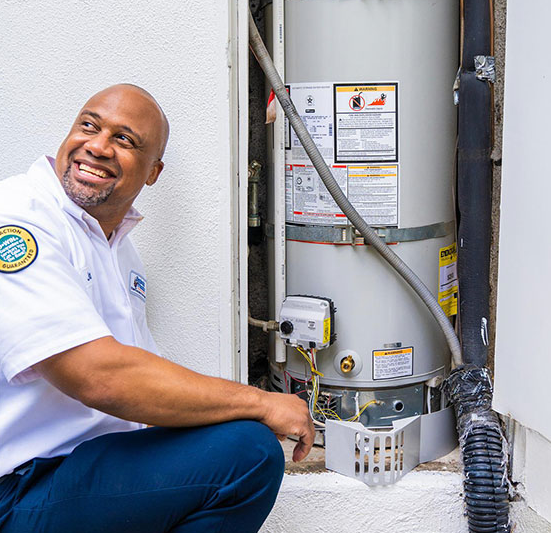
A failing water heater doesn’t just ruin your morning shower — it can increase energy bills, damage your home, and create safety risks.
This guide covers:
- Warning signs you need service
- Repair vs. replacement decisions
- How to choose the right water heater
- Essential maintenance (including the anode rod)
- Rebates and tax credits
- Frequently asked homeowner questions
If you’re researching water heater repair, replacement costs, or high-efficiency upgrades, this guide will help you make a confident and informed decision.
Signs Your Water Heater Needs Service
Small issues can quickly turn into expensive failures. Watch for these warning signs:
- Inconsistent or lukewarm water
- No hot water at all
- Breaker repeatedly trips (electric units)
- Pilot light won’t stay lit (gas units)
- Leaking from the tank or plumbing connections
- Rusty or discolored hot water
- Popping, rumbling, or banging noises
- Visible corrosion around fittings
Common causes include sediment buildup, failing heating elements or thermostats, internal tank corrosion, or pressure problems. Active leaking from the tank itself usually means replacement is necessary.
Repair vs. Replace: Which Is Smarter?
When Repair Makes Sense
- The unit is under 8 years old
- The issue is minor (thermostat, heating element, valve, igniter)
- There is no tank corrosion
- This is the first major repair
When Replacement Is Typically the Better Investment
- The tank is 10–12+ years old
- You’ve had multiple recent service calls
- The tank is leaking
- Your household’s hot water demand has increased
- Energy bills are rising due to declining efficiency
If you’re spending money every year just to keep the unit running, replacement often delivers better long-term value and improved energy efficiency.
How to Choose the Right Water Heater
The best system for your home depends on fuel type, space, household size, and hot water demand.
1. Traditional Tank Water Heaters
- Lower upfront cost
- Straightforward installation
- Reliable for steady, predictable demand
- Limited hot water supply
- Standby energy loss when not in use
2. Tankless Water Heaters
- On-demand, continuous hot water
- Higher energy efficiency
- Longer lifespan (15–20+ years with maintenance)
- Higher upfront cost
- Must be properly sized for climate and demand
Tankless systems work well in cold climates when correctly sized for groundwater temperatures and simultaneous usage.
3. Heat Pump (Hybrid) Water Heaters
- Extremely energy efficient
- Lower operating costs over time
- Often qualify for rebates and tax credits
- Require adequate space and airflow
- Higher upfront investment
Key Sizing Considerations
- Number of people in the household
- Simultaneous hot water usage (showers, laundry, dishwasher)
- Fuel type (gas, electric, propane)
- Tank capacity or tankless flow rate
- Recovery rate
- Available installation space
- Energy efficiency rating
Improper sizing is one of the most common reasons homeowners experience performance issues after replacement.
Water Heater Maintenance 101
Routine maintenance can extend the life of your system and improve efficiency.
Annual Maintenance Checklist
- Flush the tank to remove sediment buildup
- Test the temperature & pressure (T&P) relief valve
- Verify thermostat setting (120°F recommended for most homes)
- Inspect for corrosion or leaks
- Check the anode rod condition
What Is an Anode Rod — and Why Does It Matter?
The anode rod is a sacrificial metal rod installed inside tank-style water heaters. Its purpose is to corrode instead of the tank lining.
When the anode rod is depleted:
- Tank corrosion accelerates
- Water quality may decline
- The risk of premature tank failure increases
Replacing a worn anode rod can significantly extend the lifespan of your water heater, especially in homes with hard or corrosive water.
Rebates & Tax Credits
Installing a high-efficiency water heater may qualify you for:
- Federal tax credits
- State energy incentives
- Local utility rebates
- Manufacturer promotions
Heat pump water heaters and high-efficiency gas models often provide the largest savings. Program availability varies by region and changes frequently, so always verify eligibility before installation and retain all documentation.
Ask About Financing Options
In addition to rebates and tax incentives, many plumbing companies offer financing programs to help spread out the cost of a new water heater. If upfront cost is a concern, ask your local plumber about available payment plans, promotional financing, or low-interest options.
Combining available rebates, tax credits, and financing can make upgrading to a high-efficiency system much more affordable than many homeowners expect.
When to Call a Licensed Plumber
Schedule a professional evaluation if:
- Your water heater is nearing 10 years old
- You notice leaks or corrosion
- Performance is inconsistent
- Energy bills are climbing
- You are considering an upgrade
A licensed plumber can assess safety and efficiency, confirm proper sizing, ensure code compliance, protect warranty eligibility, and help you maximize rebate opportunities.















 Your Privacy Choices