
Toilet clogs happen to everyone. Even if you only flush the right things, too much at once or gradual buildup over time can still cause a backup. And while a licensed plumber is always an option, unclogging a toilet is often something you can handle yourself with a few household supplies and a little know-how.
Here is what to try along with safety tips, what not to do, and the signs that it is time to stop DIYing and call for help.
Before You Start: Stop the Overflow
If the toilet is actively overflowing or threatening to, do this first:
- Remove the tank lid and locate the rubber flapper at the bottom of the tank.
- Press the flapper down to stop water flowing into the bowl.
- Unhook the chain connected to the handle so the flapper stays flat and closed.
- Do not flush again until the clog is cleared. Repeated flushing on a clogged toilet pushes more water into an already-full bowl and makes the overflow worse.
Once the water level in the bowl recedes slightly, you are ready to start working on the clog.
A note on boiling water: nearly every method below involves hot water. Use the hottest water your tap produces. Do not use boiling water. Pouring boiling water into a porcelain toilet bowl can crack it. Hot tap water is plenty effective and safe for your fixture.
Our toilet repair page covers what to do when the issue is beyond a clog and something mechanical needs fixing.
Method 1: The Plunger (Start Here)
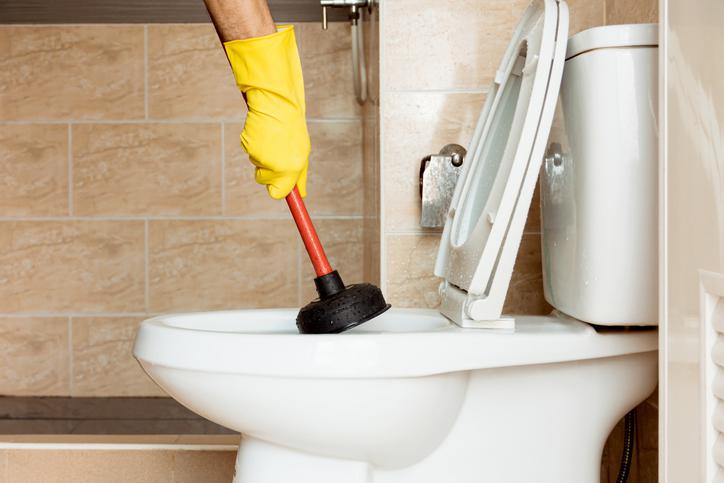
A good plunger is the single most effective tool for unclogging a toilet, and it should always be your first move. Not all plungers are equal for this job. You want a flange plunger, which has a rubber extension (the flange) that fits into the toilet drain opening to create a proper seal. A basic cup plunger, the kind with a flat rim, is designed for sinks and does not seal well against a toilet drain.
How to plunge a toilet effectively:
- Make sure there is enough water in the bowl to submerge the rubber head of the plunger. Add water from a bucket if needed.
- Spread a little petroleum jelly around the rim of the plunger for a better seal, especially if the rubber has stiffened over time.
- Lower the plunger at an angle into the water to let it fill with water rather than air. An air-filled plunger pushes air, not pressure.
- Position the flange directly over the drain and press down to seal it firmly.
- Push and pull vigorously. The pull stroke is just as important as the push. The suction created on the pull often dislodges a clog more effectively than the pressure on the push.
- Plunge without lifting the plunger head out of the water. Breaking the seal with each stroke reduces effectiveness and causes splashing.
- After 15 to 20 strokes, carefully lift the plunger. If the water drains, the clog has cleared. If not, repeat.
Related: 5 Steps to a Winning Plunger Technique
If you do not have a plunger, the methods below can help in the meantime. But after the clog is resolved, buy a flange plunger and keep it in every bathroom. It is the most important plumbing tool a homeowner can own.
Method 2: Dish Soap and Hot Water
If no plunger is available, this is the fastest and most reliable no-tool method. Dish soap's lubricating properties help the clog move through the trap, and hot water adds both heat to soften the blockage and the physical force of falling water.
Steps:
- Pour approximately half a cup of liquid dish soap directly into the toilet bowl.
- Let the soap sit for 10 to 15 minutes so it can work its way down around the clog.
- Fill a bucket or large pot with the hottest water your tap will produce (again, not boiling).
- Pour the water into the bowl from waist height. The drop adds force, similar to a mini waterfall, which can help push the clog through.
- Wait another 10 to 15 minutes, then flush.
- If the clog does not clear on the first attempt, repeat the process.
This method works best on soft clogs caused by excess toilet paper or organic material. It may not be effective on hard obstructions or non-flushable items. If you are out of dish soap, small pieces of bar soap work as a substitute.
Keeping your drains clear throughout the home reduces the overall load on your plumbing system and makes individual fixture clogs less likely to compound into something worse.
Method 3: Baking Soda and Vinegar (The Volcano Method)
This is a gentler approach than chemical drain cleaners and one that is safe for your pipes and septic system. The fizzing reaction between baking soda and vinegar helps break down soft blockages over time.
Steps:
- If the bowl is very full, remove some water with a bucket before starting, adding more liquid to an already-full bowl risks overflow.
- Add one cup of baking soda to the bowl.
- Slowly pour in two cups of white vinegar. Pour gradually. It will fizz immediately, and a rapid pour can cause it to bubble over.
- Allow the mixture to fizz and work for at least 30 minutes, ideally several hours or overnight for stubborn clogs.
- Pour in a gallon of hot (not boiling) water and flush.
This method is best for clogs that are not severe. It is particularly useful if you want to avoid any chemical cleaners and have time to wait. A natural drain cleaner recipe page has additional options for eco-friendly drain maintenance worth bookmarking.
Method 4: Toilet Auger (Closet Auger)
When physical force is needed, but a plunger has not done the job, a toilet auger, also called a closet auger, is the right next step. This is the tool plumbers use for toilet clogs, and it is available at any hardware store. Do not use a standard drain snake designed for sinks; the closet auger is specifically sized and shaped to navigate a toilet's trap without scratching the porcelain.
Steps:
- Insert the rubber-coated cable end of the auger into the toilet drain.
- Turn the handle clockwise while applying gentle forward pressure to feed the cable deeper into the trap.
- When you feel resistance, you have reached the clog. Continue rotating to either break up the blockage or hook it so you can pull it out.
- Pull the auger out slowly and carefully. Coming out too fast can fling contaminated water across the bathroom.
- Flush to test whether the clog has cleared.
The closet auger can reach clogs several feet into the drain that a plunger cannot access. For objects that have been accidentally flushed, a small toy, a disposable wipe, or excessive toilet paper, the auger is often the only DIY solution that will work.
Our related guide on common toilet clog causes can help you understand what led to the clog in the first place, which matters for preventing the next one.
Method 5: Call a Professional
If none of the above methods clear the clog, the problem is likely deeper than the toilet's trap. This could mean a blockage further down the drain line, a partial clog that has built up gradually in the pipe, or something lodged in the sewer line itself. Continuing to plunge or use household methods against a deep blockage risks damaging the toilet, the trap, or the drain.
Signs it is time to call a plumber:
- Water backs up into other fixtures (tub, shower, or sink drains gurgle or fill when you flush), this points to a main line blockage, not just the toilet
- The toilet clogs repeatedly, even after clearing
- Sewage odors are present in the bathroom or coming from drains
- The toilet overflows with no sign of improvement after multiple attempts
- You can see or suspect a non-flushable object (toy, wipe, diaper) is lodged in the trap and the auger cannot retrieve it
A plumber has access to drain cleaning tools, including motorized augers and hydro-jetting equipment that can clear blockages no DIY method will reach. Our toilet plumbing services page covers both repair and replacement when the problem turns out to be more than a clog.
What NOT to Do When Unclogging a Toilet
Avoid these common mistakes that can make the situation worse:
- Do not flush repeatedly when the toilet is clogged; it adds water to a full bowl and risks overflow.
- Do not use boiling water. It can crack the porcelain toilet bowl.
- Do not use chemical drain cleaners. They are ineffective on full stoppages and can damage plumbing components.
- Do not use a metal wire hanger on the porcelain without padding the end. It scratches the bowl surface easily.
- Do not use a regular sink plunger. The flat cup does not seal against a toilet drain.
For stubborn clogs, or if you would rather leave it to the professionals, our licensed team is ready to help. Call us at (866) 318-9397 or book an appointment online. You can also find a location near you.













 Your Privacy Choices