
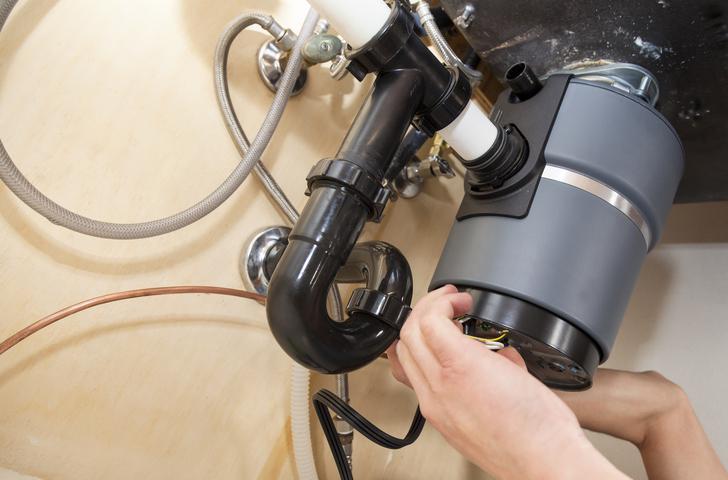
If you've had your garbage disposal stop working while entertaining guests or during a hurried dinner cleanup, you know how frustrating it can be. Luckily, the fix is usually as simple as pressing the garbage disposal reset button. Before you throw in the dish towel, follow these tips for resetting a garbage disposal and getting your kitchen running smoothly again.
Why Did Your Garbage Disposal Stop Working?
Most garbage disposals have a built-in sensor that automatically cuts off power whenever it detects something that could damage its components or burn out its motor. This automatic shutdown works much like a GFCI outlet cuts off power when it detects a short. The disposal isn't broken. It's doing exactly what it was designed to do.
There are a few common reasons your disposal's overload protector may have tripped:
- A jam: A hard object like a bone, utensil, or bottle cap is lodged between the impellers, causing the motor to stall.
- Overheating: Running the disposal for an extended period or grinding a large volume of food at once can cause the motor to overheat and shut down automatically.
- An electrical issue: In less common cases, a tripped circuit breaker or a wiring problem may be the culprit.
- Age or wear: Older disposals may trip more frequently as internal components begin to wear out.
Garbage disposals don't always give up immediately. If you hear a buzz or hum when you turn on the disposal but nothing grinds, that's usually a sign the unit has seized up while trying to work through something lodged in the grinding components. To get it working again, you'll need to clear any jam and reset the disposal manually.
What You'll Need
Before you get started, we recommend grabbing:
- Tongs or needle-nose pliers
- An Allen wrench, also called a hex wrench
- A flashlight
How to Reset Your Garbage Disposal in Four Steps
Step 1: Cut Off Power to the Disposal
Never work on a disposal without completely cutting off power at the breaker first. Turn off the circuit breaker connected to the disposal. Keep in mind that this may also cut power to nearby outlets and appliances, so have your flashlight ready just in case.
Step 2: Look for the Blockage
Use the flashlight to look deep into the disposal for any lodged items. The most common culprits are stray eating utensils, metal lids, jewelry, or bones. Use the tongs or pliers to remove any blockage you find.
Do not put your hand down the disposal, even with the power off. It is simply not worth the risk.
If you can see that something is stuck but can't remove it with tongs, this is where the Allen wrench comes in. Most garbage disposals have a small hex socket on the bottom of the unit, usually in the center. Insert a quarter-inch Allen wrench into this socket and work it back and forth to manually rotate the grinding plate and free whatever is causing the jam. Once the wrench turns freely in both directions, the jam has been cleared. Remove the wrench before restoring power.
Step 3: Reset the Garbage Disposal
Most disposal reset buttons are located on the bottom of the unit, though on some models, you'll find them on the side. The button is typically red and about the size of a pencil eraser, though some units have a black button instead. If you're having trouble locating it, check near the manufacturer's logo or consult your owner's manual.
Do all garbage disposals have a reset button? Yes. Every residential garbage disposal includes one.
Once you've found the button, press it firmly until you feel it click and stay in place. If the button immediately pops back out after pressing it, the disposal motor is likely still too hot from the overload. Wait 10 to 20 minutes for it to cool down and then try again. If the button refuses to stay latched after multiple attempts, there may be a deeper mechanical issue that requires professional attention.
Step 4: Restore Power and Test the Disposal
Return the breaker switch to the on position, run cold water down the disposal, and try turning the unit on.
If the disposal sounds normal and grinds smoothly, you're all set. If it's still making buzzing or grinding sounds, turn it off immediately. Repeat these steps or call Benjamin Franklin Plumbing for a helping hand.
When a Reset Isn't Enough
In many cases, a simple reset is all it takes to restore your disposal to working order. But there are situations where the reset button alone won't solve the problem. Watch for these signs that something more serious may be going on:
- The disposal resets successfully but keeps tripping again after a short period of use
- The motor hums but the unit still won't grind after the reset and jam clearing
- You notice water leaking from the base or sides of the unit
- The disposal makes loud rattling or grinding sounds even without food in it
- The reset button will not stay latched no matter how long you wait
These issues may point to a worn motor, a cracked housing, a damaged seal, or internal components that have simply reached the end of their service life. Continuing to force a struggling disposal can cause additional damage to the unit and put added strain on your kitchen drain. If you recognize any of these warning signs, it's worth having a licensed plumber take a look before the problem gets worse.
You can also learn more about what might be going wrong by reviewing our guide to common garbage disposal problems.
When to Consider Replacing Your Disposal
Garbage disposals typically last 10 to 15 years with regular use and proper maintenance. If yours is older and experiencing frequent jams, tripping repeatedly, or making sounds it never used to make, replacement may be the more practical and cost-effective solution compared to ongoing repairs.
Our licensed plumbers can assess your unit and give you an honest recommendation. Whether you need a straightforward disposal repair or a full new disposal installation, we'll help you choose the best path forward for your home and budget.
How to Avoid Garbage Disposal Problems
A few simple habits can go a long way toward preventing jams, overloads, and the need for future resets. Follow these tips to keep goes down the drain. Avoid putting coffee grounds, fat or grease, eggshells, metal objects, bones, banana peels, or fibrous vegetables like broccoli and celery down the disposal. Consider using a sink strainer to control what makes it into the unit in the first place.
- Skip the harsh chemicals. Avoid using bleach or other commercial drain cleaners to clean or unclog the disposal. These chemicals can damage the impellers and other internal components over time. For safe cleaning tips, check out our guide on https://www.benjaminfranklinplumbing.com/expert-tips/disposals/how-to-clean-your-garbage-disposal/how to clean your disposal.
- Always use cold water. Run cold water every time you operate the disposal, and keep it running for several seconds after the grinding stops. Cold water helps solidify any grease or fat so it can be broken down and flushed through the drain. Hot water can soften grease and allow it to coat and build up inside the unit.
- Don't overload it. Feed food scraps in gradually rather than stuffing the disposal all at once. Cutting larger items into smaller pieces before putting them in reduces strain on the motor and helps prevent jams.
- Run it regularly. Even when you're not grinding food, running the disposal briefly once a day can help prevent rust, corrosion, and the kind of buildup that leads to jams and odors.
Keep Your Whole Home Running Smoothly with Benjamin Franklin Plumbing
The kitchen is the hub of the home, and your garbage disposal is a valuable part of keeping it functional. Keep home life rolling with practical plumbing tips and punctual service from Benjamin Franklin Plumbing. Our trained, friendly plumbers provide trustworthy maintenance and repairs that keep your family on the move.
Whether you need a quick reset assist, a repair, or a full replacement, our team is available 24/7 and ready to help. We stand behind our work with industry-leading guarantees.
https://www.benjaminfranklinplumbing.com/locations/Find a location near you or call us anytime at (800) 259-7705.
You can also book an appointment online to get started right away.
















 Your Privacy Choices