
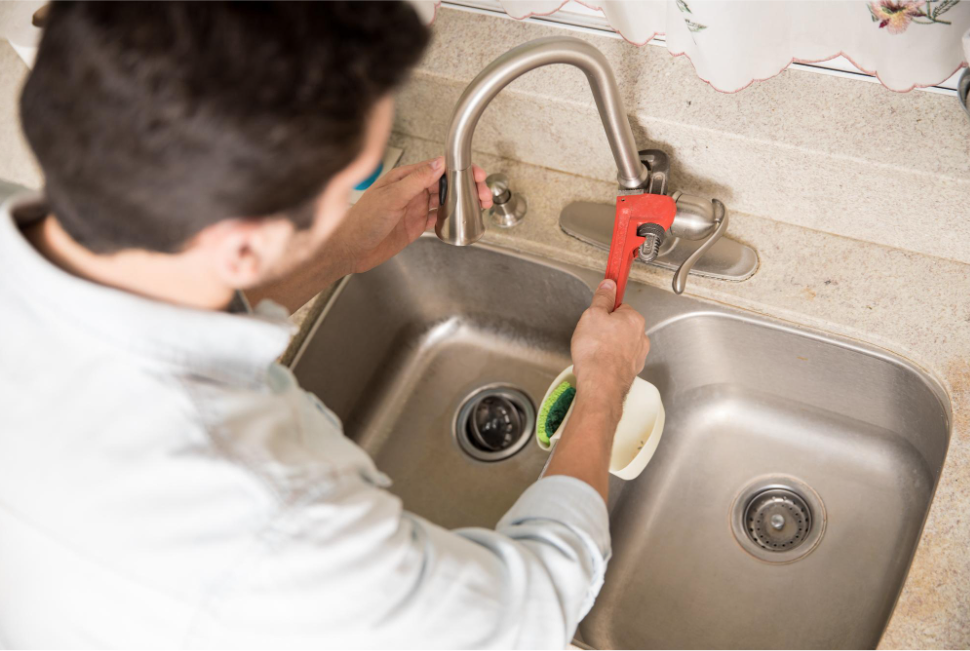
A faucet leaking after you turn the handle off may seem like a small plumbing annoyance. That steady drip can point to a worn seal, damaged cartridge, loose connection, excessive water pressure, or deterioration inside the fixture. The right fix depends on where the water appears and whether the faucet is otherwise in good condition.
Many leaky faucets can be repaired without replacing the entire fixture. A new cartridge, washer, O-ring, or supply connection may restore a dependable seal. Replacement becomes more reasonable when the faucet body is cracked, corrosion is extensive, compatible parts are unavailable, or the same fixture keeps leaking after repairs.
Before buying parts, identify whether water is dripping from the spout, collecting around the base, or leaking below the sink. A professional plumbing diagnosis follows the water to its source instead of treating every faucet leak as a bad washer.
In this article, you will learn about:
- Most faucet drips trace back to a few familiar failures
- The leak pattern reveals where the water is escaping
- A focused repair works when the rest of the faucet is sound
- Replacement makes sense when problems start stacking up
- A slow drip can waste water and damage more than the sink
- A few details make the service call more useful
Keep reading to understand what the leak is telling you and make a better repair-or-replace decision.
Most faucet drips trace back to a few familiar failures
Closing the handle is supposed to stop water inside the faucet before it reaches the spout. If a sealing component cannot close fully, a small amount of water continues to pass through.
The failed part depends on the faucet design. Compression faucets use different internal components than cartridge, ball, and ceramic-disc models, so a part that fits one fixture may be completely wrong for another.
Washers and O-rings eventually lose their seal
Washers and O-rings create seals between moving or connected parts. Repeated use, age, friction, and mineral deposits can flatten, crack, or distort them until water finds a path through.
A worn seal is often repairable, but the replacement must match the fixture. Installing a part with the wrong size, shape, or material can leave the faucet dripping or make the handle difficult to operate.
Cartridges can fail before the faucet body
Many single-handle and two-handle faucets use cartridges to control flow or mix hot and cold water. A damaged seal, scratched surface, or buildup inside the cartridge can prevent the water from shutting off completely.
Cartridge replacement can be a practical repair when the faucet body and handle are still sound. The fixture's brand and model matter because cartridges that look similar are not always interchangeable.
High water pressure can shorten the life of a repair
Excessive pressure can place more stress on cartridges, seals, supply connectors, valves, and other plumbing components. A faucet that drips mostly at certain times or after another fixture closes may need a pressure check in addition to a local repair.
Replacing a seal without testing the system can leave the underlying stress in place. Homes with banging pipes, forceful flow, or repeated fixture leaks should be evaluated for high water pressure before another component fails.
Mineral buildup keeps seals from closing cleanly
Mineral deposits and debris can collect on sealing surfaces or inside small openings. Even a sound component may not close correctly when material is trapped between the parts that should meet.
Cleaning may help when the buildup is accessible and the component remains undamaged. Pitted metal, scratched ceramic surfaces, or distorted rubber parts generally require replacement rather than repeated cleaning.
The leak pattern reveals where the water is escaping
The visible water is not always directly below the failed part. It can travel along the faucet body, supply tube, sink rim, or cabinet wall before it drips where you finally notice it.
Dry the area completely, then observe the faucet while it is off and while it is running. Do not reach near electrical connections, and stop the test if water is spreading into cabinetry or flooring.
A spout drip usually starts inside the faucet
A spout drip while the handles are fully off usually points to an internal sealing problem. The likely components include a washer, valve seat, cartridge, O-ring, ball assembly, or ceramic disc, depending on the faucet.
Pay attention to whether the drip is constant or intermittent and whether handle position changes it. Do not overtighten the handle in an attempt to force the leak closed because that can damage the stem or internal seal.
Water around the base changes the diagnosis
Water at the base may come from an O-ring, gasket, loose mounting area, pullout hose, or connection inside the faucet body. It may appear only while the faucet is running or when the spout is moved.
Splashing can create a similar wet ring, so dry the sink and test carefully. If water returns without normal sink use, the base or an internal connection deserves closer inspection.
A wet cabinet may point away from the faucet
Moisture below the sink may come from a supply connection, shutoff valve, pullout hose, faucet mounting point, drain connection, or disposal connection. The first repair should address the component that is actually releasing water.
Run one component at a time and watch from a safe position. If water appears only as the basin empties, the issue may involve drain repair rather than the faucet's pressurized supply.
A leak near the disposal flange, body, or discharge connection can also mimic a faucet problem. Water that appears only when the unit or sink is used may require garbage disposal repair instead of work on the faucet.
Dry the entire area between tests so the next drop has a clear path. If several components are wet at once, stop running water and let a plumber isolate the source.
The shutoff valve can be the real source
Fixture shutoff valves can seep around the stem, body, or supply connection. The water may then travel along the tube and make the faucet connection look responsible.
Do not force a corroded valve or rely on it if it will not close completely. A working shutoff is important because it lets the fixture be isolated without turning off water to the entire home.
Outdoor faucets bring their own warning signs
An outdoor faucet may leak from the spout, handle packing, vacuum breaker, threaded connection, or pipe behind the wall. Remove any attached hose, dry the fixture, and observe whether water appears while the valve is off or only while it is running.
Regular outdoor plumbing maintenance should include checking hose bibs for drips, loose mounting, and moisture where the pipe enters the building. A leak inside the wall can cause damage without leaving a large puddle outside.
Wet soil near the faucet may come from the fixture, an irrigation connection, or another buried pipe. If the damp area continues when the faucet is dry and unused, an underground water-line leak may need to be ruled out.
Do not keep tightening an outdoor faucet that requires increasing force to close. Excessive force can damage the stem or packing and turn a slow drip into a larger leak.
A focused repair works when the rest of the faucet is sound
Repair is usually the first consideration when the fixture is structurally sound, the finish is in acceptable condition, and a compatible replacement part is available. A targeted repair produces less waste and preserves a faucet that still suits the sink.
The decision also depends on access and labor. A simple cartridge in an accessible fixture is different from a corroded faucet mounted behind a deep sink where other connections may fail during disassembly.
One failed part is often worth replacing
A single worn washer, O-ring, cartridge, or gasket often makes repair reasonable, particularly when this is the fixture's first leak and the surrounding metal is undamaged.
The new part must fit correctly, and the sealing surfaces should be inspected before reassembly. A replacement seal cannot compensate for a cracked housing, badly pitted valve seat, or damaged cartridge cavity.
Smooth operation supports a targeted repair
A faucet that moves smoothly, delivers consistent hot and cold water, stays firmly mounted, and has a sound finish may have plenty of useful life after a focused repair. The leak should stop completely when the work is done.
Poor handle movement, a loose spout, recurring temperature-control problems, and corrosion around several components change the calculation. Multiple defects can make a series of small repairs less sensible than one replacement.
DIY repair begins with a reliable shutoff
Some homeowners can replace an accessible aerator or manufacturer-specified seal when they have the correct instructions and a reliable shutoff. The task becomes riskier when the fixture is corroded, the model is unknown, or the valve below the sink will not close.
Before starting any faucet repair, consider these practical questions.
- Can the water be shut off completely and reopened safely?
- Is the exact faucet model and replacement part known?
- Are the mounting points and supply connections accessible?
- Is there corrosion that could cause another component to break?
- Can you test for leaks without exposing cabinetry or electrical equipment?
A single uncertain answer does not automatically require replacement, but it may make professional service safer. Keep small parts organized and avoid using excessive force on finished or corroded components.
If the repair does not stop the leak, do not keep tightening handles or connections. A local plumber can identify the faucet design, isolate the failed part, and check nearby valves and supply tubes.
Even a slow drip adds up over time
A steady drip is easy to underestimate because each drop looks insignificant. Over a full day and year, however, thousands of drops become a measurable volume of treated water.
The U.S. Environmental Protection Agency reports that a faucet dripping once per second can waste more than 3,000 gallons in a year.
The actual loss depends on drop size and drip rate, so a timed count is an estimate rather than a precision measurement. Even so, it shows why a small repair can matter long before the sink begins overflowing.
An unexplained high water bill may reflect more than one leak. If usage stays high after the faucet is repaired, the home may need a broader inspection.
Replacement makes sense when problems start stacking up
Replacement makes more sense when the faucet has damage that a new seal cannot correct or when repair would leave several failing components in service. The objective is dependable operation, not simply stopping today's visible drip.
Consider the faucet as a complete assembly. Its body, finish, handle, spout, mounting hardware, supply connections, and internal parts all affect whether another repair is worthwhile.
Cracks and corrosion move the decision toward replacement
A cracked body can leak from an area that is not designed to be serviced. Extensive corrosion can also weaken threaded connections, mounting hardware, and internal surfaces that new seals depend on.
Surface discoloration alone does not prove the fixture has failed, but active corrosion, flaking metal, distorted openings, and recurring seepage are stronger replacement signs. A plumber can distinguish cosmetic wear from structural deterioration.
Repeat leaks can make another repair a poor bet
A second leak shortly after a correct repair may indicate damage beyond the replaced part. The valve seat, cartridge cavity, stem, or faucet body may no longer provide a reliable sealing surface.
Review what was replaced and how long the repair lasted. Repeating the same repair without identifying why it failed can add labor and parts while water continues to escape.
Parts availability can decide the outcome
Older, discontinued, or unidentified faucets can be difficult to match with the correct cartridge and seals. A generic part that almost fits may create poor handle movement or fail to stop the leak.
Replacement is often more practical when the manufacturer cannot be identified or the correct component is no longer made. Keep the model information for the new faucet so future maintenance is easier.
One new fixture can resolve several worn-out features
Replacement may be worthwhile when the fixture also has poor handle control, a loose base, damaged sprayer hose, worn finish, or an inconvenient design. Addressing several defects at once can be more sensible than repairing them separately.
Do not confuse lower flow with poor performance. Faucet flow may be intentionally limited for efficiency, while a leak is an uncontrolled loss. Product specifications and measured operation should guide the decision.
EPA WaterSense limits labeled bathroom faucets and aerators to 1.5 gallons per minute, at least 30% below the standard flow of 2.2 gallons per minute. The agency estimates that replacing inefficient bathroom fixtures can save an average family about 700 gallons of water each year.
Those efficiency figures do not mean every older faucet needs replacement. They become relevant when a worn fixture already needs substantial work and the homeowner is comparing repair with a new model.
A slow drip can waste water and damage more than the sink
The consequences depend on where the water goes. A spout drip usually enters the drain, while a base, hose, valve, or supply leak can spread into cabinets, walls, flooring, or nearby materials.
Waiting also makes it harder to tell whether the original leak is getting worse or another problem has appeared. Mark when you first noticed the issue, check the surrounding area, and arrange service promptly if moisture is escaping the sink.
The water bill keeps growing while the drip continues
The amount added to the bill depends on the drip rate and how the utility bills water and related services. A faster drip or thin stream wastes more than an occasional drop.
EPA WaterSense estimates that average household leaks waste nearly 10,000 gallons annually and that 10% of homes lose at least 90 gallons per day through leaks. A single faucet may be only part of that total, especially when the home's metered use remains high after the visible drip is repaired.
Cabinet moisture can become more costly than the faucet
Water that escapes around the base or below the sink can swell wood products, stain finishes, loosen materials, and create persistent dampness. Damage can begin before water becomes visible on the floor.
Drying the surface does not repair the source. When the path is unclear or moisture has spread beyond the fixture, targeted leak detection can help determine what is wet and where the water began.
A hot-water drip wastes more than cold water
A leak on the hot side causes the water heater to replace heated water that is going down the drain. The energy impact depends on the leak rate, water-heater type, temperature setting, and utility costs.
Every hot-water drip sends water that has already been heated down the drain. Repairing the leak reduces both water loss and unnecessary demand on the water heater.
Repeated fixture leaks can point to a broader problem
One worn cartridge can be an isolated failure. Several leaks, forceful flow, banging pipes, or repeated seal damage may point to a broader pressure or aging-component issue.
Routine residential plumbing service can include checking nearby shutoffs, connections, and visible piping while the faucet is being evaluated. The scope should remain tied to observed conditions rather than assuming every fixture needs work.
A few details make the service call more useful
A few clear observations can make the service visit more efficient. Note the faucet location, where water appears, when it leaks, and whether hot or cold handle position changes the drip.
Homes across Conroe can have different fixture brands, plumbing layouts, and previous repairs. The part should be identified at the fixture instead of selected from the neighborhood or the home's age alone.
Leak location and timing narrow the possibilities
Photograph the faucet, handles, and any visible brand or model marking. Note whether the leak comes from the spout, base, handle, pullout hose, shutoff, or supply connection.
The following details can help a plumber prepare for the likely repair.
- Whether the faucet has one handle or two.
- Whether the leak is constant or happens only while water runs.
- Whether hot, cold, or both sides are affected.
- Whether the shutoff valves close and remain dry.
- Whether the faucet has been repaired before.
Do not remove the faucet just to find a model number if doing so could create a larger leak. Visible markings and clear photos are often a safer starting point.
If several fixtures have begun leaking, mention that pattern when scheduling. It may justify pressure testing or a broader check rather than treating each drip as an unrelated event.
Active damage changes whether the water should stay on
An occasional spout drip that flows safely into an open drain is different from water entering a cabinet or floor. If an active leak is causing damage and the fixture shutoff works properly, isolate the faucet if you can do so safely.
Do not force a damaged valve or leave a sink drain blocked beneath a dripping spout. For a fast leak, spreading moisture, or failed shutoff, turn off the appropriate water supply if it is safe and arrange prompt plumbing help.
Routine checks catch the next leak earlier
Maintenance cannot keep every seal from aging, but it can identify loose connections, corrosion, abnormal pressure, and small leaks earlier. Periodically look under sinks and around fixture bases instead of waiting for water to reach the floor.
Consistent leak prevention is especially useful before periods of heavier household or outdoor water use. Summer plumbing maintenance can also catch dripping hose bibs and supply connections before demand increases.
A plumbing membership may make routine inspections easier to schedule, depending on the plan's terms. Maintenance does not replace immediate service when water is actively damaging a cabinet, wall, or floor.
Conclusion
A leaky faucet does not always need to be replaced. When the body is sound and the correct part is available, a washer, O-ring, cartridge, or connection repair may restore dependable operation.
Replacement becomes more practical when the faucet is cracked, heavily corroded, repeatedly leaking, difficult to match with parts, or experiencing several failures at once. The source of the water should be confirmed before either option is chosen.
Benjamin Franklin Plumbing can inspect the faucet, shutoff valves, supply connections, and surrounding plumbing, then explain whether repair or replacement fits the condition of the fixture.
For professional faucet service and ongoing plumbing care, visit the Benjamin Franklin Plumbing Club Membership Program.

 Your Privacy Choices