
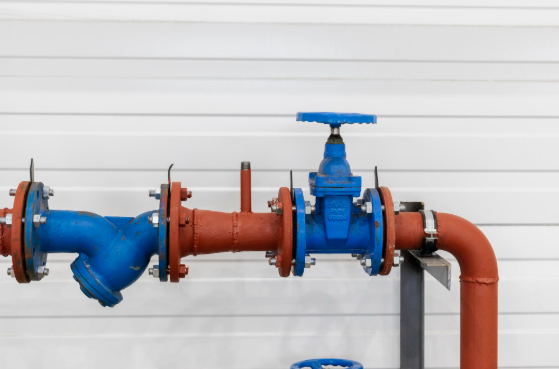
Backflow prevention in Conroe TX exists to answer one uncomfortable question: what happens to your home's water if the pressure in the street suddenly drops.
Under normal conditions, water flows one direction, from the municipal main into your house. But a water main break, a firefighting draw, or even a sudden neighborhood demand spike can reverse that flow, and if there's nothing stopping it, whatever is sitting in your pipes, hose, or irrigation system can get pulled backward into the drinking water supply.
That's the core problem a backflow preventer solves. It's a mechanical device installed at the point where your plumbing connects to the public water main, or at specific fixtures like irrigation systems and pools, that only allows water to move in one direction. For homeowners in Conroe and surrounding Montgomery County communities, this isn't an abstract code requirement. It's tied directly to how your household actually gets safe water.
This article covers what backflow actually is, why Texas regulates it the way it does, which properties need a device, and what ongoing testing and maintenance look like once one is installed.
In this article, you will learn about:
- What backflow is and how it happens
- Texas and TCEQ requirements for backflow prevention
- Which Conroe homes and properties are most at risk
- Testing, maintenance, and what to do if your device fails
Keep reading to find out whether your home has an unprotected cross connection you don't know about.
What backflow is and how it happens
Backflow is the unwanted reversal of water flow inside a plumbing system. Instead of clean water moving from the municipal supply into your home, pressure changes can pull water, and anything mixed into it, backward into the pipes that are supposed to carry only drinking water.
There are two distinct ways this happens, and understanding the difference helps explain why certain fixtures need protection and others don't. It's a similar diagnostic mindset to spotting hidden slab leak symptoms, where the underlying cause isn't always obvious from what you can see at the surface.
Backpressure versus back-siphonage
Backpressure occurs when something on your property, like a boiler, a pool pump, or an irrigation system, generates more pressure than the municipal supply line. That pressure can push contaminated water backward into the main system if nothing blocks it.
Back-siphonage is the more common scenario for residential properties. It happens when pressure in the main line drops suddenly, often from a water main break, a nearby fire hydrant in use, or heavy simultaneous demand during a plumbing system summer readiness crunch. That drop creates a vacuum effect that can draw water backward out of a garden hose, an irrigation line, or any submerged fixture.
- A garden hose left submerged in a pool or a bucket of chemicals
- An irrigation system with sprinkler heads below ground level
- A boiler or heating system connected to the same water line
- A pool or spa fill line without proper separation
Some of these same pressure swings show up in other plumbing symptoms too, including the shower water temperature fluctuating that homeowners sometimes notice right around the same time as a nearby water main event.
Why cross connections are the real hazard
A cross connection is any point where your potable water system physically connects to a non-potable source, whether that's an irrigation line, a pool, a boiler loop, or a garden hose sitting in standing water. The cross connection itself isn't dangerous under normal pressure, but it becomes one the moment backpressure or back-siphonage occurs.
- Identify every point on your property where a hose, pipe, or fixture connects to an outside water source
- Note which of those connections lack any kind of check valve or air gap
- Prioritize protecting connections tied to irrigation, pools, and heating systems first
- Have a licensed plumber confirm which connections legally require a backflow assembly
Federal researchers have documented the real-world consequences of unprotected cross connections. The Environmental Protection Agency has recorded more than 400 reported backflow incidents nationwide between 1970 and 2001, resulting in over 12,000 documented cases of illness, and officials widely consider that number an undercount since backflow events are often never reported.
Why this matters even in a well-maintained home
It's tempting to assume backflow risk only applies to older homes or commercial properties, but any home with an irrigation system, a pool, or certain water heater setups has at least one cross connection. The CDC estimates that germs in drinking water cause at least 1.1 million illnesses in the United States every year, and unprotected cross connections are one of the contributing pathways public health agencies track closely.
None of this means your water is unsafe under normal conditions. It means the protection only matters during the moments when pressure shifts, which is exactly when most homeowners aren't thinking about it, the same way most people don't think about seasonal leak prevention services until a problem has already started.
Texas and TCEQ requirements for backflow prevention
Backflow prevention isn't optional in Texas, and the requirements come from a specific state regulatory framework rather than a general suggestion. Understanding where that authority comes from helps explain why your water provider may be contacting you about testing.
The Texas Commission on Environmental Quality regulates cross-connection control and backflow prevention under Title 30 of the Texas Administrative Code. Public water systems, including the ones serving Conroe and the surrounding area, are required to maintain a cross-connection control program that protects the distribution system feeding every home connected to it.
What TCEQ actually requires
- All backflow prevention assemblies must be tested at installation by a licensed tester
- Assemblies protecting against a health hazard must be tested at least once annually
- Testing must be performed by a tester holding a valid TCEQ Backflow Prevention Assembly Tester license
- Properties with septic systems typically must install a reduced pressure zone assembly on irrigation lines
According to the Texas Commission on Environmental Quality, water providers may also require a customer service inspection for new construction, for existing customers who've made substantial plumbing modifications, or whenever there's reason to suspect a hazard on the property.
Who is actually responsible for testing and cost
Property owners, not the city or water utility, are generally responsible for backflow testing costs and scheduling. That responsibility often surprises homeowners who assume it's handled automatically as part of their water bill.
- Confirm whether your property has a registered backflow assembly already on file with your water provider
- Check whether your provider mails annual testing reminders or requires proactive scheduling
- Hire a TCEQ-licensed tester to perform the annual test and submit documentation
- Keep a copy of your test report in case your provider requests proof of compliance
Missing an annual test doesn't just risk a compliance letter. An assembly that hasn't been tested can fail silently, which defeats the entire purpose of having it installed in the first place, not unlike how skipping outdoor plumbing maintenance in Montgomery County tends to surface as a bigger repair down the line.
Where local code adds to state requirements
State rules set the floor, but many municipalities and water providers layer additional requirements on top, particularly for irrigation systems and commercial properties. Homeowners in The Woodlands and Shenandoah should check with their specific water provider, since testing frequency and assembly type requirements can vary even across neighboring communities in Montgomery County.
Which Conroe homes and properties are most at risk
Not every property carries the same backflow risk, and understanding where your home falls on that spectrum helps clarify whether you already have adequate protection or a gap worth closing.
Irrigation systems are consistently the most common residential cross connection, since sprinkler heads sit at or below ground level and connect directly to the same line supplying your kitchen tap. Homes with private wells, common in Grangerland and other unincorporated parts of Montgomery County, face a related but separate concern, since a well connected to a home that also ties into municipal water creates its own cross-connection risk if not properly isolated.
Higher-risk property types
- Homes with in-ground irrigation or sprinkler systems
- Properties with swimming pools or spas using an auto-fill line
- Homes on private wells with any connection to municipal water
- Properties with boilers, hydronic heating, or radiant floor systems
- Homes near Lake Conroe with lake-fed irrigation or auxiliary water sources
Lower-risk but not risk-free properties
- Standard single-family homes with no irrigation system or pool
- Homes without a boiler or auxiliary heating water loop
- Properties with all outdoor hose bibs equipped with vacuum breakers
Even in the lower-risk category, a garden hose submerged in a bucket or a kiddie pool during a pressure drop is enough to create a temporary cross connection. That's why hose bib vacuum breakers, a low-cost fix, are worth confirming even on homes that otherwise seem low-risk, alongside a broader look at residential plumbing services that touch the same outdoor connections.
Signs a property may already have an unprotected cross connection
- Discolored or unusual-tasting water after irrigation runs
- No visible backflow assembly near the water meter despite having an irrigation system
- A recent high water bill that coincides with irrigation system changes
- A water provider notice referencing cross-connection control or backflow testing
If any of these apply, it's worth having a licensed plumber inspect the property rather than waiting for a compliance notice to force the issue. It's the same reasoning behind getting a plumbing diagnosis early, since catching a cross connection before it causes a problem is always less disruptive than dealing with the aftermath.
Testing, maintenance, and what to do if your device fails
A backflow prevention assembly is a mechanical device, and like anything mechanical, it can wear out or fail over time. That's the entire reason annual testing exists rather than a one-time install-and-forget approach.
Testing itself is straightforward for the homeowner, even though the process behind it is technical. A licensed tester connects gauges to the assembly, checks that each internal check valve holds pressure correctly, and confirms the relief valve opens as designed under simulated backflow conditions.
What the annual test actually checks
- Confirms each check valve inside the assembly seals properly under pressure
- Verifies the relief valve opens correctly if backpressure is detected
- Checks for any internal wear, debris, or valve seat damage
- Documents results on the required test and maintenance report for your water provider
A test typically takes 30 to 60 minutes per assembly, and the tester should provide documentation you can keep for your own records in addition to whatever gets filed with your water provider.
What happens when a device fails testing
- The tester will flag exactly which component failed and why
- Minor issues like debris or a worn seal are often repairable on the spot
- More significant failures may require replacing the assembly entirely
- Your water provider may require proof of repair before service continues uninterrupted
A failed test isn't cause for panic, but it does need prompt follow-up. An assembly that's failed inspection is no longer providing the protection it's there for, and leaving it unaddressed defeats the purpose of having tested it in the first place, similar to how ignoring high usage water pressure issues elsewhere in the home tends to compound rather than resolve on its own.
Choosing a qualified tester
Not every plumber is licensed to test backflow assemblies. Texas requires testers to hold a specific TCEQ Backflow Prevention Assembly Tester license, separate from a standard plumbing license, so it's worth confirming that credential before scheduling.
A licensed plumber with the correct backflow testing credentials can also flag related issues while they're on-site, since backflow testing often overlaps with a broader look at your home's outdoor plumbing.
Conclusion
Backflow prevention isn't a piece of plumbing trivia. It's the difference between a home's water supply staying clean during a pressure event and that same event pulling contaminated water backward into the pipes feeding your kitchen sink. For homes with irrigation systems, pools, wells, or certain heating setups, that risk is real and documented, not hypothetical.
Texas takes this seriously enough to regulate it at the state level, and TCEQ's annual testing requirement exists precisely because these assemblies can fail quietly if nobody checks them. Skipping that yearly test doesn't just risk a compliance issue with your water provider, it risks losing the one thing standing between your home and a genuine cross-connection hazard.
If you have an irrigation system, a pool, or a well on your property and you're not sure whether you have a backflow assembly installed, or whether it's been tested in the last year, that's worth resolving before it becomes a bigger problem. Benjamin Franklin Plumbing serves Conroe and the surrounding Montgomery County communities through the Benjamin Franklin Plumbing club membership program, which is built around exactly this kind of proactive home protection.

 Your Privacy Choices