
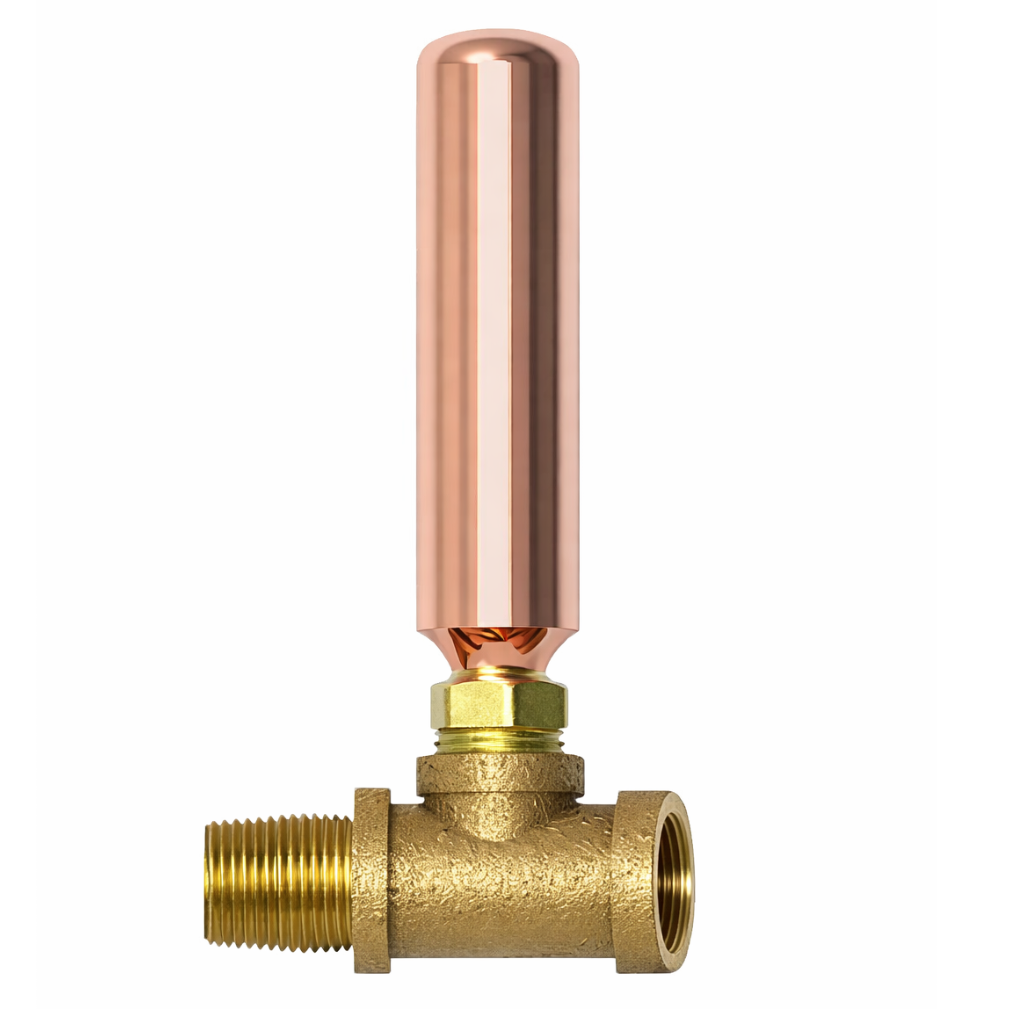
Key Takeaways About Water Hammer Arrestors
Water hammer is a sudden pressure surge that causes banging and stress in plumbing. This summary helps homeowners and property managers decide when to act and what to watch for.
- Identify which fixture or appliance causes the banging noises.
- Prevent loose pipe straps from allowing runs to hit framing.
- Avoid DIY fixes that might conceal leaks or weaken fittings.
- Spot high static pressure with a simple pressure gauge test.
- Reduce shocks by adjusting valve closing speed or timing.
- Plan professional diagnostics when noises persist, or leaks appear.
Introduction
That loud banging in your walls or under the sink is often water hammer, a pressure surge that stresses pipes and fixtures. Sudden valve closures and fast-moving water create shock waves that rattle clamps and joints. Left unchecked, these shocks can loosen fittings and cause leaks over time. Homeowners notice it when faucets or washing machines stop quickly and the pipes snap.
Water hammer matters because it reduces the lifespan of plumbing components and can lead to sudden failures. Repeated shocks wear out shutoff valves, supply lines, and mounting hardware. You may see loose fittings, hear recurrent noises, or find fresh leaks after heavy appliance cycles. Addressing the cause prevents inconvenient damage and unexpected repairs.
Two common water hammered facts and solutions stop the noise and protect pipes: water hammer arrestors and valve adjustments. Arrestors absorb the pressure wave before it travels through the system. Adjusting the speed of closing valves reduces the strength of each shock. Both approaches aim to cut peak pressures that harm pipes and fixtures.
Professional diagnosis checks system pressure, inspects shutoff valves, and locates where shocks originate in the supply network. For coastal homes in Conway, SC, the combination of appliance timing and valve condition often reveals the source. Property owners should watch for patterns tied to laundry or dishwashing cycles. If the banging continues, contact a licensed plumber in Myrtle Beach, SC to confirm the cause and recommend repairs.

Photo from iStock - Credit: barbaliss
What Water Hammer Means and Why It Happens
Water hammer means a rapid pressure spike in a closed plumbing system when flowing water stops suddenly.
- Momentum from moving water creates a shock wave.
- Closed valves reflect that shock back into pipes.
- Air pockets can change how shocks travel.
- Loose pipe straps let pipes move and bang.
- High system pressure makes impacts worse.
This pressure spike happens because water has mass and momentum that must dissipate when flow stops abruptly. Homeowners often ask if a single loud bang is dangerous, and the clear answer is yes because repeated spikes stress fittings and valves. A common check is to note which fixture causes the noise and whether it happens during washing machine or dishwasher cycles. Professionals will use a pressure gauge and visual inspection to confirm that rapid valve closure or high static pressure caused the shock.
Water hammer also depends on valve type and condition, not just appliance speed. Fast-closing solenoid valves in dishwashers and washing machines create stronger shocks than manual faucets. Worn shutoff valves may close unevenly and spike pressure repeatedly during each cycle. For properties in Conway, SC, and Myrtle Beach, SC, aging valves combined with heavy laundry or dishwasher use often point an inspector toward valve timing as the root cause.
Common Causes of Loud Pipe Banging Sounds
Air pockets trapped at high points in plumbing often amplify banging by compressing and releasing suddenly when flow changes. Faulty or missing pipe straps allow runs to shift and collide with framing during a pressure surge. Fast-closing solenoid valves in appliances send quick stops that a loose support will amplify into loud impacts. A professional inspecting will look for visible pipe movement and worn strap locations near the noise source.
High static water pressure raises baseline forces so any shock becomes louder and more damaging when it travels. Partially closed shutoff valves or debris-clogged supply lines can create turbulence that worsens hammer effects. Corroded or seized valves may snap shut instead of closing smoothly and increase shock magnitude. Technicians often measure system pressure with a pressure gauge to confirm excessive static pressure.
Specific fixture valves cause repeated banging when their internals fail or close too fast during cycles like dishwashing and laundry. Washing machine and dishwasher solenoids commonly create predictable timing patterns that reveal the originating circuit. In homes with frequent heavy appliance use, timing can point right to these fast valves. A plumber will isolate the fixture and test valve operation to confirm it as the source.
Failing pressure-reducing valves (PRVs) or missing expansion devices let transient spikes travel freely through the network and hit distant fittings. Old galvanized supply lines and brittle connections transfer impact energy instead of absorbing it, making distant bangs more noticeable.
Typical Warning Signs and Immediate Home Actions
If you hear banging at specific times, note the fixture, time, and whether appliances run together. Turn off the appliance and then slowly open a nearby faucet to see if the noise stops. Check visible shutoff valves for tightness and feel for vibration against the pipes when the device cycles. If you detect wet spots or fresh corrosion near joints, shut off the water and consider a professional inspection.
Another immediate action is to operate the main shutoff briefly to see if the noise pattern changes after pressure drops. Use a pressure gauge at a hose bib if you have one to record static pressure readings before calling for help. Tighten any loose pipe straps you can access safely to reduce movement during a pressure surge. Avoid striking pipes with tools to silence banging, that can damage fittings and hide the real problem.
If water hammer happens mostly during dishwashing or laundry, add a delay between cycles and run appliances separately to reduce overlapping shocks. Inspect flexible supply lines to those appliances for bulging, kinks, or wear that could worsen shocks. A short-term fix is gently opening an affected fixture when a machine cycles to relieve sudden pressure spikes. For residential homeowners, this step can prevent immediate damage while you arrange a permanent repair.
When noises occur across multiple units or floors, record the times and locations and share them with building management or a plumber. A technician will use a pressure gauge, visual inspection, and valve testing to confirm whether an arrestor or valve adjustment is needed. For property managers, collecting these observations speeds diagnosis and reduces repeat visits. If you suspect high pressure or failing valves, call a licensed plumber rather than attempting complex repairs yourself.
How Water Hammer Arrestors Work Mechanically
A water hammer arrestor cushions a sudden pressure spike by providing a compressible space that interrupts the shock wave. Inside, a piston or a sealed air chamber compresses when water hits, converting kinetic energy into a small movement without a loud impact. Some arrestors pair a spring with a piston to reset quickly for repeated cycles and preserve response over time. Professionals choose the arrestor type based on pipe size and the fixture's valve speed to match expected loads.
- Piston-style arrestors use a sliding piston to absorb shock.
- Air-charged units rely on a trapped air cushion to compress.
- Spring-assisted models return quickly for frequent valve pulses.
- Location matters because distance affects how waves travel.
Technicians confirm an arrestor works by isolating the circuit and observing noise change when the device is installed. They often attach a pressure gauge at the fixture supply to measure transient peaks before and after the arrestor is fitted. Visual checks include ensuring the arrestor mounts near the valve and that fittings remain tight under cycling. A plumber may also record sound or vibration with a simple stethoscope to verify the arrestor reduced the shock.
Arrestors differ from open air chambers that relied on trapped air, which can dissolve into water and fail over time. Modern arrestors keep their cushioning ability without needing maintenance, making them more reliable for busy homes. For properties in Myrtle Beach, SC and condominiums in Conway, SC with frequent appliance cycles, the right arrestor type prevents repeated stress on fixtures. If you suspect failing arrestors, contact a licensed plumber to test pressure transients and recommend replacement or valve adjustments.
Installing Arrestors Versus Adjusting Shutoff Valves
Deciding between installing water hammer arrestors and adjusting shutoff valves starts with where the shock originates in the supply line. A plumber will isolate the circuit and test valve timing and pressure with a gauge to determine if slowing a valve would reduce peak force. If the shock forms right at a fast-closing solenoid, changing valve timing or adding a soft-start device may work without new fittings. When the pulse travels from an appliance into long pipe runs, an arrestor mounted near the valve usually gives a more reliable cushion.
Valve adjustments involve changing shutter speed or replacing worn shutoff valves to close more gradually and reduce sudden momentum transfer. Technicians may replace a single faulty shutoff valve or add a flow restrictor to appliances that close too quickly during cycles. Adjustments are less invasive and often quicker than cutting pipe to fit an arrestor, which can lower immediate disruption for homeowners. However, adjustments depend on valve availability and interior access to supply fittings behind appliances.
Installing arrestors requires access to the supply stub or a nearby accessible fitting and proper sizing for pipe diameter and expected transient energy. A plumber will typically drain the line, install a threaded or sweat arrestor, and verify orientation and tightness to avoid leaks under pressure. Professionals often retest using a pressure gauge and by running the originating appliance to confirm the arrestor reduced the transient spike. In some multi-unit buildings, technicians add arrestors at each unit to address distributed shocks when a single building-level fix is impractical.
Choosing the right approach balances cost, access, and recurrence risk for future shocks, and a professional diagnosis helps homeowners decide. If pipes show movement or repeated fittings loosen, arrestors generally provide longer-term protection than simple valve tweaks. For single-instance or easy-to-reach valves, an adjustment may solve the problem with minimal parts and time. Contact a licensed plumber to inspect valve operation, measure pressure transients, and recommend whether arrestors or valve adjustments offer the best outcome for your home.
When To Call a Professional Plumbing Service
If banging continues after basic checks, call a professional when you cannot safely access supply fittings or shutoffs. A licensed plumber will perform a controlled diagnostic that isolates the affected circuit and measures transient pressure with a gauge. They will also inspect shutoff valves, solenoids, and visible mounting to find soft spots that a homeowner might miss. Schedule service promptly if you notice wet spots near joints or repeated loud impacts during appliance cycles.
Request that the technician demonstrate their diagnostic steps so you understand the problem and recommended repairs. Expect the plumber to run the offending appliance while observing pressure readings and valve operation in real time. They may temporarily install a test arrestor or use a stethoscope to confirm the noise origin before committing to permanent work. This evidence-based approach helps avoid unnecessary parts or interventions.
Bring timing notes about when the banging occurs and which fixtures run simultaneously to speed diagnosis, especially in multiunit situations. For property owners in Conway, SC, organized logs reduce guesswork and can reveal building-level patterns requiring coordinated fixes. If the plumber finds high static pressure, they will check the PRV and recommend adjustment or replacement to protect the whole system. Addressing a failing PRV often prevents further transient damage across multiple fixtures.
If the repair requires cutting into a supply run or replacing a valve, hire a professional to avoid leaks and code violations. A technician will size and install water hammer arrestors correctly, verify orientation, and pressure-test the work to ensure durability. Ask for a written report showing pre- and post-repair observations so you can track system health over time. For homeowners in Myrtle Beach, SC, timely professional action prevents small shocks from becoming costly leaks or damaged fixtures.
Preventative Maintenance Tips for Long-Term Protection
Set a regular inspection schedule to catch early wear on valves, straps, and fittings before shocks worsen. Check visible shutoff valves quarterly for smooth operation and replace any that feel gritty or stick. Record pressure gauge readings during inspections to spot gradual increases that raise risk of hammer. If you lack a gauge, ask a plumber to include one in a routine visit.
- Tighten loose pipe straps promptly.
- Replace brittle flexible supply lines when found.
- Test shutoff valves for smooth closing.
- Monitor appliance cycles for new noises.
- Keep a log of when banging occurs.
Consider adding arrestors proactively on circuits with fast-closing valves even if noise is minimal now. Install units sized for the pipe diameter and located near the offending valve for best protection. A plumber can verify correct mounting and test peak pressures after installation. This preventive step reduces the chance of fittings loosening over time.
Balance repairs with adjustments when appropriate to limit cost and disruption to your home. Slight valve timing changes or replacing a single solenoid often stops spikes without cutting pipes. For larger or recurring problems, combine valve work and arrestors for durable protection across the system. Homeowners in Myrtle Beach, SC and property managers in Conway, SC find that a planned maintenance approach avoids sudden failures and repeated service calls.
Cost Factors and Expected Service Procedures
A technician will start service by isolating the affected circuit and gathering diagnostic readings with a pressure gauge and visual inspection. They typically record static pressure and transient spikes while the appliance cycles to confirm the problem before proceeding. If readings show high pressure, the plumber will examine the pressure-reducing valve and downstream shutoffs for corrective action. Expect the tech to explain findings and outline repair options before any work begins.
Common procedures include installing a correctly sized water hammer arrestor or replacing a faulty shutoff valve to control closing speed and reduce shocks. Installation requires draining a short section, connecting the arrestor to the supply stub, and pressure-testing the fitting to ensure no leaks. Valve work may involve removing a worn shutoff and fitting a new one or adding a flow control device at the appliance supply. Technicians will retest with the appliance running to verify noise reduction after the repair.
Service time varies by access and complexity, but a single arrestor installation typically finishes within one to two hours for accessible fittings. Replacing multiple valves or addressing a building-level PRV can take longer and may need scheduled downtime for tenants or occupants. Parts selection depends on pipe material and diameter, and the plumber will match the arrestor or valve to the system for reliable performance. Request a written estimate listing parts, labor, and any follow-up testing before work begins.
Cost factors include part quality, number of affected circuits, and labor time needed for confined-access installations or wall work. Properties with repeated issues may need multiple arrestors or a PRV adjustment, increasing scope and price accordingly. For homeowners, ask for pre- and post-repair pressure readings to document improvement and help plan future maintenance. If the job involves cutting into concealed plumbing, hire a licensed plumber to ensure proper sealing, testing, and code compliance.

 Your Privacy Choices