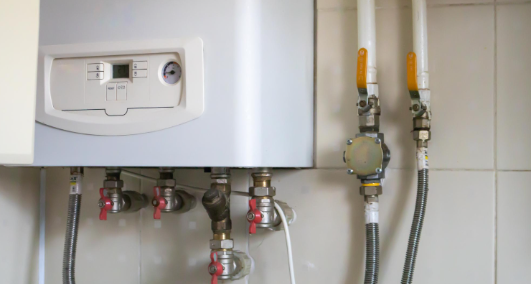
Water heater repair in the Northland, MO, starts with an accurate diagnosis. No hot water may point to a failed heating element, ignition issue, thermostat, control, power supply, or fuel problem, depending on the type of equipment in your home.
Other symptoms are less direct. A short shower may mean the unit is not heating properly, but it can also reflect a capacity problem, heavy simultaneous demand, or a plumbing crossover that mixes cold water into the hot side.
Because the same complaint can have several causes, the first step should be a complete evaluation rather than a guessed part. Professional water heater services can determine whether the unit needs maintenance, a focused repair, or a replacement discussion.
In this article, you will learn about:
- Which water heater symptoms need prompt attention
- How a plumber finds the cause of a hot-water problem
- When repair makes sense and when replacement deserves consideration
- How to prepare for service and protect the restored system
Keep reading to make a safer, better-supported decision when your Northland home loses reliable hot water.
Which water heater symptoms need prompt attention
The urgency depends on the symptom. A slow recovery deserves diagnosis, while leaking water, a gas odor, signs of combustion trouble, or an electrical concern may require you to stop using the equipment.
Do not remove covers or bypass safety controls to find the problem yourself. Water heaters combine hot water with electricity, gas, combustion, pressure, or several of those hazards in one appliance.
The unit produces no hot water
Start by noticing whether the loss is complete or limited to one fixture. If every hot tap stays cold, the problem is more likely at the water heater, its energy source, or the main hot-water distribution line.
An electric unit may have a tripped breaker, failed element, thermostat issue, wiring fault, or control problem. A gas-fired model may have an ignition, gas supply, venting, burner, thermocouple, or electronic control issue.
Before the appointment, collect a few observations without opening the appliance:
- Note whether every fixture is affected or only one.
- Check whether the display shows a visible error code.
- Record when the problem began and whether it followed a power or gas interruption.
- Identify the model, fuel type, approximate age, and tank capacity when available.
- Report any water, unusual odor, scorching, or repeated breaker trip.
Do not repeatedly reset a breaker that trips again. A recurring trip can indicate an electrical fault that needs professional attention rather than another attempt to restart the heater.
If you smell gas, leave the area and follow the fuel provider's emergency instructions from a safe location. For active flooding or another urgent plumbing condition, use emergency plumbing service instead of waiting for a routine visit.
Hot water runs out or changes temperature
A tank that starts hot and turns cold too quickly may have a failed heating component, sediment reducing usable volume, an internal tube problem, or demand that exceeds the unit's capacity. The pattern matters more than the phrase "not enough hot water."
Write down how long the hot water lasts, which fixtures were running, and how long the unit takes to recover. Those details make it easier to identify why a water heater is not keeping up and whether the cause is a component fault or a demand problem.
Temperature swings at one shower can come from a mixing valve, pressure-balancing cartridge, or fixture problem. Similar fluctuations at multiple taps point more strongly toward the heater, a plumbing crossover, or supply conditions.
Cold Northland weather can also change the workload because incoming water is colder and some equipment sits near garages, basements, or exterior walls. National Weather Service normals show February daily lows at Kansas City International Airport rising from about 20 degrees early in the month to 28 degrees late in the month, with average February snowfall of 5.9 inches.
The heater cannot protect every connected pipe from cold exposure. Steps that keep pipes from freezing are still important around garages, crawl spaces, hose connections, and other vulnerable locations.
Leaks, noises, odors, and discolored water need context
Water at the base of a tank can come from a valve, connection, drain, condensation, or the tank itself. A leaking fitting may be repairable, while a compromised storage tank generally changes the conversation.
Do not assume every puddle began inside the heater. Traceable moisture from nearby pipes may call for leak repair, and a floor drain or HVAC condensate line can create water in the same room.
Popping or rumbling may be associated with sediment and boiling activity beneath buildup in a tank. Hissing, sizzling, banging, or clicking can have different causes based on fuel and design, so a sound description is more useful than a general report of "noise."
Rust-colored hot water may relate to the tank or its components, especially when cold water remains clear. If both hot and cold sides are discolored, the investigation should extend beyond the heater and consider supply piping or utility conditions.
How a plumber finds the cause of a hot-water problem
Diagnosis begins by confirming the equipment type, symptom, and energy source. Testing then moves from external conditions to components so the recommendation is based on evidence.
The service process should also look at connected plumbing. Pressure, shutoff valves, expansion control, recirculation, venting, electrical supply, and hot-water distribution can affect how the unit behaves.
Gas, electric, tankless, and hybrid units fail differently
A conventional electric tank commonly uses thermostats and one or more heating elements. Gas tank systems add combustion, ignition, burner, draft, and venting components that require a different diagnostic process.
Tankless units heat water as it moves through the equipment. Flow sensors, scale, filters, venting, gas supply, electrical capacity, controls, and error codes can all influence performance.
Hybrid heat pump models combine a storage tank with heat-pump and electric-resistance operation. A complaint may involve air filters, condensate, operating mode, surrounding temperature, controls, or conventional heating components.
Benjamin Franklin Plumbing® of Kansas City services multiple system types through its residential plumbing work. The local Kansas City plumbing team still needs the model and installation details to choose the appropriate tests and replacement parts.
The heater may not be the only cause
One lukewarm sink is unlikely to prove that the entire heater has failed. A fixture cartridge, mixing valve, closed stop, clogged aerator, or bathroom plumbing issue can affect one location while other taps work normally.
Low flow can also feel like a hot-water shortage. When both hot and cold pressure are weak, the broader causes behind low water pressure should be evaluated before the heater is blamed.
The plumber may compare temperatures and flow at multiple fixtures, isolate recirculation or mixing components, and inspect accessible connections. When the fault is outside the appliance, appropriate plumbing repairs should address that cause instead of replacing heater components.
A long wait for hot water can be a distribution issue rather than slow heating. Distant fixtures, long pipe runs, missing insulation, and a poorly operating recirculation system can waste time even when the heater reaches its setpoint.
Maintenance history helps explain performance loss
Water quality and maintenance affect equipment differently. Sediment can accumulate in a tank, and scale can restrict heat exchangers or reduce flow through some tankless models.
Visible mineral residue at fixtures can support a broader water-quality evaluation, but hard-water signs do not identify the failed heater component by themselves. The plumber still needs to inspect the unit.
Useful maintenance history includes several details:
- The date and type of the last professional service.
- Whether a tank has been flushed and what condition the drained water showed.
- Previous element, thermostat, valve, anode, burner, or control repairs.
- Any recent change in household size or hot-water schedule.
- Error codes, utility interruptions, or plumbing work before the symptom began.
Maintenance is not a universal cure. Flushing a severely deteriorated or actively leaking tank may not be appropriate, and a tankless descaling procedure must follow the equipment requirements.
Routine home plumbing maintenance can make changes easier to catch, but safe service intervals and tasks should follow the manufacturer and the unit's actual condition.
When repair makes sense and when replacement deserves consideration
The diagnosis should explain what failed, whether the tank or heat exchanger remains sound, and what the repair is expected to restore. Age is relevant, but it should not be the only deciding factor.
Homeowners also need to consider repeated failures, efficiency, capacity, parts availability, and installation safety. A low-cost component repair on a sound unit is different from investing in an appliance with a leaking tank or several major concerns.
A focused repair can restore a sound unit
Repair may be practical when the failure is isolated and the core vessel or heat exchanger is in acceptable condition. Examples can include certain thermostats, electric elements, ignition parts, controls, valves, or connections.
The exact repair depends on the model. A technician should verify the fault before replacing parts and confirm operation afterward under normal demand.
Ask what caused the failed component and whether another condition contributed to it. Excessive pressure, scale, poor electrical connections, blocked airflow, venting problems, or water leakage can damage a new part if the underlying issue remains.
The U.S. Department of Energy says water heating accounts for nearly 20% of average home energy use. Restoring correct operation matters not only for comfort but also because a struggling unit can run longer or rely more heavily on backup heating.
Replacement becomes more reasonable as risks accumulate
Some findings make repair less attractive or technically inappropriate. A leaking storage tank, serious corrosion, unsafe installation, unavailable parts, or damage to a heat exchanger can change the recommendation.
Repeated breakdowns and inadequate capacity also deserve consideration. A repaired heater that is too small for the current household may still leave the same comfort complaint in place.
Compare repair and replacement when several factors appear together:
- The tank or heat exchanger is leaking or structurally compromised.
- The unit has needed multiple significant repairs in a short period.
- Replacement parts are unavailable or unsupported.
- The equipment no longer meets normal household demand.
- Installation, venting, electrical, gas, drain, or clearance issues require major correction.
The decision should reflect the full scope, not only the appliance price. New equipment may require changes to connections, venting, gas capacity, electrical service, condensate disposal, drainage, or space. Any applicable special offers should be considered only after the required work is clear.
The practical questions in repairing or replacing a water heater help frame the choice, but an on-site inspection determines which concerns apply to a specific Northland home.
Replacement options must fit the home
If replacement is appropriate, sizing begins with household demand and usage patterns. Tank capacity, first-hour delivery, fuel type, recovery, available space, and utility connections all affect performance.
A tankless system requires adequate flow, fuel or electrical capacity, venting where applicable, and realistic expectations about simultaneous fixtures. A heat pump water heater needs suitable space, air volume, temperature, condensate management, and electrical service.
ENERGY STAR reports that certified heat pump water heaters use 70% less energy than a standard electric water heater. Its national estimate says a household of four could save about $550 per year on electricity, but actual Northland savings depend on rates, location, operating mode, and the system being replaced.
Efficiency should not come at the expense of reliable hot water. The recommendation needs to account for peak demand, installation conditions, ongoing maintenance, and who will service the selected technology.
How to prepare for service and protect the restored system
Good preparation gives the plumber better information and reduces time spent reconstructing the failure. Keep the area accessible and gather the model, serial number, approximate installation date, and recent service records if they are available.
Do not clear the area if doing so requires touching wet electrical equipment, hot water, a suspect gas connection, or damaged venting. Safety takes priority over appointment preparation.
Know when to shut the system down
Active leaking, repeated breaker trips, scorching, a gas odor, combustion concerns, or dangerously hot water call for caution. The correct shutdown method depends on the equipment and the location of its water, gas, and electrical controls.
If you can act without entering a hazardous area, stop water at an appropriate valve and follow the manufacturer's emergency instructions. Do not cap a relief discharge, block a vent, or defeat a control to keep the heater running.
The U.S. Consumer Product Safety Commission notes that even water at 120 degrees Fahrenheit can cause a third-degree burn with five minutes of exposure. Its tap-water scald guidance says a 120-degree thermostat setting may be needed to reduce the risk of most residential tap-water scald injuries.
Temperature settings still need household-specific judgment, correct measurement at the fixture, and awareness of health guidance. A plumber can inspect the controls and discuss mixing protection when water is unexpectedly hot.
A complete visit ends with verification
The technician should reproduce the symptom when safe, test the suspected component, and inspect related conditions. A repair is not complete merely because the unit turns on.
Verification may include temperature, recovery, flow, leak, pressure, venting, combustion, electrical, or error-code checks based on the equipment. The homeowner should receive an explanation of the fault and the work performed.
Properties within Kansas City, MO follow the requirements applicable to that address. A home in Gladstone may follow a different process. Nearby Riverside can also have its own local requirements.
When replacement or substantial alteration is involved, confirm the applicable permit and inspection requirements for the service address. The work plan should also identify who handles disposal, connection upgrades, drainage, and any finish repairs.
Maintenance should match the equipment
After service, keep the diagnosis, invoice, parts information, settings, and recommended follow-up with the home records. This history helps a future technician see whether a symptom is new or recurring.
Check the area periodically for moisture, corrosion, unusual noise, and changes in delivery. Do not wait for a utility-room leak to reach finished space before investigating it.
A practical routine can include:
- Keeping the water-heater area visible and accessible.
- Watching for changes in hot-water duration and recovery.
- Checking exposed connections and the discharge route without operating safety devices yourself.
- Following manufacturer-specific service and descaling guidance.
- Protecting nearby pipes during freezing weather.
Use a winter plumbing checklist for the supply lines around the heater and the rest of the home. Preventing frozen or burst piping protects the appliance area even when the heater itself is working correctly.
Monitor water use as well as temperature. Practical water-waste fixes can reveal fixture leaks that increase hot-water demand and make a healthy system appear undersized.
Conclusion
Water-heater symptoms make more sense when they are traced to the equipment, connected plumbing, energy source, and household demand. That complete view keeps a fixture issue from becoming an appliance replacement and keeps a serious failure from receiving only a temporary patch.
Repair can be a sound choice when the failed part is isolated and the rest of the system remains safe and serviceable. Replacement deserves a fair comparison when leaks, corrosion, repeated failures, capacity problems, or installation deficiencies begin to overlap.
After service, maintenance should follow the actual unit and the technician's findings. Consistent records and early attention to changing performance give you a better chance to act before the next cold shower or utility-room leak.
For annual plumbing attention, priority scheduling, and repair benefits, join Benjamin Franklin Plumbing® of Kansas City through its Club Membership Program.

 Your Privacy Choices