
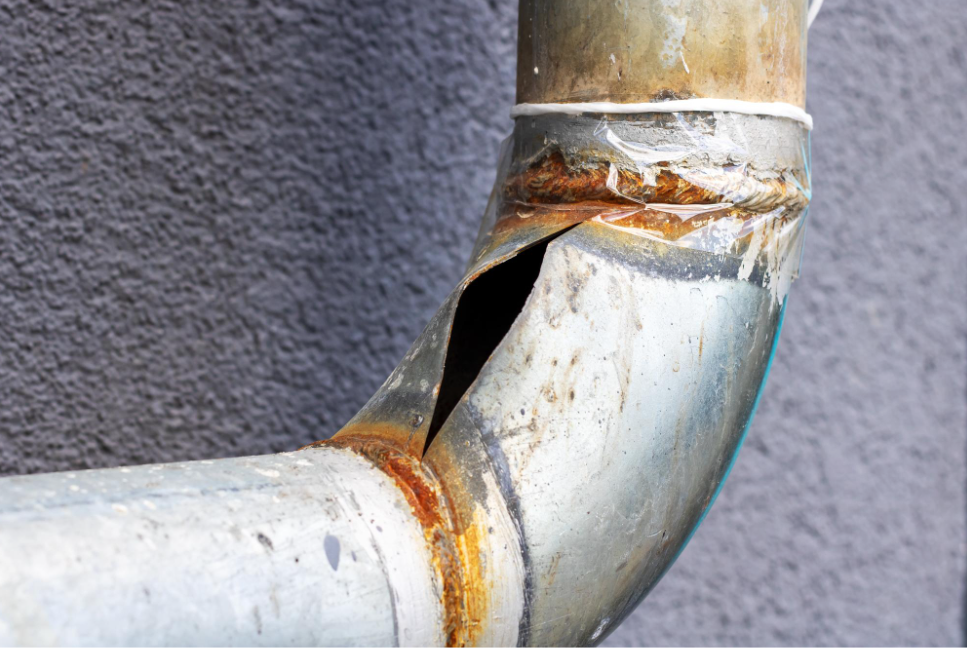
The signs your home needs repiping in Lenexa, KS, usually develop as a pattern rather than one dramatic failure. Recurring leaks, weak flow, discolored water, visible corrosion, and repairs in several parts of the house can indicate that the supply piping is deteriorating as a system.
Repiping is the replacement of some or all of the pipes that deliver hot and cold water to fixtures and appliances. It is different from replacing the buried water service line from the public main, repairing a drain, or replacing the sewer lateral.
The key is knowing when another localized leak repair is reasonable and when repeated repairs are only moving the next failure to another weak point. A professional evaluation can map the symptoms to the pipe material, pressure, layout, and actual condition of your plumbing.
In this article, you will learn about:
- Which warning signs suggest a whole-house piping problem
- How pressure and flow problems reveal restricted pipes
- When repiping makes more sense than another repair
- What Lenexa homeowners should expect from a repiping project
Keep reading to decide whether your plumbing needs one focused repair or a more complete reset.
Which warning signs suggest a whole-house piping problem?
No single symptom proves that your entire home needs new pipes. A dripping connection, clogged aerator, failed valve, or damaged appliance hose can remain an isolated problem. Repiping becomes more likely when the same type of failure appears in multiple rooms or different sections of pipe.
Water loss is worth taking seriously even before a leak becomes visible. The U.S. Environmental Protection Agency estimates that household leaks can waste 180 gallons per week, or 9,400 gallons per year, for the average family. Across the country, household leaks account for nearly 900 billion gallons of wasted water annually.
Look for a combination of these warning signs:
- Leaks have developed in different supply lines, fittings, or rooms over a relatively short period.
- Exposed metal piping shows flaking, green-blue deposits, heavy rust, bulges, or damp joints.
- Hot or cold water looks rusty, yellow, brown, or blue-green after periods of nonuse.
- Several fixtures have weak flow even after aerators and showerheads are cleaned.
- Water temperature or pressure changes sharply when another fixture starts running.
- Repairs reveal widespread internal buildup, pitting, thinning, or brittle pipe material.
The pattern should guide the decision. One corroded fitting near a water heater may need only a focused repair, while pinhole leaks in a kitchen line, upstairs bathroom, and basement run suggest a broader condition.
Document where and when each symptom appears. Photos, repair invoices, water bills, and notes about whether hot or cold water is affected can help the plumber see a system-wide trend that might be easy to miss during one service call.
Leaks keep appearing in different places
An isolated leak can result from a bad connection, accidental damage, freeze exposure, or a defective component. Repeated leaks in unrelated sections raise a different concern because they may reflect shared age, material, installation, pressure, or corrosion conditions.
Pay attention to repairs behind finished surfaces. A small wet spot may represent a larger concealed issue, especially when another leak appeared recently on the same branch or pipe material.
The EPA's leak-detection guidance notes that old piping, corrosion, cold temperatures, irregular pressure, equipment problems, and incorrect installation can all contribute to household leaks.
Professional plumbing repairs should address the failed point and help explain whether nearby piping shows the same vulnerability.
Water is discolored at more than one fixture
Discolored water can come from the public system, the water heater, a fixture, the service line, or the home's interior piping. The timing and distribution of the symptom help separate those possibilities. Color only on the hot side points in a different direction from rusty water at every cold tap.
WaterOne reported that its 2025 water quality report was based on more than 13,000 tests of over 14,000 samples collected in 2024. The utility stated that its water met or surpassed applicable quality standards, so unexplained discoloration at one property still deserves a site-specific diagnosis rather than an assumption about the public supply.
The WaterOne service-line lookup distinguishes the utility-owned and customer-owned sections of the line and identifies recorded material status. That exterior service information is useful, but it does not replace an inspection of the distribution piping inside the home.
Exposed pipes show corrosion or outdated material
Inspect accessible supply lines in a basement, crawlspace, utility room, and beneath sinks without scraping or disturbing them. Galvanized steel may show rust and threaded joints, copper may develop blue-green deposits or localized pitting, and plastic systems should be checked for improper transitions, damage, or unsupported runs.
Age alone does not establish remaining service life. Water chemistry, installation quality, pressure, temperature, wall thickness, and previous repairs all affect condition. Two houses built in the same year can have very different plumbing histories.
Material identification matters for water quality as well as reliability. The Centers for Disease Control and Prevention notes that plumbing fixtures, solder, and pipe fittings made before 1986 may contain lead and that galvanized iron pipe can be another potential source. Testing and material verification are more reliable than judging water safety by appearance or taste.
How do pressure and flow problems reveal restricted pipes?
Low pressure is often how homeowners describe any weak stream, but pressure and flow are not identical. Static pressure is the force available when water is not moving, while flow describes how much water reaches a fixture during use. A restriction can create disappointing flow even when incoming pressure is adequate.
That distinction keeps a repiping decision grounded in diagnosis. Utility work, a partly closed valve, a failing pressure regulator, mineral buildup at one fixture, or an undersized service line can mimic problems inside the house.
Several fixtures lose flow at the same time
If one faucet is weak, remove and inspect its aerator before drawing conclusions about the entire system. If an upstairs shower, kitchen faucet, and washing machine all struggle, the restriction may sit in a shared branch, main distribution line, valve, or service connection.
The behavior under simultaneous demand is especially informative. A shower that drops to a trickle whenever a toilet refills may indicate restricted or undersized piping, although regulator and supply conditions should be checked before recommending replacement.
A plumber evaluating low water pressure can compare static and flowing readings, inspect valves, and identify whether the limitation affects the public supply, private service line, or interior distribution system.
Hot and cold sides behave differently
Weak hot-water flow throughout the house may point toward the water heater connections, a valve, sediment, or hot-side piping rather than a complete cold-water distribution problem. Weak flow on both sides suggests a shared upstream restriction or more widespread buildup.
Temperature swings can also occur when pipe sizing and restrictions prevent fixtures from receiving stable proportions of hot and cold water. Pressure-balancing shower valves can compensate within limits, but they cannot restore capacity lost to a severely restricted supply line.
Do not replace the water heater solely because hot-water flow is poor. A plumber should separate equipment performance from pipe restriction and determine whether the system is not keeping up because of demand, heating capacity, sediment, controls, or delivery piping.
Tests can separate a pipe problem from a fixture problem
Diagnosis may include pressure readings, flow comparisons, valve inspection, meter observation, and targeted fixture checks. The plumber may also look for pressure loss across a regulator, filter, treatment device, water heater connection, or known section of old piping.
Water quality clues need the same discipline. Scale on a showerhead can reduce flow at that fixture, but visible deposits do not prove that every pipe is internally blocked. Information about hard water in the home can help identify mineral-related symptoms without turning them into an automatic recommendation for repiping.
Ask for the findings that connect the proposed scope to the symptom. Measurements from several locations, visible pipe condition, and repair history make a stronger case than a conclusion based on the age of the house alone.
When does repiping make more sense than another repair?
Repiping is a planning decision as much as a repair decision. It can reduce the cycle of opening walls for one leak at a time, but replacing sound pipe unnecessarily adds cost and disruption without solving unrelated pressure, fixture, or utility problems.
The most useful question is not whether a pipe is old. It is whether evidence shows that failures or restrictions are distributed widely enough that a coordinated replacement offers better long-term value than continued spot repairs.
Consider these questions before choosing the scope:
- Have leaks occurred in several unrelated parts of the supply system?
- Does exposed piping show similar deterioration beyond the current failure?
- Are weak flow and discoloration present at multiple fixtures or on both levels of the home?
- Would another spot repair leave substantial sections of the same failing material in service?
- Are walls already open for remodeling, water-damage restoration, or another plumbing project?
- Does the proposed repipe address the documented cause rather than an unrelated fixture or public-supply issue?
A qualified recommendation should explain why a full, partial, or phased repipe fits the evidence. It should also identify which pipes will remain, how new and old materials will transition, and whether the service line or pressure controls need separate work.
If the evidence is mixed, ask whether monitoring, testing, or a focused repair can resolve the uncertainty. Repiping should be based on a defensible system assessment, not fear created by one leak.
A spot repair still makes sense for isolated damage
Localized repair is appropriate when a failure has a clear one-time cause and the surrounding system remains in good condition. Examples include a punctured pipe, failed appliance connector, loose fitting, or freeze break limited to one exposed section.
The repair should include a look at nearby pipe and connections. If the plumber finds sound walls, normal flow, stable pressure, and no history of similar failures, expanding the scope may offer little benefit.
Afterward, watch the repaired area and review water use for unexplained changes. Practical steps to reduce water waste can also help you catch a new leak without treating every unusual bill as proof that the whole house needs new piping.
Partial or whole-house repiping addresses wider deterioration
A partial repipe replaces a defined zone, branch, or material while leaving verified sound piping in place. It may fit an addition with one problematic material, an accessible basement distribution run, or a hot-water side that has deteriorated differently from the cold system.
A whole-house project is more appropriate when failures and restrictions are broadly distributed or when nearly all accessible supply piping shares the same poor condition. The work typically includes new hot and cold distribution lines, supports, valves, fixture connections, and planned transitions at equipment and the service entry.
Repiping does not automatically include drains, the sewer lateral, the water heater, every fixture, or the buried water service. The estimate should state each boundary clearly so homeowners can compare scopes accurately.
Pipe material and routing affect the project plan
Common replacement choices include copper and approved plastic piping systems. Each has installation requirements, support needs, transition details, and advantages that depend on local code, home layout, water conditions, and homeowner priorities.
Routing determines how much finish access is required. An unfinished basement or accessible crawlspace may allow efficient branch distribution, while a finished multistory home may need carefully placed openings at chases, ceilings, cabinets, and fixture walls.
A residential plumbing estimate should specify material, sizing, valve locations, insulation where needed, wall-access assumptions, testing, permits, cleanup, and whether finish repair is included. Those details matter more than comparing one total price with another.
What should Lenexa homeowners expect from a repiping project?
A well-planned repipe begins before anyone opens a wall. The plumber documents the existing system, confirms the new layout, identifies shutoff points, protects occupied areas, and coordinates any required permit and inspection steps.
Homeowners should also understand how water service will be managed during the work and which spaces need access. Clear expectations reduce disruption and prevent misunderstandings about drywall, painting, cabinets, storage, and appliance connections.
Inspection defines the scope before work begins
The plumber should identify accessible pipe materials, fixture count, existing valves, pressure conditions, service entry, water heater connections, and likely routing. Leak history and areas of past water damage should be part of the review.
If there is concern about the buried service line, check it separately from the interior repipe. WaterOne's records can help identify known service material, while a plumber can evaluate the customer-owned side and explain whether it belongs in the current scope.
The written proposal should make exclusions visible. Ask who handles permits, inspections, wall openings, finish restoration, furniture movement, and any code updates triggered by the work.
Access and water interruptions are planned in advance
Repiping requires access to reach fixture groups and connect new lines. Good routing minimizes unnecessary openings, but some finished surfaces may still need to be cut. The work plan should identify likely locations before the project starts.
Water will need to be shut off during portions of the installation and final connections. Ask when it will be unavailable, whether limited service can be restored between work periods, and what fixtures should remain unused until testing is complete.
Prepare by clearing cabinets, moving fragile belongings, protecting electronics, and arranging around the planned outage. Keep pets away from open walls, tools, and work paths.
Final testing protects the investment
Before closeout, the new system should be pressure-tested and checked at fixtures and connections. Valves, hot-water delivery, fixture flow, and transitions should operate as intended without leaks or excessive noise.
Future protection includes maintaining appropriate pressure, winterizing vulnerable sections, and knowing where the new main shutoff is located. Lenexa's cold weather makes freeze protection for plumbing especially important for pipes near exterior walls, garages, crawlspaces, and other unconditioned areas.
Save the permit, inspection, material, warranty, and routing information with your home records. Regular plumbing maintenance before seasonal changes can then focus on valves, exposed connections, pressure, and equipment instead of trying to reconstruct what is behind the walls.
Conclusion
Recurring leaks, corrosion, discoloration, and weak flow deserve investigation, but they do not all lead to the same solution. The right scope comes from comparing symptoms across the house with pipe condition, pressure measurements, material, and repair history.
A focused repair remains sensible when the damage is isolated. Partial or whole-house repiping becomes more compelling when failures and restrictions are widespread, the same vulnerable material remains throughout the system, or continued spot repairs would create repeated disruption.
Benjamin Franklin Plumbing of Kansas City can evaluate supply piping, diagnose leaks and pressure problems, and develop a repair or repiping plan for Lenexa homeowners. For annual plumbing checks and ongoing service benefits, explore the Club Membership from Benjamin Franklin Plumbing of Kansas City.

 Your Privacy Choices