
A slow drain in one sink is annoying. A slow drain in every fixture at once, or sewage backing up into a tub when you run the washing machine, is a different problem entirely. That pattern almost always points to the main sewer line, the pipe that carries everything from your house out to the city system, and it's one of the most common calls Kansas City homeowners make once they've ruled out a simple clog.
Kansas City's sewer infrastructure carries some real history with it. The city's own system includes more than 2,800 miles of sewer lines, many of them decades old, and the private lines running from individual homes to that system are frequently just as aged.
Older clay pipe, cast iron, and even Orangeburg pipe (a tar-paper composite used through the mid-20th century) still exist under plenty of yards across the metro, and each of those materials fails in its own predictable way.
Whether you're in the urban core of Kansas City proper, an older neighborhood in Independence, or a newer subdivision out toward Blue Springs or Olathe, the age and material of your sewer lateral has a lot to do with what kind of repair actually makes sense.
This article breaks down the real warning signs, the repair options available today, and what to expect from Benjamin Franklin Plumbing if you need a fix.
In this article, you will learn about:
- The warning signs that mean your sewer line, not just a drain, needs attention
- How sewer lines actually fail, and why age and material matter so much
- Trenchless and traditional repair options, and how a plumber decides between them
- What working with Benjamin Franklin Plumbing looks like for a sewer repair
Keep reading to understand what's really happening underground before you call anyone out to dig up your yard.
Warning signs your sewer line needs repair
Most sewer line problems don't announce themselves clearly. They show up as smaller, seemingly unrelated issues that get worse over weeks or months, which is part of why so many homeowners wait longer than they should before calling a plumber.
The signs that point past a simple clog
Multiple slow drains at once, especially the lowest fixtures in the house like a basement floor drain or a first-floor tub, is one of the clearest signals. A single slow sink is usually a local clog, the kind covered in top causes of clogged drains. Several slow drains at once, or drains that gurgle when another fixture runs, means water is backing up somewhere further down the line.
Sewage odor in the yard, particularly in one consistent spot, often means there's already a break or a saturated area where the line is leaking underground. Combined with unusually lush or fast-growing grass in that same spot, since sewage acts as an accidental fertilizer, it's a strong indicator of a break rather than a clog.
The following signs, taken together, are what a technician looks for when deciding whether a problem is isolated to one drain or points to the main line:
- Multiple drains backing up or draining slowly at the same time, especially the lowest fixtures in the home
- Gurgling sounds from toilets or drains when other fixtures are used
- Sewage odors in the yard, basement, or near the cleanout, especially if they're stronger after rain
- Unusually green, lush, or soggy patches of lawn along the likely path of the sewer line
- Frequent clogs that keep coming back even after snaking, especially in older homes that have never had the line inspected
- Cracks or settling in the driveway, sidewalk, or foundation near where the lateral line runs
Homes built before the 1970s, common throughout Kansas City's older neighborhoods, are more likely to still have their original clay or cast iron lateral, which raises the odds that one of these signs points to a real structural problem rather than a routine clog.
Why so many of these signs get ignored at first
It's easy to explain away a single slow drain or an occasional gurgle, especially if a plunger or a bottle of drain cleaner seems to help temporarily.
Homeowners who've read about the harsh reality of chemical drain cleaners already know these products don't address a root intrusion or a bellied section of pipe, they just clear the immediate blockage, so the underlying problem keeps developing while the symptom disappears for a few weeks.
A homeowner who's dealt with the same clog three or four times in a year, even if each individual incident got resolved, is very likely dealing with a structural issue further down the line rather than a coincidence of bad luck. That repeat pattern is one of the strongest signals a plumber uses to recommend a camera inspection instead of another round of snaking.
Waiting also tends to narrow the options. A minor crack caught early might only need a targeted patch or a trenchless liner. The same crack left untreated for a year or two, especially with roots actively growing into it, can widen into a full collapse that only a traditional dig-and-replace can fix.
When a home's age makes an inspection worth scheduling proactively
Age alone doesn't confirm a sewer line problem, but it's a reasonable trigger for a proactive camera inspection rather than waiting for symptoms to show up. The median occupied home in the Kansas City area was built in 1977, several years older than the 1974 national median, according to the U.S. Census Bureau, which means a large share of the metro's housing stock is old enough to be running on an original clay or cast iron lateral that has never been inspected.
Homeowners in established neighborhoods throughout Kansas City, Independence, and the older sections of Overland Park and Leawood are the most likely to fall into that category. A preventative camera inspection, done before any symptoms appear, costs far less than an emergency call after a backup, and it gives a homeowner a clear picture of what's underground and how much time is realistically left before repair becomes urgent.
How sewer lines actually fail
Understanding why a sewer line fails helps explain why plumbers recommend different repairs for what looks like the same symptom on the surface. Age, material, and what's happening in the soil around the pipe all play a role.
According to the U.S. Environmental Protection Agency, sanitary sewer overflows nationwide are caused primarily by line and main breaks or blockages, which together account for more than 70 percent of overflow events, with oil and grease buildup and tree root intrusion as the leading blockage causes. That pattern holds for private sewer laterals too, not just municipal mains, since the same aging materials and the same root pressure apply to the pipe running from a house to the street.
Kansas City has dealt with this at a citywide scale. The EPA's Kansas City, Missouri Clean Water Act settlement required the city to spend an estimated $2.5 billion over 25 years to overhaul its sewer system after more than 1,300 illegal overflows since 2002, driven largely by an aging network of pipes and joints.
That municipal-level problem is a magnified version of what happens under individual properties across the metro, where private laterals installed decades ago are reaching, or have already passed, the end of their expected service life.
Root intrusion and Kansas City's clay soil
Root intrusion is consistently one of the most common causes of sewer line failure in this region, and it isn't really the tree's fault. Roots can't break into a sound pipe on their own. They follow moisture escaping through an existing crack or a loosened joint, then wedge into that opening and expand, widening the damage over months or years.
Kansas City sits on soil with a significant clay content, and clay-heavy soil expands when it absorbs water and contracts as it dries out. That seasonal swelling and shrinking puts real pressure on buried pipe, particularly at joints, which is exactly where older clay and cast iron sewer lines are weakest to begin with.
Heavy spring rains followed by dry summer stretches, a normal pattern for this region, create the kind of repeated soil movement that gradually opens small gaps at pipe joints.
- A joint separates slightly due to soil movement or age, creating a small gap.
- Moisture escapes through that gap, and nearby tree or shrub roots detect it and grow toward the source.
- Roots enter the gap and expand, widening the crack and eventually restricting or blocking flow through the pipe.
Mature, established neighborhoods, common in parts of Kansas City, Independence, and older sections of Overland Park, tend to combine both risk factors at once: older clay pipe nearing the end of its service life, and decades-old trees with root systems that have had plenty of time to find their way toward the sewer line.
Pipe material and age across the metro
Not every home in the service area faces the same risk profile, and the material of the original lateral line matters as much as its age. Newer subdivisions in areas like Olathe and Gladstone are more likely to have PVC laterals, which resist root intrusion and corrosion far better than the materials used decades earlier.
- Clay pipe, common in homes built before the 1970s, is durable against corrosion but brittle and prone to cracking at the joints, which is exactly where roots gain entry.
- Cast iron, used through the mid-20th century, corrodes from the inside out over time and can develop scale buildup that restricts flow long before a full failure occurs.
- Orangeburg pipe, a tar-impregnated fiber material used from the 1940s through the 1970s, is notorious for deforming and collapsing under soil pressure and generally needs full replacement rather than repair.
- PVC, standard in newer construction, resists roots and corrosion well but can still fail at poorly sealed joints or from ground shifting if installed incorrectly.
A home's age is a reasonable first clue about what material is likely underground, but it isn't a guarantee. Previous owners sometimes replaced a section of line without updating records, so a camera inspection remains the only reliable way to know exactly what's down there before recommending a repair method.
What happens when a line is left unaddressed
A sewer line problem rarely stays the same size. Left alone, a minor root intrusion or a small crack tends to compound, and the eventual fix often ends up more invasive and more expensive than it would have been with an earlier repair.
Continued root growth inside a cracked pipe gradually restricts flow until backups become frequent, then eventually constant. What started as an occasional slow drain can progress to full backups into the lowest fixtures in the home, sometimes during ordinary use rather than during a heavy rain event.
Structural failure is the more serious endpoint. A pipe that's been weakened by root pressure, corrosion, or soil movement can eventually collapse, which usually means raw sewage backing up into the home and a repair that requires full excavation rather than a targeted fix.
Cleanup and remediation for a sewage backup into a home routinely runs into the thousands of dollars on top of the actual pipe repair, which is part of why catching the problem early matters as much for the budget as for the mess.
Trenchless and traditional repair options
Once a plumber has a clear picture from a camera inspection, the next decision is how to actually fix the line. Kansas City homeowners generally have two broad paths available, and which one applies depends on the pipe's condition, material, and location.
Trenchless repair methods have become the preferred option for a large share of sewer line problems, since they avoid tearing up a yard, driveway, or landscaping to reach the pipe. Instead, the repair is done through existing access points, which is faster for the homeowner and less disruptive to the property.
- A camera inspection identifies the exact location, length, and severity of the damage.
- The old pipe is cleared of roots, debris, or scale using hydro jetting or mechanical cutting, depending on the blockage.
- A resin-saturated liner is inserted into the existing pipe and cured in place, creating a new pipe within the old one, or a pipe bursting method pulls a new pipe through while fragmenting the old one outward.
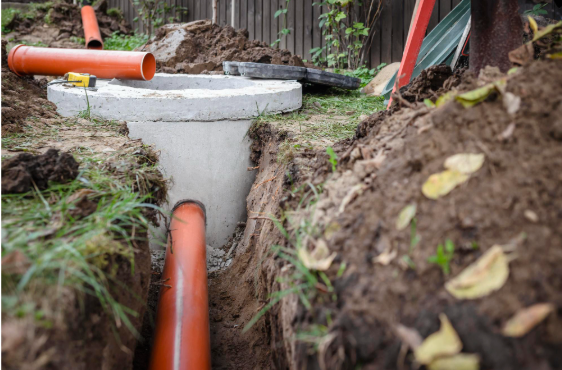
Traditional excavation is still the right call in certain situations, particularly when a pipe has fully collapsed, when the damage is too severe or too widespread for a liner to bridge, or when the line needs to be rerouted entirely. It's more disruptive, since it involves digging a trench along the pipe's path, but it remains the most reliable option for pipes in the worst condition.
When trenchless repair makes sense
Trenchless methods work best on pipes that are still structurally sound enough to support a liner or accept a burst-and-replace process, even if they're cracked, root-infiltrated, or corroded. The existing pipe essentially acts as a guide for the new one.
Homes with mature landscaping, established driveways, or hardscaping directly over the sewer line benefit the most from this approach, since the alternative would mean tearing out and later replacing all of that surface work. This is common across older, established neighborhoods throughout the metro where decades-old trees and landscaping sit directly above the lateral.
- Root intrusion damage that hasn't caused a full structural collapse is a strong candidate for lining or bursting.
- Multiple small cracks along a run of pipe can often be addressed in a single lining pass rather than multiple excavation points.
- Pipes under permanent structures like patios, driveways, or additions are much better candidates for trenchless repair, since digging isn't practical in the first place.
When traditional excavation is still necessary
Some situations genuinely call for digging, and a plumber recommending excavation over a trenchless method usually has a specific structural reason for it, not just a preference.
A fully collapsed section of pipe can't support a liner, since there's no intact structure left to line. Severe bellying, where a section of pipe has sunk and created a low point that traps waste and water, generally needs to be dug up and reset at the correct grade rather than lined in place.
Pipes that need to be rerouted, whether due to root systems that make repeated intrusion likely or a change in the home's layout, also require excavation.
Cost and timeline differ meaningfully between the two approaches, and a homeowner deciding between a full trenchless job and a smaller traditional repair should weigh both the upfront difference and the disruption to landscaping, driveways, or hardscaping before deciding.
How a plumber decides between the two
The decision isn't made in isolation from a single camera pass. A technician weighs the pipe's remaining structural integrity, its material, the length and location of the damaged section, and what sits above the pipe, whether that's open yard, a driveway, or a mature tree line, before recommending trenchless sewer repair over a dig.
Cost estimates and a clear explanation of why one method was chosen over the other should come before any work begins, not after. A homeowner comparing quotes should ask specifically why a plumber is recommending one approach, since the answer should reference the pipe's actual condition, not simply which method the company happens to specialize in.
What to expect from Benjamin Franklin Plumbing
A sewer line problem is stressful enough without also wondering whether the company doing the work is going to recommend the right fix for the right reasons.
Benjamin Franklin Plumbing has worked in the Kansas City metro, including Overland Park, Lee's Summit, Leawood, and Prairie Village, since 1955, long enough to have seen the full range of pipe materials and soil conditions this region can throw at a sewer line.
Technicians train under master plumbers before working independently, which matters most on a job like sewer diagnosis, where correctly reading a camera feed and recognizing the difference between a repairable crack and a section that needs full replacement takes real experience. Benjamin Franklin Plumbing is BBB accredited, giving homeowners an independent record to check before committing to a major repair.
- On-time arrival is backed by the company's promptness guarantee, "if there's any delay, it's you we pay," which matters on a job where a delayed diagnosis often means a delayed fix.
- Camera inspection findings are shared with the homeowner directly, including footage, rather than a verbal summary alone, so the recommendation can be verified rather than taken on faith.
- Upfront pricing is provided before any digging or lining work begins, so there's no ambiguity about cost once the yard is already opened up.
What a sewer line diagnosis actually involves
A proper diagnosis starts with a camera inspection, not a guess based on symptoms alone. A technician feeds a waterproof camera through the cleanout or an access point and records the full length of the line, identifying exactly where the damage is, what's causing it, and how severe it is.
That footage is what determines whether trenchless repair is realistic or whether the damage requires excavation. It also tells the technician what material the existing pipe is made from, which affects both the repair method and how urgently the work should happen. A homeowner should expect to see or be walked through that footage before agreeing to any specific repair method.
For homes throughout Kansas City, Blue Springs, Gladstone, Greenwood, Independence, and Olathe, that inspection is what separates a real recommendation from a guess, especially given how much pipe material and soil conditions vary from one neighborhood to the next.
Reaching the Kansas City team
Homeowners across the metro can reach the Lee's Summit, MO-based team directly to schedule a camera inspection or sewer repair. Call (816) 239-2685, or ask about the Heroes Club discount program if you're a first responder, teacher, or veteran dealing with a sewer line issue.
Protecting the repair once it's done
A finished sewer repair, whether it's a trenchless liner or a fully replaced section, still benefits from periodic attention rather than being forgotten once the yard is put back together. This is especially true for homes that still have older sections of pipe elsewhere on the property that weren't part of the immediate repair.
Ongoing plumbing checks give a technician who already knows the home's specific pipe history the chance to catch a new problem, a fresh root intrusion, a slow-forming clog, before it turns into another backup.
That kind of continuity matters more on a sewer line than almost any other part of a home's plumbing, since the consequences of a missed early sign are so much bigger underground than they are at a single fixture.
Conclusion
A sewer line problem is one of the few plumbing issues where guessing at the fix can genuinely make things worse. Root intrusion, aging clay and cast iron pipe, and Kansas City's clay-heavy soil combine to make this metro a place where sewer laterals fail in fairly predictable ways, but the right repair still depends on what a camera actually finds underground, not on the age of the house alone.
Trenchless repair has changed what's possible for a huge share of these repairs, avoiding the kind of yard destruction that used to be unavoidable. But it isn't the right answer for every situation, and a plumber recommending traditional excavation for a collapsed or severely bellied section of pipe is making that call based on what the pipe can actually support, not convenience.
Catching the warning signs early, gurgling drains, recurring clogs, sewage odor in the yard, gives you more options and generally a smaller bill than waiting for a full backup to force the issue. If any of this sounds familiar, a camera inspection is the fastest way to know exactly what you're dealing with.
If you're dealing with a sewer line issue in the Kansas City area, Benjamin Franklin Plumbing can send a technician out for a camera inspection and walk you through exactly what repair option fits your situation before any work begins.

 Your Privacy Choices