
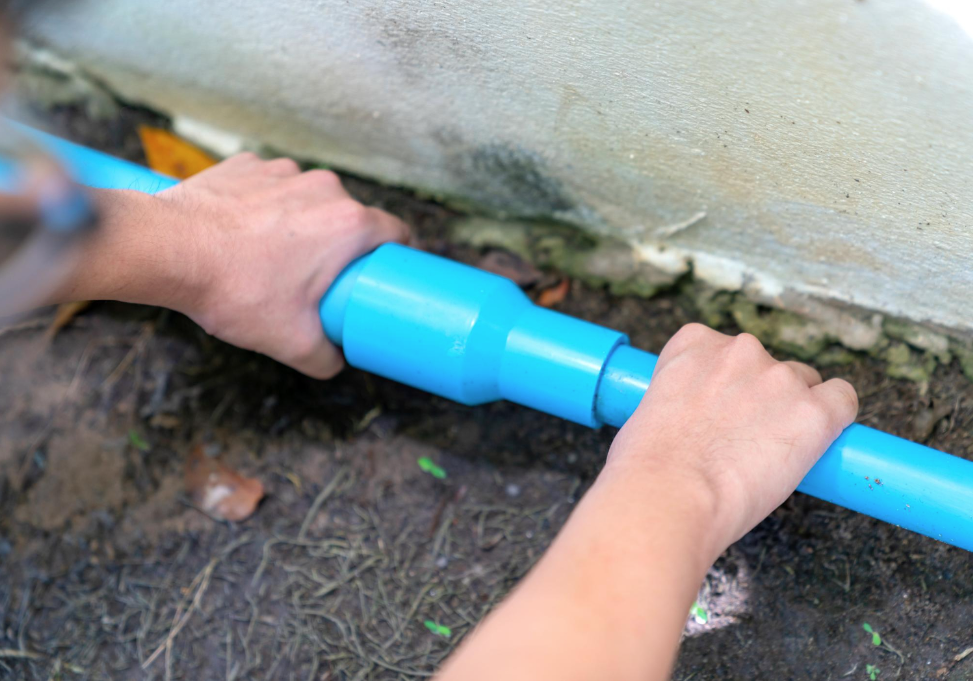
Repiping in Johnson County, KS, replaces some or all of a home's water-distribution piping when isolated repairs no longer provide a dependable solution. It can address recurring leaks, internal corrosion, restricted flow, incompatible materials, or a layout that no longer supports the way the household uses water.
A repipe is a planned plumbing project, not an automatic response to one leaking joint. The plumber should identify the existing materials, map the hot and cold lines, evaluate pressure and flow, and explain why replacement offers more value than another local repair.
Homes across Overland Park, Leawood, Prairie Village, and nearby communities vary in age, additions, and renovation history. An experienced residential plumbing team can build the scope around the house in front of them instead of applying one standard route or material to every property.
In this article, you will learn about:
- When does repiping make more sense than another repair?
- What does a partial or whole-house repipe involve?
- How do Johnson County conditions affect the plan?
- How can you compare repiping proposals confidently?
Keep reading to recognize when pipe replacement is justified and prepare for a clearer, more durable project.
When does repiping make more sense than another repair?
One accessible leak usually calls for a focused repair. Repiping becomes a stronger option when failures occur in several places, the same pipe material is deteriorating throughout the home, or restricted lines keep creating pressure and flow problems.
The decision should rest on documented condition, not age alone. Pipe material, water chemistry, installation quality, freeze exposure, previous repairs, and remodeling can make two homes built in the same year perform very differently.
Are recurring leaks warning you about the whole system?
A leaking valve or damaged connector does not condemn every pipe in the house. A pattern of pinhole leaks, corroded joints, stained ceilings, and repeated wall openings can indicate that more of the system is approaching the same failure stage.
Look at the repair history as a whole. If leaks keep appearing on the same material in different rooms, the cumulative cost and disruption of local repairs may begin to outweigh a coordinated replacement.
- Leaks have developed in several unrelated locations.
- New wet spots appear after earlier sections were repaired.
- Exposed pipe shows widespread rust, pitting, flaking, or mineral deposits.
- Shutoff valves and connections are failing throughout the home.
- Previous remodels left a patchwork of poorly matched materials.
- Insurance or restoration work repeatedly follows plumbing failures.
Photographs, invoices, and the locations of past repairs give the plumber useful evidence. A pressure test and systematic leak repair evaluation can help distinguish one weak point from a systemwide pattern.
Do not wait for another leak if piping is visibly compromised or water is reaching electrical equipment or structural materials. Shut off the affected line when safe and arrange prompt service.
Even a smaller failure can continue wasting water while it damages finishes out of sight. Monitoring the meter and utility bills can help reveal whether the loss continues after a local repair.
Can old pipes cause low flow or uneven pressure?
Corrosion and mineral buildup can narrow the usable opening inside some pipes. The result may be weak flow at several fixtures, a large pressure drop when two fixtures run together, or slow recovery at an upstairs bathroom.
The symptom still needs diagnosis. A closed valve, failing pressure regulator, clogged aerator, supply issue, or undersized branch can imitate the effect of restricted piping.
A plumber investigating low water pressure should compare static pressure with pressure under flow and note which fixtures are affected. Repiping is useful only when the distribution piping is actually responsible.
Pipe sizing and fittings also influence performance. A NIST-sponsored plumbing study used 16-foot test sections and groups of 10 fittings to measure pressure loss; in one half-inch copper test near 3 gallons per minute, the loss was about 0.05 psi per fitting. The specific result is not a design rule for every home, but it shows why material, diameter, route, and fitting geometry must be evaluated together.
What do discoloration and pipe material tell you?
Orange or brown water after a period of nonuse can indicate corrosion in galvanized steel piping, although utility work and water-heater sediment can also discolor water. Blue-green staining may point toward copper corrosion, but a laboratory water test and plumbing inspection provide better evidence than color alone.
Galvanized steel often corrodes internally as its protective coating deteriorates. Older copper can develop localized pitting under certain water and installation conditions, while plastic piping can have issues related to product type, connections, support, temperature, or workmanship.
Lead requires a separate safety conversation. The EPA defines “lead free” plumbing as no more than a weighted average of 0.25% lead across wetted pipe, fitting, fixture, and plumbing-fitting surfaces, with no more than 0.2% lead in solder and flux.
Those limits apply to new products and do not mean every older component contains lead or must be replaced automatically. If the service line, solder, or fixtures are uncertain, identify materials and use appropriate water testing before deciding the scope.
What does a partial or whole-house repipe involve?
A partial repipe replaces a defined section, such as one bathroom group, a damaged branch, or an addition with problematic material. A whole-house repipe replaces the main interior distribution branches serving fixtures and appliances within the agreed scope.
Neither term automatically includes the underground service line, sewer lateral, gas piping, drains, fixtures, water heater, drywall repair, or painting. The proposal should identify every boundary so the homeowner knows what will remain.
How does a plumber map the existing system?
Planning begins at the point where water enters the home and continues through the main shutoff, water heater, fixture groups, appliances, hose connections, and any recirculation or treatment equipment. Accessible basements and utility spaces may reveal the route, while finished areas require careful locating.
The plumber records pipe materials, diameters, shutoffs, transitions, and signs of past work. Pressure and flow tests help show whether the problem is local, branch-specific, or widespread.
The inspection should also separate water-supply piping from drains and the service line. Repiping can improve distribution inside the house, but it will not correct a clogged sewer, failing drain stack, or municipal supply issue.
Bathroom plumbing often groups several fixtures within a compact area, while kitchens, laundry rooms, and exterior faucets may sit on separate branches. Mapping those groups helps the plumber size and route the new system logically.
In an Overland Park home with multiple additions, for example, the original trunk and later branches may follow different routes and use different materials. Mapping those transitions is more useful than guessing based on the home's exterior age.
Which repiping material fits the home?
Copper, PEX, and CPVC are among the materials a plumber may evaluate for residential distribution, subject to local code and the installation. Each has different joining methods, support requirements, routing characteristics, temperature limits, and interactions with water and surrounding materials.
Copper is rigid and familiar, but it usually requires more fittings and access around changes in direction. PEX can bend around obstacles and reduce some joints, while CPVC is rigid plastic with its own temperature, support, and solvent-weld requirements.
Material name alone does not determine performance. Pipe sizing, water pressure, hot-water demand, fixture count, recirculation, UV exposure, freeze risk, fastening, expansion, and approved fittings all affect the design.
Ask which product standard, joining system, and warranty apply to the proposed material. The plumber should also explain how transitions to fixtures, the water heater, outdoor faucets, and any remaining pipe will be handled.
What happens during installation and testing?
The installation plan should minimize the time without water while giving the crew safe access. Homeowners usually need to clear cabinets, closets, utility areas, and walls where access panels or controlled openings are planned.
A typical project moves through a defined sequence, although layout and scope can change the order. The proposal should explain which steps happen each day and when water service will be restored.
- Confirm the pipe plan, materials, permits, and access locations.
- Protect floors, cabinets, and occupied areas near the work.
- Shut off and drain the affected water lines.
- Install new hot and cold piping, supports, valves, and transitions.
- Connect fixtures, appliances, exterior faucets, and the water heater within scope.
- Pressure-test, flush, inspect, and check every connection.
- Restore water and identify any finish repairs that remain.
Testing is not a formality. It verifies that joints hold, fixtures receive appropriate flow, hot and cold connections are correct, valves operate, and the system has been flushed before normal use.
Access restoration should be documented separately. Some plumbing proposals include basic patching, while others leave drywall, tile, paint, cabinets, and trim for the homeowner or a restoration contractor.
How do Johnson County conditions affect the plan?
Johnson County includes established homes with original galvanized or copper piping, extensively remodeled properties, and newer construction using modern plastic systems. Neighborhood age can guide questions, but a visual inspection and testing should determine what is actually installed.
Local water provider, treatment, house pressure, seasonal temperatures, and pipe location all affect the plan. The best material and route account for those conditions instead of relying on a generic lifespan chart.
Does hard water mean the house needs repiping?
No. Hard water describes dissolved calcium and magnesium, not pipe failure. It can leave scale on fixtures and inside water-heating equipment, but visible mineral deposits do not prove that supply lines need replacement.
The U.S. Geological Survey classifies water with 0 to 60 milligrams per liter of calcium carbonate as soft, 61 to 120 as moderately hard, 121 to 180 as hard, and more than 180 as very hard.
Water hardness can vary by provider and source, so use a current water-quality report or test for the specific property. Knowing how hard water appears at home helps separate scale maintenance from signs of corrosion or leaking pipe.
If scale is contributing to fixture restriction or water-heater problems, treatment and maintenance may address those symptoms. Repiping should be reserved for piping that is damaged, undersized, incompatible, or broadly restricted.
How do freezing temperatures influence pipe routing?
Pipes in exterior walls, garages, crawl spaces, attics, and poorly sealed chases face more freeze exposure than lines inside conditioned space. A repipe creates an opportunity to improve routing and insulation where the building layout allows.
The shortest route is not always the safest route. A line that saves material but hugs an exterior surface may create a recurring cold-weather vulnerability.
Practical freeze defense includes sealing air leaks, protecting exposed piping, disconnecting hoses, and keeping vulnerable spaces warm enough. Those measures still matter after new piping is installed.
Discuss how outdoor faucets, garage plumbing, and lines serving additions will be protected. Homes in Prairie Village may have remodels that moved plumbing into walls or rooflines that were not part of the original plan.
Is a service line replacement part of repiping?
Usually not unless the proposal says so. The service line runs from the water provider's connection to the home, while a whole-house repipe generally refers to distribution lines inside the property.
That distinction matters when lead or galvanized service piping is suspected. Replacing interior branches does not remove a problematic service line outside the foundation.
The EPA's Lead and Copper Rule Improvements require water systems to identify and replace lead pipes within 10 years, with limited exceptions. The rule addresses lead service lines and public-water-system responsibilities, not a blanket mandate to repipe every older home's interior.
Ask the water provider for the service-line inventory status and clarify the ownership boundary before combining the projects. Coordinating work may reduce duplicate access in some cases, but the provider and plumber need to define their separate scopes.
How can you compare repiping proposals confidently?
The lowest total may omit valves, fixture connections, permits, access restoration, or testing that another proposal includes. Compare the route and scope line by line before comparing the price.
A strong proposal explains what problem the repipe will solve, what will remain in place, and how the completed system will be verified. It should also state assumptions that could change after walls are opened.
Is a partial repipe enough?
A partial repipe can make sense when one branch is undersized, one area contains failing material, or a remodel creates a clean opportunity to replace a defined section. It can also be a practical first phase of a planned larger project.
Partial replacement is less convincing when the same deteriorated material remains throughout the home and has already failed in several locations. New pipe may perform well while the unreplaced sections continue to generate risk.
Ask how the new and old materials will connect and whether the remaining pipe can support the expected pressure and flow. The transition fitting, its accessibility, and the condition of the existing pipe around it all matter.
Regular plumbing maintenance can help track the condition of the pipe left in place. Future leak patterns or flow changes may show when the next phase deserves attention.
Routine plumbing repairs remain the right answer for many isolated failures. The repipe recommendation should show why the pattern has moved beyond that point.
What belongs in a complete written proposal?
The written scope should name the material, product system, sizes, route, fixtures served, valves, transitions, access points, testing, permits, and warranties. It should also identify items that are excluded.
Ask how the team will protect the home, maintain access, and communicate changes. These questions make two proposals easier to compare.
- Is the project partial or whole-house, and which lines remain?
- Does the scope include the main shutoff and fixture shutoffs?
- Are outdoor faucets, appliances, and water-treatment equipment included?
- Who handles permits, inspections, drywall, paint, tile, and cleanup?
- How long will water be unavailable each day?
- What tests confirm pressure, flow, and leak-free connections?
- What product and workmanship warranties apply?
If the plumber discovers hidden conditions, request an updated explanation and price before expanding the work. A change may be justified, but it should remain tied to new evidence.
Homeowners in Leawood and neighboring communities can also ask how the route protects finished spaces and established improvements. Restoration can be a meaningful part of the complete project cost.
How should you prepare to live through the work?
Ask for a day-by-day outline and the expected water shutoff windows. Fill drinking-water containers beforehand, make alternate plans for bathing or laundry when needed, and keep pets and children away from active work areas.
Clear items from sink cabinets, vanities, utility closets, and access walls. Move fragile belongings and discuss dust containment before openings are made.
Coordinate other planned plumbing work when it makes practical sense. A bathroom renovation, water heater replacement, or fixture update may share access with the new piping, but combining projects should simplify the plan rather than expand it without a clear benefit.
After completion, keep the material specifications, permits, inspection records, photographs, and warranty documents. Future plumbers and homeowners will have a much clearer record of what is behind the walls.
Conclusion
Repiping is most valuable when it solves a documented systemwide problem, not when it is used as a default response to one repairable leak. Recurring failures, broad restriction, deteriorated materials, and a history of incompatible alterations can make replacement the more dependable path.
The right plan maps the existing plumbing, selects material and sizing for the actual house, protects vulnerable routes, and defines every connection and access point. It also separates interior repiping from service-line, drain, restoration, and fixture work unless those items are expressly included.
A clear written scope makes the project easier to compare and live through. You should know what is being replaced, how the home will be protected, when water will be unavailable, how the work will be tested, and which warranties apply.
For priority scheduling, annual plumbing checks, and member repair benefits, review the Benjamin Franklin Plumbing® of Kansas City Club Membership Program.

 Your Privacy Choices