
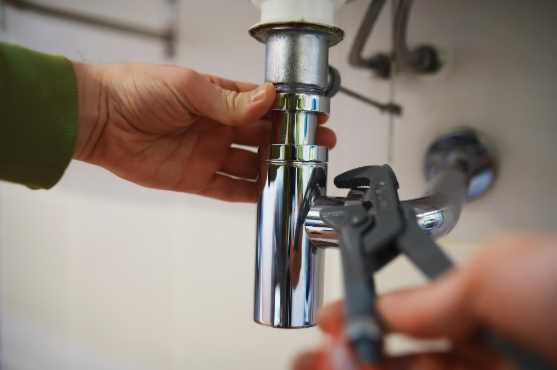
Plumbing repairs in Kansas City, MO are rarely convenient. A pipe doesn't wait for a Tuesday afternoon, and a water heater doesn't fail on a schedule that works for your calendar. It happens during a holiday weekend, right before guests arrive, or at 11 p.m. when everyone in the house is already asleep.
Kansas City's housing stock adds a layer most homeowners don't think about until something breaks.
According to the U.S. Census Bureau, the city's median home value sits around $242,900, and more than 55 percent of homes are owner-occupied, meaning the person calling for a repair is usually the one who has to live with the outcome long-term. Some neighborhoods still run on galvanized supply lines and cast iron drains that predate most of the plumbers who now service them, while newer subdivisions closer to Lee's Summit or Blue Springs deal with different issues tied to PVC fittings and modern fixtures.
This guide walks through what plumbing repair really means across Kansas City and the surrounding metro: the problems that show up most often, how a good plumber actually diagnoses them instead of guessing, what determines cost, and how to tell the difference between a fix that lasts and one that just buys you a few more months before the same issue resurfaces.
In this article, you will learn about:
- Common plumbing repair issues in Kansas City homes
- How professional plumbers diagnose and fix problems
- What affects the cost of plumbing repairs
- Choosing the right plumbing repair service
Keep reading to understand exactly what to expect from a repair call, so you can make a confident decision the next time something in your home stops working right.
Common plumbing repair issues in Kansas City homes
Kansas City's plumbing problems aren't random. They follow patterns tied to the age of the housing stock, the region's weather swings, and how water moves through a typical metro home. The city counts roughly 222,000 households, and a large share of that stock was built well before modern plumbing codes existed, which means older materials behave very differently from anything installed in the last two decades.
Older homes lean on materials that were standard decades ago but weren't built to last forever. Newer construction has its own failure points, usually tied to how fast builders work and how many subcontractors touch a single system. Between the two, a handful of issues account for most of the plumbing repair calls a Kansas City plumber runs in a given month.
Leaking pipes and fixtures
A slow leak rarely announces itself. It shows up as a slightly higher water bill, a musty smell under a cabinet, or a soft spot in the drywall that wasn't there last season. By the time it's visible, the leak has usually been running for weeks, and low water pressure is often one of the first signs something's wrong upstream of the fixture.
According to the Environmental Protection Agency, the average American home wastes more than 9,000 gallons of water every year through leaks that go unaddressed, enough to run more than 250 loads of laundry. A single leak that drips once per second can waste over 3,000 gallons annually on its own.
Supply line leaks, worn fixture seals, and corroded joints are the most common culprits in Kansas City's older neighborhoods. In homes with galvanized pipe, internal corrosion narrows the pipe over time and eventually creates pinhole leaks that are almost impossible to spot from the outside until they've already caused damage.
- Slab leaks under the foundation, which often show up as unexplained warm spots on the floor
- Leaks behind walls near bathrooms and kitchens, usually traced by a rise in water bills
- Fixture leaks at faucets, toilets, and supply valves, the easiest and cheapest to catch early
Catching a leak early is almost always cheaper than catching it late. A fixture leak might cost a fraction of what a slab leak or a drywall repair from water damage will run, which is part of why a professional leak repair inspection after any unexplained bill spike is worth scheduling before the problem grows.
Clogged drains and sewer backups
Drain clogs are the most common plumbing complaint in any city, but Kansas City's clay soil and tree-lined older neighborhoods add a wrinkle that homeowners in newer subdivisions rarely deal with: root intrusion into aging sewer laterals. Mature trees send roots toward any source of moisture, and a cracked or loose clay sewer joint is exactly that. Clogged drains that start small tend to escalate quickly once roots find their way in.
A slow drain that gets progressively worse over several days is usually a partial clog building toward a full blockage. The early signs of sewer line trouble include multiple fixtures backing up at the same time, especially the lowest drain in the house, which points toward a main line problem rather than a single fixture issue.
- Start with the simplest explanation: hair, grease, or soap buildup in a single fixture drain
- Rule out a localized clog with drain cleaning before assuming a bigger problem
- If more than one fixture is affected, treat it as a main line issue and call for a camera inspection
- Schedule hydro jetting or root cutting if tree root intrusion is confirmed
- Follow up with periodic maintenance if the home has mature trees near the sewer line
Chemical drain cleaners are tempting because they're fast and cheap, but they rarely solve a root intrusion problem and can damage older pipe from the inside out, a tradeoff worth understanding before reaching for a bottle under the sink. A camera inspection is the only reliable way to know whether a clog is a one-time nuisance or a symptom of a bigger issue building underground.
Water heater failures and inefficiencies
A water heater gives warning signs before it fails completely, but they're easy to miss if you're not looking for them. Rust-colored water, a rumbling or popping sound during heating, and a slow decline in hot water volume are all signs sediment has built up in the tank, a common precursor to needing to repair or replace a water heater sooner than expected.
Kansas City's water carries enough mineral content that many homeowners deal with hard water, and that mineral load speeds up sediment buildup compared to areas with naturally softer water. That buildup insulates the burner from the water above it, forcing the unit to work harder and burn more energy to hit the same temperature.
- Age past 10 to 12 years, the typical lifespan for a standard tank unit
- Rusty or discolored hot water, which often signals internal tank corrosion
- Inconsistent temperature or a shrinking hot water supply
- Water pooling at the base of the unit, a sign the tank itself may be failing
Water heating accounts for about 18 percent of a typical home's energy use, according to the U.S. Department of Energy, making it the second-largest utility expense behind heating and cooling a home. That means a unit working harder than it should to fight sediment buildup shows up directly on the monthly bill.
Homeowners often wait until the unit fails completely before calling, which almost always means cold showers and an emergency repair instead of a scheduled replacement on a timeline that works for the household. A unit already showing two or more of these signs is worth having evaluated before it fails entirely, especially heading into the colder months when a winter plumbing checklist becomes relevant again.
How professional plumbers diagnose and fix problems
The difference between a repair that lasts and one that doesn't usually comes down to diagnosis, not the fix itself. A plumber who treats the symptom without confirming the cause ends up back at the same house within a few months, and the homeowner ends up paying for the same problem twice.
A proper diagnostic process starts broad and narrows down, ruling out the simple explanations before assuming something more serious. It also depends on tools that let a plumber see and measure things that aren't visible from the surface, rather than guessing based on symptoms alone.
Diagnostic tools and techniques
Camera inspection technology has changed how sewer and drain problems get diagnosed. A small waterproof camera on a flexible cable travels through the pipe and sends a live feed back to a monitor, so a technician can see exactly where a clog, crack, or root intrusion sits instead of estimating based on symptoms.
Pressure testing is the standard method for confirming a leak's location without tearing into walls or flooring unnecessarily. A plumber isolates sections of the plumbing system and monitors pressure drop to narrow down where water is actually escaping.
Leak detection has moved well past listening with a stethoscope against a wall. Modern approaches combine acoustic sensors, thermal imaging, and moisture meters to locate a leak's exact position, often within inches, before any drywall or flooring gets opened up.
Every apprentice technician on a properly run team learns these tools under direct supervision before working independently, which is part of why the diagnostic step matters as much as the repair itself. A technician who skips straight to a fix without confirming the actual source of a problem is treating a symptom, not solving anything.
Common repair techniques
Not every plumbing problem calls for the same fix, and matching the right technique to the right problem is where experience matters most. A pipe with one bad section doesn't always need full replacement, and a pipe with widespread corrosion doesn't get fixed by patching one spot.
Pipe relining and trenchless sewer repair let a plumber fix a damaged section of pipe without digging up a yard or driveway, which has become the preferred approach for many sewer line repair jobs where the surrounding pipe is otherwise sound. Traditional excavation is still sometimes necessary for severe damage or pipe that's collapsed rather than just cracked.
- Spot repairs for isolated damage in an otherwise healthy pipe
- Full pipe replacement when corrosion or damage is widespread
- Trenchless methods for sewer lines where excavation would be disruptive
- Fixture-level repairs (valves, seals, cartridges) for leaks that don't involve the supply or drain lines themselves
Water heater repairs range from a simple thermostat or heating element replacement to a full tank flush that clears years of sediment buildup. A technician who diagnoses correctly can often tell within minutes whether a unit needs a component swap or has reached the end of its useful life.
When to call a professional vs. DIY
Some plumbing issues are genuinely manageable without a professional, and knowing which ones saves both money and hassle. A slow drain in a single fixture, a running toilet, or a loose faucet handle are reasonable starting points for a homeowner comfortable with basic tools.
Anything involving the main water line, gas lines, sewer connections, or a water heater's gas or electrical components crosses into territory where a mistake creates real risk, not just an inconvenience. A botched gas line connection or an improperly vented water heater isn't a problem you want to discover after the fact, and it's the kind of situation where emergency plumbing services exist for a reason.
The same applies to anything that requires cutting into a wall, working under a slab, or diagnosing a problem that isn't visible. Guessing at a hidden leak's location by opening drywall at random usually costs more in repairs than the original leak would have.
- DIY-appropriate: minor clogs, running toilets, loose fixtures, replacing a showerhead
- Call a professional: gas line work, main line clogs, water heater component failures, any leak inside a wall or under a slab, sewer backups affecting multiple fixtures
A homeowner's time is worth something too. Even a repair that's technically within reach for a confident DIYer can eat an entire Saturday, while a licensed plumber often resolves the same issue in under an hour with the right tools already on the truck.
What affects the cost of plumbing repairs
Plumbing repair costs vary widely because the variables involved actually are wide. A leaking faucet washer and a collapsed sewer line both fall under "plumbing repair," but they have nothing in common in terms of time, materials, or complexity.
Understanding what drives cost up or down helps set realistic expectations before a technician ever arrives, and it also helps homeowners spot the difference between a fair quote and one that's padded. A little context goes a long way toward avoiding sticker shock.
Factors that influence repair costs
The type of problem is the biggest single factor. A fixture-level repair involving a single part is a different job entirely from a main line issue that requires excavation or trenchless repair equipment.
Accessibility matters more than most homeowners expect. A pipe behind a finished wall or under a slab costs more to reach than the same pipe in an open crawlspace, simply because getting to it is part of the job.
- Severity and scope of the problem (isolated issue versus system-wide)
- Accessibility (open access versus behind finished walls, under slabs, or underground)
- Materials required, since older homes sometimes need parts that aren't stocked on every truck
- Time of day or week, since after-hours and emergency calls typically carry a different rate than scheduled daytime work
- Age and condition of the surrounding plumbing, since one repair sometimes reveals a second problem nearby
Pricing genuinely depends on these variables working together, which is why a trustworthy plumber gives a quote after seeing the problem rather than over the phone. Anyone offering a firm number sight unseen is either guessing or leaving room to adjust it once they arrive.
Getting accurate estimates
An accurate estimate starts with a real diagnostic visit, not a phone description. What sounds like a simple faucet leak over the phone sometimes turns out to be a symptom of a bigger supply line issue once a technician actually looks at it.
A written estimate before work begins protects both sides. It should spell out labor, materials, and any conditions that could change the price, like discovering additional damage once a wall is opened.
- Request a written estimate before any work begins
- Ask what happens if the technician finds additional damage mid-repair
- Confirm whether the estimate includes parts, labor, or both
- Compare the estimate against the scope of the actual problem, not just the bottom-line number
- Ask about warranty coverage on both parts and labor before agreeing to the work
A plumber who explains the reasoning behind a quote, not just the number itself, is usually the one worth trusting. If a technician can walk through why a repair costs what it costs, that transparency tends to carry through the rest of the job too.
Value of professional service vs. cost savings
The cheapest quote isn't always the cheapest outcome. A repair done wrong the first time often costs more in the long run, once the original problem resurfaces and a second technician has to undo bad work before fixing the actual issue.
Upfront, transparent pricing before work begins means no surprises on the final invoice. A plumber who commits to that model has no incentive to pad a bill after the fact, since the number was agreed to before the first tool came out of the truck. Simple habits like learning how to reduce water waste at home can also lower the odds of a costly repair down the line.
Quality workmanship on a first repair also protects everything around it. A poorly soldered joint or an improperly sealed connection doesn't just fail again, it can damage flooring, drywall, or cabinetry the second time around in ways the original problem never would have.
Choosing the right plumbing repair service
Not every plumbing company operates the same way, and the differences matter more once something has already gone wrong in your home. The right choice isn't always the fastest one to answer the phone, though responsiveness matters too.
A homeowner comparing options usually has more control over the outcome than it feels like in the moment. Kansas City households carry a median monthly mortgage payment north of $1,700, a real number that makes an unexpected repair bill land harder than it might in a market with lower housing costs. A few direct questions upfront separate a company built around fast, correct repairs from one that's just trying to get a truck on the schedule.
What to look for in a plumbing company
Licensing and insurance are the baseline, not a bonus feature. A licensed plumber has passed the training and testing required to legally perform the work, and insurance protects a homeowner if something goes wrong during the job itself.
Experience matters beyond years in business. A technician who has apprenticed under a master plumber and worked through a real range of problems brings pattern recognition that a newer tech simply hasn't built up yet, and that shows up in how fast and accurately a problem gets diagnosed.
- Licensed and insured, verifiable rather than just claimed
- Transparent, upfront pricing before work begins
- Technicians trained on modern diagnostic tools, not just basic repair
- Clear communication about the problem and the fix, not just a bill at the end
- A track record of standing behind the work after the job is done
Response time matters for anything urgent, but it shouldn't come at the cost of a rushed diagnosis. A company that shows up fast and still takes the time to confirm the actual problem before starting work is doing both parts of the job right.
Questions to ask before hiring
The right questions upfront save a lot of frustration later. A company confident in its own work usually answers these without hesitation, while a vague or evasive answer is worth noticing.
Asking about the technician's specific experience with your type of problem, not just general plumbing experience, tends to surface useful information. A tech who's handled dozens of similar sewer line issues in older Kansas City homes will talk about it differently than one who's mostly done new-construction work.
- Are you licensed and insured for work in Missouri?
- What does your pricing structure look like, and is it upfront before work starts?
- Do you offer any guarantee on repairs?
- How soon can a technician be on-site for something urgent?
- What happens if the diagnosis changes once you're on the job?
A company that answers all five clearly, without dodging the pricing question in particular, is generally one worth trusting with the work. Most companies keep a running FAQ page covering exactly these concerns, and it's a reasonable place to start before ever picking up the phone.
The benefits of local expertise
A plumber who works exclusively in the Kansas City metro understands things a national chain simply can't replicate: which neighborhoods still run galvanized supply lines, where clay sewer laterals are most prone to root intrusion, and how the region's freeze-thaw cycles stress pipes differently than a milder climate would.
That local knowledge shows up in faster, more accurate diagnosis. A technician who has already seen the same failure pattern in a dozen homes in Overland Park recognizes it faster in your home too. The same holds in Lee's Summit, Leawood, and Prairie Village, where the same aging supply lines and clay sewer laterals show up under very similar homes.
Benjamin Franklin Plumbing of Kansas City brings that kind of local, hands-on experience to every residential plumbing call across the metro, from Kansas City proper out to Blue Springs and Gladstone. Independence, Olathe, and Greenwood homeowners get the same standard of service, since the same team and the same training cover the whole metro rather than just the flagship neighborhoods. Every technician has apprenticed under a master plumber, which means the diagnosis is grounded in real experience, not a guess.
Conclusion
Plumbing repairs are rarely about a single broken part. They're about diagnosis, technique, and knowing which fix actually solves the problem instead of just delaying it. Kansas City's mix of older housing stock and newer construction means the same symptom can point to very different underlying causes depending on the home, which is exactly why a proper diagnostic process matters more than a fast guess.
The homeowners who come out ahead are the ones who catch problems early, ask the right questions before hiring, and choose a company built around getting it right the first time rather than the one that answers the phone fastest. A repair done correctly the first time protects the rest of the home around it, not just the pipe or fixture in question.
Benjamin Franklin Plumbing of Kansas City has built its reputation on exactly that standard: licensed, background-checked technicians, upfront pricing before any work begins, and a straightforward commitment to doing the job right the first time. If something in your home needs attention, from a stubborn drain to a failing water heater, Benjamin Franklin Plumbing of Kansas City is ready to help.

 Your Privacy Choices