
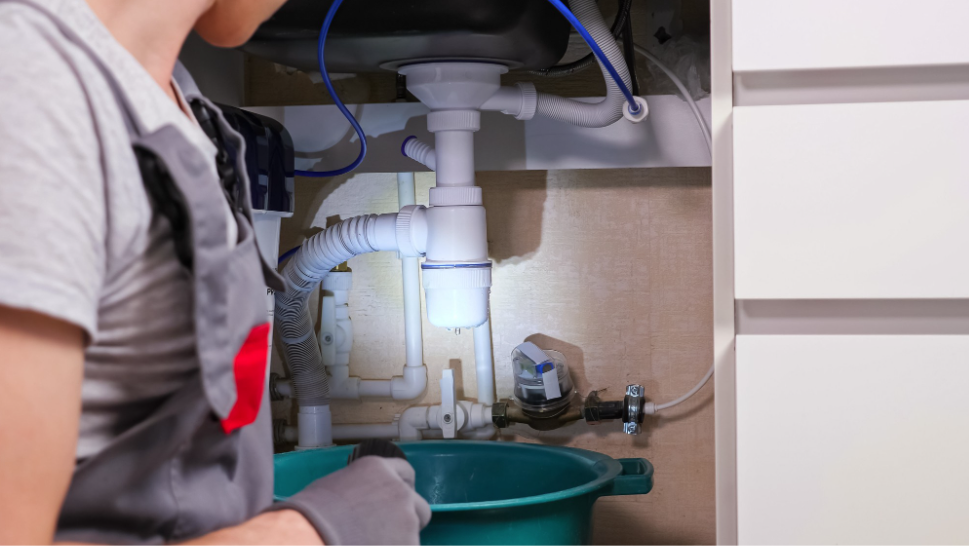
A slow kitchen sink is annoying. A backed-up main line at 9 p.m. on a Sunday is a crisis. Somewhere between those two moments, most homeowners in Lee's Summit start wondering the same thing: what is this actually going to cost, and is the number the plumber just quoted a fair one or a padded one.
The honest answer is that drain cleaning cost depends on more than most people expect going in. A single clogged sink drain and a root-choked main sewer line both fall under "drain cleaning," but they are entirely different jobs with entirely different price tags. Age of the home, the type of pipe, how far the clog sits from an access point, and whether the job happens at 2 p.m. on a Tuesday or 2 a.m. on a Saturday all move the number.
This guide breaks down what actually drives drain cleaning cost in Lee's Summit, what a fair quote looks like at each level of the job, and how to spot the difference between a plumber giving an honest estimate and one padding the invoice because the homeowner has no baseline to compare it to.
Nobody should have to guess whether $150 or $650 is the right number for their specific problem, and by the end of this guide, that guesswork should be gone.
Benjamin Franklin Plumbing of Kansas City handles drain cleaning across the metro every day, and the ranges below reflect what actually shows up on real invoices, not a marketing number.
In this article, you will learn about:
- What actually determines the cost of drain cleaning
- Typical price ranges for common drain cleaning jobs
- When to worry, and when a slow drain can wait
- How to avoid overpaying and spot a fair quote
Keep reading to find out which one factor moves the price more than any other, and why the cheapest quote is not always the one that ends up costing less.
What actually determines the cost of drain cleaning
Drain cleaning is not a single service with a single price. It is a category that spans a five-minute sink snake and a multi-hour hydro jetting job on a main sewer line, and the price difference between those two extremes is enormous. Understanding what moves the number matters more than memorizing a single dollar figure.
Clog location and pipe access
The single biggest factor in drain cleaning cost is how easy it is to physically reach the clog. A bathroom sink drain with an accessible cleanout under the cabinet is a fast, straightforward job. A main sewer line clog forty feet out into the yard, reachable only through a cleanout buried under landscaping or, in older homes, with no cleanout at all, takes longer and costs more before a single tool touches the pipe.
Older homes throughout Lee's Summit sometimes lack a modern exterior cleanout altogether, which means a technician has to access the line through a roof vent, an interior floor drain, or occasionally pull a toilet to reach the main line.
Each of those access methods adds time, and time is the single largest cost driver in any service call. The stakes of skipping maintenance on an inaccessible line are real: a single stuck float valve or a slow leak hidden behind a wall can waste 216,000 gallons a month once it goes unnoticed long enough, a number that shows why difficult access is not just an inconvenience but a real cost risk over time.
A home with a properly placed, accessible cleanout will almost always see a lower bill than an otherwise identical clog in a home without one.
- Fixture drains (sink, tub, shower) with clear under-cabinet or nearby access
- Main line clogs reachable through an exterior cleanout
- Main line clogs requiring roof vent access or fixture removal
- Clogs in older homes with no dedicated cleanout at all
Homeowners who are not sure whether their home has an accessible cleanout can usually spot one along the foundation line or in the basement or crawlspace, a capped pipe fitting roughly four to six inches across. Knowing that answer before a plumber arrives helps set realistic expectations for both timeline and cost.
Clog severity and cause
A hair clog in a bathroom sink and a root-choked sewer line both technically qualify as a "clog," but one takes fifteen minutes to clear with a hand auger and the other can take a full afternoon with heavy equipment. Severity is not always obvious from the symptom alone. A slow drain might be a minor buildup or the early sign of a much larger blockage further down the line.
Grease buildup in kitchen lines, scale buildup in older galvanized pipe, and root intrusion in clay or cast iron sewer lines are the three most common causes that push a job from a simple snake into more intensive territory.
Root intrusion in particular is common in Lee's Summit neighborhoods with mature trees near older sewer lines, since roots seek out the moisture inside a pipe and can work their way through even a small crack or joint gap over several years. Left unaddressed, even a slow leak matters more than most homeowners assume.
The EPA estimates that leaks can account for more than 6 percent of a typical property's total water use, often with no visible sign at all until a bill or a backup finally makes it obvious.
- Simple clogs (hair, soap scum, minor debris) clear with a standard hand snake or small motorized auger
- Grease buildup requires either a heavier motorized snake or, in stubborn cases, hydro jetting to fully clear the line
- Root intrusion typically requires hydro jetting or mechanical root cutting, sometimes both
- Collapsed or severely damaged pipe sections cannot be cleared at all and require repair or replacement instead of cleaning
A plumber who does not run a camera before quoting a price on anything beyond a simple clogged drain is guessing at severity rather than confirming it, and that guess can go either direction on the final bill.
Emergency and after-hours timing
A clogged drain discovered during a Tuesday afternoon service window costs less to fix than the same clog discovered at 10 p.m. on a Saturday. This is standard across the plumbing trade, not specific to any one company, and it reflects the real cost of pulling a technician off personal time to respond immediately rather than during a scheduled window.
Backups tend to happen at inconvenient times because that is when household water use peaks, evening dishwashing, weekend laundry, holiday gatherings with more guests using more fixtures than usual. Homeowners who notice a slow drain during normal business hours and schedule service proactively almost always pay less than those who wait until the drain backs up completely on a weekend.
- Standard daytime service calls during normal business hours
- Evening or weekend calls outside standard scheduling
- True after-hours emergency response (overnight, holidays)
- Same-day service requested outside the originally scheduled window
The lesson here is less about the clock and more about timing the call. A drain that has been running slow for a week is not an emergency yet, but it is very likely to become one, and calling before it does is one of the few cost factors a homeowner actually controls.
Typical price ranges for common drain cleaning jobs
Every plumbing company prices differently, and no single number applies to every home, but real ranges exist for each common category of drain cleaning work. Knowing where a specific job is likely to land helps a homeowner evaluate a quote before committing to it.
Single fixture drain cleaning
A single clogged fixture, a bathroom sink, a shower drain, a laundry standpipe, is the most common and least expensive category of drain cleaning call. These jobs typically involve a hand auger or a small motorized snake run directly into the fixture drain, clearing the blockage without needing to access the broader plumbing system.
Most single-fixture jobs are completed in under an hour once a technician is on site, assuming the clog is a standard hair, soap, or minor debris blockage rather than something more severe further down the line. The price for this category sits at the lower end of the drain cleaning spectrum precisely because the scope is narrow and the access is simple.
- Confirm the clog is isolated to a single fixture rather than affecting multiple drains (a sign of a bigger downstream problem)
- A technician runs a hand auger or small motorized snake to clear the immediate blockage
- Water is run to confirm the drain flows freely afterward
- A quick visual check confirms no immediate signs of a larger issue further down the line
If more than one fixture is slow or backing up at the same time, that is a signal the problem sits further downstream in a shared line rather than in a single fixture, and the job, along with the price, shifts into a different category entirely.
Main line drain cleaning and snaking
When a clog affects multiple fixtures at once or the main sewer line itself is backed up, the job moves beyond a simple fixture snake into main line service. This typically requires a heavier motorized snake capable of reaching much further into the line, and often a camera inspection to confirm exactly where the blockage sits and what caused it.
Main line clogs cost more than fixture clogs for a straightforward reason: more equipment, more time, and often a camera pass both before and after clearing the line to confirm the fix actually worked. A main line job that also requires locating and accessing a cleanout that is not immediately obvious adds further time to the visit. Chronic clogs sometimes point to a compromised section of sewer line that cleaning alone cannot fully resolve.
- A motorized snake capable of reaching the full length of the main line
- Camera inspection before clearing, to identify the cause and location of the blockage
- Camera inspection after clearing, to confirm the line is genuinely clear rather than just less obstructed
- Additional time for locating a cleanout in homes where one is not immediately visible
Homeowners who have main line backups more than once in a short period should treat that as a signal worth investigating further rather than just clearing the symptom repeatedly.
A line that clogs every few months usually has a structural cause, root intrusion, a low spot in the pipe, a partial collapse, that a camera inspection can identify. When the underlying pipe itself is damaged, trenchless repair can often fix it without digging up the yard.
Hydro jetting for stubborn or recurring clogs
Hydro jetting uses high-pressure water to scour the full interior diameter of a pipe, clearing grease buildup, scale, and root intrusion far more thoroughly than a mechanical snake, which tends to punch a hole through a clog rather than clear the surrounding buildup.
It costs more than standard snaking because the equipment is more specialized and the process takes longer, but it also lasts longer, often preventing the same clog from returning within weeks.
Hydro jetting makes the most sense for lines with heavy grease accumulation, established root intrusion, or a documented history of repeat clogs in the same spot.
It is generally not necessary for a simple, isolated fixture clog, since jetting a line that only needed a quick snake is more service than the situation calls for. Homeowners tempted to skip the professional visit entirely should know that chemical drain cleaners rarely fix a severe clog and can damage older pipe in the process.
- A camera inspection confirms the line is a genuine candidate for jetting rather than a simple snake job
- The jetting equipment is fed into the line and high-pressure water clears buildup along the full pipe diameter
- A follow-up camera pass confirms the pipe walls are genuinely clear, not just passable
- Any structural damage revealed by the clear pipe (cracks, offsets, root damage) gets flagged for separate repair discussion
A homeowner asked to pay for jetting on what turns out to be a simple, isolated clog should ask why. Jetting is the right tool for a specific set of problems, not a default upsell for every service call.
When to worry, and when to just call
Not every slow drain needs an emergency call, and not every clog is a sign of a bigger problem. Knowing which situations call for immediate action and which can wait for a scheduled appointment helps avoid both unnecessary emergency fees and the risk of a small problem becoming a much bigger one.
Signs a clog needs immediate attention
Some drain problems can wait a day or two for a scheduled visit. Others cannot, and treating them the same way risks real damage to the home. Water backing up out of a floor drain, sewage odor inside the house, or multiple fixtures backing up simultaneously are all signs that point toward a main line problem rather than a simple, isolated clog.
A single slow drain is rarely an emergency. Water actively coming up somewhere it should not, especially from a floor drain or the lowest fixture in the house, almost always is, since that pattern usually means the main line is blocked and everything upstream of the blockage has nowhere else to go.
- Water backing up from a floor drain or the lowest fixture in the house
- Sewage smell inside the home, particularly near a floor drain or basement
- Multiple fixtures backing up or draining slowly at the same time
- Gurgling sounds from drains when other fixtures are used, a sign of a partially blocked main line
Any of these signs justifies calling sooner rather than waiting to see if it resolves on its own, since a partial main line blockage tends to become a full one without warning, usually at the least convenient possible moment.
A gurgling drain paired with a slow-moving fixture elsewhere in the house is often the earliest sign homeowners miss, and it is worth learning to spot sewer line trouble before it becomes an obvious backup.
What to do while waiting for a plumber
Once one of the urgent signs above shows up, what a homeowner does in the next twenty minutes can limit the damage or make it worse. Shutting off water use to the affected fixtures, or the whole house if the main line is clearly backed up, keeps more wastewater from backing up further while help is on the way.
Reaching for a chemical drain cleaner in the meantime rarely helps and sometimes makes the eventual professional visit harder, since caustic chemicals left sitting in a pipe create a safety hazard for the technician who has to work on that line later. Simple, low-risk steps do far more good than an aggressive DIY attempt at a fix the situation does not call for.
- Stop running water in affected fixtures, and in the whole house if multiple drains are backing up
- Avoid flushing toilets or running the dishwasher and washing machine until the line is cleared
- Do not add chemical drain cleaner on top of an active backup, since it complicates the professional fix
- Move anything stored near a floor drain or in a basement that could be damaged by backup water
These steps buy time without making the underlying problem worse, and they cost nothing beyond a few minutes of attention while waiting for a technician to arrive.
When a slow drain can wait for a scheduled visit
A single slow fixture drain, especially one that has been gradually slowing over days or weeks rather than backing up suddenly, is usually safe to schedule for a normal appointment rather than treating as an emergency. This is the more common scenario, and it is also the one where a homeowner has the most room to shop for a fair price rather than accepting whatever an emergency dispatcher quotes.
Scheduling proactively instead of waiting for a full backup is one of the clearest ways to keep drain cleaning cost down. A slow drain caught early is almost always a simple fixture job. The same drain ignored for another month is more likely to become a full backup requiring a more involved, more expensive visit.
- Note when the slowness started and whether it is getting gradually worse
- Try a plunger on the affected fixture only if the problem is isolated to that single drain
- Avoid chemical treatments, which can mask a symptom temporarily while doing nothing about the underlying cause
- Schedule a standard appointment rather than requesting emergency service for a single, isolated slow drain
The tradeoff is straightforward: catching a problem early costs less and involves a smaller, simpler fix than waiting for it to escalate into a genuine emergency. A broader winter checklist covers several of these early-warning habits alongside drain care specifically.
How to avoid overpaying for drain cleaning
The biggest risk in drain cleaning pricing is not that every quote is inflated. It is that homeowners have no easy way to know whether a specific quote is reasonable for their specific situation, which makes it hard to push back even when something feels off.
What a fair quote actually includes
A fair, upfront quote should specify what is included before any work begins: the diagnostic approach (visual inspection versus camera), the method being used (hand auger, motorized snake, or hydro jetting), and whether a follow-up camera check is part of the price or billed separately. A quote that is just a single number with no explanation of what that number covers is harder to evaluate and easier to pad.
Homeowners are well within reason to ask a plumber to explain, in plain language, why a particular job requires a particular method before agreeing to it. A plumber confident in their pricing should have no trouble walking through that reasoning, and one who gets vague or defensive when asked is worth a second opinion.
The company's own FAQ page is a reasonable place to check what a business is willing to explain openly before a technician ever shows up.
- A clear explanation of the diagnostic method before work begins
- Confirmation of whether a camera inspection is included or billed as an add-on
- A specific explanation of why a given clearing method (snake versus jetting) is being recommended
- Written confirmation of the price before work starts, not an estimate that changes mid-job without explanation
The goal is not to become a plumbing expert. It is to be able to ask two or three specific questions that separate a plumber willing to explain their reasoning from one hoping the homeowner will not ask.
Red flags worth watching for
Certain patterns in a quote or a service call are worth pausing over. A price that changes significantly once the technician is already on site, with no clear new information to explain the jump, is one of the most common complaints homeowners have about drain cleaning service. A second is being pushed toward hydro jetting or a full line replacement before a camera inspection has actually confirmed either is necessary.
Aging water infrastructure nationally is a real and growing problem. Research from Utah State University's Utah Water Research Laboratory found that 33 percent of water mains nationwide are now past their average 53-year failure age.
That context matters here: it means older pipe genuinely does fail more often and legitimately needs more intensive work, but it also means the excuse "your pipes are old" gets used loosely by less scrupulous companies to justify unnecessary upsells. A camera inspection settles the question either way, with visual proof instead of a guess.
- A quoted price that jumps significantly on-site without a clear explanation tied to new information
- Pressure toward hydro jetting or replacement before any camera inspection has confirmed the need
- Reluctance to explain, in plain terms, why a specific method is being recommended over a simpler one
- No documentation (photos, camera footage) offered for work that supposedly required more than a basic snake
None of these red flags mean a homeowner is necessarily being overcharged. They mean it is worth asking a direct question before agreeing to the higher number, since a legitimate answer should be easy to give. Published expert tips from a plumbing company are another useful gauge of whether a business explains its reasoning openly or keeps homeowners guessing.
Getting a second opinion without wasting time
For any job beyond a simple, isolated fixture clog, a second opinion is not unreasonable, particularly if the first quote came with pressure to decide immediately or included work (jetting, camera inspection, line replacement) that was not clearly explained. A second plumber willing to review camera footage from the first visit, if any was taken, can usually confirm or dispute a diagnosis quickly without a full repeat inspection.
The homeowners who end up happiest with a drain cleaning outcome are rarely the ones who chased the single lowest quote. They are the ones who asked a few direct questions, got clear answers, and picked a plumber willing to explain the reasoning rather than just the number. That standard applies whether the job is a fifteen-minute sink snake or a full afternoon of hydro jetting on a main line, whether the home sits in Lee's Summit or Blue Springs or anywhere else across the metro.
Conclusion
Drain cleaning cost in Lee's Summit depends heavily on what kind of clog it actually is, not just that a drain is slow or backed up. A simple fixture clog with easy access costs far less than a main line blockage requiring camera work and possibly hydro jetting, and knowing which category a specific problem falls into is the difference between a homeowner who can evaluate a quote confidently and one who has to just trust whatever number shows up on the invoice.
The most useful thing a homeowner can do before calling anyone is pay attention to the pattern: is it one drain or several, has it been gradual or sudden, is there a sewage smell or standing water involved. Those details help a plumber diagnose faster and help a homeowner ask smarter questions when the quote comes in.
If a drain in a Lee's Summit home is running slow, backing up, or just overdue for a checkup before it becomes a real problem, Benjamin Franklin Plumbing of Kansas City is ready to take a look, explain exactly what is happening and why, and quote a fair, upfront price before any work begins.

 Your Privacy Choices