
Key Takeaways About Hot Water Recirculation
Hot water recirculation keeps heated water moving so hot water arrives quickly at fixtures. This guide helps homeowners and property managers decide on pumps controls and installation choices when long waits or high water waste appear.
- Identify pump type and required head for your loop.
- Prevent unintended bypass with check valves and proper piping.
- Avoid short cycling by matching pump and control strategy.
- Spot leaks noises or uneven temperatures during a diagnostic check.
- Reduce runtime with timers demand sensors or variable speed drives.
- Plan installation access valves sensor placement and insulation carefully.
Introduction
Hot water recirculation can stop the long wait for hot water and cut wasted cold water down the drain. Many homes lose gallons every day while faucets run waiting for warmth. That waste raises utility bills and strains water supplies during peak use. For homeowners noticing slow hot water or frequent runs, the right recirculation approach makes a measurable difference.
Pumps and control strategies determine how quickly hot water arrives and how much water a system saves. Different pump types move water in different ways and fit various plumbing layouts. Control options affect runtime and energy use as much as the pump does. Picking the wrong combination leaves the homeowner paying for both energy and wasted water.
Installation quality and component choice shape long term performance more than initial cost does. Properly placed check valves and timed controls reduce return flow and heat loss. Professionals will inspect piping, circulator shutoff valves, and temperature sensors to size the system correctly. That inspection step helps avoid common problems like circulation short cycling or cold zones at fixtures.
Homeowners in Winona, SC often notice long waits at the kitchen sink more than other fixtures. For properties in Florence, SC the same issue can cause complaints in multi-bath homes during mornings. A solid recirculation plan addresses symptoms like noisy pumps, visible leaks, and uneven hot water timing. When those signs appear, a professional diagnosis clarifies whether a pump upgrade or a control change will deliver expected water savings.

How Hot Water Recirculation Systems Work Mechanically
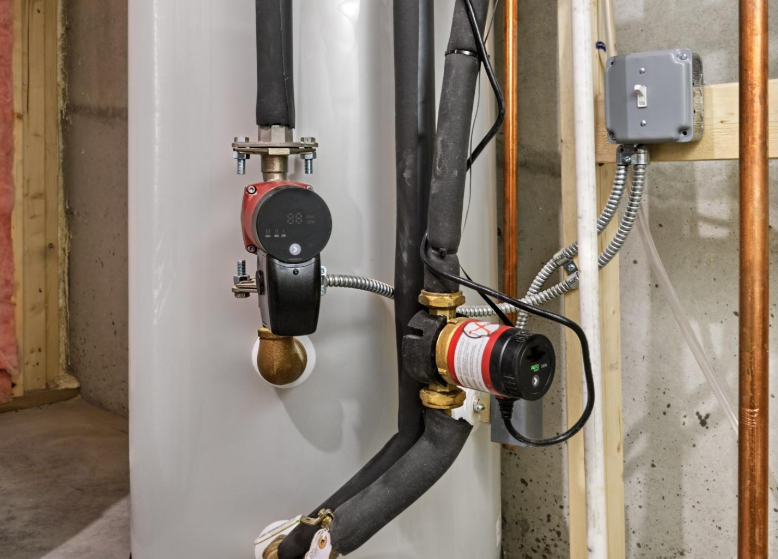
A hot water recirculating system moves heated water from the water heater to fixtures and back through a return path so hot water is available quickly. The system relies on three mechanical parts: a circulator pump, a check valve, and a return line or crossover. A pump creates flow, a check valve forces one-way circulation, piping returns cooled water to the heater. Homeowners wonder if recirculation wastes energy, and the short answer is controls determine energy use more than circulation itself.
- A closed-loop uses a dedicated return line.
- An open-loop uses the cold supply as the return.
- Point-of-use pumps sit under a fixture for short runs.
- Inline circulators serve whole-house systems.
Circulator pumps vary by head pressure and flow rate and that affects fixture delivery time and return temperature. Professional diagnosis often measures flow with a pressure gauge and checks temperature drop across the loop. Inspecting shutoff valves and the check valve reveals unintended bypass that causes short runs or continuous flow. Technicians also check pump voltage and listen for cavitation or bearings that sound rough.
Temperature sensors and control modules tell the pump when to run to avoid wasting energy while keeping comfort. Timers, thermostats, demand switches, or motion sensors each make different tradeoffs between convenience and savings. For example, a timer can run the pump during predictable morning use and save energy the rest of the day. Homeowners in Winona, SC should note when waits cluster at specific fixtures to help set controls.
Proper piping paths and valve placement keep return water from bypassing fixtures and reduce heat loss on the loop. Installers commonly place a check valve near the heater, a balancing valve on the return, and a temperature sensor close to the furthest fixture. A simple homeowner check is to time how long hot water takes to arrive and note any warm water return at the cold tap. For properties in Florence, SC that see heavy morning use, demand controls often hit the best balance of water savings and pump runtime.
Common Causes of Long Wait Times and Waste
Long wait times and water waste often trace back to unintended bypass paths that let warm water skip fixtures. A partially open mixing valve, a faulty check valve, or a misaligned crossover can send hot water straight back to the heater. Technicians diagnose this by isolating sections of piping and checking for flow where none should exist. Homeowners might notice warm water at the cold tap when the pump is off as a clue to a bypass.
Short cycling of the circulator pump reduces efficiency and raises energy use while not improving delivery time. This happens when the pump runs but the loop lacks sufficient head pressure or when return water heats the sensor too quickly. A professional will use a pressure gauge and temperature readings at the pump and furthest fixture to confirm short cycling. Replacing or resizing the pump and adjusting balancing valves often corrects the issue.
Excessive heat loss along the return loop increases runtime and can leave fixtures cooler than expected despite long pump operation. Uninsulated or undersized piping, and complex routing with many fittings, make the loop lose heat faster than the heater can replace it. Inspectors check insulation thickness, measure temperature drop over distance, and look for cold spots near access panels. Improving insulation and shortening return paths reduces runtime and water waste.
Incorrect control settings produce either wasted energy or long waits depending on the mode chosen. Timers set for fixed hours can miss unpredictable morning routines, while thermostatic setpoints placed too close to the heater skip warming distant fixtures. For a proper setup, a technician will review usage patterns and may install demand controls or re-locate the temperature sensor. Homeowners in Winona, SC and Florence, SC benefit from this tuning when morning usage patterns concentrate at specific fixtures.
Warning Signs That Your System Is Underperforming
A weak or noisy pump motor often signals reduced circulation even when the pump runs. Homeowners may hear grinding, whining, or rattling that grows with runtime. A technician will check voltage at the pump, measure flow with a pressure gauge, and perform a simple shutoff valve isolation test. Those checks confirm whether bearings, impeller damage, or low supply voltage cause the noise and weak flow.
Uneven fixture temperatures point to flow imbalance or blocked return paths rather than thermostat error. You might get hot water quickly at one sink while another stays cool after the pump runs. A plumber would measure temperature at the furthest fixture and at the return line, then inspect the check valve and any mixing valves for unintended bypass. Fixing a stuck mixing valve or replacing a failed check valve usually restores balanced delivery.
Long pump runtimes without reduced wait times indicate excessive heat loss or incorrect pump sizing. Technicians diagnose this by recording temperature drop over loop distance and comparing flow rate to expected head pressure. They also inspect insulation on return piping and review piping layout for unnecessary loops or high-resistance fittings. Improving insulation or selecting a pump with appropriate head often reduces runtime and improves arrival times at fixtures.
Visible leaks, water stains, or unexpected warm spots suggest concealed pipe issues or a failing connection in the loop. Inspectors use a visual check, a moisture meter, and targeted temperature readings to find the leak or thermal anomaly. For example, a warm ceiling panel may point to a hidden return line leak above, leading the tech to open access and confirm pressure test results. If you see these signs, schedule a professional so they can use diagnostic pressure and temperature data to plan repairs.
Pump Types Pros Cons, and Selection Guidance
Choosing between a small point-of-use pump and a whole-house circulator depends on pipe layout and fixture locations. Point-of-use units work best for single fixtures with short runs and reduce overall runtime. Whole-house circulators handle higher flow and longer loops but need proper head pressure to reach distant fixtures. A professional typically compares required flow and head using pump curves before recommending a model.
- Sized circulator pumps match loop length and fittings.
- Variable-speed pumps adjust flow for comfort and savings.
- Line-voltage pumps fit simplest electrical setups.
- DC or ECM pumps use less energy at low speeds.
Variable-speed pumps offer fine control and often avoid short cycling that wastes energy and water. They adapt to changing demand and keep quieter operation while reducing amperage draw. Fixed-speed pumps can be cheaper up front but may run longer and produce more noise. A technician will measure amperage and flow while testing a candidate pump to confirm compatibility.
When selecting pump materials, prefer bronze or stainless wetted parts for durability in potable water systems. Plastic components can work in low-corrosion situations but may degrade sooner under heat cycling. Also check for an integrated check valve or plan to install one near the heater to prevent bypass. For a nearby example, homeowners in Winona, SC and in Florence, SC should ask contractors about pump head curves relative to their loop layout.
Control Strategies for Efficiency and Comfort
Start by matching the control type to daily routines instead of relying on a single default setting. Timers work well when household use follows predictable windows, running the pump only during those times to cut energy. Demand controls respond to faucet use and reduce unnecessary runtime, which suits irregular schedules and reduces water waste. Motion or flow sensors can trigger brief runs for quick warm-up without long runtimes.
Thermostatic controls use a temperature sensor to keep loop water near a setpoint while limiting pump hours. Place sensors near the farthest fixture instead of next to the heater to avoid premature shutoff and cold returns. A professional will verify sensor placement using temperature readings and a simple time-to-temperature check at fixtures. Proper sensor location minimizes short cycling and improves comfort at distant taps.
Variable-speed pump drives offer smooth ramp-up and adjust flow to match demand, cutting noise and electrical draw during low use. They also reduce the risk of cavitation and bearing wear by avoiding abrupt starts that stress components. During a diagnostic visit, a technician may record amperage and flow with a clamp meter and pressure gauge to confirm drive settings. That data helps set drive curves for both comfort and efficiency goals.
Combining a timer with a demand override often captures the best balance of savings and comfort in mixed-use homes. For example, a timed schedule covers morning routine while demand sensing picks up unexpected afternoon use. Installers program the system and then observe runtime and hot arrival times for a week to fine-tune settings. Homeowners in Winona, SC may find this hybrid approach reduces standing water waste while keeping reliable hot delivery.
Controls must integrate correctly with valves and check valves to prevent unintended bypass or backflow that wastes water and energy. A professional diagnosis includes isolating valves, checking one-way valve seating, and running a pressure differential test to confirm proper flow direction. Adjusting balancing valves and control setpoints after those checks prevents hot spots and long runtimes. For multi-bath properties in Florence, SC, this coordinated setup often yields consistent savings and fewer complaints about timing.
Installation Tips for Homeowners and Contractors
Start by marking the intended pump and control locations before opening walls or ceilings to avoid rework and hidden costs. Verify supply and return access points and plan wiring runs to nearest junction box. Confirm shutoff valves are accessible for routine isolation and maintenance. Leave space for a future variable-speed drive or control module beside the circulator.
Match pipe connections to the pump inlet and outlet using appropriate unions and dielectric fittings to permit later removal and inspection. Install a dedicated ball valve on each side of the pump so technicians can isolate and test the unit quickly. Fit a suction strainer or inline fine mesh on systems prone to debris to protect the impeller. Tighten flanges and unions to manufacturer torque guidance and inspect for leaks at first startup.
Place temperature sensors at the farthest fixture and secure them to bare copper or PEX using proper clamps for accurate readings. Run a timed commissioning test measuring time-to-temperature at multiple fixtures and record those readings for future tuning. If the loop uses the cold supply as a return, verify that check valves prevent backflow into the cold side during pump idle periods. During commissioning, note any warm water at cold taps as an immediate troubleshooting cue.
Wire controls to a protected circuit with a labeled breaker and use a GFCI-protected receptacle if required by the device instructions. Ground the pump and control chassis to the electrical panel grounding conductor for safety and to reduce electrical noise. For a reliable installation, photograph wiring and sensor locations and keep that documentation with the home maintenance records. Homeowners in Winona, SC often find those photos help explain system operation to contractors during later adjustments.
When routing return piping, minimize unnecessary fittings and avoid long vertical rises that increase required head pressure and reduce flow. Insulate all accessible loop piping to limit heat loss and shorten runtime needed to reach comfort at distant taps. Leave clear labeling at the heater and control panel to show which valves affect the recirculation loop for future service. For multi-bath properties in Florence, SC consider installing a local isolation kit that permits sectional testing without shutting down the entire system.
Expected Water Savings and Cost Recovery Timeline
Estimating water savings starts with measuring how long faucets run before and after a recirculation system activation. Track three to five typical draws at key fixtures and record volumes or time to hot water to establish a baseline. After commissioning, compare those same draws over a week to calculate gallons saved per day. This simple before-and-after method gives a homeowner a realistic picture of daily water reduction.
- Measure initial wait times at key fixtures.
- Record water volume or timed flow for each event.
- Compare baseline and post-installation data over several days.
- Adjust controls and retest to maximize savings.
Typical savings vary widely by household routines and system type, so expect a range rather than a single number. Point-of-use setups often save most at a single sink and reduce overall pump runtime significantly. Whole-house loops can save several gallons per draw across multiple fixtures when controls match occupancy patterns. A technician can model expected annual savings once baseline usage data is available.
Cost recovery depends on water cost, pump energy use, and installation expense, so homeowners should consider both utility and time savings. To estimate payback, add projected annual water cost savings to any reduced wastewater charges and subtract increased energy use. Include a modest allowance for maintenance like occasional check valve replacement and sensor recalibration. For many properties, payback occurs within a few years, but exact timelines depend on usage patterns and local water prices.
Professionals diagnose savings performance by measuring flow rates, run hours, and temperature differentials during test cycles. They will use a flow meter or pressure gauge and log pump runtime via the control module to validate assumptions. For example, a technician checks time-to-temperature at the furthest fixture and inspects insulation conditions before finalizing savings estimates. Homeowners in Winona, SC or owners managing larger properties in Florence, SC can use those diagnostic outputs to decide whether control tweaks or pump changes will shorten the cost recovery timeline.
When To Call a Professional for System Issues
If you hear persistent grinding or detect reduced flow despite controls cycling, it's time to call a professional. A technician will perform basic electrical checks at the pump, measure current with a clamp meter, and verify supply voltage at the junction box. They will also run a pressure gauge and take temperature readings at the pump and a distal fixture to confirm mechanical or electrical fault. These diagnostic steps separate simple fixes from issues needing part replacement.
When warm water appears at the cold tap intermittently, a plumber should inspect valves and potential cross-connections rather than relying on homeowner adjustments. The pro will isolate sections, operate shutoff valves, and use a dye or temperature test to find unintended bypass paths. They will also check the check valve seating and any thermostatic mixing valves for wear or debris. Identifying the exact leak or bypass prevents repeated callbacks and wasted time.
If the system cycles too often or runs for long periods without improving wait times, call someone to evaluate pump sizing and control logic. A technician will compare measured flow and head against pump curves and log run hours from the control module to spot mismatches. They may recommend swapping to a variable-speed unit or retuning control setpoints based on real runtime data. This process uses measurable outputs to justify hardware changes.
Visible leaks, stains, or warm patches in finished areas require immediate professional assessment to limit damage and find concealed piping faults. Inspectors will pressure-test the loop, use a moisture meter or infrared camera, and open minimal access points to confirm a leak location. For system maintenance or complex repairs, homeowners in Winona, SC should keep records and allow the professional to document readings. Property managers in Florence, SC managing multi-bath units benefit from a written diagnostic report before approving larger repairs.

 Your Privacy Choices