
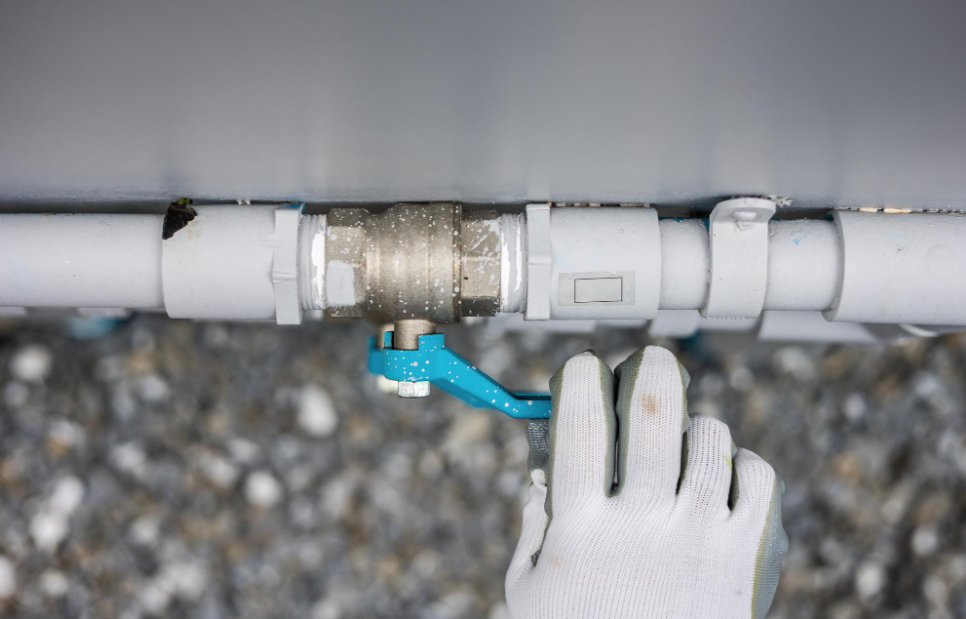
Knowing how to shut off water to your house is the single most useful piece of plumbing knowledge a homeowner can have, and most people never learn it until they're standing in an inch of water trying to figure it out. A burst pipe, a failed water heater, or an overflowing toilet all share the same first response: stop the water at the source, then deal with everything else.
The problem is that most homeowners have never actually located their main shutoff valve, let alone tested it. That's a gap worth closing before an emergency forces the issue, since fumbling through cabinets or a garage while water spreads across the floor costs real money in the time it takes.
According to the EPA's WaterSense program, roughly nine percent of homes have leaks significant enough to waste 50 gallons or more per day, and every one of those situations gets worse the longer it takes to find the shutoff.
This guide covers where to find the main shutoff valve, how to operate it correctly, what to do if it's stuck or missing, and when a whole-house shutoff isn't actually the right move. Whether you're in Conroe proper or out toward The Woodlands, the steps below apply to almost any home in the area.
In this article, you will learn about:
- Where to find your home's main water shutoff valve
- How to shut off the water correctly, step by step
- What to do if the valve is stuck, missing, or hard to reach
- When to shut off water at a single fixture instead of the whole house
Keep reading to find out why testing this valve today could save you thousands of dollars later.
Where to find your home's main water shutoff valve
Every home connected to a public water supply has a main shutoff valve somewhere between the street and the point where the water line enters the house. Where exactly it sits depends on the age of the home, the foundation type, and local plumbing conventions, which means the search sometimes takes a few minutes even for a homeowner who's lived in the house for years.
Common valve locations
Most homes in the Conroe area fall into a few predictable patterns, and checking these spots first usually turns up the valve quickly.
- Inside a garage, often near where a hose bib or water heater line enters the wall
- In a utility closet or mechanical room near the water heater
- Near the front of the house, close to where the water line comes in from the street
- In a crawl space or basement, for homes with that kind of foundation
Homes in Shenandoah and Panorama Village tend to follow the same handful of patterns, since most homes built in the same era share similar plumbing layouts.
If none of those turn up a valve, check outside near the water meter itself, which is typically near the curb or property line and covered by a small metal or plastic lid.
The meter valve as a backup
Every home also has a second shutoff at the water meter, usually accessible from outside the property near the street. This valve belongs to the utility, and turning it typically requires a meter key or a pair of pliers rather than a simple hand turn. Homes out toward Cut and Shoot and other outlying parts of the county often rely on this meter valve more than the interior one, since older rural properties sometimes skip the indoor shutoff entirely.
- Locate the meter box, usually a rectangular lid near the curb or sidewalk
- Lift the lid using a screwdriver or meter key
- Look for a valve just below or beside the meter itself
- Turn it a quarter turn with a wrench or meter key to shut off flow
This backup matters because if the main house valve is stuck, broken, or impossible to find quickly, the meter valve stops water before it ever reaches the house at all. Anyone dealing with an unexplained high water bill has likely already looked at this same meter box while trying to figure out where the water is going.
Marking the valve for next time
Once you've found the valve, it's worth doing something most homeowners skip: marking it clearly so the next emergency doesn't require another search.
- Attach a bright tag or zip tie to the valve handle
- Take a photo of the valve location and save it somewhere accessible, like a phone's photo album
- Tell every adult in the household where it is, not just whoever handles home maintenance
Knowing this location ahead of time matters just as much for a slow issue like a running toilet as it does for a sudden burst, since either one is easier to address quickly once the valve is already marked and familiar.
How to shut off the water correctly, step by step
Finding the valve is only half the job. Operating it correctly, and knowing what to check afterward, is what actually stops the emergency instead of just slowing it down.
The shutoff sequence
Most main shutoff valves are one of two types, a gate valve with a round handle or a ball valve with a lever, and each closes slightly differently. Homes in Woodloch and other older parts of the county are more likely to have the gate-style valve, which tends to need a bit more attention to confirm it's fully closed.
- Turn a round gate valve handle clockwise until it stops completely
- Turn a lever-style ball valve a quarter turn until it's perpendicular to the pipe
- Open a faucet somewhere in the house afterward to relieve pressure still in the lines
- Watch the area of the leak to confirm the flow has actually stopped or slowed significantly
Gate valves in particular can feel like they've closed fully well before they actually have, since the internal gate can bind partway. If water is still flowing at any real volume after the valve feels closed, don't assume the job is done. A clog drain repair technician will tell you the same thing about a slow drain that seems clear but isn't: verify before you walk away.
Confirming the shutoff worked
A quick check afterward saves the frustration of thinking the water is off, only to find the leak still going twenty minutes later. A basic plumbing diagnosis at this stage also helps confirm whether the shutoff actually reached the section of pipe that failed.
The stakes for getting this right are real: FEMA calculations show that a single inch of standing water in a home can cause roughly $25,000 in damage, which underscores why confirming a shutoff worked matters more than assuming it did.
- Check the original leak site for continued dripping or flow
- Run a faucet briefly to confirm no water pressure remains in the system
- Listen for any residual hissing or trickling near the shutoff valve itself
What to do immediately after
Once the water is confirmed off, the next steps shift from stopping the emergency to limiting the damage it already caused.
- Move any electronics, furniture, or belongings away from standing water
- Photograph the damage before starting cleanup, which matters for insurance purposes
- Call for repair rather than attempting to fix the failed section yourself unless it's a simple part swap
A garbage disposal that keeps running while water pools underneath the sink is another common reason homeowners reach for the fixture-level valve rather than shutting off the whole house.
What to do if the valve is stuck, missing, or hard to reach
Not every shutoff valve cooperates when it's needed most. Valves that haven't been touched in years can seize up, corrode shut, or simply refuse to turn, and knowing the workaround in advance beats discovering the problem mid-emergency. This is a common issue across Montgomery County, where plenty of homes still have their original shutoff valve decades after installation.
A valve that won't turn
A stuck valve is usually the result of mineral buildup or corrosion around the valve stem, and forcing it too hard risks snapping the handle off entirely, which creates a second problem on top of the first.
- Try turning with steady, even pressure rather than a sudden hard twist
- Use a wrench for added leverage on gate valves with a small or worn handle
- If the handle feels like it might break, stop and use the meter valve instead
A valve that's seized from disuse often points to a home that's overdue for residential plumbing services, since regular use and inspection is usually what keeps a shutoff valve turning smoothly.
No valve inside the house at all
Some older homes, or homes that have had plumbing work done without updating the shutoff, may not have an easily accessible main valve inside at all. In that case, the meter valve outside becomes the only realistic option, which is one more reason it's worth locating both valves in advance rather than only the one indoors.
- Homes with slab foundations sometimes have the main valve buried near the foundation wall
- A licensed technician can install an accessible interior shutoff if one doesn't currently exist
- Renters should confirm with a property manager or landlord where the valve is located before an emergency happens
When to call for help instead of forcing it
Some situations call for stopping and waiting for a professional rather than continuing to fight with a stubborn valve while water keeps flowing.
- The valve handle has already broken or stripped
- Water is rising faster than you can safely address the shutoff
- You suspect the valve itself is the source of the leak, not just the access point
A situation like this calls for the same urgency as an emergency commercial plumber responding to a business property, where a stuck valve and rising water leave no time to keep experimenting.
When to shut off water at a single fixture instead of the whole house
A whole-house shutoff isn't always the right call. Plenty of plumbing problems are contained enough that shutting off water to one fixture solves the issue without cutting off water to the entire household.
Fixture-level shutoffs
Most sinks, toilets, and water heaters have their own small shutoff valve located right at the fixture, usually a simple oval handle on the supply line underneath or behind the appliance.
- A leaking toilet supply line only needs the valve behind the toilet turned off
- A dripping sink faucet can be isolated at the shutoff under the cabinet
- A failing water heater has its own dedicated shutoff, separate from the main house valve
A gas water heater deserves its own isolated shutoff for a reason beyond just water damage. The Consumer Product Safety Commission reports that more than 200 people die every year in the United States from carbon monoxide produced by malfunctioning fuel-burning appliances, water heaters included, so a failing unit is worth shutting down completely rather than left running while the bigger picture gets sorted out. A sewer repair crew working nearby will often check these same fixture shutoffs as a matter of routine, since a home with easy-access valves is faster to work on safely.
Using the fixture-specific valve instead of the main one means the rest of the house keeps running water while the one problem area gets addressed. This matters for a family getting ready for the day, or for a household that can't simply go without water while waiting on a repair.
When the whole-house shutoff is the right call
Some situations genuinely need the main valve, not just a fixture-level fix, and recognizing the difference quickly saves time in a real emergency.
- The source of the leak isn't clearly tied to one fixture
- Water is spreading fast enough that isolating one valve won't stop it in time
- The leak is coming from inside a wall, ceiling, or slab where no fixture valve exists
- Multiple fixtures are affected at once, suggesting a supply-line issue upstream
If any of these apply, don't waste time hunting for a fixture valve that won't solve the problem. Go straight for the main shutoff or the meter valve instead. A commercial plumber faces this same decision constantly at properties with multiple fixtures on one line, where isolating a single valve rarely addresses a supply-side failure.
After the immediate crisis
Once water is off and the damage is contained, it's worth thinking about whether the home is set up to handle the next emergency faster. A licensed plumber can confirm the main valve works smoothly, identify whether an accessible interior shutoff should be added, and check fixture-level valves that may have seized from disuse. This same visit is a good time to rule out hidden slab leak symptoms, since a slab leak often hides behind what looks like an unrelated valve problem.
- Test the main shutoff valve once or twice a year even without an emergency
- Replace an old gate valve with a modern ball valve if it's difficult to operate
- Keep a wrench or meter key near the outdoor meter box for backup access
Homeowners in Grangerland and Lake Conroe with older piping tend to benefit most from this kind of proactive check, since valves that sit untouched for years are exactly the ones that fail when they're finally needed.
Conclusion
A plumbing emergency rarely gives advance warning, but the response doesn't have to be complicated. Knowing where your main shutoff valve is, confirming it actually works, and understanding when a fixture-level valve is enough instead of the whole house, covers almost every situation a Conroe homeowner is likely to face.
The households that handle a burst pipe or failed water heater well aren't the ones with the newest plumbing. They're the ones who took ten minutes at some point to find the valve, test it, and make sure everyone in the house knew where it was. That small bit of preparation is what turns a potential flood into a contained, manageable repair.
If you haven't located or tested your main shutoff valve, there's no better time than now, before an emergency makes the search urgent. Benjamin Franklin Plumbing serves homeowners throughout Conroe and Montgomery County with fast response when a shutoff isn't enough and a real repair is needed.
Ask about the Benjamin Franklin Plumbing club membership program for regular plumbing checkups that confirm shutoff valves, fixture connections, and the rest of the system are ready before the next emergency hits.

 Your Privacy Choices