
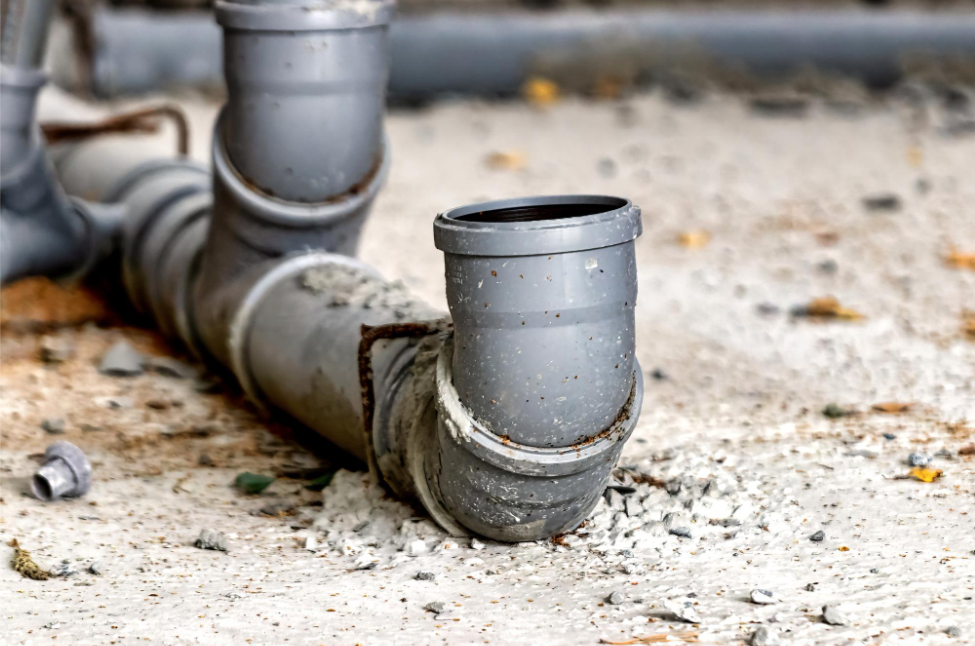
Sewer line repiping in Conroe TX becomes the conversation homeowners have once the same drain problem keeps coming back no matter how many times it's been cleared. A single clog is routine. A sewer line that backs up every few months, no matter how carefully you're using your drains, is usually telling you something about the condition of the pipe itself, not just what's inside it that day.
Conroe sits on expansive clay soil that shifts with every wet and dry cycle, and that movement is hard on buried pipe, especially the older clay and cast iron lines still common in homes built before the 1980s. Add mature trees, which are everywhere in this part of Montgomery County, and you get a sewer line under constant pressure from two directions: a fragile pipe material and a persistent root system looking for water.
This article walks through the warning signs that point toward repiping rather than another round of clearing, what's actually happening underground when those signs show up, and how trenchless repair compares to traditional excavation once repiping is the right call.
In this article, you will learn about:
- The recurring signs that mean repair alone won't fix it
- Why Conroe's soil and older pipe materials make repiping more likely
- How a sewer camera inspection confirms what's actually happening
- Trenchless repiping versus traditional excavation
Keep reading to find out whether that clog you keep clearing is actually a symptom of something bigger underground.
Recurring signs that repair alone won't fix it
Most sewer line problems start small: a slow drain, an occasional gurgle, a clog that clears with a simple snake. Repiping enters the picture when those small problems keep returning despite repeated repairs, which usually means the pipe itself, not just what's inside it, has failed.
The distinction matters because clearing a clog treats the symptom. If the underlying pipe has a crack, a collapsed section, or root intrusion at multiple points, that same blockage will simply come back weeks or months later in a slightly different spot.
Backups that keep coming back
- Multiple drains backing up together instead of just one fixture
- The same clog returning within weeks of being cleared
- Backups that happen specifically after heavy rain or high water usage
- Sewage backing up into the lowest drain in the house, often a tub or floor drain
When several drains act up at once, that's rarely a coincidence involving separate clogs. It usually points to one shared problem further down the main line where all those drains connect, the same underlying issue covered in this sewer repair in Conroe TX overview of common failure patterns.
Sounds, smells, and visible signs outdoors
- Gurgling sounds from toilets or drains when other fixtures are used
- Persistent sewer odor indoors or in the yard, even after cleaning
- Unusually lush or soggy patches of grass along the sewer line's path
- Small sinkholes or depressions in the yard tracing the pipe route
A patch of grass that's noticeably greener than the rest of the lawn is often the first outdoor clue that wastewater is leaking into the surrounding soil rather than making it all the way to the municipal line. That's a strong signal worth investigating before it becomes a larger yard issue, similar to how yard line water leaks show up as unexplained wet spots long before a homeowner traces the source.
Age and material as a warning sign on their own
- Confirm the age of your home and, if possible, the sewer line material
- Homes built before the 1980s often still have original clay or cast iron pipe
- Treat repeated backups in an older home as a stronger signal than the same pattern in a newer one
- Ask a licensed plumber to check your sewer line's material and condition even if you haven't had a backup yet
Pipe material alone isn't a guarantee of failure, but combined with a home's age and a pattern of recurring backups, it shifts the conversation from repair to repiping much faster. It's also worth ruling out a hidden slab leak while a plumber is already assessing the line, since the two issues sometimes share the same underlying cause.
Why Conroe's soil and pipe age make repiping more likely
Conroe's expansive clay soil is a defining factor in how sewer lines fail here, and it's worth understanding why before assuming a recurring clog is just bad luck.
Clay soil expands when wet and contracts when dry, and that constant movement puts pressure on anything buried in it. According to a technical bulletin from the Texas Department of Licensing and Regulation, expansive soils are responsible for more structural damage nationwide than earthquakes, floods, hurricanes, and tornadoes combined, and Texas is one of the states most affected by this soil type. Rigid, older pipe materials like vitrified clay and cast iron don't flex with that movement the way modern PVC does, so a home with original 1970s or older piping is dealing with both an aging pipe and a soil type working against it every season.
How the clay soil and root intrusion connect
Once soil movement creates even a hairline crack or a loosened joint, it opens exactly the kind of moisture-rich environment tree roots are drawn to. Mature trees, common throughout Conroe and neighboring communities like The Woodlands and Shenandoah, send roots toward that moisture and expand the crack from the inside out.
- A hairline crack lets moisture escape into the surrounding soil
- Roots follow that moisture trail directly to the pipe
- Once inside, roots expand and widen the original crack
- The blockage returns even after clearing because the opening in the pipe remains
This cycle is why the same clog keeps coming back no matter how thoroughly it's cleared. The clearing addresses the roots currently inside the pipe, not the crack that's inviting new ones in.
The scale of the problem nationally and in Texas
According to an engineering analysis published by the American Society of Civil Engineers, the typical design lifespan for wastewater pipe is 50 to 100 years, and aging collection systems increasingly show cracks, joint separation, and infiltration as they approach the end of that window. Homes with original clay or cast iron sewer lines from the 1960s through the 1980s are now reaching or exceeding that expected service life.
- Pipe age approaching or exceeding 50 years is a meaningful risk factor on its own
- Clay and cast iron are more prone to cracking than modern PVC or HDPE
- Expansive clay soil accelerates the timeline compared to more stable soil types
- Root intrusion compounds structural weakness once a crack has formed
None of this means every older home in Conroe needs repiping immediately. It means the risk factors stack in a way that makes proactive inspection worth the modest cost compared to an emergency backup, the same logic behind seasonal leak prevention services catching problems before they force an emergency call.
When the problem is isolated versus systemic
- A single crack near a tree root is often repairable without full repiping
- Multiple failure points along the line usually point toward full replacement
- A line with a persistent low spot, sometimes called a belly, tends to keep collecting debris regardless of repairs
- Recurring problems at different points along the same line are the clearest signal of a systemic issue
Distinguishing an isolated failure from a systemic one is exactly what a camera inspection is built to answer, which is the next step before deciding between repair and repiping, similar to the diagnostic approach behind Conroe leak detection services more broadly.
How a sewer camera inspection confirms what's happening
Guessing at what's wrong underground is how homeowners end up paying for repeated repairs that never actually solve the problem. A camera inspection removes the guesswork by showing the actual condition of the pipe from the inside.
A licensed plumber feeds a waterproof camera through the line and records footage of cracks, root intrusion, bellies, and joint separation as they actually appear, rather than inferring the problem from symptoms at the surface.
What the inspection typically reveals
- The exact location and severity of any cracks or breaks
- Whether root intrusion is isolated or occurring at multiple points
- Sagging sections, or bellies, where waste tends to pool and clog again
- The pipe's material, which affects both the diagnosis and the repair options
Why this step changes the decision
- A single, isolated crack often supports a targeted repair rather than a full repiping
- Multiple failure points along the line usually justify full trenchless repiping instead
- Severity and location determine which trenchless method fits the situation
- Skipping this step risks paying for a repair that addresses only part of the actual problem
Camera inspection findings are also useful documentation to keep on file, particularly if a future backup happens and you want to compare the pipe's condition over time, the same kind of proactive record-keeping behind what is included in plumbing memberships in Conroe.
Reading the results with your plumber
A camera inspection is only as useful as the conversation that follows it. Ask your plumber to walk through exactly what the footage shows, where the trouble spots are located relative to your house, and whether the pattern points toward an isolated fix or a full-line problem, similar to how a proper plumbing diagnosis should always precede a repair recommendation rather than follow it.
Trenchless repiping versus traditional excavation
Once repiping is the right call, homeowners generally face two paths: trenchless methods that rehabilitate the existing line from the inside, or traditional excavation that digs up and replaces the pipe outright. Neither is universally better, and the right choice depends on the specific damage a camera inspection uncovers.
Trenchless methods work by either lining the interior of the existing pipe with a new resin-based liner or bursting the old pipe while pulling a new one into place, both accessed through small entry points rather than a continuous trench. It's a similar philosophy to how certified pool leak inspection locates a problem precisely enough that the fix doesn't require tearing up more than necessary.
When trenchless repiping makes sense
- The existing pipe path is structurally sound enough to support a liner or burst method
- Landscaping, driveways, or hardscaping sit directly above the line
- Minimizing yard disruption and project timeline matters to the homeowner
- The damage is consistent along the line rather than involving a severely collapsed section
According to EPA-referenced trenchless rehabilitation data, lining methods for an 8-inch pipe typically involve standard cleaning and inspection both before and after the work, which is part of why camera inspection plays such a central role in trenchless projects specifically.
When traditional excavation is still the better option
- A severely collapsed or crushed section can't support a trenchless liner
- Multiple, severe structural failures scattered along the line may require full access
- Unusual pipe depth, diameter changes, or bends can limit trenchless options
- Some jurisdictions or specific site conditions may call for direct access regardless of preference
Excavation disturbs more of the yard and typically takes longer, but it remains the right tool in situations where a liner or burst method simply can't be installed safely. Homeowners near Lake Conroe with more variable soil conditions along the shoreline sometimes need this direct-access approach more often than inland properties.
What to expect either way
- A written explanation from your plumber of why one method fits your situation over the other
- A permit process, since sewer line work in Montgomery County typically requires one
- A follow-up camera inspection after the work to confirm the new pipe is clear and intact
- A conversation about whether nearby trees played a role, so future root intrusion is less likely
Cost varies enough by scope and access that it isn't useful to quote a number here, but the method itself, trenchless or excavation, should always follow from what the camera inspection actually shows rather than a default preference either way.
That same principle applies to related outdoor systems too, including the outdoor plumbing maintenance in Montgomery County that keeps small issues from becoming full excavation projects.
Conclusion
A sewer line that keeps backing up isn't bad luck, and it isn't something a stronger drain cleaner will eventually fix. In a market like Conroe, where expansive clay soil and mature tree roots put constant pressure on older pipe materials, recurring backups are often the pipe itself telling you it's reached the end of what repair alone can solve.
The good news is that this diagnosis doesn't require guesswork. A camera inspection shows exactly what's happening underground, distinguishes an isolated crack from a systemic failure, and points toward whether trenchless repiping or traditional excavation actually fits your situation. That clarity is worth having before another backup forces the decision at the worst possible time.
If your drains have been acting up more than once in the same few months, or if your home was built before the 1980s and you've never had the sewer line inspected, it's worth getting ahead of the problem rather than waiting for the next backup.
Benjamin Franklin Plumbing serves Conroe and the surrounding Montgomery County communities, and homeowners who want ongoing peace of mind around issues like this can find details through the Benjamin Franklin Plumbing club membership program.

 Your Privacy Choices