
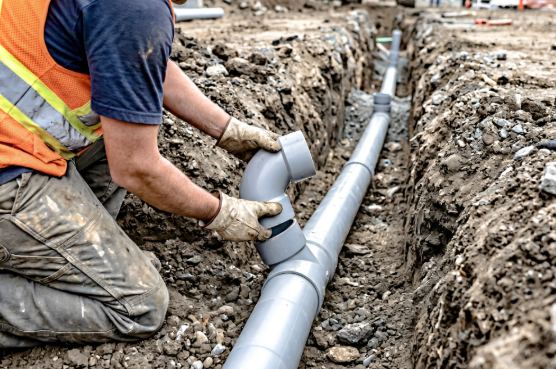
Sewer line repair in The Woodlands, TX, often becomes necessary after a clog that seemed minor keeps returning. Clearing a sink or toilet may restore flow for a while, but it does not correct a cracked, displaced, sagging, or root-filled pipe beneath the property.
The location of the symptoms matters. One slow sink usually points to a nearby trap or branch drain. When several fixtures drain slowly, a toilet bubbles as a shower empties, or wastewater appears at the lowest drain in the house, the main sewer line deserves attention.
Homes throughout The Woodlands combine mature landscaping with plumbing systems of different ages. Knowing how to separate an ordinary clog from a damaged sewer lateral helps you arrange the right service before wastewater reaches floors, walls, or cabinets.
In this article, you will learn about:
- When a clog is more than a drain problem
- What damages sewer lines in The Woodlands
- How plumbers confirm whether the line needs repair
- Which sewer line solution fits the damage
Keep reading to learn which symptoms call for sewer line repair and what a proper diagnosis should show before work begins.
When a clog is more than a drain problem
A clog describes an obstruction, not its location or cause. Hair in a shower trap, grease in a kitchen branch, and roots inside the main sewer lateral can all slow drainage, yet they require very different solutions.
The most useful first step is to notice the pattern. Which fixtures are affected, where they sit in the home, and how quickly the problem returns after service can help distinguish a local blockage from a main line defect.
One fixture usually points to a local obstruction
If one sink, tub, or shower drains slowly while the rest of the house works normally, the obstruction is probably close to that fixture. Hair, soap residue, food particles, or grease may be caught in the stopper, trap, or nearby branch line.
That situation may call for targeted plumbing drain repair rather than sewer excavation. However, a fixture that clogs again shortly after being cleared may be reacting to a deeper restriction, especially if nearby drains begin slowing too.
Several affected fixtures point farther downstream
When fixtures in different rooms develop problems at the same time, their shared connection becomes the likely trouble spot. A flushing toilet that makes a tub gurgle or a washing machine that sends water into a nearby shower suggests restricted flow after those branch drains meet.
The lowest fixtures often show the problem first because wastewater reaches them before it rises elsewhere. In The Woodlands, household debris, roots, pipe defects, and wet weather can all contribute to this pattern.
Watch for symptoms that occur together or return after a temporary clearing:
- Multiple drains slowing at about the same time
- Toilets bubbling when a sink, shower, or washing machine drains
- Water rising in a tub or shower after a toilet is flushed
- Sewage odors that persist after dry traps have been refilled
- A cleanout that leaks or releases wastewater
- An unusually wet or sunken area along the buried sewer route
One symptom does not identify the exact defect. A group of symptoms does make it much less likely that you are dealing with an isolated fixture clog.
At that point, repeated plunging or chemical drain products can delay the right diagnosis. A professional can trace the shared drainage path and determine whether the line needs cleaning, repair, or replacement.
A backup changes the situation from inconvenient to urgent
Once wastewater reverses into a tub, shower, floor drain, or toilet, stop using plumbing fixtures. More water entering the system can increase the overflow, spread contamination, and push sewage into additional rooms.
The scale of sewer failures helps explain why backups deserve prompt attention. The U.S. Environmental Protection Agency estimates that public sanitary sewer systems experience at least 23,000 to 75,000 overflows each year, excluding sewage backups inside buildings. On private property, an active backup still requires immediate containment and a diagnosis of the home's sewer lateral.
What damages sewer lines in The Woodlands
The Woodlands is not a uniform housing market. Original neighborhoods and newer villages can have different pipe materials, installation details, landscaping, and repair histories. A line's condition must therefore be verified at the individual property rather than assumed from the subdivision name or the age of the house alone.
The community's scale and landscape still matter. According to The Woodlands Township's 2025 community facts, the area contains 49,105 residential units, 10,403 acres of open space, and 1,870 acres of forest preserve. In a community built around extensive tree cover, existing weaknesses in buried sewer pipes can become entry points for roots.
Roots reveal openings that already exist
Roots grow toward moisture and nutrients, but they do not normally break through an intact sewer pipe. North Carolina State University Cooperative Extension explains that roots exploit cracks and gaps already present, then enlarge the opening as they grow inside the pipe.
That distinction affects the repair. Cutting roots may restore flow, but it leaves the failed joint or cracked pipe in place. If the opening remains, new growth can enter again and begin collecting paper, waste, and grease.
Fine roots visible at one joint may support a focused repair if the surrounding pipe is sound. Dense root masses, repeated intrusion, displaced joints, or cracking across a longer run can make a broader repair more practical.
The condition of the pipe, rather than the amount of root material alone, should guide the recommendation. This is why camera evidence after cleaning is more useful than assuming every root-related clog requires complete replacement.
Soil movement can change a line's grade
Buried drainage depends on consistent gravity flow. If soil settles or shifts beneath a section, the pipe can sag into a belly that holds water and solids. Movement can also offset a joint, reduce the usable opening, or create a crack that allows groundwater and roots to enter.
Proper slope is precise, not merely a matter of pointing the pipe downhill. The 2024 International Residential Code specifies a minimum slope of 1/8 inch per foot, or 1 percent, for horizontal drainage pipes that are 3 inches or larger. A sag or displaced section interrupts that uniform grade and creates a place where debris can settle.
A cable or hydro jet can remove material collected in a belly, but neither can lift the pipe back into position. If standing water remains after cleaning, the affected section may need to be exposed and reset or replaced.
Recurring trouble after heavy rain can also justify closer inspection. Water entering through defects can increase the flow inside the lateral, while saturated or eroded soil may reduce support around an already vulnerable section.
Pipe age and installation details affect the failure mode
Older materials may corrode, become rough inside, or separate at joints. Modern plastic pipe resists corrosion, but it can still crack, deform, or lose alignment when bedding, connections, or surrounding soil fail.
Even two houses built in the same year may have different sewer histories. One may have an original lateral, while another has a repaired section, a new cleanout, or a connection altered during remodeling. A plumbing diagnosis should identify the actual material and defect instead of relying on age alone.
Pay attention to the repair pattern as well. A first soft clog caused by household debris is different from a line that has been mechanically cleared several times in the same location.
Service records, camera footage, and the measured position of a defect create a more reliable history. That evidence helps a homeowner compare the cost of another temporary clearing with a repair that addresses the reason the clog keeps forming.
How plumbers confirm whether the line needs repair
Symptoms can identify the general part of the system involved, but they cannot show whether the underlying cause is grease, roots, a separated joint, a belly, or a collapsed section. Repair decisions should be based on what is happening inside the line.
A thorough evaluation combines questions about the symptoms with flow testing, cleanout access, cleaning when needed, and camera inspection. The goal is to locate the restriction, expose the pipe wall, and document whether the structure remains sound.
The symptom pattern narrows the search
A plumber will ask when the problem began, which fixtures are affected, whether rain changes the symptoms, and what previous service restored. These details help determine whether to begin at a fixture branch, a cleanout, or the main lateral.
The difference between a sudden obstruction and a recurring restriction matters. A child's toy or wad of paper can create an abrupt clog in an otherwise sound pipe. A drain that slows every few months after being cleared suggests a persistent catch point, intrusion, or grade problem.
A visible cleanout can reduce the time needed to access the line. Keep it reachable and tell the plumber about additions, patios, landscaping, or past excavation that may have changed access to the sewer route.
If sewage is already entering the home, share that information when scheduling. Active backups require a different response than a single slow fixture and may call for immediate steps to limit exposure and property damage.
Cleaning makes the camera inspection useful
A camera cannot evaluate pipe walls hidden behind grease, sludge, or a dense root mass. The line may need to be mechanically cleared or cleaned before the camera can reveal cracks, offsets, corrosion, standing water, and open joints.
This sequence is why clog drain repair and structural sewer repair are related but not interchangeable. Cleaning restores access and flow. The inspection that follows determines whether the pipe itself is still capable of reliable service.
Useful camera footage should show the line after debris has been removed. The technician can then identify the defect, note its distance from the access point, and explain whether it is isolated or repeated across the run.
Multiple service calls, a home purchase with an unknown sewer history, and recurring drainage symptoms are all reasonable times to schedule a sewer inspection. Each situation benefits from knowing the condition of the full lateral rather than evaluating flow at one fixture.
Evidence should connect the defect to the recommendation
Before approving sewer line repair, ask to see the part of the recording that supports it. Roots entering at a single joint, a cracked section, a long belly, and a collapsed pipe should not all receive the same recommendation.
A clear diagnosis should answer practical questions about the scope of work:
- Where is the defect in relation to the house, cleanout, driveway, and property line?
- How long is the damaged section?
- Is the line open enough to clean and inspect from end to end?
- Does the remaining pipe appear structurally sound?
- Can the defect be repaired locally, or would that leave other failures nearby?
- Will excavation be necessary, and what surfaces or landscaping could be affected?
The answers allow you to compare options on scope and durability, not just price. They also reduce the chance of paying for repeated clearing when a structural defect continues to catch debris.
A sewer repair recommendation should identify the defect, the affected length, and why cleaning alone will not restore dependable flow. Your property's footage should still be the basis for the final scope.
Which sewer line solution fits the damage
Not every main line clog needs sewer line repair, and not every damaged line needs complete replacement. The right scope depends on whether the pipe is blocked, structurally compromised, poorly graded, or affected in several places.
Access also matters. Depth, route, pipe material, nearby utilities, driveways, mature landscaping, and the location of the municipal connection can affect which methods are feasible. A responsible estimate should explain these constraints before presenting an option.
Cleaning is appropriate when the pipe remains sound
Mechanical cabling can break through certain obstructions, while hydro jetting can remove buildup from the pipe wall when the material and condition of the line allow it. If post-cleaning footage shows a continuous, properly aligned pipe without cracks or open joints, cleaning may be all that is needed.
The next step is preventing drain clogs caused by the same debris. Keep grease and food scraps out of kitchen drains, flush only toilet paper and human waste, and address fixture-level clogs before they add material to a restricted main line.
Cleaning becomes a temporary measure when the camera shows a defect that will keep catching debris. Roots will return through an unsealed opening, and solids will continue settling in a belly even after the standing material is removed.
That does not make the cleaning unnecessary. It restores flow and reveals the pipe, but the footage should determine whether additional work is required.
A focused defect may allow a focused repair
A short cracked or displaced section may be suitable for spot repair when the surrounding line is sound. Depending on access and pipe condition, the work may involve excavation, relining, or another method designed for the verified defect.
Depending on access and pipe condition, sewer line repair services may include pipe relining, open-trench repair, or trenchless work. Availability and suitability depend on the local property and the condition of the existing line.
Ask what the proposed repair will remove, seal, replace, or correct. A good scope should state how the method addresses the defect shown on camera and how the completed line will be tested.
Also ask what remains outside the repaired section. A spot repair can be sensible for one isolated failure, but less appealing when the inspection shows extensive corrosion, several separated joints, or deformation along a longer run.
Replacement makes sense when failures are widespread
Replacement may offer a better long-term result when the pipe has collapsed, lost its grade, deteriorated across multiple sections, or required repeated repairs. It can also be more practical when fixing one defect would leave another serious weakness immediately upstream or downstream.
The cost of sewer line replacement depends on length, depth, access, surface restoration, pipe condition, and method. A camera inspection and property-specific scope are necessary before estimates can be compared fairly.
After repair or replacement, keep the final footage and invoice with your home records. Documentation gives future technicians a baseline, shows where work was completed, and can be useful when you sell the property.
Ongoing plumbing maintenance can also catch developing drainage concerns before they become emergency backups. A plumbing membership can make scheduled system checks easier to plan for a home with recurring plumbing concerns.
Conclusion
A clog becomes a sewer line concern when it affects several fixtures, returns after cleaning, causes cross-fixture gurgling, or sends wastewater back into the home. Those patterns indicate that the problem may sit beyond an individual trap or branch drain.
The repair should match documented conditions inside the pipe. Cleaning can solve a true obstruction, while roots entering through a failed joint, a sagging section, or widespread deterioration may require structural repair or replacement.
Acting before the line fully backs up gives you more time to review camera footage, understand the scope, and protect the surrounding property. It also turns a stressful emergency into a decision based on evidence.
Contact Benjamin Franklin Plumbing of Conroe to ask about the Club Membership Program and schedule professional help for recurring drain or sewer line concerns in The Woodlands.

 Your Privacy Choices