
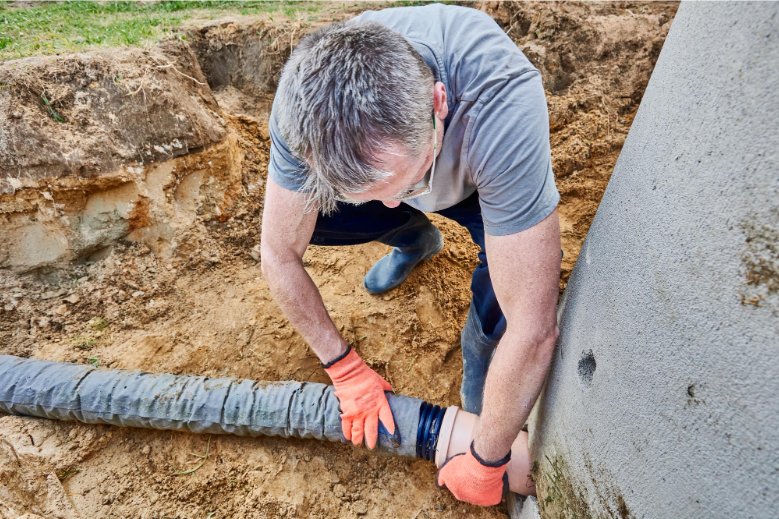
Few plumbing conversations bring on more anxiety than the words "sewer line replacement." It sounds expensive, disruptive, and mysterious all at once, and most homeowners have no frame of reference for what a fair price actually looks like until they're already dealing with a backed-up drain or a soggy patch of yard.
The reality is more manageable than the reputation suggests. Sewer line replacement cost depends on a handful of clear factors, most of which a licensed plumber can identify during a camera inspection before any work begins. Understanding those factors ahead of time turns an intimidating unknown into a straightforward decision.
This guide walks through what actually drives sewer line replacement cost in the Conroe and Montgomery County area, the difference between traditional excavation and trenchless methods, the warning signs that mean replacement is likely needed, and what a fair quote should actually include. Whether you're in Conroe proper or out toward The Woodlands, the information below applies.
In this article, you will learn about:
- What drives sewer line replacement cost
- Trenchless replacement versus traditional excavation
- Signs your sewer line may need replacing, not just repair
- What to expect from a licensed plumber's quote
Keep reading to find out which single factor affects sewer line replacement cost more than any other.
What drives sewer line replacement cost
Sewer line replacement cost varies more than almost any other plumbing job, and the reason comes down to a short list of variables that each add or subtract meaningfully from the final number.
Pipe length and depth
The most straightforward cost driver is simply how much pipe needs replacing and how deep it sits underground. A short lateral line running from the house to the street costs far less than a long run under a driveway, mature landscaping, or a section that ties into a deeper municipal connection. Anyone comparing this to a smaller job, like a clog drain repair, will notice quickly why full sewer line replacement sits in a different cost category entirely.
- Longer runs mean more materials and more labor hours
- Deeper lines require more excavation or a longer trenchless pull
- Lines running under structures like porches or garages add complexity
Homes in Lake Conroe and other areas with larger lots often see longer runs simply due to the distance between the house and the street connection, which is worth factoring into any early cost expectations.
Pipe material and condition
What the existing line is made of, and how badly it has deteriorated, shapes both the method used and the price. Older clay or cast iron lines often need full replacement rather than a simple repair, while a newer PVC line with an isolated problem might only need a targeted fix.
- Older pipe materials tend to be more brittle and harder to work around
- Root intrusion damage often extends further than the visible symptom suggests
- Multiple failure points along one line usually point toward full replacement over spot repair
Older homes throughout Montgomery County are more likely to still have their original clay or cast iron sewer line, which is exactly the material profile most likely to need full replacement rather than a targeted repair.
Access and obstacles
What sits above and around the sewer line matters just as much as the pipe itself. Mature trees, existing hardscaping, a pool, or a section running beneath a foundation all add cost, either through extra labor, specialized equipment, or the trenchless methods needed to avoid tearing them out.
Homes with a straightforward yard and easy access to the line typically see costs on the lower end. A sewer camera inspection early in the process is what actually determines which category a given home falls into, rather than guessing based on the yard's appearance alone. Property owners in Grangerland and other rural sections of the county sometimes assume open land automatically means lower cost, but soil type and depth still matter more than surface appearance.
Trenchless replacement versus traditional excavation
Not every sewer line replacement means digging up an entire yard. Trenchless methods have changed what's possible, and understanding the difference helps homeowners ask the right questions when getting quotes.
How traditional excavation works
Traditional replacement involves digging a trench along the entire length of the failing pipe, removing the old line, and installing new pipe before backfilling everything. It's the most direct method, and sometimes the only option depending on the specific damage.
- The plumbing crew maps the line's exact path using camera inspection
- A trench is dug along that path, often requiring equipment access
- The damaged pipe is removed and replaced with new material
- The trench is backfilled and the surface is restored
This approach tends to disturb more of the yard, and restoration of landscaping, hardscaping, or driveways adds to both the timeline and the total cost. A sewer repair crew will typically flag this trade-off upfront, since restoration costs sometimes rival the excavation itself.
How trenchless methods work
Trenchless sewer replacement avoids digging up the entire line by working through small access points instead. According to an EPA technical fact sheet on pipe bursting, the method uses a bursting head pulled through the existing pipe to break it apart while simultaneously pulling new pipe into place, filling the void as the old pipe is destroyed.
- Two small access pits are dug, typically at each end of the line
- A bursting head is pulled through the old pipe, breaking it outward
- New pipe follows directly behind, filling the space immediately
- Surface disruption is limited to the two access points rather than the full trench
Trenchless methods aren't right for every situation. A line with severe bellying, where the pipe has sagged due to soil settlement, sometimes still requires excavation to correct the actual slope, not just replace the pipe material. Homes in Shenandoah with mature landscaping tend to be the strongest candidates for this method, since preserving established trees and gardens often outweighs the cost difference.
Weighing the two approaches
Cost comparisons between the two methods depend heavily on what sits above the line. A yard with no major landscaping or hardscaping might see similar total costs either way, since trenchless equipment and mobilization carry their own price even without excavation and restoration.
- Trenchless methods usually win when mature trees, pools, or hardscaping sit above the line
- Traditional excavation can be more economical for short, easily accessible runs
- Both methods should include post-installation camera verification
A plumbing diagnosis that maps the exact damage and depth is what should drive the method recommendation, not a default preference for one approach over the other.
Signs your sewer line may need replacing, not just repair
Not every sewer problem calls for full replacement. Recognizing which symptoms point toward a bigger issue helps homeowners avoid both an unnecessary replacement and a repair that won't actually solve the underlying problem.
Recurring backups and clogs
A single clog is usually just a clog. Repeated backups at the same fixture or drain, especially ones that clear temporarily and then return, often point to a structural issue in the line rather than a simple blockage. A commercial plumber sees this pattern often at properties with heavier usage, where a recurring backup gets misdiagnosed as normal wear rather than a sign the main line itself is failing.
- Multiple drains backing up at once suggests a main line problem, not an isolated fixture issue
- Clogs that return within weeks of a professional clearing point to a structural cause
- Gurgling sounds from drains when other fixtures run can indicate a partial blockage or belly in the line
A plumbing drain repair that keeps returning to the same spot despite repeated clearing is one of the clearest signals that the underlying line, not just the clog, needs attention.
Root intrusion and soil movement
Texas soil conditions play a real role in sewer line failure, and this is where local geography matters more than it might elsewhere.
According to a Texas Department of Licensing and Regulation technical bulletin on expansive soils, damage from these shrink-swell soil conditions affects roughly 25 percent of structures across the country, and buried pipes running through that same soil face the identical stress as the foundation above them. Root intrusion and aging pipe joints are also a significant contributor to failures nationally.
The EPA estimates that at least 23,000 to 75,000 sanitary sewer overflow events happen across the country each year, many of them traced back to blockages, root intrusion, and deteriorating pipe joints rather than one-time accidents.
- Tree roots seek out sewer lines specifically because of the moisture and nutrients inside
- Older clay and cast iron joints are especially vulnerable to root entry
- Seasonal soil expansion and contraction can crack pipes that were installed straight and level
A yard line water leak caused by this same soil movement often shows up around the same time as sewer line stress, since both systems run through identical ground conditions.
Age and material red flags
Sometimes the strongest signal isn't a specific symptom but the age and material of the line itself. A home with its original clay or cast iron sewer line, especially one that's decades old, is a strong candidate for proactive replacement even before a major failure occurs.
- Confirm the home's sewer line material and approximate installation date
- Schedule a camera inspection if the line has never been evaluated
- Watch for slow drainage across multiple fixtures as an early warning sign
- Treat any sewage odor in the yard as a signal to call a professional immediately
Catching these signs early, before a full collapse forces an emergency call, generally keeps both the disruption and the cost lower than waiting for a complete failure. A hidden slab leak sometimes gets mistaken for a sewer issue at first glance, so a proper camera inspection is worth confirming which system is actually failing before committing to any repair plan.
What to expect from a licensed plumber's quote
A fair sewer line replacement quote should feel transparent, not vague. Knowing what a thorough quote actually includes helps homeowners compare options and avoid surprises once the work begins.
What a complete quote should cover
A quote built on a real camera inspection, rather than a guess based on symptoms alone, should spell out the specifics rather than offering a single number with no explanation behind it.
- The exact length and depth of pipe being replaced
- Which method is recommended and why, trenchless or traditional
- Any permit requirements and who is responsible for pulling them
- What restoration work is included after the pipe is installed
Homeowners near Panorama Village and other established neighborhoods should expect any reputable quote to reference the same camera footage used to diagnose the problem, not just a verbal description of what the crew found.
Questions worth asking before committing
A homeowner comparing quotes should feel comfortable asking a few direct questions before signing off on any sewer line replacement.
- What does the camera inspection actually show, and can I see the footage?
- Why is this specific method being recommended over the alternative?
- What's included in the warranty on both materials and labor?
- Will the crew handle permitting, or is that the homeowner's responsibility?
A licensed plumber should be able to answer every one of these clearly, without hesitation or vague reassurances in place of specifics.
Financing and timing considerations
Sewer line replacement rarely fits neatly into a planned budget, since most homeowners don't discover the need until something has already gone wrong. Understanding financing options and realistic timelines ahead of time takes some of the pressure off a decision that often has to be made quickly.
- Ask whether financing options are available before assuming the full cost is due upfront
- Confirm the expected timeline, since trenchless jobs often finish faster than full excavation
- Factor in restoration time separately from the actual pipe replacement timeline
Commercial properties face a similar decision-making process, and an emergency commercial plumber handling a business sewer line often has to weigh downtime costs against the same trenchless-versus-traditional trade-off homeowners face.
Conclusion
Sewer line replacement cost in Conroe depends on factors that are knowable well before any digging starts: the length and depth of the line, the material and condition of the existing pipe, and whatever sits above it that either simplifies or complicates the job. None of that is a mystery once a proper camera inspection has been done.
The homeowners who navigate this process smoothly are the ones who ask for the inspection footage, understand why a particular method is recommended, and get a written quote that spells out exactly what's included. That level of transparency is what separates a fair sewer line replacement from an expensive guessing game.
If you're noticing recurring backups, slow drains across multiple fixtures, or you simply want to know where your sewer line stands, Benjamin Franklin Plumbing serves homeowners throughout Conroe and Montgomery County with camera-verified diagnostics and straightforward quotes.
Ask about the Benjamin Franklin Plumbing club membership program for regular plumbing checkups that can catch early sewer line warning signs before a full replacement becomes the only option.

 Your Privacy Choices