
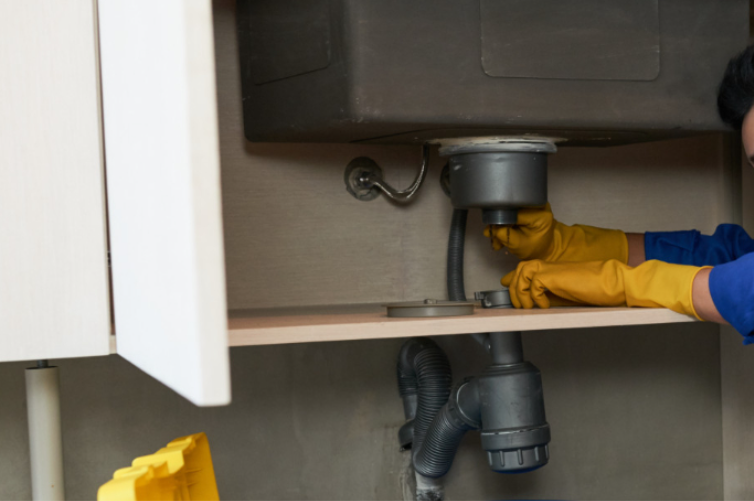
A garbage disposal that suddenly starts humming, grinding, rattling, or screeching is trying to tell you something. The noise is not random, and it is not going to fix itself. For homeowners in Conroe, a garbage disposal making strange noises usually points to a specific mechanical problem that gets worse the longer it runs, and in some cases the unit should not be running at all until the issue is resolved.
Garbage disposals handle a surprising amount of work in the average kitchen. The USDA estimates that 30 to 40% of the food supply in the United States goes uneaten, and a significant share of that waste passes through kitchen sinks and disposals on its way out of the house.
That volume of organic material, combined with the hard water and high humidity common across Montgomery County, puts steady stress on the motor, the grinding components, and the drain connection. A disposal that lasts 8 to 12 years with proper use can fail in half that time when it is overloaded, fed the wrong materials, or left to jam repeatedly without correction.
This article breaks down the most common noises a garbage disposal makes, what each one means, the fixes you can try at home, and the situations where a plumber needs to step in before the problem spreads to the drain system or the plumbing below the sink.
In this article, you will learn about:
- What each type of disposal noise actually means
- Jams, clogs, and obstructions that cause the most common sounds
- Safe DIY fixes that clear most noise problems
- When a noisy disposal needs professional repair or replacement
- Habits that keep the unit quiet and extend its working life
Keep reading to figure out what your disposal is telling you and how to stop the noise before it becomes a bigger problem.
What each type of disposal noise actually means
Garbage disposals produce different sounds depending on what is going wrong inside the unit. A humming disposal, a grinding disposal, and a rattling disposal are not the same problem, and they do not call for the same response. Learning to identify the sound narrows the diagnosis before you ever open the cabinet door.
The disposal sits under the sink, connected to the drain flange above and the drain pipe below. Inside the unit, an electric motor spins a flywheel with impeller arms that push food waste against a stationary grind ring. When everything is working, the sound is a steady, even whir. When something changes, the noise changes with it.
Humming without spinning
A disposal that hums when you flip the switch but does not spin is jammed. The motor is receiving power and trying to turn, but something is physically preventing the flywheel from rotating. The hum you hear is the motor straining against the obstruction.
This is the most time-sensitive noise because a motor that cannot spin generates heat rapidly. If the unit runs in this state for more than a few seconds, the internal thermal overload switch will trip and shut the motor down to prevent burnout. If the overload does not trip, or if you keep resetting it and restarting the motor against the jam, you risk burning out the motor windings permanently.
The moment you hear a hum with no grinding sound, turn the disposal off immediately. Do not flip the switch on and off repeatedly hoping the unit will break free. The fix for a jam is mechanical, not electrical, and the section on DIY fixes below walks through the process step by step.
A jammed disposal is one of the most common kitchen plumbing issues homeowners in Conroe encounter, and it is almost always fixable without replacing the unit.
Grinding or metallic scraping
A grinding or scraping sound that was not there before usually means a hard object has fallen into the disposal and is being thrown around by the impeller arms. Common culprits include utensils, bottle caps, small bones, fruit pits, broken glass, and even small pieces of ceramic that chip off a dish during washing.
The sound is distinctive, a sharp, metallic clatter or scrape that repeats with every rotation. It is louder and more irregular than the normal grinding noise the disposal makes when processing food waste.
Turn the disposal off and use a flashlight to look down into the drain opening. In most cases, the object is visible sitting on or near the flywheel. Never reach into the disposal with your fingers, even when the power is off. Use long-handled tongs, needle-nose pliers, or a magnetic pickup tool to retrieve the object.
If the scraping continues after the object is removed, the impeller arms or the grind ring may be damaged. A bent impeller arm will drag against the grind ring on every rotation, producing a rhythmic scraping sound that does not go away. This type of damage usually means the disposal needs professional service or replacement.
Rattling or clanking
A rattling sound that happens while the disposal is running but disappears when it stops often points to a loose component inside the unit. The mounting hardware that holds the disposal to the sink flange can loosen over time, especially in homes where the sink sees heavy daily use or where the dishwasher drains through the disposal connection.
Other sources of rattling include:
- A loose flywheel or impeller arm that has worn its mounting point
- A cracked or deteriorating splash guard (the rubber flaps inside the drain opening) that vibrates against the grind ring
- A loose drain pipe connection below the disposal that vibrates when the motor runs
Check the mounting ring under the sink by gripping the disposal body and trying to rotate or wiggle it. If it moves, the mounting bolts need tightening. Check the discharge pipe connection as well, because a loose slip nut at the P-trap or the dishwasher drain hose connection can produce a rattle that sounds like it is coming from inside the unit.
A rattling disposal is less urgent than a jammed one, but the vibration loosens connections further over time and can eventually cause a leak at the sink flange or the drain pipe. Fixing it early prevents a plumbing drain problem that is harder to reach once water is involved.
Squealing or high-pitched whining
A high-pitched squeal or whine from a disposal that is otherwise spinning normally suggests a bearing issue in the motor. The motor shaft rides on bearings that wear over time, and when they lose lubrication or develop play, the shaft produces a squeal as it rotates.
Bearing noise is a sign of age and wear, not an obstruction. There is no DIY fix for worn motor bearings in a garbage disposal. The unit is sealed, and the bearings are not serviceable. A disposal that has reached the bearing-noise stage is typically near the end of its useful life and will need replacement within months, not years.
If the unit is under five years old and squealing, it may be a warranty issue worth pursuing with the manufacturer. If it is older than eight years, the cost of a new unit is generally more practical than any attempt at internal repair.
Jams, clogs, and obstructions that cause the most common sounds
Most garbage disposal noises trace back to something physical blocking the grinding mechanism or the drain path below it. Understanding the difference between a jam at the flywheel level and a clog in the drain pipe helps you apply the right fix in the right place.
Conroe's hard water adds a layer to this problem. Mineral deposits accumulate on the grind ring and impeller arms over time, reducing the clearance between moving parts and making the disposal more prone to jamming on materials it used to handle without difficulty. The buildup is gradual, and most homeowners do not notice until the disposal starts struggling with food waste it processed easily a year ago.
Mechanical jams at the flywheel
A mechanical jam occurs when food waste or a foreign object wedges between the impeller arm and the grind ring, preventing the flywheel from rotating. The motor hums, the overload trips, and the disposal stops.
The most common jam-causing materials include:
- Fibrous vegetables like celery, asparagus, artichoke leaves, and corn husks that wrap around the impeller
- Starchy pastes from potato peels, rice, or pasta that expand and harden in the grind chamber
- Small bones or fruit pits that lodge between the impeller and the ring
- Non-food items that fall in accidentally
Fibrous and starchy materials cause more jams in Conroe kitchens than hard objects do, because they do not break apart cleanly. Instead, they wrap, compress, and pack into gaps that stop the flywheel cold.
The fix involves using the hex wrench that came with the disposal (or a standard quarter-inch Allen wrench) to manually rotate the flywheel from the bottom of the unit. Insert the wrench into the hex socket on the underside of the disposal and work it back and forth until the flywheel moves freely. Then clear the loosened debris from the top with tongs or pliers.
After clearing the jam, press the reset button on the bottom of the unit, run cold water, and test the disposal. If it spins freely and the noise is gone, the problem is solved.
Drain clogs below the disposal
A disposal that runs and grinds but does not drain, or that backs water up into the sink, has a clog downstream in the drain pipe rather than a jam at the flywheel. The noise in this case is often a labored, wet grinding sound because the disposal is churning food waste in standing water rather than flushing it down the drain.
Common causes of disposal drain clogs include:
- Grease and oil that solidify in the P-trap or the horizontal drain run
- Accumulated food particles that build up at the first bend in the pipe
- A partial blockage further down the kitchen drain line that restricts flow enough to cause a backup at the disposal
If the clog is in the P-trap, disconnecting the trap and clearing it by hand or with a small brush is a straightforward DIY task. Place a bucket under the trap, loosen the slip nuts, pull the trap down, and clean it out. Reassemble, run water, and test.
If the clog is deeper in the drain line, a hand snake or a drain auger pushed through the wall cleanout is the next step. Persistent or recurring clogs that keep coming back after clearing may indicate a problem further down the system, such as root intrusion, a belly in the line, or buildup in the sewer line that is restricting drainage from the entire house.
Hard water buildup on grinding components
Montgomery County's hard water leaves mineral deposits on every surface it touches, and the inside of a garbage disposal is no exception. Calcium and magnesium accumulate on the grind ring, the impeller arms, and the inside walls of the grind chamber. Over months and years, that buildup reduces the gap between moving parts, decreases grinding efficiency, and makes the disposal louder during normal operation.
The sound is a change in pitch or volume rather than a new noise. The disposal sounds rougher, works harder, and takes longer to process the same amount of food waste. Running ice cubes through the disposal once a month helps scrape light mineral deposits off the grinding surfaces. For heavier buildup, a mixture of baking soda, vinegar, and hot water flushed through the unit can dissolve some of the mineral layer without damaging the metal components.
Persistent hard water scaling on the grind components is one reason water treatment and softening systems pay for themselves in homes across Montgomery County. Softer water reduces mineral accumulation not only in the disposal but across the entire plumbing system, including the water heater, the faucet aerators, and the supply lines.
Safe DIY fixes that clear most noise problems
The majority of garbage disposal noises can be resolved at home with basic tools, no specialized plumbing knowledge, and about 15 minutes. The key is working safely, because a disposal contains sharp grinding components and an electric motor that should never be running while you are working inside the unit.
Before attempting any fix, confirm that the disposal is switched off at the wall switch and, for added safety, unplug the unit from the outlet under the sink or switch off the circuit breaker at the panel. Never put your hand inside the disposal, regardless of whether the power is off.
Clearing a jam with the hex wrench
Every garbage disposal ships with a small hex wrench designed to fit the socket on the underside of the unit. If you have lost the wrench, a standard quarter-inch Allen wrench from any hardware store works.
Follow these steps:
- Turn the disposal off at the wall switch.
- Insert the hex wrench into the socket centered on the bottom of the disposal housing.
- Work the wrench back and forth. You will feel resistance where the jam is. Keep working the wrench until the flywheel rotates freely in both directions.
- Remove the wrench. Use a flashlight to look into the disposal from the top and remove any loosened debris with tongs or pliers.
- Press the red reset button on the bottom of the unit.
- Turn on a strong stream of cold water, then flip the wall switch to test.
If the disposal runs smoothly and the noise is gone, you are done. If it jams again immediately, the obstruction is still lodged and may need to be removed from above with a long-handled tool.
This procedure takes less than five minutes and resolves the vast majority of humming and jammed disposal situations without any cost or professional help.
Tightening loose mounting hardware
A rattling disposal often needs nothing more than tightening the mounting assembly that holds it to the sink flange. The mounting ring sits between the disposal body and the sink drain, and it is held in place by a snap ring and three mounting screws.
To check and tighten:
- Turn the disposal off and unplug it or switch off the breaker.
- Open the cabinet under the sink and look at the point where the disposal meets the sink drain.
- Grip the disposal body and try to wiggle it. Any play means the mounting ring has loosened.
- Tighten the three mounting screws evenly using a screwdriver or the wrench provided with the unit. Do not overtighten, because excessive force can crack the sink flange.
- Check the discharge pipe connection below the disposal as well. Tighten the slip nut at the P-trap by hand, then snug it with pliers.
After tightening, run the disposal and listen. If the rattle is gone, the fix is complete. If it persists, the issue may be internal, a loose flywheel or a worn impeller arm, which is a replacement-level problem rather than a tightening job.
When resetting the overload is all you need
The thermal overload switch on the bottom of the disposal is a built-in safety feature that shuts the motor down when it overheats or draws too much current. After a jam, the overload trips and the disposal will not respond to the wall switch until the button is reset.
To reset:
- Wait three to five minutes after the disposal shuts down. The motor needs time to cool.
- Locate the small red or black button on the bottom of the disposal housing.
- Press it firmly until you feel or hear it click.
- Run cold water and flip the wall switch.
If the overload trips again immediately, the jam has not been fully cleared, or the motor is damaged. Clear the jam first using the hex wrench method, then reset again. If the overload continues to trip after the flywheel rotates freely, the motor has likely sustained damage and the unit needs professional evaluation.
A disposal that trips the overload regularly even under normal use, without obvious jams, is signaling that the motor is failing and replacement is approaching. A licensed plumber can confirm whether the motor is salvageable or whether a new unit is the more practical path.
When a noisy disposal needs professional repair or replacement
DIY fixes cover jams, loose hardware, and foreign objects. When the noise persists after those fixes, or when the problem involves electrical issues, internal component failure, or leaks, a professional repair or a full replacement is the right call.
Garbage disposals are not expensive appliances, typically $100 to $400 for the unit itself, and the labor to install a replacement is straightforward. In many cases, replacing a failing disposal is more cost-effective than multiple repair visits on a unit that is past its expected lifespan.
Motor failure and burnout
A disposal motor that has been burned out by repeated jams, overheating, or age produces one of two sounds: either complete silence when the switch is flipped (no hum, no noise at all) or a loud buzz accompanied by a burning electrical smell. Both indicate that the motor windings have failed.
Motor failure is not repairable in a residential garbage disposal. The motor is sealed inside the housing and is not designed to be rebuilt or rewound. When the motor goes, the unit goes with it. The U.S. Energy Information Administration tracks residential energy consumption by end use, and while a garbage disposal draws only a small fraction of household electricity, a failing motor that strains against jams or runs longer than necessary can trip breakers and stress the circuit shared with other kitchen appliances.
A plumber can remove the old disposal, disconnect it from the sink flange and drain pipe, and install a new unit in about an hour. The new installation also provides an opportunity to inspect the drain connection, the P-trap, and the dishwasher drain hose for any issues that may have been caused or masked by the old unit.
Leaks caused by vibration damage
A disposal that has been rattling or vibrating for weeks can loosen the connections at the sink flange, the discharge pipe, and the dishwasher drain inlet. Once those connections open enough to leak, water runs into the cabinet every time the disposal or the sink is used.
Signs of a vibration-related leak include:
- Water pooling in the cabinet under the sink
- A musty or damp smell when the cabinet door is opened
- Warped or swollen cabinet floor material
- Visible drips from the disposal body, the mounting ring, or the discharge pipe during use
Some of these leaks can be fixed by retightening the mounting hardware or replacing a worn gasket. Others, especially leaks from the disposal body itself, indicate a cracked housing or a failed seal that requires replacement of the entire unit.
Catching a cabinet leak early prevents the kind of hidden water damage that spreads to the subfloor, the adjacent cabinetry, and the wall framing behind the sink. In Conroe's humidity, mold can establish itself in a damp cabinet within days.
Replacement timing and what to expect
A garbage disposal that is older than 10 years, needs frequent resets, jams on materials it used to handle easily, or has developed persistent noise despite clearing all obstructions is a candidate for replacement rather than further repair.
When scheduling a replacement, a plumber will assess the existing drain configuration, the electrical connection, and the sink flange compatibility to confirm that the new unit fits without modifications. Most replacements use the same mounting system and drain connection as the old unit, which keeps the installation time under an hour.
This is also a good time to address any drain issues that the old disposal may have been contributing to, such as grease buildup in the P-trap, a slow drain line, or a dishwasher connection that has been leaking at the clamp.
Habits that keep the unit quiet and extend its working life
A garbage disposal that is used correctly and maintained with basic routine care runs quieter, jams less often, and lasts significantly longer than one that is treated as an indestructible appliance. Most of the habits below take seconds to follow and prevent the problems that generate noise, clogs, and premature failure.
Conroe's hard water makes these habits slightly more important than they would be in a soft water area, because mineral buildup adds a baseline layer of stress to the grinding components that good usage habits can offset. According to the EPA, food waste is the single most common material sent to landfills in the United States, and a well-maintained disposal that processes food scraps efficiently rather than sending them to the trash reduces a household's contribution to that waste stream while keeping the kitchen drain flowing cleanly.
What to keep out of the disposal
The disposal is designed to grind soft to moderately firm food waste into particles small enough to flush through a standard drain pipe. It is not designed for everything that comes off a plate or out of a pot.
Items that cause jams, clogs, and accelerated wear include:
- Grease, oil, and fat in any form, which coat the grinding surfaces and solidify in the drain
- Fibrous vegetables like celery, asparagus stalks, onion skins, and corn husks
- Starchy foods that expand in water, including pasta, rice, and potato peels
- Hard items like bones thicker than a chicken wing, fruit pits, and shellfish shells
- Non-food items of any kind, including twist ties, rubber bands, and produce stickers
Keeping these materials out of the disposal eliminates the majority of jams and drain clogs that homeowners deal with. Scrape plates into the trash first, then rinse the remaining soft residue through the disposal.
Running cold water before, during, and after
Cold water keeps grease and fat in a solid state so the disposal can break them into particles small enough to flush rather than letting them coat the grinding surfaces and the inside of the drain pipe. Run cold water for five seconds before turning the disposal on, keep it running the entire time the disposal is grinding, and let it run for 10 to 15 seconds after turning the disposal off to flush the last of the processed material down the drain line.
Using hot water while the disposal is running does the opposite. It melts grease into a liquid that flows past the grinding chamber and then resolidifies further down the pipe, exactly where it causes the clogs that eventually back up into the sink.
Monthly cleaning and deodorizing
A disposal that smells bad or sounds rougher than usual benefits from a monthly cleaning cycle. The simplest method is running a handful of ice cubes and a half cup of coarse salt through the unit with cold water. The ice and salt scrub the grinding surfaces and the inside walls of the chamber, removing soft buildup and light mineral deposits.
For odor, follow the ice cycle with a half cup of baking soda poured into the drain, then a cup of white vinegar. Let the fizzing action sit for 10 minutes, then flush with cold water. This combination neutralizes the bacteria and organic residue that cause the sour smell most commonly associated with a neglected disposal.
Keeping the disposal clean reduces both noise and odor, and it maintains grinding efficiency so the unit does not have to work harder than necessary to process the same volume of food waste. A clean disposal also produces less downstream drain buildup, which protects the P-trap, the branch drain, and the main line from accumulating the kind of debris that leads to slow drainage and backups.
Conclusion
A garbage disposal making strange noises in your Conroe home is almost always telling you exactly what is wrong. A hum means a jam. A rattle means something is loose. A scrape means something is caught. A squeal means the motor is wearing out. Each sound points to a specific cause, and most of them can be fixed at home in under 15 minutes with a hex wrench, a pair of tongs, and a flashlight.
The problems that cannot be fixed at home, motor failure, cracked housings, internal bearing wear, and vibration-related leaks, are replacement-level issues where a new unit is more practical than a repair. Catching these early, before the disposal floods the cabinet or backs up the kitchen drain, keeps the fix simple and the cost manageable.
When a disposal needs more than a jam reset or a tightened mounting ring, Benjamin Franklin Plumbing serves Conroe and Montgomery County with upfront pricing, 24/7 availability, and the on-time guarantee that gets your kitchen back to normal on your schedule.

 Your Privacy Choices