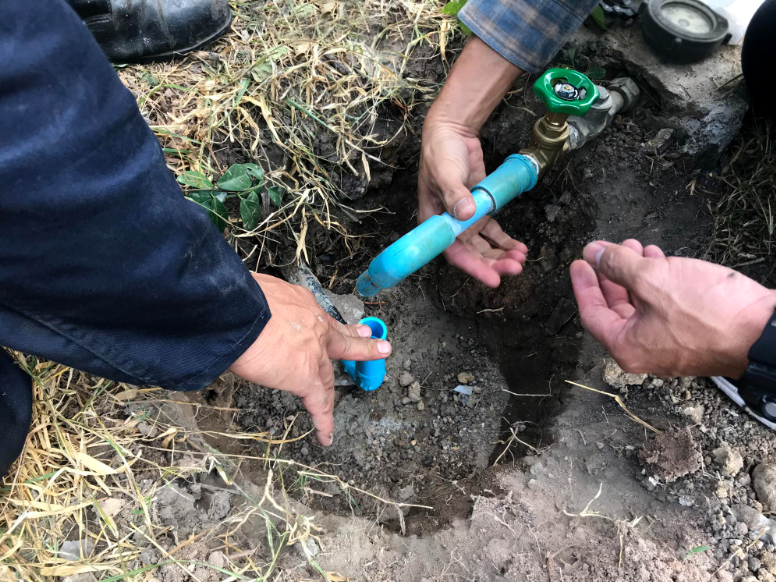
A slow drip from an outdoor faucet might not seem urgent, but that steady trickle adds up fast. Homeowners in Cut and Shoot, TX who ignore a leaking hose bib risk more than a high water bill. Left unchecked, even a small outdoor faucet leak can send water behind siding, into crawl spaces, and along foundation walls where the damage stays hidden for weeks. By the time stains appear on an interior wall or a musty smell settles into a room, the repair costs have already multiplied.
Cut and Shoot sits in Montgomery County, where hot, humid summers push outdoor plumbing through months of heavy use, and the occasional hard freeze in winter catches exposed pipes off guard. That combination of extremes makes outdoor faucets one of the most vulnerable fixtures on any home.
According to the EPA, the average household wastes roughly 9,400 gallons of water per year from leaks alone. A single outdoor spigot dripping at a steady rate contributes to that waste around the clock, and the moisture it deposits near the foundation invites problems that go well beyond the water bill.
The good news is that most outdoor faucet leaks are preventable. A handful of seasonal habits, a basic understanding of how hose bibs work, and a willingness to call a professional before a small drip becomes a big repair can keep Cut and Shoot homeowners ahead of the damage.
This article walks through the causes, the warning signs, and the practical steps that protect both your plumbing and your property.
In this article, you will learn about:
- Why outdoor faucets in Cut and Shoot are more vulnerable than you think
- Warning signs of a hose bib leak you should never ignore
- Seasonal maintenance that keeps outdoor plumbing in shape
- When a leaking outdoor faucet needs professional repair
- How water damage from a neglected spigot spirals quickly
Keep reading to find out how a few simple steps can save you thousands in avoidable water damage and plumbing repairs.
Why outdoor faucets in Cut and Shoot are more vulnerable than you think
Outdoor faucets take a beating that indoor plumbing never sees. They sit exposed to direct sunlight, wind-driven rain, temperature swings, and physical contact from hoses, lawnmowers, and yard work. In Cut and Shoot, the climate adds another layer of stress that accelerates wear on every component of a hose bib.
Most homeowners treat their outdoor spigots as an afterthought, turning them on in spring and forgetting about them until something goes wrong. That gap in attention is exactly where leaks develop. Understanding what makes these fixtures so exposed is the first step toward keeping them functional and leak-free through every season.
How Montgomery County weather stresses hose bibs year round
Cut and Shoot is part of the broader Montgomery County and Conroe area, where summers regularly push past 95 degrees and humidity stays elevated for months. That sustained heat causes metal and rubber components inside a hose bib to expand, contract, and gradually deteriorate. Rubber washers dry out and crack. O-rings lose their seal. Valve seats corrode from constant moisture contact.
Winter brings a different kind of risk. While Southeast Texas does not freeze as often as northern states, the freezes that do hit tend to arrive suddenly, sometimes dropping temperatures 40 or 50 degrees in a matter of hours. Water trapped inside an unprotected outdoor faucet expands by roughly 9% when it freezes, and that expansion generates enough pressure to crack copper, split PEX, and shatter PVC connections. The National Association of Insurance Commissioners recommends disconnecting garden hoses and winterizing outdoor plumbing before freezing weather arrives to reduce the risk of burst pipes.
These freeze events do not need to last long. Even a few hours below 32 degrees can damage an exposed spigot if water is sitting inside the line. Homeowners who left hoses attached during the February 2021 freeze across Texas learned that lesson the hard way.
What makes a frost-free hose bib different from a standard spigot
Many homes in Cut and Shoot have frost-free hose bibs, which are designed to reduce freeze risk by placing the valve seat deeper inside the wall where temperatures stay warmer. When you turn a frost-free faucet off, water drains out of the long stem through the spigot opening, leaving the pipe empty and protected.
That design works well, but only under the right conditions. If a garden hose stays connected, water cannot drain from the stem. It sits trapped inside the wall, and a single freeze can crack the internal stem without any visible sign on the outside. Homeowners often discover the damage months later when they turn the faucet on in spring and water pours through an interior wall instead of out the spigot.
A standard hose bib, by contrast, has a short valve right at the wall. These are less common in newer construction but still appear on older homes throughout Montgomery County. Standard spigots are more obviously vulnerable to freezing, but they are also easier to inspect visually because the valve components sit closer to the surface.
Regardless of the type, both styles rely on rubber washers, brass seats, and threaded connections that wear out with use and age. Neither is immune to leaks, and neither should go uninspected from one season to the next.
The role soil and foundation conditions play in outdoor plumbing
Cut and Shoot sits on the kind of clay-heavy soil common across Montgomery County. Clay soil expands when it absorbs moisture and contracts when it dries, and that movement puts lateral pressure on any plumbing that runs through or near the foundation. A supply line feeding an outdoor faucet passes through the exterior wall, and seasonal soil shifts can stress the connection point where the pipe meets the wall framing.
Over time, that repeated shifting loosens fittings, creates hairline cracks, and opens gaps around pipe penetrations that allow water to seep into the wall cavity. The issue is worse on homes where the backfill around the foundation was not properly compacted during construction, because loose fill settles unevenly and accelerates the lateral movement.
Homeowners who notice soil pulling away from the foundation during dry spells or pooling water near the base of an exterior wall during rainy periods should check their outdoor faucet connections carefully. The same ground movement that causes foundation concerns in the Conroe area also puts stress on the plumbing that passes through those walls.
Warning signs of a hose bib leak you should never ignore
Outdoor faucet leaks rarely announce themselves with a dramatic burst. Most start small, and the earliest signs are easy to miss if you are not looking for them. Catching a leak while it is still minor keeps the repair simple and prevents the kind of hidden water damage that turns a $200 fix into a multi-thousand-dollar problem.
A routine check takes five minutes and does not require any tools. Walk the perimeter of your home, look at every outdoor spigot, and pay attention to the details below. According to FEMA, just one inch of water inside a home can cause up to $25,000 in damage, so even a slow, steady drip that reaches an interior wall carries real financial risk.
Visible dripping when the faucet is off
The most obvious sign is water dripping from the spigot when the handle is fully closed. A small drip every few seconds points to a worn washer or a degraded valve seat. A faster, steady stream suggests the valve is no longer seating properly, which usually means the internal components need replacement rather than just tightening.
Do not dismiss a slow drip as harmless. A faucet that drips once per second wastes more than 3,000 gallons per year, and the moisture it deposits around the foundation, on the siding, or onto the slab invites mold growth, wood rot, and pest activity. In humid conditions like those in Cut and Shoot, biological growth can begin on a damp surface within 24 to 48 hours.
Check the area directly below and around the spigot as well. Staining on the siding, green algae growth on the brick or concrete, or an unusually muddy patch of soil near the wall all suggest the faucet has been leaking longer than you realized.
Water appearing where it should not be
Some hose bib leaks do not drip from the spigot at all. Instead, water escapes from behind the wall plate, from the handle assembly, or from the connection point where the pipe enters the exterior wall. These leaks are harder to spot because the water travels along the pipe or the framing before it becomes visible.
Inside the house, watch for these clues:
- Damp or discolored drywall on the wall closest to the outdoor faucet
- A musty smell in a room that shares a wall with the spigot
- Baseboards that feel soft or spongy to the touch
- Paint bubbling or peeling on an interior wall near the faucet location
Any of these signs warrants an immediate investigation. Water inside a wall cavity can travel several feet from the source before it shows on the surface, so the visible damage may not be directly behind the faucet.
Outside, look for water weeping through the mortar joints in brick, staining below the sill plate, or puddles that reappear after dry weather. These patterns suggest the leak is following the pipe penetration through the wall.
A water bill that creeps up without explanation
A sudden spike in your water bill is an obvious red flag, but a gradual increase over several months is just as telling. A slow outdoor faucet leak can add $20 to $50 per month to a water bill without the homeowner noticing, especially when the total is still within a range that seems reasonable.
The EPA notes that roughly 10% of homes have leaks severe enough to waste 90 gallons or more per day. If your household water use during a low-use month (like January or February) exceeds 12,000 gallons for a family of four, a leak is likely somewhere in the system.
To isolate an outdoor faucet leak, shut off every water-using fixture and appliance inside the house, then check your water meter. If the meter dial is still moving, water is flowing somewhere. Walk the exterior and check each hose bib. If none are visibly dripping, the leak may be underground in the supply line or inside the wall, both of which need professional diagnosis.
Seasonal maintenance that keeps outdoor plumbing in shape
Preventing outdoor faucet leaks in Cut and Shoot comes down to consistent, seasonal attention. The fixtures are simple enough that a homeowner can handle most maintenance tasks, but the key is doing them on schedule rather than waiting until a problem appears.
Think of outdoor faucet care the same way you think about changing an HVAC filter or flushing a water heater. It is routine, it takes a few minutes, and it prevents expensive surprises. The tasks shift with the seasons, so splitting them into a spring checklist and a winter checklist keeps the process manageable.
Spring startup and inspection
Spring is when most Cut and Shoot homeowners turn their outdoor faucets back on after winter. That first use of the season is the single best opportunity to catch a freeze-related crack or a worn component before it causes damage.
Follow this sequence every spring:
- Walk to each outdoor faucet and visually inspect the spigot, the wall plate, and the surrounding siding or brick for cracks, staining, or moisture.
- Turn the faucet on slowly and watch for water appearing anywhere other than the spigot opening, especially around the handle, the wall plate, or the base of the valve body.
- Let the water run for 30 seconds while you check inside the house on the wall closest to the faucet. Look for drips, wet spots, or changes in the drywall.
- Shut the faucet off and watch for dripping. A properly sealed faucet stops flowing within a second or two. Continued dripping means the washer or seat needs attention.
- Inspect any connected hoses for cracks, bulges, or corroded fittings that could cause a failure at the connection point.
If anything looks off during this inspection, address it before connecting a hose and leaving the faucet under pressure for the season. A hose under pressure on a compromised faucet multiplies the risk of a blowout.
After the inspection, this is also a good time to check your yard line for soft spots or unexplained wet areas that could indicate a buried supply line problem connected to the outdoor plumbing.
Summer use habits that reduce wear
Cut and Shoot summers are long and hot, and outdoor faucets see heavy use from May through September. Watering gardens, filling pools, washing cars, and running sprinklers all put hours of continuous pressure on a hose bib that was designed for intermittent use.
A few habits reduce the strain:
- Disconnect the hose after each use. Leaving a hose attached under pressure keeps the faucet valve, the hose washer, and the connection fitting under constant stress, even when the faucet is off.
- Replace rubber hose washers at the start of every season. A cracked washer at the hose connection causes a drip at the fitting that keeps the area around the faucet perpetually wet.
- Avoid overtightening the handle when shutting the faucet off. Cranking the handle past the closed position damages the washer and the seat, shortening their lifespan.
- Check for drips weekly during heavy-use months. A drip that starts in June and goes unnoticed until October can deposit hundreds of gallons of water against the foundation.
According to a study from the Texas Water Development Board, outdoor water use in Texas accounts for roughly 31% of total residential consumption. That heavy outdoor demand puts proportional stress on the fixtures delivering that water, and hose bibs are the weakest link in the chain.
Keeping drain systems clear during summer also helps, because clogged exterior drains can redirect water back toward the foundation and compound any moisture problems caused by a leaking spigot.
Winterization before the first freeze
Texas winters are mild compared to the northern half of the country, but the occasional hard freeze hits Montgomery County without much warning. Winterizing outdoor faucets is the single most effective step a homeowner in Cut and Shoot can take to prevent a burst pipe and the water damage that follows.
The process is straightforward:
- Disconnect and drain every garden hose. Coil them and store them in a garage or shed.
- Locate the interior shut-off valve for each outdoor faucet. In most homes, this is a gate valve or ball valve on the supply line near where it exits through the exterior wall. Turn it off.
- With the interior valve closed, open the outdoor faucet fully and let any remaining water drain out. Leave the faucet in the open position so any residual moisture has room to expand if temperatures drop.
- If your home does not have interior shut-off valves for the outdoor lines, install insulated faucet covers over each spigot. These foam or hard-shell covers slow heat loss and buy a few extra degrees of protection.
- Wrap any exposed pipe between the wall and the faucet with pipe insulation or heat tape if the pipe runs along an exterior wall, through an unheated crawl space, or through a garage.
Homeowners who completed a plumbing inspection earlier in the year already know where their shut-off valves are and whether the outdoor lines have any existing issues. If you have not had an inspection, winterization is a good time to map out the system and note anything that needs attention before the next season.
When a leaking outdoor faucet needs professional repair
Not every outdoor faucet problem is a DIY fix. Some leaks involve components inside the wall, damaged supply lines, or valve bodies that need to be cut out and replaced. Knowing the line between a simple washer swap and a job that needs a licensed plumber keeps you from making a small problem worse.
A good rule of thumb: if the leak stops when you replace the washer and tighten the packing nut, you handled it. If water is coming from inside the wall, from a cracked valve body, or from a connection point you cannot see, a professional needs to evaluate the situation before water damage spreads further.
Repairs you can handle yourself
A dripping spigot caused by a worn washer is one of the simplest plumbing repairs a homeowner can tackle. The process involves shutting off the water supply to the faucet, removing the handle and packing nut, pulling out the stem assembly, and replacing the rubber washer at the end of the stem.
Here is what you need:
- An adjustable wrench or pliers
- A flathead screwdriver
- A replacement washer that matches the size of the old one (bring the old washer to the hardware store to match it)
- Plumber's grease for the new washer and the packing nut
The entire job takes about 15 minutes. If the drip stops after reassembly, you are done. If it continues, the valve seat itself may be corroded or pitted, and that is where the job crosses into professional territory.
Replacing a hose bib washer is comparable in difficulty to swapping out a garbage disposal gasket or tightening a loose faucet handle. The tools are basic, and the parts cost less than five dollars.
Problems that call for a licensed plumber
Several outdoor faucet issues go beyond a washer replacement and require a plumber who can assess the full scope of the problem.
- A cracked frost-free stem. The stem runs 6 to 18 inches through the wall, and a crack anywhere along its length means the entire assembly needs to come out. This involves working from inside the house and may require cutting into drywall to access the connection.
- Water leaking through the exterior wall. If water is seeping around the pipe penetration or coming through the siding near the faucet, the leak is behind the wall and needs professional leak detection to locate the exact failure point.
- A damaged supply line. The pipe feeding the outdoor faucet may have corroded, cracked, or developed a pinhole leak inside the wall. This is especially common in older homes in Cut and Shoot where original galvanized or copper supply lines have been in service for decades.
- The faucet body itself is cracked or corroded beyond repair. A valve body that has split from freeze damage or corrosion cannot be patched. It needs a full replacement, which involves soldering or connecting a new assembly to the existing supply line.
Attempting these repairs without the right tools or experience risks making the leak worse and increasing the amount of water that reaches interior finishes, insulation, and framing.
Why delaying a repair costs more than the repair itself
The temptation to put off an outdoor faucet repair is strong, especially when the leak seems minor. But the math does not support waiting. A slow leak that costs $150 to $300 to fix today can cause slab leak conditions, mold growth, and structural damage that pushes repair costs into the thousands.
Insurance does not always help, either. Standard homeowners policies typically cover sudden and accidental water damage, but claims for gradual damage caused by a known, unfixed leak are routinely denied. If your insurer determines that the damage resulted from deferred maintenance rather than a sudden event, the entire cost falls on you.
The smarter approach is treating outdoor faucet leaks the way you treat any other plumbing issue: address it when you first notice it, not when it forces you to act.
How water damage from a neglected spigot spirals quickly
A leaking outdoor faucet does not just waste water. It introduces moisture into areas of your home that were never designed to stay wet, and the damage compounds rapidly once it starts. Understanding how a small exterior drip becomes a major interior problem makes the case for prevention and prompt repair stronger than any statistic alone.
Cut and Shoot's humidity, heat, and soil conditions accelerate every stage of this progression. What might take months to develop in a dry climate can happen in weeks here, especially during the long stretch from May through October when temperatures and moisture levels stay elevated.
Foundation and structural concerns
Water pooling near the base of an exterior wall softens the soil around the foundation and can undermine the support the foundation relies on. In Montgomery County, where expansive clay soil is the norm, excess moisture causes the clay to swell unevenly. That differential movement puts stress on the slab, which can lead to cracks, door frames that no longer close properly, and visible settling on one side of the house.
A leaking hose bib positioned near a corner of the home or close to a window well concentrates water in a small area, making the swelling and settling more pronounced. Over time, the moisture path widens, and the foundation damage becomes harder and more expensive to correct.
Homeowners who notice unexplained changes in water pressure should consider whether an outdoor leak is contributing to the problem, because foundation shifts can stress the supply lines running under the slab.
Mold, wood rot, and pest infiltration
Moisture inside a wall cavity creates ideal conditions for mold growth, which can begin within 24 to 48 hours on a damp surface. In a humid climate like Cut and Shoot, mold spreads quickly once it establishes a foothold, and remediation often requires removing drywall, insulation, and sometimes framing to eliminate the affected material.
Wood rot follows a similar timeline. Structural framing that stays damp loses its load-bearing capacity over time, and termites and carpenter ants are drawn to softened wood. A single leaking hose bib on an exterior wall can feed all three problems simultaneously, with mold colonizing the drywall, rot weakening the studs, and pests moving in to exploit the softened framing.
These are not hypothetical scenarios. The Insurance Information Institute reports that water damage and freezing account for roughly one in every five homeowners insurance claims nationwide. A significant portion of those claims start with a plumbing failure that went unaddressed for too long, including outdoor faucet leaks that homeowners dismissed as minor.
The real cost of waiting too long
The financial math is simple. Replacing a worn hose bib washer costs a few dollars. Replacing the entire faucet assembly runs $150 to $350 depending on the type and accessibility. Repairing water-damaged drywall, insulation, and framing behind the wall where the faucet leaked for months can reach $2,000 to $5,000. Add mold remediation, and the number climbs higher.
The Congressional Budget Office estimates that flood-related property damage across the United States averages roughly $46 billion per year, and those costs are projected to climb as weather patterns become more severe. An outdoor faucet leak that migrates through the wall and reaches interior finishes can produce thousands of dollars in damage before the homeowner realizes the extent of the problem.
A proactive approach, regular inspections, seasonal maintenance, and prompt repairs, costs a fraction of what reactive emergency work demands. The homeowners in Cut and Shoot who stay ahead of their outdoor plumbing avoid the cycle of deferred maintenance, hidden damage, and expensive surprises.
Conclusion
Outdoor faucet leaks are one of the most preventable plumbing problems a homeowner in Cut and Shoot can face. The fixes are straightforward, the seasonal habits are simple, and the cost of staying ahead of the problem is a fraction of what it takes to recover from water damage that went undetected for months.
Start with a walk around your home this week. Check every hose bib for drips, inspect the walls and siding around each one, and disconnect any hoses that are still attached when they are not in use. If anything looks off, address it now rather than later. The window between a minor drip and a major repair is shorter than most homeowners expect, especially in a climate where heat, humidity, and clay soil work together to accelerate damage.
When an outdoor faucet needs more than a washer replacement, or when you spot signs of water inside a wall, a licensed plumber can diagnose the issue and get it resolved before it spreads. Benjamin Franklin Plumbing serves homeowners across Cut and Shoot and Montgomery County with upfront pricing, 24/7 availability, and the on-time guarantee that takes the guesswork out of scheduling a repair.

 Your Privacy Choices