
Spring arrives in Marietta, East Cobb, and Sandy Springs with a narrow and useful window — the period between the last frost and the first stretch of genuine summer heat when plumbing issues that developed quietly over winter can be found and fixed before they become urgent. Plumbing contractors in Cobb County are at their busiest from June through August. Homeowners who run a systematic spring walkthrough in May address small problems on their own schedule and avoid the premium of emergency summer calls.
This checklist is organized room by room. It covers what to look for, why it matters in the specific context of Cobb County's older housing stock and water chemistry, and what warrants a call to a licensed plumber versus what you can address yourself.
Start Outside: Hose Bibs, Irrigation, and the Main Shutoff
Hose Bibs
Test every exterior hose bib by turning it fully on, running it for 30 seconds, then shutting it off completely. You're looking for: continuous dripping after shutoff, reduced flow compared to prior seasons, looseness at the wall mount, or any moisture on the interior wall near where the bib penetrates the exterior. In Cobb County's older homes — particularly those built in the 1970s and 1980s in East Cobb neighborhoods like Indian Hills, Murdock, and Shallowford Falls — original hose bibs are frequently standard (non-frost-free) models that can allow water to remain in the exterior pipe section. After a winter with hard freezes, check for any signs of split or cracked pipe just inside the wall.
A dripping hose bib is a simple and inexpensive repair. A slow interior leak from a compromised exterior wall pipe section is not. Catching it in spring, before irrigation season begins and the bib is in regular use, is the right time.
Irrigation Backflow Preventer
Georgia requires backflow preventers on all irrigation systems tied to a municipal water supply, and Cobb County Water System and Marietta Water both enforce this requirement. The backflow preventer — typically a bronze assembly mounted at the irrigation shutoff near the side of the house — prevents irrigation water from flowing backward into your home's domestic supply. Inspect it for visible cracks, corrosion, or dripping from the assembly itself. Annual testing and certification is required under Georgia law, and many East Cobb and Vinings HOAs require documentation. A licensed plumber can test and certify the device as part of spring startup service.
Main Water Shutoff Valve
This is the most important item on the outside checklist and the one most commonly overlooked. Locate your main shutoff — typically near the water meter at the street or in a utility space near the water heater — and test whether it actually closes. In Cobb County's 1970s through 1990s homes, the main shutoff is frequently an aging gate valve that has not been operated in years. Gate valves seize. A valve that won't close when a pipe bursts or a fixture fails is not a shutoff — it is a hazard. If your shutoff is a round-wheel gate valve and turns with difficulty or doesn't fully stop water flow when tested, replacing it with a ball valve is a straightforward, inexpensive upgrade that genuinely matters in an emergency.
Water Heater
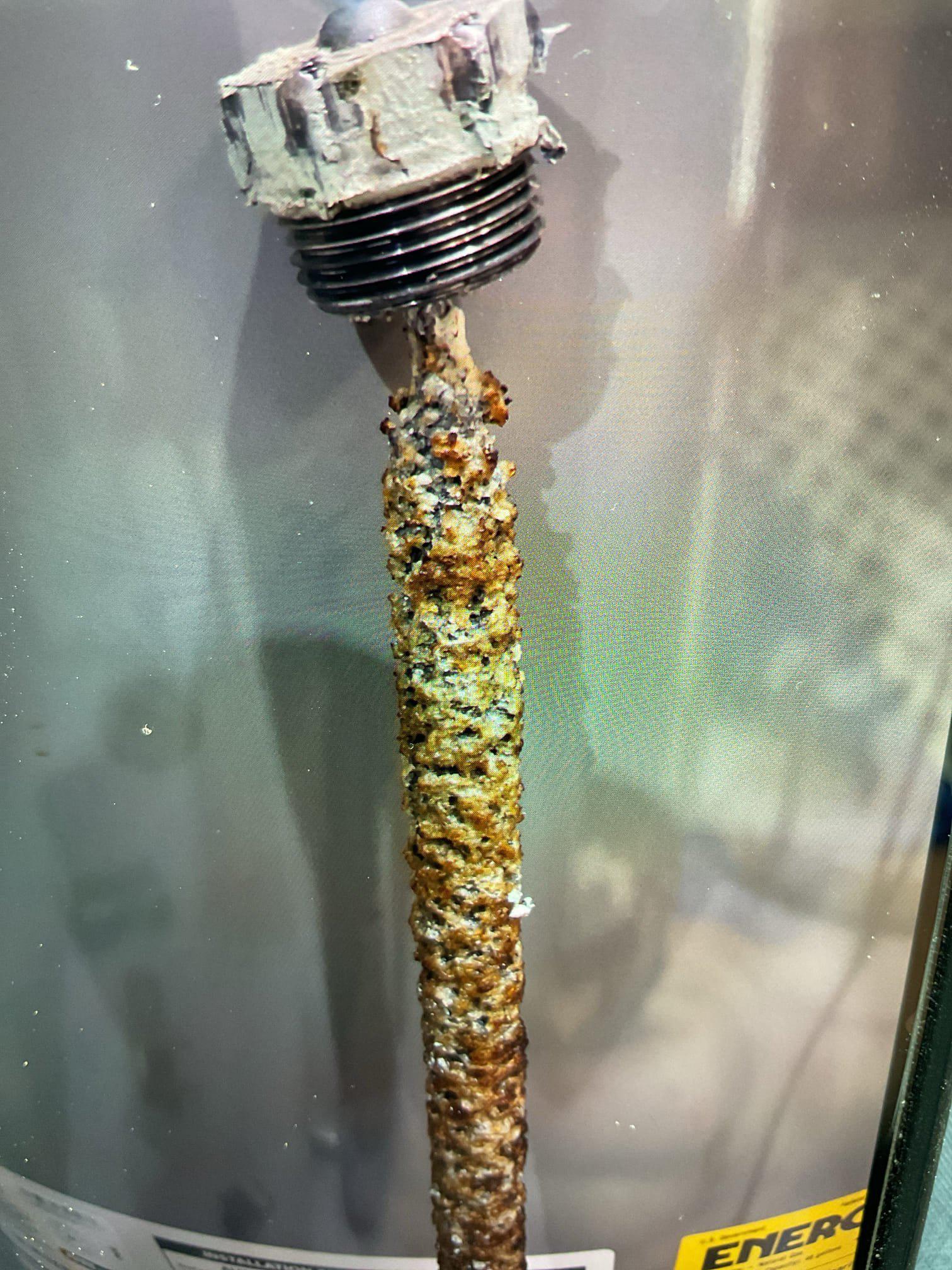
Your water heater deserves dedicated attention every spring, and in Cobb County this is especially true given the water chemistry conditions documented by the Cobb County-Marietta Water Authority. Hard water and the specific mineral content of CCMWA's supply accelerates sediment accumulation on heating elements and inside tankless heat exchangers.
- Check around the base of the tank for moisture, rust staining, or white mineral deposits. Any of these indicate a leak — either from the tank itself or from the temperature-pressure relief valve, which should discharge through a pipe to the floor drain or exterior, not accumulate at the base.
- Listen during a heating cycle for popping, cracking, or rumbling. These are sediment sounds. In Cobb County's water conditions, a water heater that has not been flushed in two or more years will almost certainly produce these sounds. Annual flushing is the correct interval.
- Check the age. If the unit is 10 or more years old, you are in the statistical replacement window. Planning ahead gives you time to evaluate tankless options, compare unit efficiency ratings, and schedule on your timeline rather than reacting to a failure on a cold morning.
- Tankless water heater owners: spring is the correct time for annual descaling. Navien, Rinnai, and other manufacturers specify annual maintenance. In CCMWA's water conditions, this is not optional maintenance — scale buildup on the heat exchanger measurably reduces flow rate and efficiency within a single year of skipped service.
Kitchen
Under-Sink Supply Lines
Open the cabinet under your kitchen sink and inspect the braided supply lines running to the hot and cold shutoff valves. These lines have a service life of approximately 10 years. If your home's kitchen was last renovated in the early 2010s or earlier, and the supply lines are original, they are approaching or past their service life. The failure mode is abrupt and high-volume — a supply line that fails while you are away or asleep can discharge several gallons per minute until discovered. Replacement lines cost under $30 per pair and take 20 minutes to install. It is the best inexpensive preventive action on this checklist.
Disposal and Drain
Run the garbage disposal with water flowing and listen for grinding or excessive vibration. Check the drain connections under the sink for softness in the pipe, staining on the cabinet floor, or white mineral buildup at slip-joint connections — all indicators of a slow drip. Check the dishwasher drain hose where it connects to the disposal or the sink drain; these connections work loose over time and a failed connection drains dishwasher water directly into the cabinet.
Bathrooms
Toilet Leak Test
Add several drops of food coloring to the tank of each toilet in the house and wait 10 minutes without flushing. If color appears in the bowl, the flapper is leaking. A running toilet wastes 100 to 200 gallons of water per day — significant on a Cobb County Water System or Marietta Water bill, and potentially enough to push you into a higher usage tier. Flapper replacement costs a few dollars and takes five minutes. Do not let this go until the next plumbing call.
Also check for toilet movement at the base. A toilet that rocks or shifts when sat on has a failed wax ring. This is not a cosmetic issue — a compromised wax ring allows sewer gas into the home and permits water from the base seal to infiltrate the subfloor below, causing structural damage that compounds over time.
Shower and Tub Caulk
Inspect the caulk lines at the base of every shower and around every tub. Cracked, separated, or darkly stained caulk is not just a cosmetic problem — it is an active water intrusion path that sends water into the subfloor and wall framing with every use. This is one of the most common causes of hidden water damage in Cobb County bathrooms, particularly in the 1970s and 1980s tile-surround showers common in East Cobb and Sandy Springs homes. Recaulking is an easy DIY repair; the critical step is removing all old caulk before applying new material, since new caulk applied over degraded material fails quickly.
Older Homes: East Cobb, Sandy Springs, and Smyrna
Cobb County's pre-1990 housing stock carries specific plumbing considerations that go beyond the standard spring checklist. If your home was built before 1990, add the following to your walkthrough:
- Polybutylene pipe: gray plastic supply pipe stamped PB2110 was used extensively in Cobb County construction from the mid-1970s through the mid-1990s. If your home has polybutylene and has not been repiped, your system is past its expected service life. Spring is a good time to have it assessed, particularly if you've seen any unexplained water staining near walls or ceilings.
- Galvanized steel drain lines: older East Cobb and Sandy Springs homes with original galvanized drain lines experience progressive interior corrosion that narrows the pipe over decades, causing slow drains throughout the home that don't respond to standard clearing methods. If you have persistent drain slowness in a pre-1980 home, this is likely the cause.
- Copper supply line age: homes with original copper plumbing built before 1990 are in the age range where pitting corrosion from CCMWA's water chemistry becomes a real concern. Multiple pinhole leaks over the past few years in different locations is a strong indicator that the corrosion is widespread rather than isolated.
Benjamin Franklin Plumbing® of Marietta serves homeowners throughout Marietta, East Cobb, Sandy Springs, Smyrna, Vinings, and Cumberland. Available 24/7 — call (770) 999-9871 or book online. Licensed, background-checked, and drug-tested technicians. If we are ever late, we pay you $5 for every minute — up to $300.

 Your Privacy Choices