
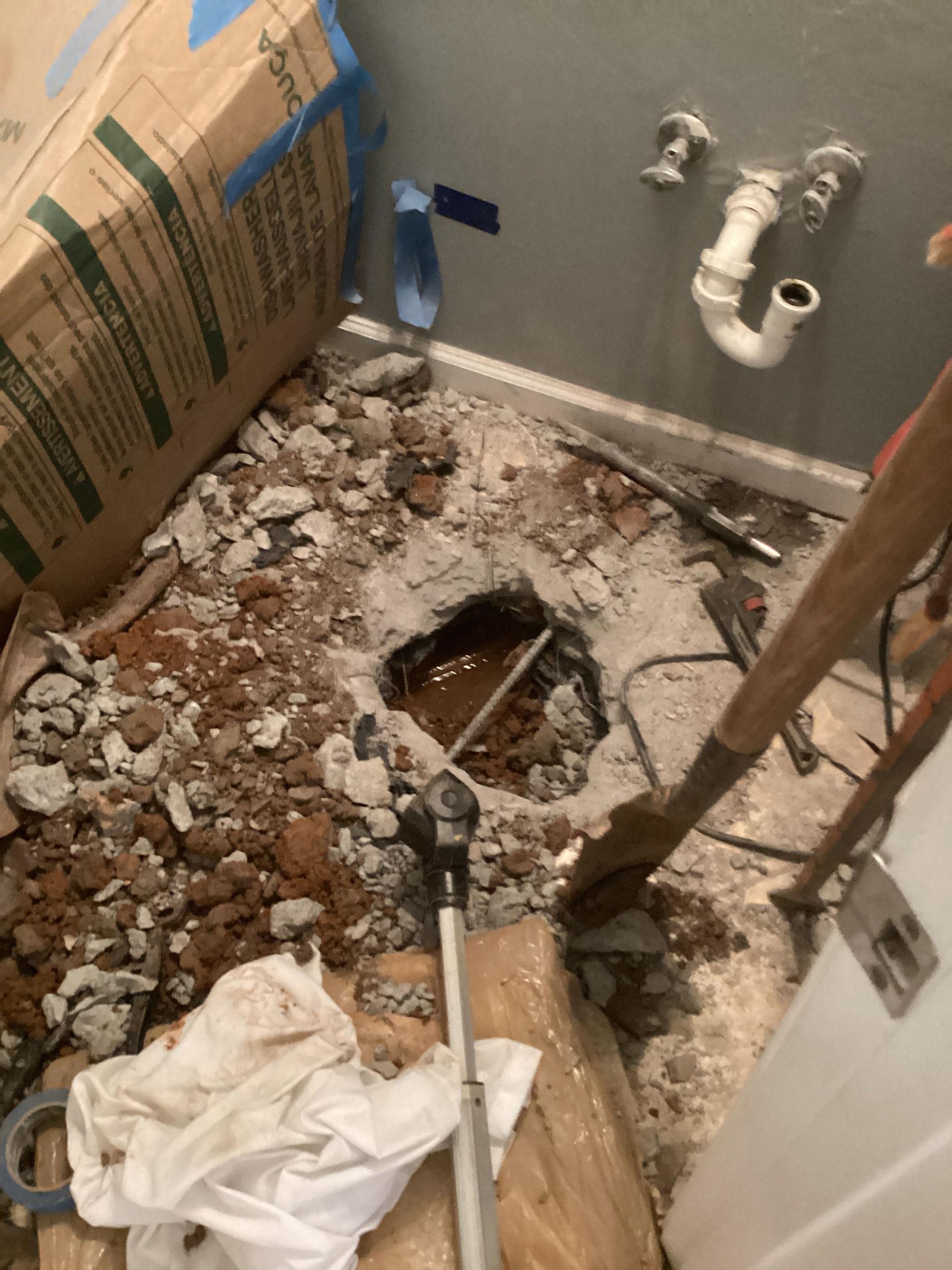
Slab leaks are one of the most consistently damaging — and consistently underdiagnosed — plumbing problems we encounter throughout Cobb County and the surrounding area. A broken pipe that floods a room announces itself immediately. A slab leak, by contrast, is a slow leak in a water line running beneath your home's concrete foundation, and it can go undetected for weeks or months while it quietly erodes soil, saturates building materials, promotes mold growth, and steadily drives up your water bill.
For homeowners in Marietta, East Cobb, Sandy Springs, and the surrounding communities, the combination of aging copper plumbing, Georgia's expansive clay soil, and slab-on-grade construction means slab leaks are not a rare occurrence — they are a documented, recurring pattern in homes of a certain age. Knowing what to look for is the difference between catching a slab leak early, when repair is manageable, and discovering it late, when the damage has compounded.
Why Marietta and Sandy Springs Homes Are Particularly Prone to Slab Leaks
The Age of the Housing Stock
Marietta's median home construction year sits around 1986, and a significant share of Sandy Springs' residential neighborhoods — particularly in Riverside, Mount Vernon, and the communities along the Chattahoochee corridor — were built in the 1960s through the 1980s. Homes in that age range were built with copper supply lines that are now 40 to 60 years old. Under normal conditions, with normal water, copper plumbing has a long service life. But in the Atlanta metro area, with the water chemistry conditions that exist here and the clay soil pressures described below, that clock runs faster.
Documented Water Chemistry Issues in Cobb County
Cobb County has a well-documented and researched problem with pinhole leaks in copper pipes, particularly in homes built in the 1980s that receive water through the Cobb County-Marietta Water Authority. The interaction between the water supply's chemistry and aging copper pipe walls accelerates a process called pitting corrosion, where the interior of the pipe wall degrades from the inside out. The same water chemistry that drives pinhole leaks in interior copper lines also affects copper supply lines embedded beneath slabs. When pitting corrosion weakens the pipe wall at the same time that ground movement is stressing it, slab leaks become increasingly likely.
Georgia Red Clay and Seasonal Ground Movement
Georgia's characteristic red clay soil expands when it absorbs water and contracts when it dries out. This cycle — heavy spring rains followed by dry summers, then wet falls — produces continuous seasonal ground movement beneath foundations. Over the decades, that movement puts stress on the copper supply lines embedded in or beneath your slab at their weakest points: joints, fittings, and areas where corrosion has already thinned the pipe wall. When soil movement stress meets a corroded pipe wall, the result is a leak.
Sandy Springs: Mid-Century Homes and Deep Risk
Sandy Springs presents a distinct version of this problem. The neighborhood's large share of mid-century homes — many built in the 1960s and early 1970s in communities like Riverside and Mount Vernon Woods — have copper supply lines that are now 50 to 60 years old. At that age, pitting corrosion can be extensive throughout the system, and the soil movement pressure over that many decades has been considerable. Slab leaks are one of the defining plumbing concerns for Sandy Springs homeowners in this age bracket, and they tend to be more advanced by the time they are discovered because the pipes have been degrading for so long.
Seven Warning Signs of a Slab Leak
Any one of these signs should prompt a call to a licensed plumber for assessment. Two or more occurring together is a strong indicator that a leak is active.
- A Water Bill That Has Increased Without Explanation
The most common first signal — and the one most often dismissed — is a water bill that has quietly climbed over several billing cycles without any corresponding change in household use. A small but continuous leak beneath a slab runs water around the clock. Over a month, that adds up to a measurable and bill-visible volume of water. If your bill is up and you cannot explain why, do not wait for the next cycle. Have someone assess your plumbing.
- Warm or Hot Spots on Your Floor
When a hot water supply line beneath the slab is leaking, the escaping water heats the concrete and the flooring above the leak location. Walking across tile floors barefoot and finding a warm patch — especially in a bathroom, kitchen, or hallway near a plumbing wall, and not near a floor vent or direct sunlight — is a specific and reliable indicator of a hot water slab leak. This symptom does not occur with cold water line leaks, but is highly characteristic when it does appear.
- The Sound of Running Water When Everything Is Off
Shut off every faucet, appliance, and fixture in your home and listen carefully near the floor or near your water meter. If you can hear a faint hiss, trickle, or flowing sound with everything turned off, water is escaping somewhere in the system. In slab homes, this sound often seems to emanate from the floor itself. It is one of the most actionable signs because it is unambiguous: water should not be audible when nothing is running.
- Musty or Earthy Odors
Water leaking beneath a slab saturates the soil and creates conditions for mold and mildew growth in the space between the soil and the underside of the concrete. That microbial activity often produces a musty, damp, or earthy smell that enters the living space through flooring, baseboards, or HVAC registers. If a room in your home — particularly a bathroom, laundry room, or first-floor hallway — has developed a persistent musty odor that cleaning and airing out does not resolve, a slab leak is a likely cause.
- Cracks at the Base of Interior Walls
Water migrating beneath and through a slab can produce subtle shifts in the foundation that manifest as cracking. The most characteristic locations are at the base of interior walls, in the corners where flooring meets walls, or in horizontal runs low on a wall. Not every crack indicates a plumbing problem, but cracks that are new, near plumbing walls, or accompanied by any other sign on this list should be investigated rather than patched and ignored.
- Reduced Water Pressure Throughout the Home
A slab leak that has grown beyond a small drip can cause a noticeable drop in water pressure at faucets and showers throughout the home. This happens because water that should be building pressure to your fixtures is instead escaping beneath the slab. A pressure drop that affects multiple fixtures simultaneously, and that has developed gradually rather than suddenly, points toward a supply line leak rather than a clogged fixture or failing pressure regulator.
- Wet Spots, Saturated Carpet, or Buckling Flooring
When these visible signs appear, the slab leak has been active for some time and the damage has already accumulated. Unexplained wet patches on hard floors, carpet padding that is damp for no apparent reason, or hardwood and laminate flooring that has begun to buckle or warp in an area away from obvious water sources are all late-stage indicators. At this point, the urgency is high — not only to repair the plumbing, but to assess how much building material damage has occurred.
What Happens When a Slab Leak Goes Unrepaired
The damage from an unaddressed slab leak compounds over time in ways that go well beyond the plumbing repair itself. Prolonged water intrusion beneath a slab can destabilize the soil load-bearing structure, causing foundation movement and cracking. Moisture trapped beneath concrete creates sustained conditions for mold growth — a serious health concern and a costly remediation project. Saturated drywall, subfloor, and framing require replacement rather than drying. Every week an undetected slab leak runs, the scope of the remediation required after the plumbing is fixed grows.
Early detection does not just save money on the plumbing repair. It limits the entire cascade of secondary damage that makes slab leaks one of the more expensive plumbing events a homeowner can experience.
How We Locate and Repair Slab Leaks
Our approach prioritizes precision before any concrete work begins. Non-invasive detection tools allow us to identify the leak location accurately, so we open only the minimum area of flooring and concrete necessary.
- Thermal imaging cameras identify temperature anomalies at the floor surface. A hot water slab leak appears as a distinct warm zone even through tile, hardwood, or carpet.
- Acoustic leak detection equipment amplifies the sound of water escaping under pressure through the pipe wall or through the concrete, allowing us to locate the leak point precisely.
- Whole-home pressure testing confirms whether pressure is being lost within the closed pipe system, helping distinguish a slab leak from other possible sources like a supply line leak in the yard.
Once the leak is located, we provide flat-rate pricing for the repair before any concrete is opened. We handle the access, the repair, and the patch. For homes with multiple past slab leaks or with assessment findings showing widespread copper corrosion, we will give an honest recommendation about whether a targeted repair or a broader replumb is the better long-term value.
Benjamin Franklin Plumbing® of Marietta serves homeowners throughout Marietta, East Cobb, Sandy Springs, Smyrna, Vinings, and Cumberland. Available 24/7 — call (770) 999-9871 or book online. Licensed, background-checked, and drug-tested technicians. If we are ever late, we pay you $5 for every minute — up to $300.

 Your Privacy Choices