
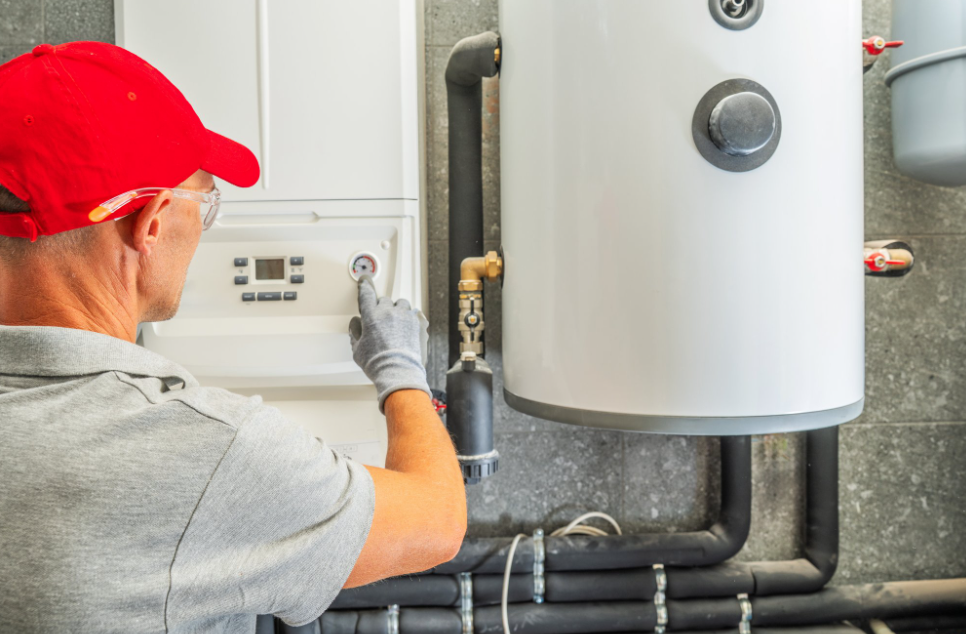
Water heater repair in Leawood, KS, starts with finding the cause of the problem, not guessing from one symptom. No hot water, temperature swings, unusual noises, leaks, and rising energy use can come from different components, and some require a much faster response than others.
Many faults are repairable when the tank and major connections remain sound. A worn heating element, faulty thermostat, failed ignition component, loose electrical connection, or damaged valve may be replaced without changing the entire water heater.
The right decision depends on the equipment, its condition, the failure history, and your household's hot-water demand. A plumber who provides water heater service in Leawood can test the system, explain the findings, and distinguish a practical repair from a short-lived patch.
In this article, you will learn about:
- The warning signs that your water heater needs professional attention
- How plumbers diagnose different water heater systems
- When repair makes sense and when replacement is smarter
- What to expect from service and preventive maintenance
Keep reading to respond confidently when your hot water becomes unreliable.
The warning signs that your water heater needs professional attention
A water heater can lose performance gradually or stop suddenly. The symptom alone rarely identifies the failed part, but it can tell you whether to schedule service, limit use, or shut the system down and seek urgent help.
Pay attention to when the problem happens, which fixtures it affects, and whether you see water around the unit. Those observations give the plumber a useful starting point and can prevent a minor fault from causing damage in a finished basement or utility area.
No hot water and unstable temperatures narrow the possibilities
If every hot-water fixture runs cold, the issue may involve the energy supply, thermostat, heating element, burner, ignition system, or safety control. If only one shower or faucet is affected, the fixture's cartridge, mixing valve, or flow restriction may be the real problem.
Temperature swings create a different diagnostic trail. A tank may recover too slowly for current demand, one electric element may have failed, controls may be reading inaccurately, or sediment may be interfering with heat transfer. A water heater repair visit should identify which condition is present before parts are replaced.
Water heating is a meaningful part of household energy use. The U.S. Department of Energy estimates that it can account for 14% to 25% of the energy consumed in a home, so a unit that runs excessively or fails to reach its setpoint deserves attention.
Do not repeatedly reset a breaker or bypass a safety control to keep the unit running. Note whether the failure is constant or intermittent, then leave electrical, gas, combustion, and sealed control work to a qualified professional.
Noise, odor, and discolored water need the right diagnosis
Popping or rumbling in a tank often points toward sediment interacting with heated surfaces, but clicking, buzzing, hissing, and banging can have other causes. The location and timing of the sound matter, especially if it begins during burner operation, electric heating, or high water demand.
Rust-colored hot water may come from the tank, an anode-related condition, a nearby fitting, or the home's hot-water piping. If discoloration appears on both hot and cold sides, the plumber should look beyond the water heater and consider the broader water treatment system.
Several observations can help separate a heater problem from a fixture or whole-house issue:
- Check whether the symptom appears at every hot-water outlet.
- Compare hot and cold water for color, odor, and visible particles.
- Note whether noises occur while heating or after a faucet closes.
- Record how long the water stays hot during normal use.
- Look for recent changes in water pressure or household demand.
A sulfur-like odor also requires diagnosis rather than a deodorizing shortcut. Water chemistry, bacterial activity, temperature, anode material, and periods of low use can all influence odor, and the appropriate response depends on the actual source.
When a symptom is limited to one faucet, cleaning an aerator or repairing the fixture may solve it. When the same condition reaches several rooms, the heater, hot-water distribution, or incoming supply deserves a broader inspection.
Water around the unit can become an emergency
A small puddle might come from condensation, a loose connection, a drain valve, or a relief-valve discharge. It can also be the first visible sign that the tank itself has lost integrity, which changes the situation from routine performance trouble to a risk of continuing water release.
Do not assume that every drip needs the same repair. A plumber can trace the water to its highest wet point, dry the area, operate the unit, and determine whether the leak originates at a replaceable component or through the tank body.
If water is spreading, keep people away from wet electrical areas and shut off the water supply when you can do so safely. Emergency plumbing service is appropriate when the leak cannot be contained, the tank is releasing water, or nearby finishes and equipment are at risk.
The response may also involve professional leak detection when the source is concealed or the water appears away from the heater. Once the immediate flow is controlled, targeted leak repair may be possible at a connection, but a leaking vessel generally points toward replacement.
How plumbers diagnose different water heater systems
Gas, electric, heat pump, and tankless water heaters create hot water in different ways. A symptom such as lukewarm water can therefore point to a burner problem in one home, an element problem in another, or a flow and control issue in a tankless system.
Diagnosis begins with the model, fuel or power source, installation, error history, and household complaint. The plumber then tests the components relevant to that system while checking for unsafe conditions around venting, wiring, gas supply, water connections, and pressure relief.
Gas tank units require combustion and venting checks
A gas water heater depends on reliable fuel delivery, ignition, combustion air, burner operation, temperature control, and exhaust venting. If one part of that chain fails, the heater may not ignite, may shut down, or may produce hot water inconsistently.
The plumber inspects the visible installation, checks manufacturer diagnostic information, and tests the controls that safely permit burner operation. Soot, scorching, damaged venting, or unusual combustion behavior should never be treated as a simple nuisance.
Natural gas water heating is common in this region of the country. The U.S. Energy Information Administration reported that 60% of Midwest households used natural gas for water heating in its 2020 Residential Energy Consumption Survey, which helps explain why gas-system diagnostic experience matters in Kansas City-area service.
Repairs involving the fuel line also need a clear scope. A water-heater component repair is different from gas line repair, and any concern about gas odor should prompt immediate safety action rather than continued troubleshooting by the homeowner.
Electric tank units rely on elements, thermostats, and wiring
Standard electric tanks commonly use upper and lower heating elements controlled by thermostats and safety devices. One failed element may leave you with a limited amount of hot water, while a power, wiring, control, or high-limit issue can result in no heating at all.
A plumber or appropriately qualified technician verifies the power condition, tests the elements and controls, and looks for loose or heat-damaged connections. The unit must be de-energized before covers are removed or electrical components are handled.
Tank condition remains part of the evaluation even when an electrical fault is obvious. Replacing an element may be sensible on a sound system, but the same repair deserves reconsideration if the tank is leaking, heavily corroded, or has accumulated a history of component failures.
A broader plumbing inspection and diagnosis can also check shutoffs, connectors, expansion control, relief discharge routing, and nearby piping. The goal is to restore operation without overlooking a condition that could create the next problem.
Tankless systems add flow sensors and electronic controls
Tankless water heaters fire or energize in response to water flow. Their operation depends on minimum flow, clean heat-transfer surfaces, proper fuel or electrical capacity, sensors, controls, venting where applicable, and a unit sized for simultaneous demand.
An error code is useful evidence, but it is not a complete diagnosis. The same code can be triggered by installation conditions, scale, restricted flow, an obstructed intake or exhaust, or a failed component. Record the code instead of repeatedly clearing it.
Professional tankless water heater service may include checking filters, flow, temperature rise, combustion or electrical operation, manufacturer diagnostics, and scale accumulation. Maintenance history matters because mineral deposits can reduce heat transfer and interfere with normal performance.
Tankless equipment also needs to match the house. Back-to-back showers, laundry, and kitchen use can exceed the unit's output even when nothing is broken, so the plumber should compare the complaint with incoming-water temperature, requested setpoint, and simultaneous gallons-per-minute demand.
When repair makes sense and when replacement is smarter
A repair is valuable when it safely restores dependable operation for a reasonable remaining service period. Replacement becomes more compelling when the tank itself is failing, corrosion is advanced, parts are unavailable, performance no longer meets the household's needs, or repairs are becoming a pattern.
No single age rule should make the decision by itself. The plumber should consider the exact failure, equipment condition, installation quality, energy source, capacity, prior work, and the changes needed to bring a replacement into a reliable configuration.
A repair is strongest when the core unit remains sound
Replaceable controls, elements, ignition parts, valves, and connections can make repair a straightforward choice when the tank or heat exchanger is in good condition. The proposal should identify the failed component and explain how testing supports that conclusion.
Repair is less persuasive when water is coming through the tank wall or a nonserviceable vessel has failed. Surface rust does not always mean the tank is leaking, but active water from the body or seam usually cannot be corrected by changing a valve.
Several findings generally support a focused repair rather than immediate replacement:
- Testing identifies one serviceable failed component.
- The tank or heat exchanger remains dry and structurally sound.
- Connections, venting, wiring, and safety devices are in acceptable condition.
- The unit still meets the household's hot-water demand when operating correctly.
- The repair does not continue a recent pattern of repeated failures.
Use repair history as evidence. One documented repair may be ordinary maintenance, while repeated faults, recurring shutdowns, and several recent part replacements suggest that another isolated fix may not deliver the reliability you expect.
If the heater can be restored safely, a focused plumbing repair avoids replacing serviceable equipment. If replacement is recommended, ask which physical finding or performance limitation makes repair impractical.
Capacity and operating cost can change the answer
Running out of hot water does not always mean the heater is broken. Household size, shower duration, tub filling, laundry, dishwashing, fixture flow, and simultaneous use all affect whether a tank can recover or a tankless unit can keep pace.
The U.S. Geological Survey estimates average indoor use at roughly 80 to 100 gallons per person per day. Not all of that is hot water, but the figure shows why actual household routines should guide sizing rather than bedroom count alone.
When replacement is already necessary, efficiency becomes part of the comparison. ENERGY STAR estimates that a certified heat pump water heater can save a four-person household about 3,760 kWh and $550 per year versus a standard electric model, based on its stated assumptions.
Those national estimates are not a promised Leawood utility-bill reduction. Fuel rates, installation cost, available space, ambient temperature, noise, condensate drainage, and household use all affect the result, so water heater installation planning should compare viable options for the actual home.
Safety and installation conditions belong in the decision
Water temperature affects both comfort and scald risk. The U.S. Consumer Product Safety Commission notes that 150°F water can cause a third-degree burn in about 2 seconds, 140°F water in about 6 seconds, and 130°F water in about 30 seconds. It urges residential users to consider a 120°F setting.
A thermostat dial is not a precise measurement of delivery temperature. The plumber may need to verify temperature at fixtures and evaluate mixing or tempering when household health needs, appliances, recirculation, or system design require a different storage-and-delivery strategy.
Replacement can also reveal required changes to venting, drain pans, shutoffs, gas capacity, electrical service, expansion control, or relief piping. These are not decorative add-ons. They support safe operation and give the new unit the conditions it needs to perform correctly.
The final recommendation should separate the equipment price from the supporting work. A complete water heater replacement plan explains what will be removed, what will be installed, what connections will change, and how the finished system will be tested.
What to expect from service and preventive maintenance
A productive service visit combines homeowner observations with systematic testing. Clearing the area and recording symptoms helps, but you should not drain, disassemble, or repeatedly reset a malfunctioning unit before the plumber arrives.
The visit should end with a clear explanation of the fault, the available options, and the condition of the surrounding installation. Whether you choose repair or replacement, testing should confirm that hot water is restored without leaks or unsafe operation.
A few observations help before the plumber arrives
Start by checking which fixtures are affected and whether the problem involves no hot water, insufficient volume, slow recovery, excessive heat, discoloration, odor, noise, or leakage. Note when the issue began and whether it followed a power outage, utility interruption, plumbing project, or change in household use.
You can record the brand, model, visible error code, and approximate installation history without removing covers. Photos of the display, piping, and wet area can help document an intermittent event, especially if the unit later stops leaking or resets itself.
Before service, gather these practical details:
- Which hot-water fixtures show the problem
- Whether cold-water fixtures have the same color or odor
- How long hot water lasts under normal use
- Any breaker trips, error codes, or ignition attempts
- The location and extent of visible water
- Previous repairs and recent maintenance
Keep the path to the equipment clear and secure pets away from the work area. Do not store combustible materials beside fuel-burning equipment, and do not attempt to relight or energize a unit when you suspect gas, electrical, or water damage.
If the issue affects only one shower, the plumber may find that shower repair is more appropriate than heater work. Clear observations help avoid spending time and money on the wrong system.
A professional repair follows a test-and-verify sequence
The plumber first confirms the complaint and inspects the installation. Testing then follows the system type, with attention to energy supply, controls, heating components, safety devices, water connections, and any manufacturer diagnostic information.
Once the cause is identified, you should receive an explanation of the repair, the condition of the equipment, and the alternatives. Approval should come before work moves beyond agreed diagnostic steps.
A well-controlled service process generally includes:
- Verify the reported symptom at the heater and affected fixtures.
- Check for leaks, unsafe conditions, and obvious installation defects.
- Test the components relevant to the gas, electric, or tankless system.
- Explain the confirmed fault and available repair or replacement options.
- Complete the authorized work using appropriate parts and procedures.
- Restore utilities, check for leaks, and verify temperature and operation.
- Review the completed work and any maintenance or monitoring needs.
Testing after repair matters as much as finding the failed part. The plumber should operate the unit through an appropriate cycle, confirm that safety controls remain functional, and inspect disturbed connections.
Reliable residential plumbing service also leaves the work area orderly and the homeowner informed. You should know what changed, what signs to watch, and where the relevant shutoffs are located.
Maintenance can expose small problems before a shutdown
Maintenance needs vary by water heater type, manufacturer, water conditions, and installation. A tank may need sediment management and inspection of its anode and relief components, while a tankless system may require filter cleaning and descaling at intervals appropriate to its use and water quality.
Visual checks between visits can still be valuable. Look for new moisture, corrosion at connections, damaged venting, unusual sounds, or a change in recovery. Keep the area accessible and follow the manufacturer's instructions rather than applying a universal internet schedule.
Preventive attention should cover more than the vessel. Hot-water piping, shutoffs, connectors, drain-pan routing, expansion components, and nearby leaking pipes can affect reliability or mimic a heater problem.
If corrosion or failures extend through multiple hot-water branches, piping and repiping may need to be evaluated separately. An isolated damaged section may instead call for pipe repair, so the scope should follow evidence rather than proximity to the heater.
Benjamin Franklin Plumbing explains the protections associated with its work on its service guarantees. Review the terms that apply to the local service, keep repair records, and address changes early instead of waiting for a complete loss of hot water.
Conclusion
Water heater trouble is easier to manage when you respond to the specific symptom. A loss of hot water, unstable temperature, noise, discoloration, error code, or leak gives the plumber a starting point, but testing determines whether the answer is a component repair, a fixture correction, or replacement.
Repair often makes sense when the core unit remains sound and the fault is limited to a serviceable part. Replacement may be the more dependable choice when the tank or heat exchanger has failed, corrosion is extensive, capacity no longer fits the household, or repairs have become frequent.
Prompt diagnosis protects your comfort and helps limit water, electrical, gas, and scalding risks. It also gives you time to compare options before a manageable issue becomes an emergency.
For clear answers and professional water heater service, schedule an appointment with Benjamin Franklin Plumbing of Kansas City.

 Your Privacy Choices