
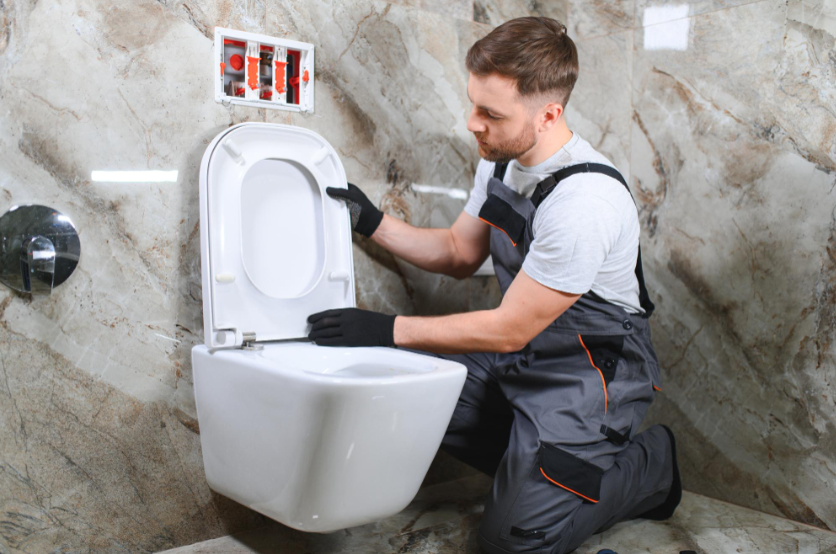
A toilet that runs all night, rocks when you sit down, or won't stop clogging isn't just annoying, it's usually a sign of something specific going wrong underneath the porcelain. Toilet repair and installation in Kansas City, MO covers everything from a simple flapper swap to a full replacement, and most of it is more straightforward than homeowners expect once someone who does this daily takes a look.
It's easy to put off dealing with a toilet problem because the toilet still technically works. But a running toilet wastes real water and real money every single day it goes unfixed, and a wobbly or poorly sealed toilet can lead to water damage that costs far more to repair than the toilet itself.
Kansas City homes span a wide range of ages and plumbing setups, from older bungalows in the city to newer builds out toward Overland Park and Lee's Summit with modern low-flow models. What your toilet needs, repair, a wax ring reset, or a full replacement, depends a lot on what's actually happening below the waterline.
In this article, you will learn about:
- Common toilet problems and what they actually mean
- Repair versus replacement, and how to decide
- What installation day looks like
- Choosing the right toilet for your home
Keep reading to stop guessing about what's wrong and start fixing it the right way.
Common toilet problems and what they actually mean
Most toilet issues fall into a handful of categories, and each one points to a different part failing. Knowing which symptom matches which cause saves a lot of guesswork before a plumber ever shows up.
The good news is that toilets are mechanically simple compared to most home systems, which means most problems are diagnosable from a short list of possibilities.
The running toilet nobody notices
A toilet that keeps running after the tank refills is one of the most common calls a plumber gets, and it's usually caused by a worn flapper, a misaligned float, or a fill valve that isn't shutting off completely. It's also one of the most expensive problems to ignore, since a constantly running toilet can waste a significant amount of water every single day.
- A flapper that doesn't seal, letting water leak from tank to bowl
- A float set too high, causing water to spill into the overflow tube
- A fill valve that's worn out and won't shut off cleanly
- A cracked or corroded flush valve seat
Most of these are inexpensive fixes on their own. The trouble is that homeowners often live with the sound for months before realizing how much it's actually costing them.
Clogs, weak flushes, and rocking toilets
A toilet that clogs frequently, flushes weakly, or rocks slightly when you sit down each points to a different root cause. A weak flush often traces back to a partially blocked trapway or a low water level in the tank, while frequent clogging can mean a partial blockage further down the drain line rather than a problem with the toilet itself.
A rocking toilet is a different kind of warning sign entirely. It usually means the wax ring seal underneath has failed or the closet flange has cracked, and a toilet that isn't sitting flat and sealed is at real risk of leaking water down into the subfloor with every flush.
Leaks at the base and what they signal
Water pooling around the base of a toilet after flushing is one of the clearer signs that the wax ring seal has failed. This isn't a cosmetic issue, since water finding its way under a toilet base can rot subflooring and, in older homes, damage ceiling drywall in the room below.
- Check whether the water is coming from the base, the supply line, or the tank
- Turn off the shutoff valve if the leak is active and ongoing
- Avoid using the toilet until the source is confirmed
- Note whether the toilet feels loose or unstable when you sit
- Call for repair before the leak causes structural water damage
Catching a base leak early is almost always cheaper than waiting for it to show up as a stain on the ceiling below. An active leak like this is a job for emergency plumbing, not a wait-and-see approach.
Repair versus replacement, and how to decide
Not every toilet problem means it's time for a new toilet, but plenty of them do. Knowing where that line sits saves homeowners from either wasting money on repairs to a fixture that's past its useful life or replacing something that only needed a ten-dollar part.
Age, repair frequency, and water efficiency all factor into this decision, and a straightforward conversation with a plumber usually settles it quickly.
When repair makes sense
A single issue, a bad flapper, a worn fill valve, a loose wax ring, is almost always worth repairing rather than replacing, especially on a toilet that's otherwise in good condition. These are typically same-visit plumbing repair fixes that solve the problem completely without touching the rest of the fixture.
Repeated repairs on the same toilet within a short window are a different story. If the same toilet keeps needing attention every few months, that pattern usually means the toilet itself is nearing the end of its practical life, even if each individual fix is cheap.
When replacement is the better call
Toilets manufactured before 1994 often use significantly more water per flush than today's models, and older units are also more prone to cracked porcelain, failing internal components, and outdated flush mechanisms that no longer perform well. According to the Environmental Protection Agency's WaterSense program, toilets account for nearly 30 percent of a home's indoor water use, and older, inefficient models can use as much as 6 gallons per flush compared to the 1.28 gallons or less used by current WaterSense labeled toilets.
That efficiency gap adds up fast. WaterSense estimates that switching to a labeled toilet can save the average family around 13,000 gallons of water a year, a number that turns an aging toilet from a minor annoyance into a real ongoing cost.
The hidden cost of a silent leak
Not every leak announces itself with a puddle. A worn flapper can leak slowly enough that the sound is barely noticeable, and homeowners often have no idea it's happening until an unusually high water bill shows up. This is exactly the kind of slow, hidden problem leak detection is designed to catch. A running toilet can waste around 200 gallons of water in a single day, enough to turn a minor part failure into a genuinely expensive monthly bill if it goes unaddressed.
A quick way to check is dropping food coloring into the tank and waiting ten minutes without flushing. If color shows up in the bowl, water is leaking past the flapper seal, and that's a same-visit repair rather than anything more involved.
What installation day looks like
Once the decision is made to replace a toilet, homeowners are often surprised by how quick and contained the actual installation is. Most jobs are completed start to finish in a single visit, with minimal disruption to the rest of the bathroom.
Knowing what to expect ahead of time takes a lot of the uncertainty out of the process, especially for anyone who's never had a toilet replaced before.
Removing the old toilet
The technician starts by shutting off the water supply, draining the tank and bowl, and disconnecting the supply line. The old toilet is then unbolted from the closet flange and lifted away, exposing the flange and the old wax ring underneath.
This step is also when hidden problems tend to surface. A cracked flange, water-damaged subflooring, or corrosion around the mounting bolts is much easier to catch and address now than to discover later after a new toilet is already installed on top of it.
Setting the new toilet correctly
A new wax ring is set on the flange, and the new toilet is carefully lowered into place and bolted down evenly to create a proper seal. Getting this step right matters more than it might seem, since an uneven or improperly seated toilet is exactly what leads to the rocking and base-leak problems described earlier.
- Inspect and repair the closet flange if it's damaged or corroded
- Set a new wax ring or wax-free seal on the flange
- Lower the toilet into place, aligning it evenly over the mounting bolts
- Tighten bolts gradually and evenly to avoid cracking the base
- Reconnect the supply line and test for leaks
- Run several test flushes to confirm proper operation before finishing
That final testing step isn't optional. A technician who leaves before confirming a clean, leak-free flush cycle is skipping the part of the job that actually protects the homeowner from a callback.
Cleanup and what to expect afterward
A properly done installation leaves the bathroom clean and the old toilet hauled away, not left for the homeowner to deal with. The new toilet should be immediately usable, with no waiting period beyond letting any caulk around the base cure if that step was included.
Most installations are done efficiently enough that a technician can typically complete a straightforward swap without disrupting the rest of the household's day.
Choosing the right toilet for your home
Not all toilets are built the same, and the right choice depends on the bathroom's layout, the household's needs, and how much the homeowner wants to save on water going forward. This is worth a real conversation rather than picking whatever's cheapest at a big box store.
A few practical factors make the biggest difference in day-to-day satisfaction with a new toilet.
Bowl height, shape, and rough-in size
Standard toilets sit around 15 inches from floor to seat, while comfort-height or ADA-compliant models sit closer to 17 to 19 inches, which many adults find more comfortable, especially anyone dealing with knee or hip issues. Bowl shape, round versus elongated, is mostly a matter of preference and available space, since elongated bowls need a few extra inches of clearance.
Rough-in size, the distance from the wall to the center of the drain, has to match the existing plumbing or the new toilet won't fit correctly. This is exactly the kind of detail worth confirming before buying a toilet on your own, since a mismatched rough-in turns a simple swap into a bigger job.
Flush performance and water efficiency
Not all low-flow toilets perform equally, and the earliest low-flow models sometimes needed a second flush to fully clear the bowl, which defeated the purpose of using less water in the first place. Modern WaterSense labeled toilets have largely solved this with better bowl and trapway design, delivering strong flush performance at a fraction of the water older models use.
Dual-flush toilets offer a partial flush for liquid waste and a full flush for solid waste, which can meaningfully cut water use for households that want to maximize savings without sacrificing performance. For a household replacing multiple bathrooms at once, this is worth factoring into the residential plumbing plan as a whole rather than deciding room by room.
Getting a straight recommendation
A good plumber will ask about the household's priorities, water savings, comfort height, budget, before recommending a specific model rather than pushing whatever's easiest to install. If your home has known hard water, that's also worth mentioning, since mineral buildup inside tank components can shorten the life of internal parts regardless of which toilet you choose.
Benjamin Franklin Plumbing® of Kansas City backs installation work with a 100% satisfaction guarantee, and technicians arrive stocked to handle the vast majority of repairs and installs in a single visit, no guesswork, no upselling, just a straight assessment of what your bathroom actually needs.
Conclusion
A toilet problem rarely fixes itself, and the longer a running toilet, a slow leak, or a rocking base goes unaddressed, the more it tends to cost, whether that's in wasted water, a higher bill, or actual water damage to the floor underneath. Kansas City's mix of older and newer homes means the right fix really does depend on the specific toilet and the specific home.
Whether it's a quick flapper repair or a full replacement with a modern, water-efficient model, getting it handled correctly the first time saves both money and hassle down the road.
Benjamin Franklin Plumbing® of Kansas City is ready to help with toilet repair and installation, backed by a 100% satisfaction guarantee and technicians who treat every bathroom like it's their own.

 Your Privacy Choices