
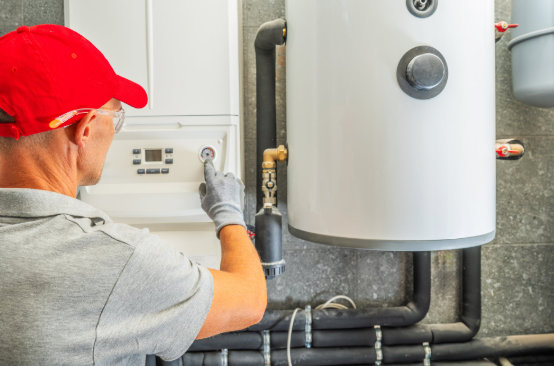
Picking a new water heater sounds simple until the actual decision lands in front of you: keep the familiar tank, or switch to a tankless unit that costs more upfront and promises to pay it back over time. Kansas City homeowners run into this choice most often when an old tank starts failing, since that is usually the moment someone finally researches the alternative instead of just replacing like for like.
Both systems do the same basic job, get cold water hot and deliver it to a faucet or shower, but they get there in very different ways, and that difference shows up in the monthly bill, the space they take up, and how long they last before needing replacement again.
Neither option is universally better. The right call depends on household size, how the home is set up, and what a family actually wants out of the appliance.
Benjamin Franklin Plumbing of Kansas City installs and services both tank and tankless systems throughout the metro. Calls come in regularly from Overland Park and just as often from Lee's Summit, Leawood, and Prairie Village, and the same question comes up on nearly every water heater call: which one actually makes sense for this house.
Based out of Lee's Summit, MO, the team fields these calls daily and this guide breaks down the real differences so the decision gets easier.
In this article, you will learn about:
- How tank and tankless water heaters actually work
- Energy efficiency and long-term cost differences
- Lifespan, space, and installation considerations
- Which option fits which kind of Kansas City household
Keep reading to see which system fits your household size, budget, and home setup before you commit to a replacement.
How tank and tankless water heaters actually work
A traditional tank water heater keeps a reservoir of hot water ready at all times, usually 40 to 50 gallons for a typical household, reheating it continuously so hot water is available the moment a faucet turns on. A tankless unit skips the reservoir entirely and heats water on demand as it flows through the unit, using a gas burner or an electric element that activates only when a hot tap is opened.
That single difference in design drives almost everything else that separates the two systems, from monthly operating costs to how much space they take up in a basement or utility closet.
Standby loss and why it matters
A tank water heater loses some of its stored heat over time even when nobody is using hot water, a phenomenon called standby loss. The tank's insulation slows that loss but never eliminates it, so the burner or heating element cycles on periodically throughout the day just to keep the stored water at temperature, whether or not anyone showers or runs a dishwasher.
Tankless units avoid this entirely because there is no stored water sitting around losing heat. Water only gets heated the moment it is called for, which is the core reason tankless systems consistently outperform tanks on efficiency, even though the technology itself is not dramatically more advanced.
How each system responds to demand
A tank system draws from its stored reservoir, so it can supply multiple fixtures at once until that reservoir runs low, at which point water temperature drops noticeably. A tankless system has no such limit on total volume, since it heats continuously, but it does have a flow-rate ceiling.
Most tankless units deliver hot water at roughly 2 to 5 gallons per minute, and running a shower and a dishwasher simultaneously can push a single unit to its limit. Homes with high simultaneous demand sometimes need two tankless units installed in parallel, or dedicated units for high-draw appliances like a clothes washer.
- A tank heater draws down its stored reservoir and refills gradually with cold water
- A tankless unit heats water continuously as long as a fixture calls for it
- Tank systems handle simultaneous use well until the reservoir depletes
- Tankless systems handle continuous use well but cap out at a maximum flow rate
Neither approach is flawed, they simply solve the hot water problem differently, and the better fit depends on how a specific household actually uses hot water day to day.
Gas versus electric versions of each system
Both tank and tankless water heaters come in gas and electric versions, and that fuel choice interacts with the tank-versus-tankless decision in ways homeowners often overlook. Gas tankless units generally deliver higher flow rates than electric tankless units, which matters more for larger households, but they also require proper venting to the outside, since combustion byproducts have to go somewhere.
Electric tankless units skip the venting requirement entirely, which simplifies installation, but they draw enough instantaneous power that many homes need an electrical panel upgrade to support one. A heat pump water heater, meanwhile, is electric by definition and uses ambient air rather than a burner or a simple resistance element, which is part of why it can outperform even a standard electric tank on efficiency.
Energy efficiency and long-term cost differences
Efficiency is usually the first thing homeowners ask about, and it is also where the two systems diverge the most. The gap is not small, and it compounds over the life of the appliance.
The efficiency numbers, and what they actually mean
For households using 41 gallons of hot water or less per day, tankless water heaters are 8 to 34 percent more efficient than a standard storage tank unit, and a tankless system carrying the ENERGY STAR label can save $100 or more a year on utility bills. That range depends heavily on how much hot water a household actually uses, since the efficiency advantage narrows somewhat for larger families with heavier daily demand.
Electric heat pump water heaters, a newer category that still uses a tank but moves heat rather than generating it directly, push efficiency even further. Water heating is typically the second largest energy user in a home after heating and cooling, and an ENERGY STAR certified heat pump model can be up to four times more efficient than a conventional electric water heater.
A four-person household switching to one can save more than $550 a year on electric bills and more than $5,600 over the unit's typical lifespan, according to ENERGY STAR's own savings tables, with the payback period running under three years for that household size.
Upfront cost versus what you save over time
Tankless units cost more to purchase and install than a comparable tank system, often significantly more once venting and gas line modifications are factored in for a gas-fired unit. This upfront gap is the main reason some homeowners default back to a tank without ever running the full comparison.
That said, the math tends to favor tankless or heat pump systems over the appliance's full lifespan, not just on the sticker price. A household replacing an aging electric tank with a heat pump model, for example, can be looking at a payback period of well under four years depending on household size, after which every year of ownership is pure savings compared to sticking with the old system.
- Compare the purchase price, installation cost, and any venting or electrical upgrades needed for each option
- Factor in a federal tax credit of up to $2,000 currently available on eligible heat pump water heaters through the end of 2032
- Check with the local utility for rebates, since these vary and change without much notice
- Estimate the payback period against how many more years you expect to stay in the home
A household planning to sell within two or three years may not recoup a larger upfront investment, while a household settling in for the long haul almost always comes out ahead with the more efficient option.
None of these numbers are guarantees, since actual savings depend on household size, local utility rates, and how the system is used, but the directional advantage of tankless and heat pump systems over standard tanks holds consistently across most Kansas City households.
Maintenance costs over the life of the system
Ongoing maintenance costs also factor into the real comparison, and this is where the two systems differ more than most homeowners expect. A tank system generally needs an annual flush to clear sediment buildup, plus periodic anode rod replacement to slow internal corrosion, both of which are relatively low-cost, straightforward maintenance items.
Tankless units need descaling on a regular schedule, especially in areas with harder water, since mineral buildup inside the heat exchanger reduces efficiency and can eventually damage the unit if ignored.
That maintenance is a bit more specialized than a tank flush, and skipping it tends to shorten the tankless system's lifespan advantage over time, so it is worth factoring the cost of regular service into the long-term comparison rather than assuming a tankless unit is maintenance-free once installed.
Lifespan, space, and installation considerations
Cost and efficiency get most of the attention, but lifespan and physical footprint matter just as much for a lot of Kansas City homeowners, especially those working with a smaller basement or utility closet.
How long each system actually lasts
A standard storage tank water heater typically lasts 10 to 15 years before it needs replacement, while a well-maintained tankless unit can run for 20 years or more, sometimes with parts replacement extending that even further. That gap alone changes the long-term math, since a tankless system installed today may still be running strong when a second tank system would already be due for replacement.
Warning signs your current water heater is due for replacement
Age is the single biggest factor in deciding whether an aging tank is worth repairing or replacing outright, but age alone does not tell the whole story. A handful of physical warning signs usually show up before a full failure, and catching them early turns a planned upgrade into the decision instead of an emergency.
- Visible corrosion on the tank itself or the water lines connected to it
- Water leaking from joints, seals, or seams, since a water heater is designed to be a closed system
- Rust-colored water coming out of the hot tap, a sign the tank's interior is breaking down
- Rumbling or knocking noises, usually caused by sediment buildup at the bottom of the tank
- A noticeable drop in how much hot water is available or how long it lasts
Any one of these on its own is worth a look. A water heater older than 10 years showing two or more of these signs is a strong candidate for proactive replacement rather than waiting for it to fail outright and cause water damage to the surrounding floor or carpet.
Space and installation differences
A traditional tank takes up a noticeable footprint, usually standing three to five feet tall with a similar diameter, and it needs to sit somewhere with floor space and enough clearance for maintenance access. Basements, utility closets, and garages are the usual spots in Kansas City homes.
Tankless units mount on a wall and take up a fraction of that footprint, which matters a lot in older homes with tighter mechanical rooms or in newer builds where every square foot of storage space counts. That said, a tankless retrofit into an older home sometimes requires upgraded gas lines or electrical service to handle the unit's higher instantaneous demand, which adds to the installation cost and timeline.
- Confirm whether the home's existing gas line or electrical panel can support a tankless unit's demand
- Check available wall space near an exterior wall for proper venting
- Factor in whether existing tank plumbing and shutoffs can be reused or need modification
- Get a straightforward assessment of installation complexity before comparing final pricing
Homes built more than a few decades ago, common throughout established Kansas City neighborhoods, are more likely to need some infrastructure upgrade to support a tankless system than a newer build already wired and piped for higher-capacity appliances.
Which option fits which kind of Kansas City household
There is no universal right answer here, and homeowners who get the best result are usually the ones who match the system to their actual household rather than chasing the option with the best headline efficiency number.
When a tank still makes sense
A traditional tank remains a solid, lower-cost option for smaller households with modest hot water demand, for homeowners planning a shorter stay in the home, or for anyone who wants the lowest possible upfront cost and is comfortable with a shorter replacement cycle.
Tanks are also simpler to service in a pinch, since the technology has been standard for decades and most plumbing techs can diagnose issues quickly.
For a household on a tight renovation budget, or one replacing a failed unit on short notice, a tank system gets hot water back online faster and cheaper, even knowing a second replacement will likely come sooner.
When tankless or heat pump technology pulls ahead
Larger households with heavy simultaneous hot water demand, homeowners planning to stay put for a decade or more, and anyone prioritizing long-term operating costs over the lowest possible purchase price tend to come out ahead with a tankless or heat pump system. The combination of a longer lifespan and lower annual operating cost usually outweighs the higher installation bill within a handful of years.
Homeowners in Kansas City, Overland Park, and Leawood renovating an older home already have contractors on site dealing with plumbing and electrical work, which is often the most cost-effective time to handle any gas line or panel upgrades a tankless system might need, rather than tackling that as a standalone project later.
The same logic holds in Prairie Village, where many homes are old enough that an electrical panel upgrade is worth bundling with other work.
Getting a straight answer for your specific home
The honest answer for most households comes down to running the actual numbers against household size, current energy costs, and how long the home is likely to be owned, rather than picking based on which system sounds more modern. A water heater that is not keeping up with demand is often the first sign a household has simply outgrown its current system, tank or tankless, regardless of age.
A short assessment before replacement usually settles the question faster than researching every option online. Bringing these details into that first conversation saves time and gets to a real recommendation sooner.
- Current household size and typical daily hot water use
- Age and condition of the existing water heater
- Whether the home already has adequate gas line capacity or electrical service for a tankless upgrade
- How many more years the household plans to stay in the home
Every technician at Benjamin Franklin Plumbing of Kansas City has apprenticed under a master plumber and can walk through the tradeoffs for a specific home rather than pushing a one-size-fits-all recommendation. That assessment is available for homeowners in Blue Springs just as readily as it is in Kansas City proper.
Gladstone gets the same treatment. Independence homeowners get the same walkthrough. So do Olathe residents. Greenwood rounds out the list, since the same tradeoffs apply regardless of which side of the metro a home sits on.
None of those four factors require a specialist to gather ahead of time. A homeowner who shows up to the conversation with rough answers already gets a faster, more accurate recommendation than one starting from scratch.
Conclusion
Choosing between a tank and tankless water heater comes down to matching the system to the household, not picking whichever option sounds more advanced. Tank systems remain a reasonable, lower-cost choice for smaller households or shorter ownership timelines, while tankless and heat pump systems tend to win out for larger households and homeowners planning to stay in place long enough to recoup the higher upfront cost.
Kansas City's mix of older housing stock and newer construction means the right infrastructure for a tankless retrofit varies significantly from one home to the next, which is exactly the kind of assessment worth getting from a licensed plumber before committing either way. A rushed decision made during an emergency replacement often costs more over time than one made with the full comparison in hand.
If your water heater is approaching 10 years old, showing early warning signs, or you are simply ready to compare tank and tankless options for your specific home, Benjamin Franklin Plumbing of Kansas City has served the metro since 1955 and backs every appointment with a promptness guarantee known locally as "if there's any delay, it's you we pay."
Call (816) 239-2685 or reach out through the Benjamin Franklin Plumbing Club Membership program to get a straight assessment of which system fits your home.

 Your Privacy Choices