
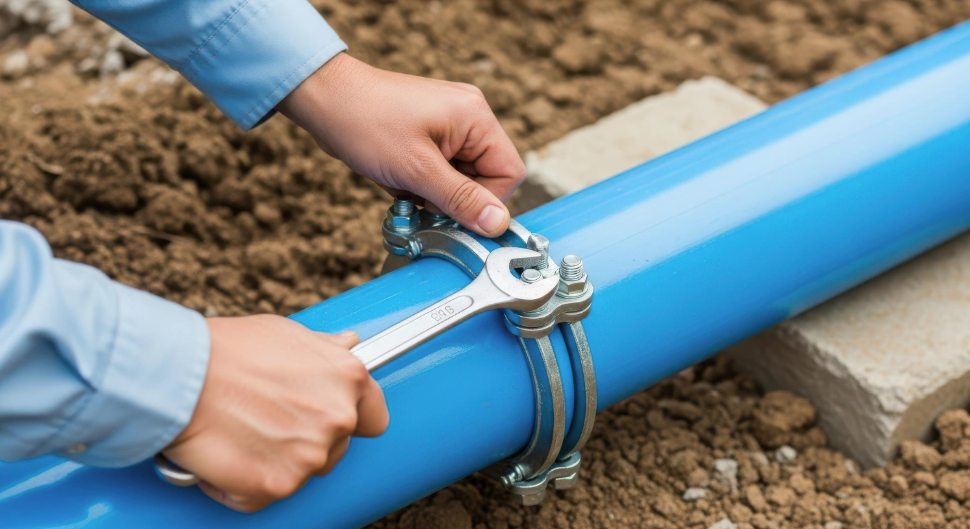
Repiping in Leawood, KS, can solve recurring leaks, rusty water, weak pressure, and other problems that isolated repairs no longer control. It replaces some or all of a home's water-supply piping with a system designed around the property's layout, fixture demand, and current plumbing requirements.
That decision should come from evidence, not the age of the house alone. A skilled plumber looks at pipe material, visible deterioration, repair history, water pressure, water quality, and how consistently fixtures perform before recommending a partial or whole-home repipe.
Leawood combines established neighborhoods with newer development, so plumbing conditions can differ substantially from one street to the next. A local plumbing assessment in Leawood helps determine whether a targeted repair will restore reliable service or merely postpone the next failure.
In this article, you will learn about:
- The warning signs that make repiping worth considering
- How a plumber confirms whether your house needs new pipes
- Which repiping materials fit a Leawood home
- What happens during a whole-home repipe
Keep reading to make a well-informed decision about the pipes behind your walls.
The warning signs that make repiping worth considering
One leak does not automatically mean that an entire house needs new plumbing. A damaged fitting, loose connection, or isolated freeze break may call for a focused repair, especially when the surrounding pipe remains sound.
Repiping becomes more reasonable when failures form a pattern across the system. The central question is whether the latest problem is a single weak point or evidence that the same material, installation method, or deterioration is affecting many branches.
Repeated leaks reveal a system-wide pattern
A second or third leak in a different part of the house deserves a broader look. Each opening in a wall or ceiling may expose only one failed section, but repeated failures can indicate that other sections of the same age and material are deteriorating under similar conditions.
Professional leak detection can separate an active hidden leak from condensation, roof intrusion, or an old stain. Moisture meters, pressure testing, and observation of the water meter help narrow the source before anyone recommends extensive pipe replacement.
Several clues make a series of leaks more significant than one isolated repair:
- Failures have appeared in different rooms or on different floors.
- Multiple leaks involve the same pipe material or type of fitting.
- New stains, damp drywall, or meter movement continue after a repair.
- Accessible pipe shows pitting, rust, scaling, or previous patches.
- Repair openings reveal deterioration beyond the point that first leaked.
The scale of ordinary household leakage is easy to underestimate. The U.S. Environmental Protection Agency reports that leaks in an average household can waste nearly 10,000 gallons a year, which is why small, concealed losses still deserve prompt attention.
A plumber should document where leaks have occurred, what material failed, and whether the breaks share a cause. If the failures are confined to one accessible branch, pipe repair may still be the measured response. Widespread pinholes, corroded fittings, or patched sections throughout the house point more strongly toward repiping.
Pressure and flow problems affect several fixtures
Low flow at one faucet often begins at the fixture. A clogged aerator, partially closed stop valve, worn cartridge, or kinked supply connector can restrict a single location without saying anything about the rest of the piping.
The pattern matters more than the sensation of weak pressure. If showers lose flow when a toilet fills, upper-level fixtures perform poorly, or both hot and cold lines are affected in several rooms, deposits or undersized supply branches may be limiting the system.
A pressure gauge at an exterior hose connection provides only one part of the answer. Static pressure may look normal while flow falls sharply under demand, so a useful plumbing inspection and diagnosis compares pressure with fixtures closed and while multiple outlets are running.
Repiping can improve flow when old galvanized lines have narrowed internally or when additions were connected to pipes that were never sized for the new load. It cannot correct low utility pressure, a faulty pressure-reducing valve, or a restricted service line unless that specific cause is also addressed.
Discoloration, taste, and temperature changes need investigation
Yellow, brown, or reddish water can come from corrosion products, sediment, utility work, or the water heater. If discoloration appears only on the hot side, the tank and its connections deserve attention before the entire cold-water distribution system is blamed.
WaterOne reported that its laboratory performed more than 13,000 tests on over 14,000 samples in 2024 while serving nearly 500,000 customers. Those figures in the utility's 2025 Water Quality Report announcement help illustrate an important distinction: high-quality water entering a neighborhood does not rule out changes inside an individual home's plumbing.
The EPA explains that lead can enter drinking water when plumbing containing lead corrodes, with older pipes, solder, faucets, and fixtures among the possible sources. A home's construction and renovation history therefore matters even when the public supply meets applicable standards.
A plumber may recommend water testing, a hot-versus-cold comparison, and inspection of accessible pipe before discussing replacement. Water treatment can address certain taste, odor, mineral, or contaminant concerns, but treatment is not a substitute for removing a pipe that is physically failing.
How a plumber confirms whether your house needs new pipes
A sound repiping recommendation connects symptoms to physical evidence. That means inspecting representative sections of the system, testing its performance, and considering previous repairs rather than relying on a quick glance at one pipe in the basement.
The evaluation should also define the boundary of the proposed work. Interior supply piping, the service line from the utility connection, drain piping, and the sewer lateral are separate components. A problem in one does not automatically justify replacing the others.
Pipe material and installation history shape the risk
Older Leawood neighborhoods may contain homes that have been renovated in stages. One property can have original galvanized steel in a concealed wall, copper in a later addition, and newer flexible supply lines near remodeled fixtures. Mixed materials are not automatically defective, but transitions and past workmanship need close review.
Age is a useful clue, not a diagnosis. The plumber should look for corrosion at fittings, mineral buildup, improper supports, stressed joints, dissimilar-metal connections, and sections exposed to cold. Accessible piping near the water heater, utility room, basement ceiling, and shutoff valves often reveals how the broader system was assembled.
Leawood is strongly owner-occupied. The U.S. Census Bureau estimates a 91.0% owner-occupied housing rate for 2020 through 2024 and a median owner-occupied home value of $658,800. Those numbers do not predict pipe condition, but they underscore why a documented, house-specific plan matters when work affects a major residential asset.
A complete residential plumbing review should also identify past additions, bathroom remodels, relocated kitchens, and capped branches. Those details help the plumber avoid preserving an obsolete layout or overlooking piping that still feeds a less-visible fixture.
Testing separates local damage from broad deterioration
Visual inspection cannot reach every pipe, so the plumber combines it with performance testing. Meter observation can reveal continuous water movement, pressure-loss testing can identify leakage, and simultaneous fixture operation can expose flow restrictions or sizing problems.
The most useful diagnosis follows a sequence. Each step narrows the cause before walls are opened or a whole-home solution is proposed.
- Review the home's age, renovations, pipe materials, and repair records.
- Ask where symptoms appear and whether they affect hot water, cold water, or both.
- Inspect accessible pipe, valves, fixture connections, and mechanical-room plumbing.
- Measure static and flowing pressure under realistic household demand.
- Check the meter and isolate branches when a concealed leak is suspected.
- Map the routes and access points needed for repair or replacement.
This process may show that a single branch can be replaced while the rest stays in service. It can also reveal recurring deterioration in multiple zones, making a planned piping and repiping project more predictable than repeated emergency openings.
Diagnosis should end with clear findings, not a vague statement that the pipes are old. The homeowner should understand what failed, which lines are affected, what remains serviceable, and how the recommended scope addresses the observed problem.
The source, drain, and supply sides must be separated
A wet basement wall can result from a pressurized supply leak, a drain leak, groundwater, or stormwater intrusion. Each behaves differently. Supply leaks may continue when fixtures are off, while drain leaks usually appear only when a particular fixture is used.
Likewise, slow drains and sewage odors generally point toward the drainage system rather than the potable-water piping. Professional drain cleaning can resolve a blockage.
A damaged lateral may require sewer line repair. Neither service is the same as repiping the water lines inside the house.
The incoming service line also needs its own diagnosis. If every fixture suffers from weak flow and the interior branches are clear, the restriction may be between the main and the house. Water line services address that exterior connection separately from a whole-home interior repipe.
This separation prevents unnecessary work and improves planning when more than one system truly needs attention. A detailed scope should identify the included lines, excluded lines, fixture reconnections, valve work, wall access, and testing so that everyone shares the same definition of the project.
Which repiping materials fit a Leawood home
There is no universally best pipe for every house. Copper and cross-linked polyethylene, commonly called PEX, can both perform well when the product, design, installation method, and local code requirements fit the application.
Material selection also affects routing, access, supports, transitions, noise, and future service. A professional recommendation should explain those practical differences in the context of the actual house rather than reducing the choice to a price comparison.
Copper offers rigidity and a long-established track record
Copper keeps straight, orderly runs and is familiar to many homeowners and tradespeople. It can be a strong choice in exposed mechanical spaces or layouts where a rigid pipe and compact outside diameter simplify installation.
Successful copper work depends on correct sizing, joining, supports, and protection from contact with incompatible materials. Water chemistry and installation conditions influence corrosion behavior, so the plumber should examine why the old system failed before replacing it with more of the same material.
Copper also transfers heat readily. Hot-water lines may benefit from insulation to reduce waiting and heat loss, while pipes near exterior walls require protection from cold. The material itself does not eliminate the need for thoughtful routing.
When a repipe connects to existing fixtures, valves, or equipment, compatible transitions matter. A water heater system may need new nearby shutoffs, connectors, or distribution changes as part of the plan, but replacing the heater is not automatically required.
PEX allows flexible routing with fewer directional fittings
PEX bends around many obstacles, which can reduce the number of elbows needed in a complicated route. That flexibility is useful when a plumber is trying to reach kitchens, bathrooms, or upper floors through limited access points.
The design still requires discipline. Tubing must be supported, protected where it passes through framing, kept away from damaging heat or ultraviolet exposure, and sized for the length and expected flow. A flexible material does not compensate for an undersized or poorly organized layout.
PEX systems can use trunk-and-branch routing or a manifold arrangement with more direct fixture runs. The best approach depends on available space, household demand, the distance to fixtures, and whether isolation of individual branches would be useful.
Connections behind finished surfaces should follow the manufacturer's system and local requirements. The plumber should also explain how fixture shutoffs, the main valve, and future access will work after the new lines are installed.
The right design starts with fixture demand and winter exposure
Pipe size influences both flow and water velocity. A line that is too small may struggle when several fixtures run together, while indiscriminately oversized hot-water piping can increase the wait for warm water and the volume cooled between uses.
The design should account for the home's actual demand. Important inputs include the number and location of bathrooms, high-flow fixtures, laundry equipment, kitchen appliances, hose connections, the water heater, and any planned remodel. A tankless water heater also has connection and flow requirements that belong in the plan.
Several conditions deserve specific attention during material and route selection:
- Exterior walls, rim joists, garages, and other areas vulnerable to cold
- Long hot-water runs to distant bathrooms or additions
- Framing penetrations that require protective plates or sleeves
- Accessible locations for the main shutoff and branch valves
- Transitions between new piping and retained fixtures or equipment
- Pressure and flow needs when several fixtures operate at once
The regional freeze season is not theoretical. The National Weather Service lists Kansas City's average last spring freeze as April 8 and its average first fall freeze as October 28, while nearby Olathe averages April 16 and October 23. Those long-term dates are not forecasts, but they show why vulnerable pipe placement deserves serious attention.
Insulation slows heat loss but does not generate heat. Pipes in poorly protected areas may need rerouting into conditioned space, air sealing around penetrations, or other building-specific measures. Professional frozen-pipe service can address an immediate event, while repiping should correct avoidable exposure when the layout permits.
What happens during a whole-home repipe
A whole-home repipe is a coordinated construction project, but it does not require indiscriminate demolition. Good planning uses closets, cabinet interiors, basement ceilings, utility spaces, and carefully selected wall openings to reach fixtures while limiting disruption.
The exact schedule depends on the size and layout of the home, the number of fixtures, material choice, access, inspections, and the amount of finish repair. A responsible proposal sets expectations for water shutoffs and access without promising a universal timeline.
Planning comes before the first pipe is removed
The plumber begins by mapping the existing system and the proposed routes. That map identifies supply entry, main shutoff, water heater connections, vertical risers, fixture branches, exterior hose connections, and any pipes that will remain.
Homeowners should point out previous leaks, rooms with weak flow, planned renovations, valuable finishes, and spaces with restricted access. A kitchen or bathroom update may be the right time to coordinate plumbing installations so new piping serves the future layout rather than the one about to be removed.
The written scope should address material, sizing approach, valves, access openings, fixture reconnections, permits when required, testing, cleanup, and finish restoration responsibilities. It should also identify whether abandoned piping will be removed where accessible or safely disconnected and left in place.
Before work starts, protect belongings and clear agreed access areas. The crew can then stage materials, confirm shutoff locations, and sequence the work so the house spends as little practical time without water.
Installation follows a controlled sequence
Crews usually establish the new main distribution route, create vertical and horizontal branches, and connect fixtures in a planned order. Much of the new system can sometimes be installed before the old piping is fully taken out of service.
The changeover requires deliberate control. The water supply is shut off, retained equipment is protected, old connections are separated, and the new system is tied in. Open lines must remain clean during construction.
A typical project includes several coordinated phases:
- Confirm routes, shutoffs, materials, protection, and access locations.
- Create limited openings and install supports and protective components.
- Run and secure the new hot- and cold-water piping.
- Connect valves, fixtures, appliances, and the water heater as specified.
- Pressure-test the system and inspect every accessible connection.
- Flush the new lines, verify flow and temperature, and complete required inspections.
- Close agreed openings and document valves and retained components.
During the work, unexpected conditions can change the route. Hidden framing, electrical wiring, ductwork, or past alterations may require an adjustment, so the homeowner should receive an explanation before the scope materially changes.
If a failing line causes sudden flooding before the planned repipe, shut off the water when it is safe to do so. Emergency plumbing service can stabilize the immediate problem, but the permanent replacement plan should still be based on a complete assessment.
Testing and follow-through protect the investment
New piping should be tested before access openings are closed. The crew checks connections under pressure, verifies that hot and cold lines serve the correct fixtures, confirms usable flow, and looks for vibration or water-hammer concerns.
Flushing removes construction debris and air from the new system. Aerators and fixture screens may need cleaning afterward, especially when existing fixtures remain. Each faucet should be operated rather than assumed to work.
The same final check applies to toilets, showers, appliances, and exterior connections. Testing these endpoints catches crossed lines, trapped air, debris, or an overlooked fixture valve before the project is considered complete.
Ask for a walkthrough of shutoff valves and any maintenance considerations tied to the selected material. If the project changed water delivery to a distant fixture, compare performance under realistic simultaneous demand, not just with one faucet open.
A documented leak repair history and photos of new routes can help with future remodeling and service. Benjamin Franklin Plumbing also publishes its service guarantees, but the homeowner should review the written terms that apply to the specific local project.
Conclusion
Repiping is most valuable when it resolves a documented system-wide problem. Repeated leaks, widespread corrosion, restricted flow, and unreliable water at several fixtures can justify replacement, while an isolated failure may still be better handled with a focused repair.
The right plan accounts for your home's pipe materials, renovation history, fixture demand, winter exposure, access, and future projects. It also distinguishes interior supply piping from the service line, drains, and sewer so the scope stays accurate.
A careful inspection gives you the evidence needed to compare partial replacement with a whole-home repipe. From there, clear routing, appropriate materials, controlled installation, and thorough testing help turn a disruptive plumbing problem into a durable improvement.
For a house-specific evaluation and straightforward recommendations, schedule service with Benjamin Franklin Plumbing of Kansas City.

 Your Privacy Choices